
$45.99 / month – $389.99
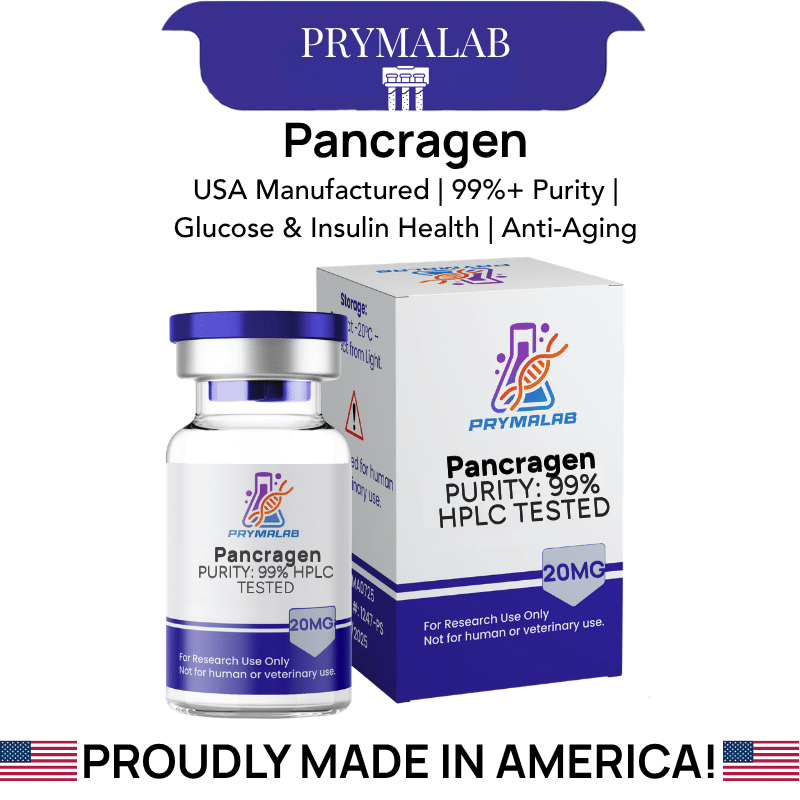
Pancragen peptide (KEDW) is a Khavinson tetrapeptide bioregulator targeting pancreatic tissue. This research-grade compound modulates gene expression in beta cells and exocrine pancreatic cells for preclinical metabolic aging and glucose regulation research. 20mg lyophilized powder, =98% purity, COA included.
Pancragen peptide is a synthetic tetrapeptide bioregulator with the amino acid sequence Lys-Glu-Asp-Trp (KEDW), developed by Professor Vladimir Khavinson at the St. Petersburg Institute of Bioregulation and Gerontology. Pancragen belongs to the Khavinson bioregulator peptides class — short regulatory peptides (2–4 amino acids) that modulate tissue-specific gene expression at physiological concentrations. Pancragen’s primary target is pancreatic tissue, where it has been studied for its capacity to normalize gene expression patterns associated with insulin-producing beta cell function, glucose metabolism regulation, and pancreatic tissue homeostasis in aging models.
As a pancreas bioregulator, pancragen operates through the Khavinson epigenetic mechanism — direct interaction with complementary DNA sequences in the promoter regions of pancreatic-specific genes, modulating transcription rather than acting through receptor agonism or enzyme inhibition. This fundamentally different approach to tissue function restoration has been studied across four decades of bioregulation research. PrymaLab Pancragen 20mg is manufactured to high purity standards and supplied exclusively for qualified preclinical research applications.
| Specification | Detail |
|---|---|
| Compound | Pancragen (tetrapeptide bioregulator) |
| Sequence | Lys-Glu-Asp-Trp (KEDW) |
| Quantity | 20mg |
| Target Tissue | Pancreatic tissue (beta cells, exocrine pancreas) |
| Class | Khavinson bioregulator peptide (short regulatory peptide) |
| Purity | ≥98% (HPLC-verified per batch) |
| Testing | HPLC, mass spectrometry, identity verification |
| Form | Lyophilized powder |
| Storage | Store at −20°C desiccated; protect from light |
| Intended Use | Preclinical research only — not for human or veterinary therapeutic use |
Pancragen operates through the established Khavinson model of peptide bioregulation, in which short peptides interact with complementary DNA sequences in the promoter regions of tissue-specific genes. For pancragen, the target gene clusters are those governing pancreatic beta cell function, insulin synthesis and secretion, and pancreatic tissue maintenance during biological aging.
Research from the Khavinson group demonstrates that pancragen modulates the expression of genes critical to pancreatic endocrine function, including genes involved in insulin biosynthesis, beta cell glucose sensing via glucokinase pathways, and pancreatic transcription factors (such as PDX-1) that maintain beta cell identity and function throughout the lifespan. In aged pancreatic tissue models, pancragen administration was associated with restoration of gene expression patterns toward profiles characteristic of younger, functionally competent tissue.
The primary research interest in pancragen centers on its effects on pancreatic beta cell function and glucose metabolism regulation. Preclinical studies from the St. Petersburg Institute have examined pancragen’s impact on insulin secretion capacity, beta cell proliferation markers, and glucose tolerance parameters in aged and metabolically stressed animal models. The peptide’s mechanism — modulating gene expression rather than directly stimulating insulin release — represents a distinct research approach compared to conventional secretagogue compounds that act on sulfonylurea receptors or GLP-1 pathways.
Age-related decline in pancreatic function is a major focus of gerontological research, as beta cell mass and insulin secretion capacity decrease progressively with aging. Pancragen has been studied as a potential bioregulatory intervention to slow or partially reverse this age-related functional decline by restoring the transcriptional programs that maintain pancreatic tissue identity and secretory capacity. This anti-aging application aligns with the broader Khavinson hypothesis that short peptides can be used to counteract age-related epigenetic changes in specific organ systems.
The following research context reflects published preclinical and clinical gerontology literature from the Khavinson research program. PrymaLab Pancragen 20mg is supplied exclusively for research purposes.
Khavinson and colleagues have published data demonstrating that pancragen administration in aged animal models was associated with improved glucose tolerance, enhanced insulin secretion responses to glucose challenge, and normalization of fasting glucose levels. These effects are attributed to the restoration of beta cell gene expression patterns that deteriorate during biological aging, including upregulation of insulin gene transcription and glucokinase activity normalization.
In gerontological research models, pancragen has been studied alongside other Khavinson bioregulators for its potential to extend functional lifespan of pancreatic tissue. Published data indicates that bioregulator peptide administration in aging animal cohorts was associated with maintained pancreatic function at ages where control animals showed significant functional decline, supporting the hypothesis that short regulatory peptides can modulate the rate of age-related organ function loss.
Preliminary preclinical data has examined pancragen’s effects on pancreatic cell survival under metabolic stress conditions, including oxidative stress and glucotoxicity models relevant to type 2 diabetes research. These cytoprotective properties are hypothesized to result from gene expression modulation affecting antioxidant defense enzymes and cellular stress response pathways in pancreatic tissue.
| Feature | Pancragen (KEDW) | Ovagen (Liver/GI Bioregulator) |
|---|---|---|
| Sequence | Lys-Glu-Asp-Trp | Glu-Asp-Leu |
| Primary Target | Pancreatic tissue (endocrine and exocrine) | Liver and gastrointestinal tissue |
| Research Focus | Beta cell function, insulin secretion, glucose metabolism | Hepatic function, hepatocyte gene expression, GI repair |
| Metabolic Effects | Glucose homeostasis, insulin pathway normalization | Hepatic detoxification, bile metabolism, GI barrier function |
| Aging Context | Pancreatic aging and beta cell decline | Hepatic aging and liver function decline |
| Combined Use | Often studied with Ovagen for metabolic system support | Often studied with Pancragen for metabolic system support |
PrymaLab supplies Pancragen 20mg as a high-purity research-grade bioregulator peptide verified at ≥98% purity by reverse-phase HPLC and identity-confirmed by mass spectrometry. Each production batch ships with a unique lot number and Certificate of Analysis documenting purity, identity, and testing methodology. Independent third-party analytical testing ensures unbiased results and full traceability for GLP-compliant research environments and peer-reviewed publication standards.
Pancragen is a synthetic tetrapeptide (Lys-Glu-Asp-Trp, KEDW) belonging to the Khavinson bioregulator peptide class. It targets pancreatic tissue — specifically insulin-producing beta cells and the broader endocrine and exocrine pancreas. Pancragen was developed by Professor Vladimir Khavinson at the St. Petersburg Institute of Bioregulation and Gerontology and has been studied for its capacity to modulate pancreatic gene expression patterns associated with glucose metabolism and aging.
Pancragen operates through the Khavinson bioregulation mechanism — direct interaction with complementary DNA sequences in the promoter regions of pancreatic-specific genes. Rather than stimulating receptors or inhibiting enzymes, pancragen modulates transcription of genes governing beta cell function, insulin biosynthesis, and pancreatic tissue homeostasis. This epigenetic approach aims to restore gene expression patterns that deteriorate during biological aging.
Both are Khavinson bioregulator peptides targeting metabolic organs, but they differ in tissue specificity. Pancragen (KEDW) targets pancreatic tissue — focusing on beta cell function, insulin pathways, and glucose metabolism. Ovagen targets liver and gastrointestinal tissue — focusing on hepatic function, detoxification pathways, and GI barrier integrity. Research protocols sometimes use both peptides together for comprehensive metabolic system support.
Store lyophilized pancragen at −20°C, desiccated and protected from light, for stability of 24+ months. After reconstitution with sterile solvent, refrigerate at 2–8°C and use within 2–4 weeks. Avoid repeated freeze-thaw cycles by aliquoting into single-use portions.
Every batch is tested at ≥98% purity by reverse-phase HPLC and identity-verified by mass spectrometry. Each batch ships with a unique lot number and Certificate of Analysis. Testing is conducted by independent analytical laboratories for unbiased quality verification and full traceability.
For Research Use Only. PrymaLab Pancragen 20mg is intended exclusively for qualified preclinical research use. This product is not intended for human consumption, therapeutic use, veterinary treatment, or any application outside controlled research environments. Pancragen has not been approved by the FDA or any equivalent regulatory authority for therapeutic use. All research applications described are drawn from published preclinical and gerontological literature. Researchers are responsible for ensuring compliance with all applicable regulations.
| Weight | N/A |
|---|---|
| Dimensions | N/A |
Only logged in customers who have purchased this product may leave a review.

support@prymalab.net info@prymalab.net

30 Day return window. Satisfaction guaranteed or your money back.

All orders over %150 in value will receive free shipping.


Reviews
There are no reviews yet.