Description
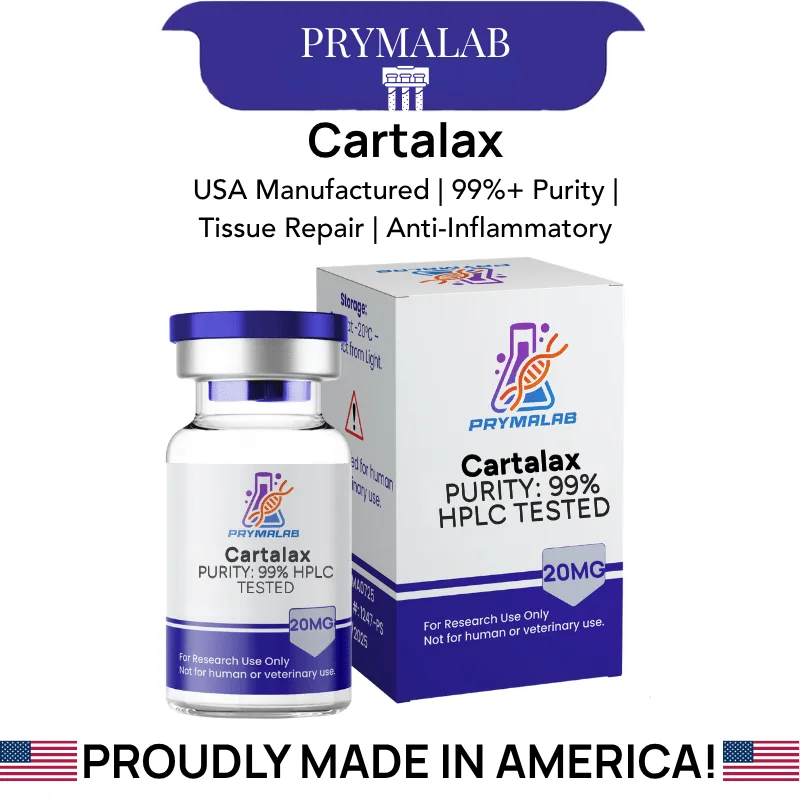
About Cartalax 20mg Peptide
Cartalax peptide is a synthetic tripeptide bioregulator with the amino acid sequence Ala-Glu-Asp (AED), developed by Professor Vladimir Khavinson at the St. Petersburg Institute of Bioregulation and Gerontology. Cartalax promotes cell proliferation in cartilage and connective tissue, functioning as a cartilage bioregulator that tunes gene expression in chondrocytes, fibroblasts, and supporting musculoskeletal matrix tissue. It belongs to the Khavinson bioregulator peptides class — short control peptides that show tissue-specific gene expression tuning at natural levels — and has been studied in lab models of cartilage aging, tissue repair, chronic joint swelling, and age-related musculoskeletal decline.
Cartilage is among the hardest tissues to cellular proliferation and regeneration in the adult body. Unlike vascularized tissues that benefit from blood-borne growth factors and immune cells, cartilage is avascular and relies almost entirely on the synthetic capacity of resident chondrocytes for maintenance and repair. As chondrocyte function declines with age, cartilage decline becomes progressive and largely irreversible under normal conditions. Cartalax addresses this basic challenge by penetrating cellular and nuclear membranes so interacts with DNA and chromatin directly, tuning the transcriptional programs that govern matrix synthesis, chondrocyte survival, and tissue homeostasis. Among all Khavinson bioregulators, cartalax a short peptide is the dedicated cartilage peptide bioregulator and the main compound for musculoskeletal aging research. PrymaLab Cartalax 20mg comes with a certificate of analysis so you know it is manufactured to the highest of purity standards and supplied exclusively for qualified lab research.
Cartalax 20mg: Key Specifications
| Specification |
Detail |
| Compound |
Cartalax (tripeptide bioregulator) |
| Sequence |
Ala-Glu-Asp (AED) |
| Quantity |
20mg |
| Target Tissue |
Cartilage, chondrocytes, connective tissue, musculoskeletal matrix |
| Class |
Khavinson bioregulator peptide (short control peptide) |
| Purity |
≥98% (HPLC-verified per batch) |
| Testing |
HPLC, mass spectrometry, identity check |
| Form |
Freeze-dried powder |
| Storage |
Store at −20°C desiccated; protect from light |
| Intended Use |
Lab research only — not for human or veterinary treatment use |
How Does Cartalax Peptide Work?
Epigenetic Gene Expression Modulation in Cartilage Tissue
Cartalax operates through the peptide-DNA interaction mechanism described by Professor Khavinson’s research group, wherein the AED tripeptide sequence selectively binds specific DNA motifs within gene promoter regions of cartilage cells and tunes chromatin conformation. In chondrocytes and connective tissue fibroblasts, cartalax influences the expression of genes governing extracellular matrix synthesis, proteoglycan production, collagen assembly, and chondrocyte differentiation. This epigenetic mechanism operates at physiologically relevant levels, distinguishing bioregulator peptides from pharmacological agents that target downstream swelling or catabolic pathways.
Chondrocyte Function and Matrix Homeostasis
Cartilage homeostasis depends entirely on the balance between matrix synthesis and breakdown by resident chondrocytes. During aging, this balance shifts toward catabolism as chondrocytes reduce production of type II collagen, aggrecan, and other matrix components while upregulating matrix metalloproteinases (MMPs). Cartalax research targets this imbalance at its transcriptional origin, tuning the genes that control the synthesis-breakdown ratio in cartilage tissue. By restoring anabolic gene expression in aged chondrocytes, cartalax provides a research approach to cartilage preservation that addresses root causes rather than symptoms.
Connective Tissue Specificity
The tissue specificity of cartalax peptide derives from the selective affinity of the AED sequence for control DNA motifs enriched in cartilage and connective tissue gene promoters. Lab studies have showed that cartalax preferentially tunes gene expression in chondrocytes and musculoskeletal fibroblasts, with its effects concentrated in the genes governing extracellular matrix makeup, structural protein assembly, and tissue mechanical properties.
Cartalax Peptide Benefits Reported in Preclinical Research
Published studies on cartalax peptide benefits report multiple cartilage-specific and connective tissue effects relevant to musculoskeletal aging research. All findings described below are from lab animal and cell culture models.
Cartilage Matrix Restoration
The most major cartalax peptide benefit documented in the literature is the restoration of cartilage matrix synthesis in aged chondrocyte models. Studies show enhanced type II collagen gene expression, increased aggrecan production, improved proteoglycan content, and normalized glycosaminoglycan deposition in cartilage tissue treated with cartalax. These matrix restoration effects directly address the basic deficit in aged cartilage — reduced synthetic capacity of resident chondrocytes — and represent a gene-expression-level approach to cartilage preservation.
Anti-Inflammatory Effects in Joint Tissue
Chronic low-grade joint swelling accelerates cartilage breakdown and drives the progression of age-related joint disease. Among the documented cartalax benefits, suppression of pro-swelling gene expression in cartilage and synovial tissue has been consistently reported. Studies show reduced NF-κB pathway start, decreased IL-1β and TNF-α expression in chondrocytes, and tuned MMP gene expression. These anti-swelling effects distinguish cartalax from conventional anti-swelling agents by targeting the transcriptional programs that sustain chronic joint swelling rather than acutely suppressing personal mediators.
Chondrocyte Survival and Anti-Apoptotic Effects
Chondrocyte loss through apoptosis is a key and largely irreversible event in cartilage aging. Cartalax research reports enhanced chondrocyte survival in aged and stress-exposed cartilage models, with upregulation of anti-apoptotic gene expression and improved cellular stress resistance. Given the extremely limited capacity for chondrocyte replacement in adult cartilage, these pro-survival effects have specific significance for research into cartilage longevity and preservation.
Tissue Repair and Regenerative Signaling
Beyond keeping existing cartilage, cartalax research has documented tuning of regrowth signaling pathways in connective tissue, including enhanced expression of growth factor genes (TGF-β superfamily members, BMPs) and improved chondrocyte proliferative capacity in repair models. These tissue repair bioregulator effects extend cartalax’s research relevance into regrowth medicine uses for cartilage and connective tissue repair.
Musculoskeletal Anti-Aging Effects
Longitudinal studies by the Khavinson group have reported that cartalax use is linked with preserved joint function, kept cartilage thickness, and reduced histological signs of cartilage aging in chronically treated animal cohorts compared to controls. These musculoskeletal anti-aging findings support the broader bioregulatory hypothesis that tissue-specific gene expression tuning can slow the trajectory of cartilage degeneration during aging.
Cartalax Peptide Dosage in Research Applications
Published research provides context for cartalax peptide dosage parameters across different experimental paradigms. The following represents reported dosage ranges from lab literature and is intended solely to inform research protocol design.
Important: These are reported research dosages from published lab literature. Best cartalax dosage depends on experimental design, animal model, route of use, and research objectives. This product is not intended for treatment use.
Cartalax in the Khavinson Bioregulator System: Musculoskeletal Context
Among the Khavinson bioregulators, cartalax occupies a unique position as the sole cartilage and connective tissue bioregulator. While other peptides in the system target organs with major cellular turnover (liver, immune system, respiratory epithelium), cartalax addresses one of the body’s most repair-resistant tissues. This distinction makes cartalax very valuable for research into why cartilage ages differently from other tissues and whether epigenetic interventions can overcome the inherent regrowth limitations of avascular connective tissue.
| Feature |
Cartalax (Cartilage) |
Other Tissue Bioregulators |
| Tissue Vascularity |
Avascular (no blood supply) |
Vascularized (direct blood supply) |
| Cell Turnover |
Extremely low (chondrocytes rarely divide) |
Moderate to high (hepatocytes, lymphocytes, epithelial cells) |
| Regrowth Capacity |
Very limited in adult tissue |
Moderate to major depending on organ |
| Research Challenge |
Overcoming intrinsic repair limitations |
Restoring age-declined but inherently capable regrowth |
| Bioregulator Strategy |
Preserve existing chondrocytes and maximize matrix output |
Restore normal gene expression patterns in renewing cells |
| Paired Bioregulators |
Vesilute (vascular supply to joints), Vilon (swelling tuning) |
Organ-specific pairings (e.g., cardiogen + vesilute) |
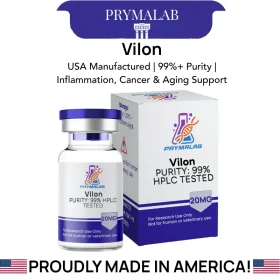
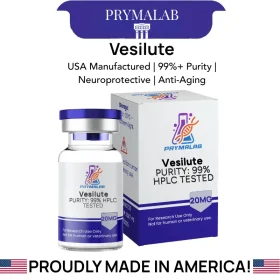
For full musculoskeletal aging research, cartalax may be combined with bioregulators that address supporting systems: vesilute for vascular supply to joint tissues, vilon for systemic immune tuning affecting swelling joint processes, and organ-specific bioregulators for any co-morbid aging conditions under study.
How to Store and Handle PrymaLab Cartalax 20mg
- Store freeze-dried at −20°C. Keep sealed, desiccated, and protected from light. Stable for 24+ months.
- Allow vial to reach room heat before opening to prevent condensation.
- Reconstitute with appropriate sterile solvent. Add slowly along vial wall.
- Use mixed solution within 2–4 weeks. Refrigerate at 2–8°C.
- Avoid repeated freeze-thaw cycles. Aliquot into single-use portions.
- Retain the Certificate of Test for lot traceability.
Why Choose PrymaLab Cartalax 20mg?
PrymaLab supplies Cartalax 20mg as a high-purity research-grade cartilage bioregulator peptide verified at ≥98% purity by reverse-phase HPLC and identity-confirmed by mass spectrometry. Each batch ships with a unique lot number and Certificate of Test. Independent third-party testing ensures unbiased quality check and full traceability for GLP-compliant musculoskeletal and aging research.
Frequently Asked Questions About Cartalax Peptide
What is cartalax peptide and what does it target?
Cartalax is a synthetic tripeptide bioregulator (Ala-Glu-Asp, AED) developed by Professor Khavinson targeting cartilage and connective tissue. It tunes gene expression in chondrocytes, fibroblasts, and musculoskeletal matrix tissue. Research uses include cartilage aging, joint swelling, tissue repair, and musculoskeletal anti-aging in lab models.
What are the reported cartalax peptide benefits in research?
Published lab research reports cartalax peptide benefits including restored cartilage matrix synthesis (type II collagen, aggrecan, proteoglycans), anti-swelling gene tuning in joint tissue (reduced NF-κB, IL-1β, TNF-α, MMP expression), enhanced chondrocyte survival through anti-apoptotic signaling, improved regrowth gene expression (TGF-β, BMP pathways), and preserved joint function in longitudinal aging models. All benefits are from lab research.
How does cartalax differ from conventional joint supplements?
Cartalax operates through epigenetic gene expression tuning in chondrocytes rather than providing substrate use (like glucosamine or chondroitin) or acute anti-swelling activity (like NSAIDs). It targets the transcriptional programs governing cartilage matrix synthesis and chondrocyte function, addressing the root epigenetic causes of cartilage aging rather than downstream symptoms or substrate deficiencies.
What is the recommended cartalax peptide dosage for research?
Published cartalax peptide dosage ranges include 10–200 nM for cell culture studies and 1–10 µg/kg for in vivo cartilage aging models. Dosing depends on experimental design, model system, and research objectives. This product is for lab research only and is not intended for treatment dosing.
How should cartalax be stored?
Store freeze-dried cartalax at −20°C, desiccated and protected from light, for 24+ months shelf life. After mixing, store at 2–8°C and use within 2–4 weeks. Aliquot to avoid freeze-thaw cycles.
Research Disclaimer
For Research Use Only. PrymaLab Cartalax 20mg is intended exclusively for qualified lab research use. This product is not intended for human consumption, treatment use, veterinary treatment, or any use outside controlled research environments. Cartalax has not been approved by the FDA or any equivalent control authority for treatment use. All research uses described are from published lab and gerontological literature. Researchers are responsible for control compliance.




















14 reviews for Cartalax 20mg Peptide