$45.99 / month – $389.99
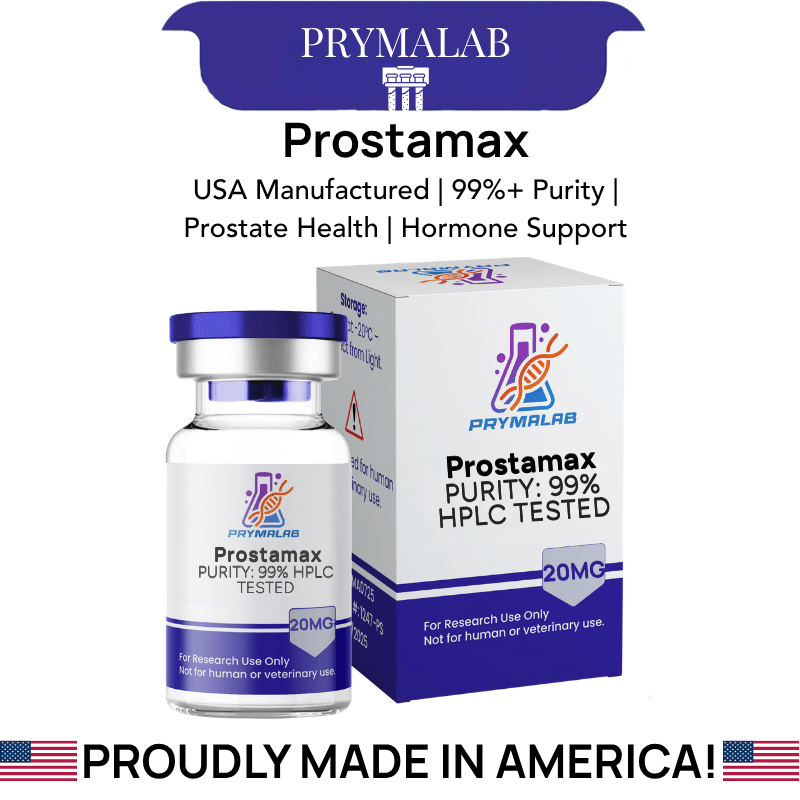
Prostamax peptide is a Khavinson bioregulator peptide complex targeting prostate tissue. This research-grade compound modulates gene expression in prostatic epithelial and stromal cells for preclinical prostate aging, tissue repair, and anti-inflammatory research. 20mg lyophilized powder, =98% purity, COA included.
Prostamax peptide is a synthetic bioregulator peptide complex developed by Professor Vladimir Khavinson at the St. Petersburg Institute of Bioregulation and Gerontology. Prostamax targets prostate tissue, functioning as a prostate bioregulator that modulates gene expression in prostatic epithelial cells, stromal cells, and supporting glandular tissue. It belongs to the Khavinson bioregulator peptides class — short regulatory peptides that exhibit tissue-specific gene expression modulation at physiological concentrations — and has been studied in preclinical models of age-related prostatic changes, prostate tissue repair, chronic prostatic inflammation, and male reproductive aging.
The prostate gland undergoes significant age-related changes that affect the majority of aging males, including benign hyperplasia, chronic inflammation, and functional decline. These changes are driven in part by progressive epigenetic alterations in prostatic gene expression that shift the balance from homeostatic maintenance toward proliferative and inflammatory programs. Prostamax addresses this research gap by operating at the gene expression level in prostatic tissue, offering a fundamentally different research approach compared to hormonal modulators or anti-inflammatory agents. Among the Khavinson bioregulators, prostamax is the dedicated prostate peptide bioregulator for male reproductive tissue research. PrymaLab Prostamax 20mg is manufactured to high purity standards and supplied exclusively for qualified preclinical research.
| Specification | Detail |
|---|---|
| Compound | Prostamax (bioregulator peptide complex) |
| Target Tissue | Prostate gland (epithelial, stromal, glandular tissue) |
| Quantity | 20mg |
| Class | Khavinson bioregulator peptide (short regulatory peptide) |
| Purity | ≥98% (HPLC-verified per batch) |
| Testing | HPLC, mass spectrometry, identity verification |
| Form | Lyophilized powder |
| Storage | Store at −20°C desiccated; protect from light |
| Intended Use | Preclinical research only — not for human or veterinary therapeutic use |
Prostamax operates through the peptide-DNA interaction mechanism characterized by Professor Khavinson’s research group, wherein short regulatory peptides selectively bind specific DNA sequences within gene promoter regions and alter chromatin conformation. In prostate tissue, prostamax modulates the expression of genes governing prostatic epithelial differentiation, stromal-epithelial signaling, inflammatory responses, and tissue homeostasis. This epigenetic mechanism targets the transcriptional programs driving age-related prostatic changes rather than individual downstream pathways.
The tissue specificity of prostamax derives from the selective affinity of its peptide sequence for regulatory DNA motifs enriched in prostatic gene promoters. Preclinical studies have demonstrated that prostamax preferentially modulates gene expression in prostatic epithelial and stromal cells while exhibiting minimal transcriptional activity in non-prostatic tissues. This targeted activity profile makes prostamax a valuable research tool for isolating prostate-specific aging mechanisms from systemic hormonal and inflammatory changes.
Age-related prostatic changes involve a shift from homeostatic gene expression toward proliferative and inflammatory transcriptional programs. Prostamax research targets this imbalance at its epigenetic origin, modulating the genes that control prostatic cell proliferation rates, apoptotic balance, and stromal-epithelial communication. By addressing the transcriptional root of prostatic dysregulation rather than its downstream manifestations, prostamax provides a unique research perspective on the biology of prostate aging.
One of the most frequently asked research questions is what prostamax 20 do for men in experimental contexts. Published preclinical studies report multiple prostate-specific effects in male animal models. All findings described below are from preclinical research and do not constitute therapeutic claims.
Chronic prostatic inflammation is a major driver of age-related prostate changes in male aging models. Among the primary prostamax peptide benefits reported in the literature, suppression of pro-inflammatory gene expression in prostatic tissue has been consistently documented. Studies show reduced NF-κB pathway activation, decreased IL-6 and TNF-α expression in prostatic cells, and normalized inflammatory cell infiltration in aged prostate tissue. These anti-inflammatory effects represent a direct answer to researchers asking what prostamax does for male reproductive tissue aging.
Age-related prostatic changes involve both cellular hyperplasia and stromal remodeling that disrupt normal glandular architecture. Prostamax research reports restoration of balanced proliferative signaling, normalized stromal-to-epithelial ratios, and improved tissue architecture in aged prostate models. These tissue repair findings suggest that epigenetic modulation can address the structural changes that accumulate in prostatic tissue during male aging.
Uncontrolled prostatic cell proliferation underlies many age-related prostate conditions. Preclinical prostamax studies demonstrate modulation of cell cycle regulatory genes, enhanced apoptotic balance, and normalized proliferation indices in prostatic tissue. These anti-proliferative effects operate through transcriptional regulation rather than direct cytotoxicity, preserving normal prostatic cell function while restraining pathological proliferative programs.
The prostate gland produces seminal fluid components essential for reproductive function. Reported prostamax benefits include maintained secretory epithelial gene expression and preserved glandular function in aged models. These findings extend prostamax’s research relevance beyond prostatic disease models into broader male reproductive aging biology.
Prostatic tissue is highly responsive to androgen signaling, and age-related changes in androgen receptor expression and sensitivity contribute to prostatic pathology. Prostamax research reports modulation of androgen receptor gene expression and downstream signaling pathways in prostate tissue, suggesting that bioregulatory peptides may influence how prostatic cells respond to hormonal signals during aging.
Published research provides context for prostamax peptide dosage parameters across different experimental paradigms. The following represents reported dosage ranges from preclinical literature and is intended solely to inform research protocol design.
| Research Application | Reported Dosage Range | Protocol Context |
|---|---|---|
| Cell Culture (Prostatic Epithelial) | 10–100 nM | Gene expression and proliferation studies in prostatic cells |
| Prostate Aging Models | 1–10 µg/kg | Chronic administration in aged male rodent models |
| Prostatic Inflammation Models | 5–20 µg/kg | Anti-inflammatory protocols in chronic prostatic paradigms |
| Combined Bioregulator Protocols | 1–10 µg/kg each | Multi-peptide regimens (e.g., prostamax + testagen) |
Important: These are reported research dosages from published preclinical literature. Optimal prostamax dosage depends on experimental design, animal model, route of administration, and research objectives. This product is not intended for therapeutic use.
Researchers studying male reproductive aging often compare prostamax and testagen because both target the male reproductive system within the Khavinson bioregulator framework. Understanding their distinct tissue targets is essential for selecting the appropriate bioregulator for specific research applications.
| Feature | Prostamax | Testagen |
|---|---|---|
| Classification | Prostate bioregulator (prostatic tissue) | Testicular bioregulator (reproductive/endocrine tissue) |
| Primary Target | Prostatic epithelium, stromal cells | Leydig cells, seminiferous tubules, testes |
| Key Mechanism | Anti-inflammatory and anti-proliferative gene modulation in prostate | Reproductive endocrine gene expression and spermatogenic support |
| Research Focus | Prostate aging, prostatic inflammation, tissue remodeling | Testicular aging, hormonal decline, reproductive function |
| Hormonal Angle | Modulates prostate androgen receptor response | Modulates testosterone synthesis gene expression |
| Best For | Prostate-specific: inflammation, hyperplasia, repair models | Testicular-specific: hormonal, spermatogenic, endocrine models |
| Combined Use | Complementary: prostate + testicular = complete male reproductive system | Complementary: testicular + prostate = complete male reproductive system |
The prostamax-testagen combination represents the most comprehensive male reproductive bioregulator research approach in the Khavinson system, with prostamax addressing the prostate gland and testagen targeting testicular function. Researchers investigating systemic male reproductive aging may benefit from protocols incorporating both peptides for complete coverage of the male reproductive tract.
PrymaLab supplies Prostamax 20mg as a high-purity research-grade prostate bioregulator peptide verified at ≥98% purity by reverse-phase HPLC and identity-confirmed by mass spectrometry. Each batch ships with a unique lot number and Certificate of Analysis. Independent third-party testing ensures unbiased quality verification and full traceability for GLP-compliant reproductive and aging research.
Prostamax is a bioregulator peptide complex developed by Professor Khavinson targeting prostate tissue. It modulates gene expression in prostatic epithelial cells, stromal cells, and supporting glandular structures. Research applications include prostate aging, chronic prostatic inflammation, tissue repair, and male reproductive aging in preclinical models.
In preclinical male animal models, prostamax 20mg has demonstrated anti-inflammatory effects in prostate tissue (reduced NF-κB, IL-6, TNF-α), anti-proliferative gene regulation (normalized cell cycle and apoptotic balance), prostatic tissue repair and improved glandular architecture, maintained secretory function, and modulated androgen receptor response. All findings are from preclinical research only.
Published preclinical research reports prostamax peptide benefits including suppression of prostatic inflammation, restoration of balanced proliferative signaling, improved tissue architecture in aged prostate models, maintained glandular secretory function, and modulated hormonal response pathways. All benefits are from preclinical research and do not constitute therapeutic claims.
Published prostamax peptide dosage ranges include 10–100 nM for cell culture studies and 1–10 µg/kg for in vivo prostate aging models. Dosing depends on experimental design, model system, and research objectives. This product is for preclinical research only and is not intended for therapeutic dosing.
Store lyophilized prostamax at −20°C, desiccated and protected from light, for 24+ months stability. After reconstitution, store at 2–8°C and use within 2–4 weeks. Aliquot to avoid freeze-thaw cycles.
For Research Use Only. PrymaLab Prostamax 20mg is intended exclusively for qualified preclinical research use. This product is not intended for human consumption, therapeutic use, veterinary treatment, or any application outside controlled research environments. Prostamax has not been approved by the FDA or any equivalent regulatory authority for therapeutic use. All research applications described are from published preclinical and gerontological literature. Researchers are responsible for regulatory compliance.
| Weight | N/A |
|---|---|
| Dimensions | N/A |
Only logged in customers who have purchased this product may leave a review.

support@prymalab.net info@prymalab.net

30 Day return window. Satisfaction guaranteed or your money back.

All orders over %150 in value will receive free shipping.
Reviews
There are no reviews yet.