Description
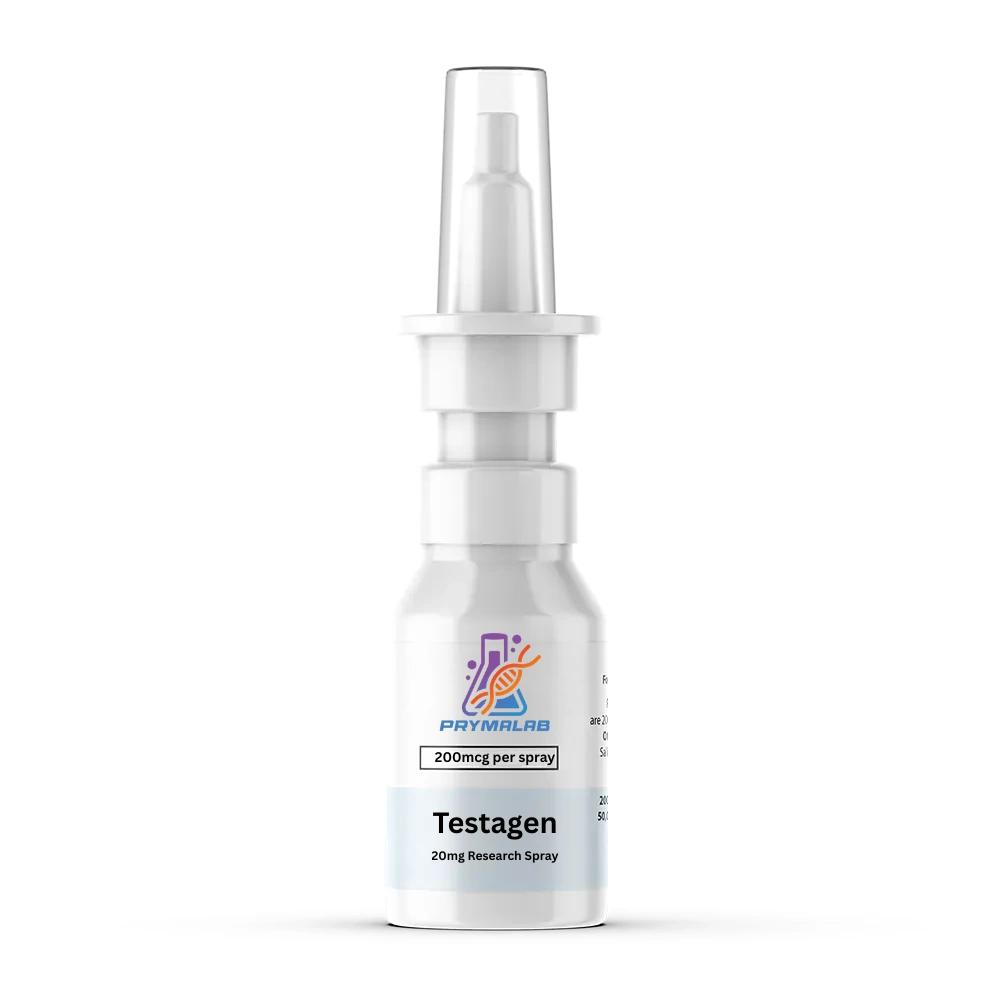
This testagen nasal spray supplies Testagen, a synthetic tetrapeptide with the sequence Lys-Glu-Asp-Gly, abbreviated KEDG. It comes from the short peptide bioregulator programme at the St Petersburg Institute of Bioregulation and Gerontology, where it was described as the active component isolated from testicular tissue extracts, and it is studied in gonadal and endocrine tissue models. This page covers cell biology and analytical characterization only. Supplied for laboratory research use only.
There is an approved testosterone nasal product, and this is not it
This needs to come first, because the search space around anything combining testosterone and a nasal format is dominated by an actual licensed medicine, and confusing the two would be a serious error.
Natesto is a testosterone nasal gel developed by Acerus Pharmaceuticals Corporation, delivered intranasally through a metered-dose pump with a nasal applicator. It is prescribed for hypogonadism, meaning clinically diagnosed testosterone deficiency, and it is a controlled substance. Prescribing is guided by measurements: serum total testosterone concentrations, sometimes written total serum testosterone, alongside monitoring of related markers including estradiol, DHT and hematocrit. It is one option within testosterone replacement therapy, the category usually shortened to TRT, and it sits alongside a testosterone nasal spray format in the same space. Terms like low testosterone, low testosterone levels and low-T describe the diagnosed condition it is licensed to treat.
Because it is a regulated androgen product, its label carries the burden that goes with replacing a hormone. Local effects reported with the nasal route include nosebleeds and epistaxis, nasal discomfort, nasal scabbing, nasal dryness, nasal congestion, a runny nose, rhinorrhea, parosmia, nasopharyngitis, sinusitis, sinus problems, sinus infection, bronchitis and upper respiratory tract infection, with allergic reaction listed as well and use complicated in conditions such as Sjogren’s syndrome. Systemic warnings across androgen products cover polycythemia, blood clots including DVT, pulmonary embolism and venous thromboembolism, heart attack, high blood pressure and hypertension, edema, worsening sleep apnea, acne, gynecomastia, mood swings, hypercalcemia, and effects on spermatogenesis and sperm count. Monitoring includes PSA, the prostate-specific antigen test, because androgen therapy is contraindicated in prostate cancer and used cautiously with benign prostatic hyperplasia or an enlarged prostate, with BPH the usual abbreviation. Breast cancer, significant liver disease and lung disease appear as further cautions, diabetes affects dosing decisions, and interactions are documented with warfarin and with corticosteroid medicines such as prednisone and cortisone. Patients are told not to use a decongestant like oxymetazoline around dosing. Questions about sex drive or erectile dysfunction belong to that clinical conversation.
Testagen is a different category of thing entirely. It is a four-residue synthetic peptide sold as a research chemical for in-vitro laboratory work. It is not testosterone, it is not one of the androgen hormones, it is not a hormone product, not a controlled substance, and not a treatment for anything. It has no label, because it has no approval, and it is not an alternative to a prescribed medicine. Anyone reading this page because of a testosterone concern should be speaking to a clinician rather than considering a research compound.
Steroidogenesis experiments need a stimulated comparator
The most common way an in-vitro steroidogenesis experiment fails is subtle, and it is worth understanding before ordering any compound studied in this area.
Steroid-producing cells, Leydig cell lines such as MA-10 and R2C being the usual models, sit at a low basal output when unstimulated. Their physiological trigger is luteinizing hormone acting through the LH receptor, or hCG as a longer-acting equivalent, and the pathway runs through cyclic AMP and protein kinase A to StAR protein, which moves cholesterol into the mitochondrion. That transport step is rate-limiting, and everything downstream depends on it.
Here is the trap. Basal steroid output in an unstimulated culture is low but not zero, and assay variability at low signal is proportionally large. A compound that produces a small increase from a low baseline can look impressive as a fold-change and mean very little in absolute terms. Meanwhile a compound that genuinely modulates the pathway may show nothing at baseline because the pathway is not running.
The fix is to run both conditions. Test the compound on unstimulated cells and on cells stimulated with LH, hCG or a cAMP analogue such as dibutyryl-cAMP or forskolin, which bypasses the receptor. That tells you whether the compound acts at all, and if it does, whether it acts upstream or downstream of cAMP. A single unstimulated condition cannot distinguish those, and most published work in this area does exactly that.
What to measure
Steroid output itself by ELISA or, better, LC-MS/MS, which avoids the cross-reactivity that steroid immunoassays are prone to. StAR protein expression by Western blot or qPCR, since it is the rate-limiting step. Steroidogenic enzyme transcripts including CYP11A1, CYP17A1 and HSD3B. Cyclic AMP accumulation to locate the effect relative to the second messenger. And viability in parallel, because a decline in steroid output is uninformative if the cells are dying.
For intranasal testagen research and any cell work with this compound, one control is not optional. The peptide hydrolyses to lysine, glutamate, aspartate and glycine, all ordinary nutrients, and glutamate in particular is not biologically inert. A free amino acid control at matched concentration is what separates an effect of the intact tetrapeptide from an effect of its breakdown products, and it is missing from most of this literature.
Testagen nasal spray specifications
| Compound |
Testagen, synthetic short peptide bioregulator |
| Sequence |
Lys-Glu-Asp-Gly (KEDG) |
| Length |
Tetrapeptide (four residues) |
| Charge character |
One basic residue and two acidic residues, plus glycine |
| Origin |
St Petersburg Institute of Bioregulation and Gerontology; described as isolated from testicular tissue extracts |
| Proposed mechanism |
Peptide-DNA or peptide-histone interaction altering gene accessibility (hypothesis) |
| Common in-vitro models |
Leydig cell lines (MA-10, R2C) |
| Evidence status |
Preclinical, single research lineage, limited independent replication |
| Regulatory status |
No FDA or EMA approval |
| Format |
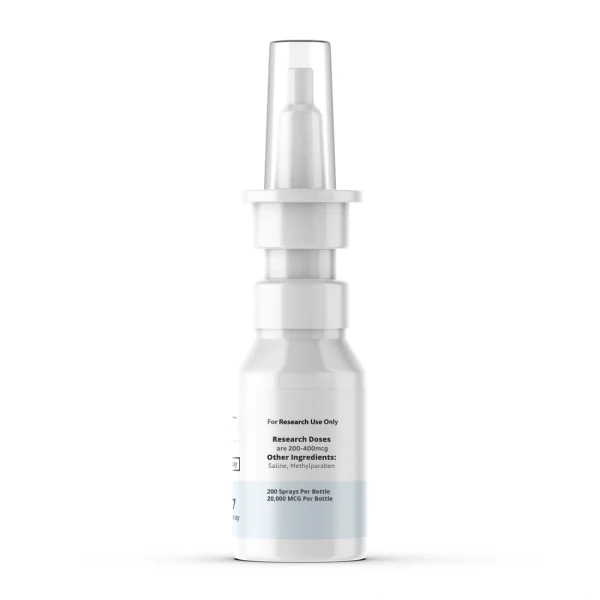
Metered spray bottle [CONFIRM: fill volume, mg per bottle, concentration] |
| Classification |
Research chemical. In-vitro laboratory use only. Not for human or veterinary use. |
What the evidence supports
The proposal across this series is that short peptides enter cells, reach the nucleus and interact with DNA promoter regions or chromatin-associated histones, changing gene accessibility. That argument, with supporting mobility shift assays, histone binding assays and docking models, appears in Short Peptides Regulate Gene Expression in the Bulletin of Experimental Biology and Medicine.
For Testagen specifically the evidence is preclinical and concentrated within one research lineage, with limited independent replication and no human clinical trials. High-resolution structural confirmation of a peptide-DNA complex is unpublished for any peptide in the series. No endocrine outcome in humans is established for this compound, and none is claimed here. That thin base is why this page is shorter than those for compounds with deeper literatures.
Testagen nasal spray storage and handling
KEDG contains no cysteine, no methionine and no tryptophan, so disulfide chemistry, oxidation and light sensitivity are not the practical risks here. Charge and enzymatic exposure are.
Carrying a lysine alongside two acidic residues, this peptide holds both positive and negative charge, so solubility and behaviour are pH-dependent and buffer control matters more than it looks. A four-residue peptide with a C-terminal glycine is also a comfortable substrate for serum peptidases, so long incubations in serum-containing medium give a declining and poorly defined exposure. Sensible testagen nasal spray storage is otherwise routine: cold, sealed, out of light, single-use aliquots rather than repeated freeze-thaw, and low-binding plasticware at low working concentrations.
How research grade testagen spray is characterized
KEDG shares three residues with Livagen, which is Lys-Glu-Asp-Ala, differing only at position 4 where Testagen carries glycine and Livagen carries alanine. That is a difference of a single methyl group, 14 mass units, which is easily resolved by mass spectrometry but is a reminder that these sequences are close relatives and that naming the sequence in a methods section matters more than naming the product.
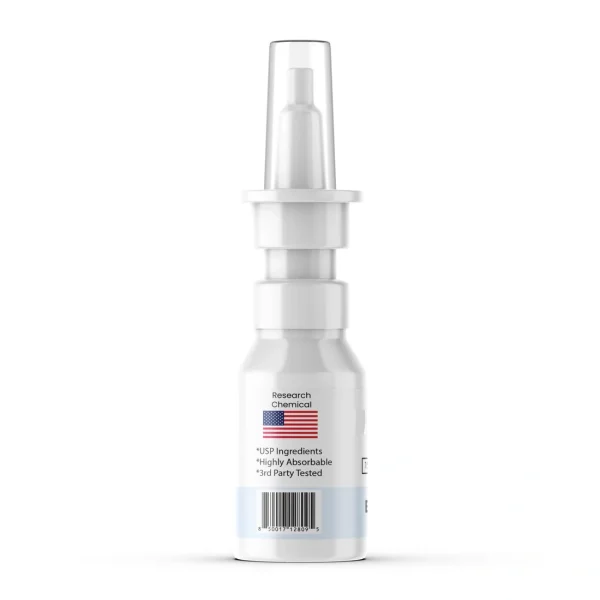
Short, charged peptides retain poorly on standard reversed-phase columns, so the analytical method behind a purity figure is more informative than the figure itself. A research grade testagen spray is supplied under the same verification PrymaLab applies across its research peptides, HPLC and MS confirmation plus independent third-party testing. No specific lot figures are asserted here; request the certificate of analysis for the lot you receive.
For related bioregulator research, see the PrymaLab Research Library.
Frequently asked questions
What is Testagen?
Testagen is a synthetic tetrapeptide, Lys-Glu-Asp-Gly (KEDG), one of the Khavinson-class short peptide bioregulators, described as isolated from testicular tissue extracts and studied in gonadal and endocrine cell models. Material supplied here is a research chemical for in-vitro laboratory use only.
Why does a steroidogenesis experiment need a stimulated condition?
Because basal steroid output in unstimulated cells is low and variable, so a small absolute change can look like a large fold-change. Running stimulated conditions with LH, hCG or a cAMP analogue shows whether a compound acts at all, and whether it acts upstream or downstream of cAMP.
What readouts suit Leydig cell work?
Steroid output by LC-MS/MS rather than immunoassay where possible, StAR protein by Western blot or qPCR since it is rate-limiting, steroidogenic enzyme transcripts such as CYP11A1 and CYP17A1, cAMP accumulation, and a parallel viability assay.
How does Testagen differ from Livagen?
By one residue at position 4: Testagen is Lys-Glu-Asp-Gly, Livagen is Lys-Glu-Asp-Ala. That is a single methyl group, 14 mass units, easily resolved by mass spectrometry but close enough that methods sections should state the sequence rather than the trade name.
Is Testagen nasal spray approved for human use?
No. This material is a research chemical for in-vitro laboratory use only, has no FDA or EMA approval, and is not intended for human or veterinary use. It is not a supplement and no endocrine outcome in humans is claimed. Nothing here is medical advice.
Ordering and compliance
Every PrymaLab research compound ships from the United States and is sold research-use-only. This testagen nasal spray is supplied for in-vitro laboratory research, is not intended for human or veterinary use, is not a drug, supplement or sports product, and has not been evaluated by the FDA for the research-chemical context. Verify the legal status of any research compound in your jurisdiction before ordering. Certificates of analysis are available on request for the lot you receive.














Reviews
There are no reviews yet.