Description
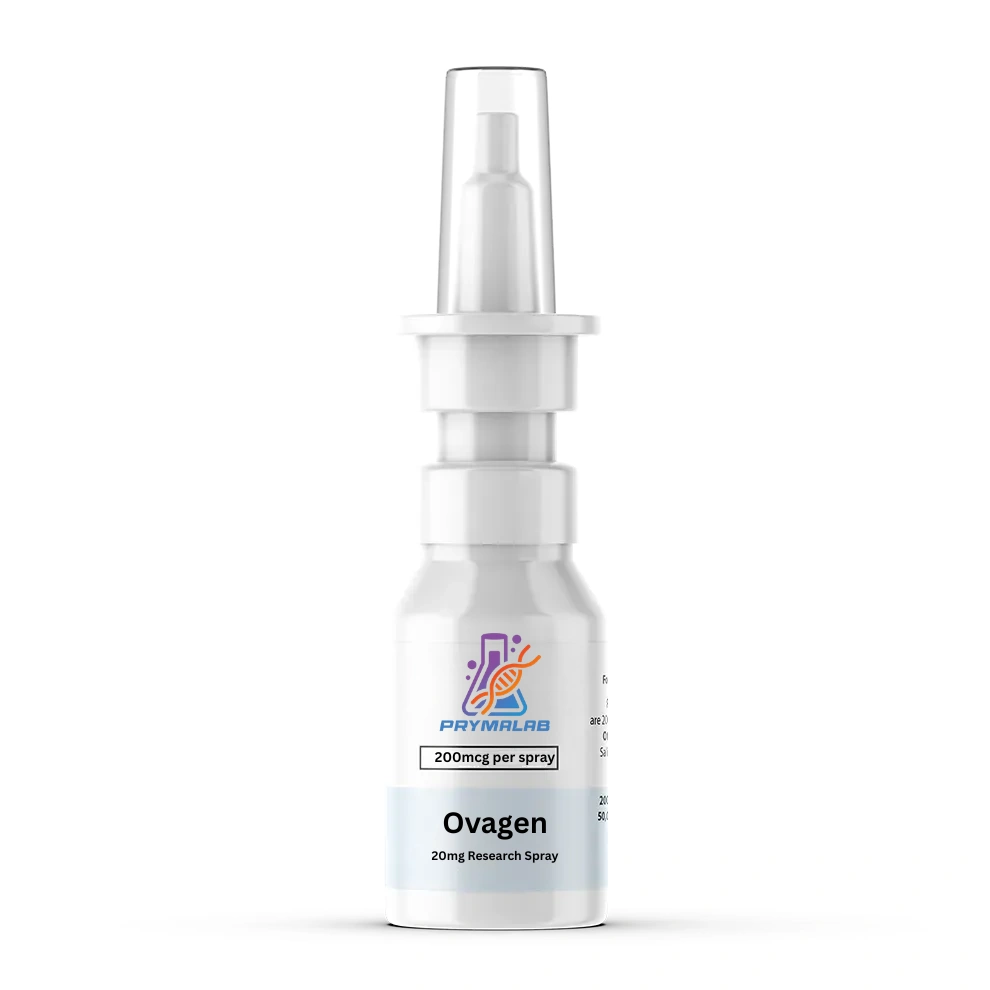
This ovagen nasal spray supplies the Ovagen peptide, a synthetic tripeptide with the sequence Glu-Asp-Leu, written Glu–Asp–Leu or abbreviated EDL in the literature. Its three residues are glutamic acid, aspartic acid and leucine, two acidic side chains and one hydrophobic, with no alanine or basic residue to balance the charge. It belongs to the short peptide bioregulators developed at the St Petersburg Institute of Bioregulation and Gerontology under Vladimir Khavinson, and it is studied mainly in hepatic and gastrointestinal cell models. Three amino acids is an unusually small molecule to attribute tissue-specific activity to, and that is the claim worth examining first. Supplied for laboratory research use only.
What this is not: the pharmacy aisle
Searching for anything in a spray bottle returns the pharmacy shelf first, so the separation is worth making early.
That shelf holds several distinct categories. A saline nasal spray, sold under names like Simply Saline or Xlear and in baby nasal mist form, is sodium chloride in purified water, sometimes buffered with baking soda, supplied as an isotonic or hypertonic solution to moisten the mucous membrane and rinse the nasal passages. A nasal decongestant constricts blood vessels to shrink swollen tissue. An antihistamine addresses nasal allergy symptoms. Nasal steroid sprays such as Nasacort, which delivers triamcinolone, and older combination products like Dristan act on inflammation over repeated use. The complaints they target are nasal congestion, a runny nose, sneezing, sinus pressure, nasal dryness and sometimes nosebleeds, and several of them advertise a non-drowsy formulation. Entirely separately, fasedienol is an investigational nasal spray studied for social anxiety disorder, which shares nothing with any of the above beyond the bottle.
Ovagen is none of these. It is a synthetic tripeptide sold as a research peptide for in-vitro work, usually described as a liver bioregulator within its own framework, and it treats no nasal or respiratory complaint. No such claim is made anywhere on this page. Claims that a spray format improves bioavailability are generic to the packaging rather than established for this compound, and bioavailability is in any case an organism-level measurement that does not apply to cell culture.
Where Ovagen sits in the Khavinson series
Ovagen belongs to the second-generation compounds that Professor Vladimir Khavinson’s group calls cytogens: defined synthetic short sequences, as distinct from the earlier organ-extract preparations. Its siblings in that series include Livagen, also hepatic-associated, along with Chonluten, Cartalax and Vesugen, each tied to a different tissue within the same framework. Any Khavinson peptide in this group shares the same proposed mechanism and the same evidence limitations, so a claim about one should not be read as support for another.
Two naming points that cause confusion when ordering. Ovagen lingual is a sublingual presentation of the same sequence rather than a different compound. And multi-component preparations sold under labels such as peptide complex AC-3, sometimes written AC-3 peptide complex, contain several peptides at once, so a result obtained with a complex cannot be attributed to any single component. Online tools marketed as a peptide calculator handle reconstitution arithmetic and say nothing about whether a compound works.
What a “bioregulator” is actually proposed to do
The Khavinson programme began with organ extracts, fractions purified from animal tissue, and moved to defined synthetic short peptides once the active sequences were isolated. Ovagen belongs to that second generation: a specified tripeptide with a reproducible synthesis rather than a tissue preparation.
The mechanistic proposal is specific and unusual. These peptides are hypothesized to enter cells, reach the nucleus, and interact with DNA at promoter regions or with chromatin-associated histones, altering how accessible particular genes are to transcription factors. Each short sequence is proposed to be complementary to particular DNA regions, which is where the claim of tissue specificity comes from. Supporting work includes electrophoretic mobility shift assays showing peptide-DNA complex formation, histone binding assays, and molecular docking models built for a set of short peptides, alongside transcriptome changes after treatment. The general argument is set out in Short Peptides Regulate Gene Expression in the Bulletin of Experimental Biology and Medicine.
Here is the honest position on that. It is a research hypothesis with some supporting biochemical data, not an established mechanism. High-resolution structural confirmation of a specific peptide-DNA complex remains unpublished, and the evidence sits overwhelmingly within one research lineage with limited independent replication outside it. A tripeptide selecting a genomic address is a strong claim, and strong claims need independent structural work before they are settled. I would rather say that plainly than repeat the mechanism as though it were textbook.
Testing tissue specificity rather than assuming it
The interesting thing about the specificity claim is that it is testable, and most intranasal ovagen research and cell work never tests it.
If EDL is genuinely selective for hepatic and gastrointestinal tissue, then a hepatocyte model should respond and an unrelated cell type should not. HepG2 or primary hepatocytes on one side, and a fibroblast or unrelated epithelial line on the other, treated identically, is the comparison that would demonstrate specificity. Running the peptide only in liver cells and observing a change tells you nothing about whether the effect is tissue-specific, because you never gave it a chance to fail.
Hepatic models bring their own standard measurements. ALT is the routine marker of hepatocyte injury and belongs in any liver culture experiment as a damage control rather than an efficacy readout. Detoxification capacity is measured through phase I and phase II enzyme activity rather than inferred, and where hormone handling is the question, estrogen metabolism is one of the better-characterised hepatic pathways to work in. The wider hepatic literature also takes in metabolic conditions such as diabetes, states of malnutrition, and what is loosely called metabolic balance. Those are organism-level contexts. A dish cannot report on any of them, and this material carries no claim about them.
For readouts, the sensible panel is transcript-level: qPCR or RNA-seq for genes relevant to hepatic function, since the proposed mechanism is transcriptional. Protein-level confirmation of any transcript hit belongs alongside it, because the two do not always move together. And because the proposed mechanism requires nuclear entry, cell permeability is itself worth establishing rather than assuming, since a charged tripeptide crossing a plasma membrane and then a nuclear envelope is not something to take for granted.
Ovagen nasal spray specifications
| Compound |
Ovagen, synthetic short peptide bioregulator |
| Sequence |
Glu-Asp-Leu (EDL) |
| Length |
Tripeptide (three residues) |
| Class |
Khavinson-class synthetic short peptide (second-generation, defined sequence) |
| Origin |
St Petersburg Institute of Bioregulation and Gerontology |
| Proposed mechanism |
Peptide-DNA or peptide-histone interaction altering gene accessibility (hypothesis) |
| Studied tissue focus |
Hepatic and gastrointestinal cell models |
| Evidence status |
Preclinical, concentrated in one research lineage, limited independent replication |
| Regulatory status |
No FDA or EMA approval |
| Format |
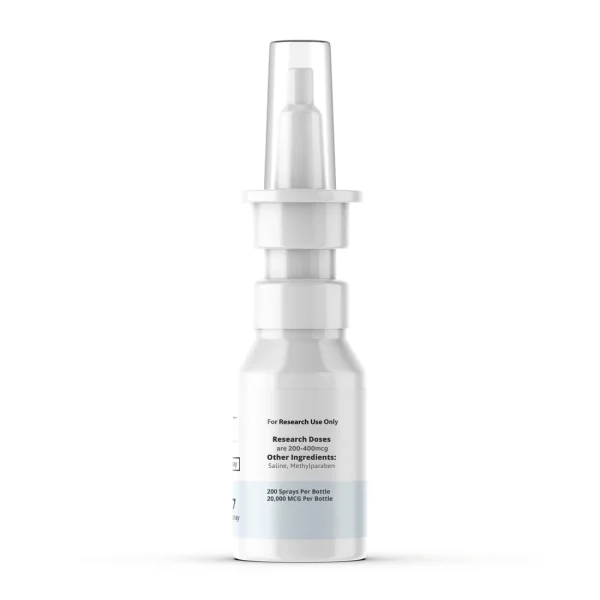
Metered spray bottle [CONFIRM: fill volume, mg per bottle, concentration] |
| Classification |
Research chemical. In-vitro laboratory use only. Not for human or veterinary use. |
Ovagen nasal spray storage and handling
Short peptides are chemically simpler than long ones, and EDL contains no cysteine, no methionine and no tryptophan, so the disulfide, oxidation and photodegradation problems that dominate handling elsewhere in this catalogue do not apply here.
Two things do. Two of the three residues are acidic, glutamate and aspartate, which makes the peptide’s charge state and solubility genuinely pH-dependent, so an assay buffer that drifts will change behaviour before anything biological does. And a tripeptide is a natural substrate for the peptidases present in serum, so in serum-containing medium over a long incubation you are working with a falling concentration rather than a fixed one. Where the design permits, shorter exposures or a serum-free window give a defensible exposure.
Otherwise sensible ovagen nasal spray storage is routine: cold, sealed, out of light, single-use aliquots rather than repeated freeze-thaw on one container, and low-binding plasticware at low working concentrations.
How research grade ovagen spray is characterized
A three-residue peptide is trivial to synthesize, which cuts both ways: it is cheap to make correctly and there is no excuse for poor documentation. The analytical wrinkle is that very short, polar peptides retain poorly on standard reversed-phase columns, so the chromatographic method matters more than the number it produces. A certificate reporting an appropriate method for a small acidic tripeptide is worth more than a bare purity percentage from an unstated one.
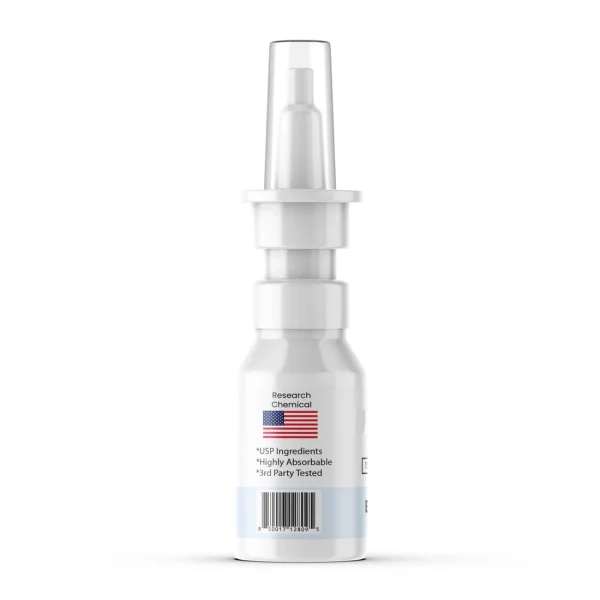
A research grade ovagen spray is characterized by reversed-phase HPLC for purity and mass spectrometry for identity. This material is supplied under the same verification PrymaLab applies across its research peptides, HPLC and MS confirmation plus independent third-party testing. No specific lot figures are asserted on this page; request the certificate of analysis for the lot you receive.
For related bioregulator research, see the PrymaLab Research Library.
Frequently asked questions
What is Ovagen?
Ovagen is a synthetic tripeptide, Glu-Asp-Leu (EDL), one of the Khavinson-class short peptide bioregulators developed at the St Petersburg Institute of Bioregulation and Gerontology. It is studied in hepatic and gastrointestinal cell models. Material supplied here is a research chemical for in-vitro laboratory use only.
How is Ovagen proposed to work?
The hypothesis is that the tripeptide enters cells, reaches the nucleus and interacts with DNA promoter regions or chromatin-associated histones, changing gene accessibility. Supporting data includes mobility shift and histone binding assays plus docking models. It remains a hypothesis rather than an established mechanism.
How strong is the evidence for Ovagen?
Preclinical and concentrated. The work sits overwhelmingly within one research lineage, independent replication outside it is limited, and high-resolution structural confirmation of peptide-DNA binding is unpublished. There are no human clinical trials and no FDA or EMA approval.
How would tissue specificity be tested in vitro?
By running a hepatic model and an unrelated cell type under identical conditions and comparing. Treating only liver cells and observing a change cannot demonstrate specificity, because the peptide was never given a chance to fail in a tissue it should not affect.
Is Ovagen nasal spray approved for human use?
No. This material is a research chemical for in-vitro laboratory use only, has no FDA or EMA approval, and is not intended for human or veterinary use. Nothing here is medical advice.
Ordering and compliance
Every PrymaLab research compound ships from the United States and is sold research-use-only. This ovagen nasal spray is supplied for in-vitro laboratory research, is not intended for human or veterinary use, is not a drug or supplement, and has not been evaluated by the FDA for the research-chemical context. Verify the legal status of any research compound in your jurisdiction before ordering. Certificates of analysis are available on request for the lot you receive.













Reviews
There are no reviews yet.