Description
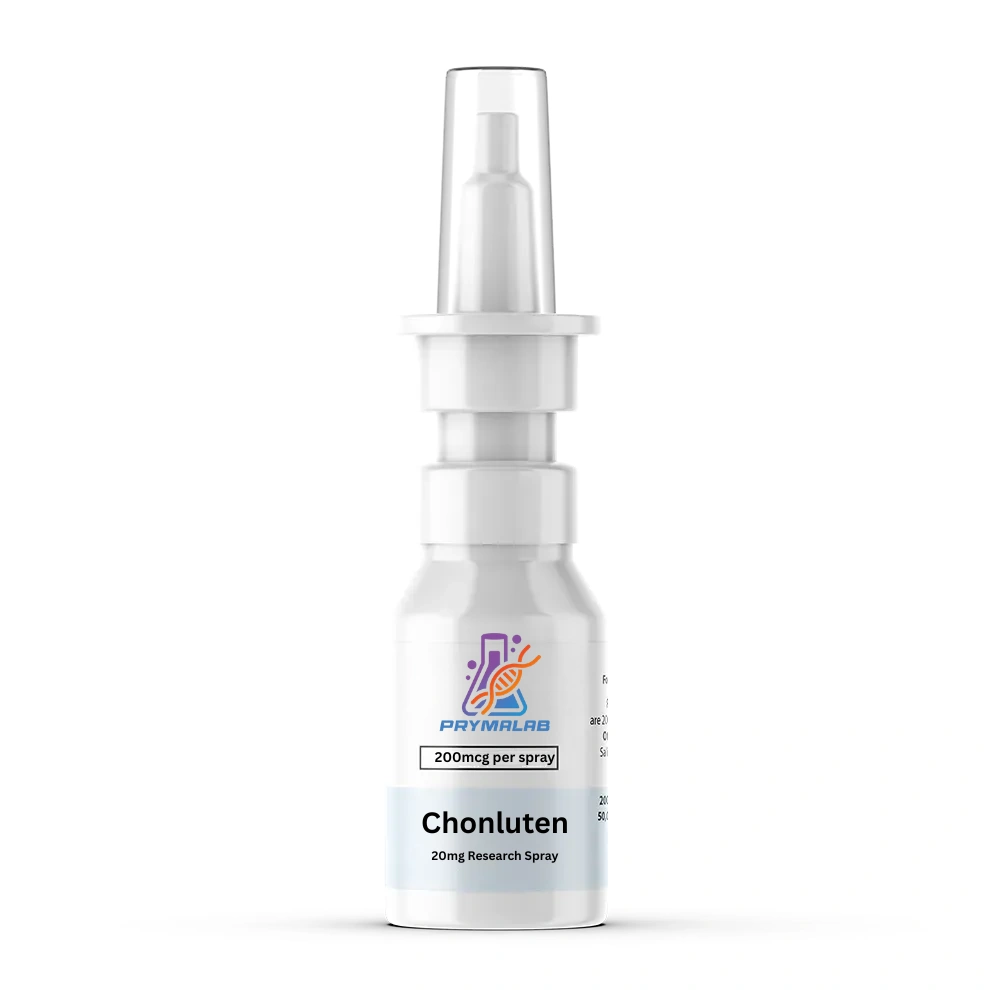
This chonluten nasal spray supplies Chonluten, a synthetic tripeptide with the sequence Glu-Asp-Gly, abbreviated EDG and sometimes labelled T-34. It comes from the short peptide bioregulator programme at the St Petersburg Institute of Bioregulation and Gerontology, and within that framework it is associated with bronchopulmonary tissue. If you are going to study a respiratory compound in cell culture, the model you choose will determine your result more than the compound will, so that is where this page starts. Supplied for laboratory research use only.
Submerged culture is the wrong model for airway epithelium
This is the most consequential decision in respiratory cell work and it is routinely got wrong.
Airway epithelium in the body sits with its apical surface exposed to air and its basal surface fed by tissue fluid. Grow the same cells submerged in medium in a plastic dish and they do not differentiate properly: you get a flat, undifferentiated monolayer without cilia, without goblet cells producing mucus, and without the barrier properties real airway epithelium has. Any compound tested in that system is being tested against a cell type that does not exist in a lung.
Air-liquid interface culture solves this. Cells are seeded on a permeable insert, medium is supplied only from the basal compartment, and the apical surface is exposed to air. Over roughly three to four weeks the culture differentiates into a pseudostratified epithelium with beating cilia, mucus-producing cells and tight junctions. Calu-3, primary human bronchial epithelial cells and BEAS-2B are the common starting materials, with primary cells differentiating best and Calu-3 forming the tightest barrier.
The time cost is real: an ALI experiment takes a month before treatment begins, which is why people reach for submerged culture instead. But for a compound proposed to act on respiratory epithelium specifically, testing it on undifferentiated cells answers a different question from the one you meant to ask. For intranasal chonluten research the same logic applies with more force, since nasal epithelium is the tissue in question and it too requires an air interface to differentiate.
What to measure, and what the evidence actually supports
In a differentiated ALI culture the readouts that mean something are barrier integrity by transepithelial electrical resistance, ciliary beat frequency by high-speed video microscopy, mucus production by mucin quantification or histology, and transcript changes by qPCR or RNA-seq given that the proposed mechanism is transcriptional.
On the evidence itself I would rather be straight with you than impressive. Secondary sources circulate specific lists of genes said to be regulated by this peptide. I have not been able to trace those lists to primary literature, so they are not stated as findings here. What is supportable is narrower: Chonluten is a defined synthetic tripeptide from a research programme that has studied it in bronchopulmonary contexts for over two decades, the evidence is preclinical and concentrated within one research lineage, and independent replication outside that lineage is limited.
The shared mechanistic proposal for this class is that short peptides enter cells, reach the nucleus and interact with DNA promoter regions or chromatin-associated histones to change gene accessibility, argued in Short Peptides Regulate Gene Expression in the Bulletin of Experimental Biology and Medicine. High-resolution structural confirmation of a specific peptide-DNA complex remains unpublished, and there are no human clinical trials or regulatory approvals for the synthetic peptides.
Chonluten nasal spray specifications
| Compound |
Chonluten, synthetic short peptide bioregulator |
| Sequence |
Glu-Asp-Gly (EDG) |
| Also labelled |
T-34 |
| Length |
Tripeptide (three residues) |
| Charge character |
Two acidic residues plus glycine; highly polar, no basic residue |
| Distinct from |
Bronchogen (AEDL, tetrapeptide), also respiratory-associated |
| Origin |
St Petersburg Institute of Bioregulation and Gerontology |
| Proposed mechanism |
Peptide-DNA or peptide-histone interaction altering gene accessibility (hypothesis) |
| Evidence status |
Preclinical, single research lineage, limited independent replication |
| Regulatory status |
No FDA or EMA approval |
| Format |
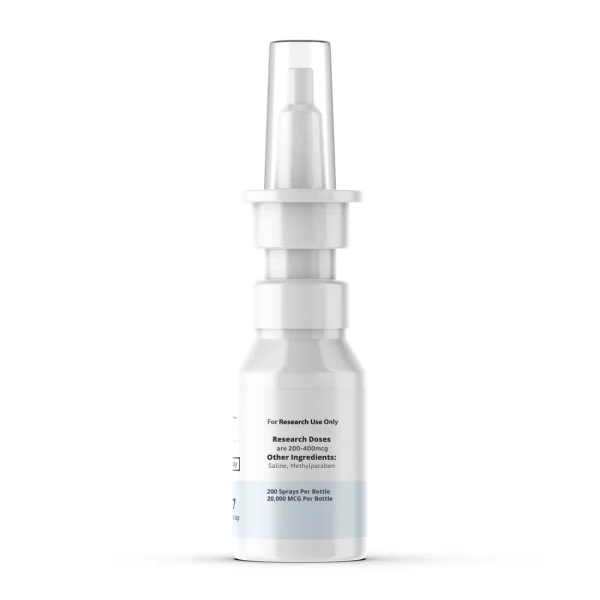
Metered spray bottle [CONFIRM: fill volume, mg per bottle, concentration] |
| Classification |
Research chemical. In-vitro laboratory use only. Not for human or veterinary use. |
Chonluten nasal spray storage and handling
EDG contains no cysteine, no methionine and no tryptophan, so oxidation, disulfide chemistry and light sensitivity are not the practical concerns here. Two other things are.
This is one of the most polar peptides in the catalogue: two acidic residues, a glycine, and no basic residue at all to balance the charge. That makes solubility and behaviour strongly pH-dependent, and it makes the molecule difficult to retain on standard chromatography, which matters for verification as much as for handling. And a tripeptide is a ready substrate for peptidases, so in serum-containing medium over a long incubation the concentration falls. In an ALI culture the apical surface is air rather than medium, which changes exposure conditions again and is worth thinking through when you decide how to apply the compound.
Sensible chonluten nasal spray storage is otherwise routine: cold, sealed, out of light, single-use aliquots rather than repeated freeze-thaw on one container, and low-binding plasticware at low working concentrations.
How research grade chonluten spray is characterized
A three-residue peptide carrying two acidic side chains and no basic residue is close to a worst case for standard reversed-phase chromatography, because there is very little hydrophobic character for a C18 column to retain. A purity number produced by an unsuitable reversed-phase method on this molecule may not reflect a real separation from salts and buffer components. Hydrophilic interaction chromatography, ion-pairing or ion exchange paired with mass spectrometry is what suits it.
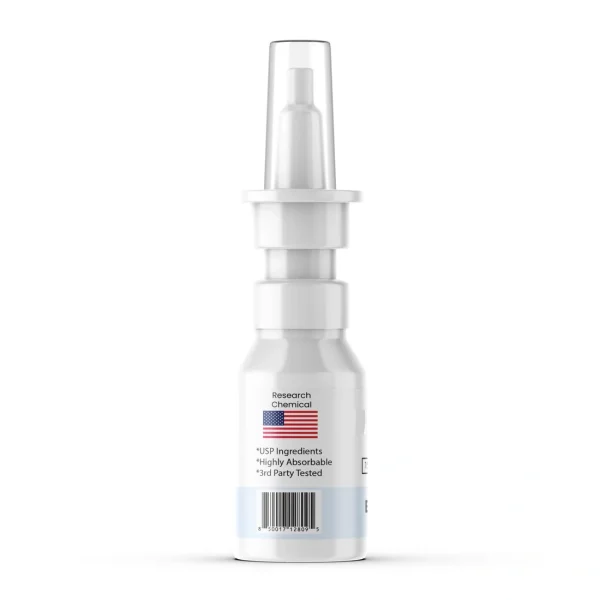
So for a research grade chonluten spray, the question worth asking is what method generated the figure, not what the figure is. This material is supplied under the same verification PrymaLab applies across its research peptides, HPLC and MS confirmation plus independent third-party testing. No specific lot figures are asserted here; request the certificate of analysis for the lot you receive and read the method line alongside the number.
For related bioregulator research, see the PrymaLab Research Library.
Frequently asked questions
What is Chonluten?
Chonluten is a synthetic tripeptide, Glu-Asp-Gly (EDG), also labelled T-34, one of the Khavinson-class short peptide bioregulators associated with bronchopulmonary tissue. Material supplied here is a research chemical for in-vitro laboratory use only.
Why does air-liquid interface culture matter for respiratory research?
Because airway epithelium only differentiates properly when its apical surface is exposed to air. Submerged culture produces a flat undifferentiated monolayer without cilia, mucus-producing cells or proper barrier function, so a compound tested there is being tested against a cell type that does not exist in a lung.
How does Chonluten differ from Bronchogen?
Chonluten is Glu-Asp-Gly, a tripeptide. Bronchogen is Ala-Glu-Asp-Leu, a tetrapeptide. Both are respiratory-associated within the same programme but they are different molecules, and a methods section should name the sequence rather than the trade name.
What readouts suit a differentiated airway culture?
Transepithelial electrical resistance for barrier integrity, ciliary beat frequency by high-speed video microscopy, mucin quantification or histology for mucus production, and qPCR or RNA-seq for transcript changes given the proposed transcriptional mechanism.
Is Chonluten nasal spray approved for human use?
No. This material is a research chemical for in-vitro laboratory use only, has no FDA or EMA approval, and is not intended for human or veterinary use. Nothing here is medical advice.
Ordering and compliance
Every PrymaLab research compound ships from the United States and is sold research-use-only. This chonluten nasal spray is supplied for in-vitro laboratory research, is not intended for human or veterinary use, is not a drug or supplement, and has not been evaluated by the FDA for the research-chemical context. Verify the legal status of any research compound in your jurisdiction before ordering. Certificates of analysis are available on request for the lot you receive. [CONFIRM: shipping timeframe and returns policy wording.]











Reviews
There are no reviews yet.