Glutathione by Route, Intravenous to Oral: A Fourteen-Minute Half-Life, the Skin-Lightening Trial Nobody Blinded, and the 2026 Endotoxin Recalls
Glutathione (GSH) is the tripeptide gamma-L-glutamyl-L-cysteinylglycine, 307.3 Da, CAS 70-18-8, present in every mammalian cell at 1 to 10 millimolar and in plasma at a few micromolar. It is a peptide with an asterisk: its first bond is a gamma-glutamyl amide that ordinary peptidases cannot cut, and it is built by two enzymes rather than a ribosome. A glutathione injection puts a large amount of it into a compartment where it does not last: after a high intravenous dose the plasma half-life was 14.1 minutes, most of the dose was oxidised or cleaved, cysteine rose and urinary excretion rose 300-fold. A single oral dose did not raise plasma levels at all; in a six-month trial, oral glutathione raised blood glutathione 30 to 35 percent. A single intranasal dose raised brain glutathione on spectroscopy for at least an hour, and the trial that followed found no advantage over placebo. No blinded trial of injected glutathione for skin lightening exists, and the one unblinded one was negative with adverse effects in every treated subject. In 2026 the FDA tied at least 30 endotoxin reactions to a single lot of supplement-grade powder used by compounders, and four Texas pharmacies recalled glutathione injection. PrymaLab supplies Glutathione 1500mg lyophilized vials and a Glutathione 250mg nasal spray for laboratory research use only.
- Structure: γ-L-glutamyl-L-cysteinyl-glycine, C10H17N3O6S, 307.32 g/mol (monoisotopic 307.084), CAS 70-18-8, PubChem CID 124886. Oxidised form GSSG: a disulfide-linked dimer, C20H32N6O12S2, 612.6 g/mol, a distinct substance with its own regulatory identifier.
- Class: Endogenous thiol tripeptide; the main non-protein antioxidant and conjugating agent in cells. Synthesised in the cytosol by glutamate-cysteine ligase (rate-limiting) and glutathione synthetase; degraded only extracellularly by γ-glutamyltransferase (GGT).
- Studied for: Parkinson's disease (intravenous and intranasal), platinum chemotherapy neuropathy, cystic fibrosis (inhaled), skin lightening (oral, lozenge, topical and one intravenous study), peripheral arterial disease, male infertility, fatty liver; precursor strategies (N-acetylcysteine, glycine plus NAC) in ageing.
- Routes studied in people: intravenous, intramuscular, oral, sublingual, intranasal, inhaled and topical; the table below gives the best measurement for each.
- Storage: Solid is stable airtight, dry and cool; aqueous solutions oxidise in air to GSSG, with only 65 to 80 percent remaining after seven days at room temperature in one dataset. Solutions are made fresh, protected from air and light, and not stored. Water solubility about 50 mg/mL.
- Forms and sizes at PrymaLab: Glutathione 1500mg lyophilized vial; Glutathione 250mg Nasal Spray. Related research compounds: NAD+ 500mg, NAD+ nasal spray and the mitochondrial peptide SS-31. Lab services: glutathione analysis, endotoxin (LAL) analysis, sterility testing.
- Regulatory: Not a component of any FDA-approved drug; no USP monograph; oral form sold as a dietary supplement. FDA's 2022 evaluation recommended against adding it to the 503A bulks list and specifically against injectable and inhaled forms; the advisory committee voted 8 to 5 the other way; no final rule as of October 2026. Not named on the WADA List, but infusions over 100 mL per 12 hours are prohibited for tested athletes.
| Route | Best human data | What it showed |
|---|---|---|
| Intravenous | Aebi 1991 (n=10); Hong 2005 (n=7); Hauser 2009 RCT (n=21) | Half-life 14.1 and about 10 min; plasma GSH 17.5 to 823 µM then gone; no significant UPDRS benefit in Parkinson's |
| Intramuscular / subcutaneous ("shots") | Lenzi 1993 (IM, n=20); Cascinu 1995 (IM) | Used in trials; no pharmacokinetic study for either route in humans |
| Oral | Witschi 1992 (single dose, n=7); Richie 2015 RCT (n=54, 6 months) | Single dose: no plasma rise; after 6 months: +30 to 35% in blood compartments, reversible on washout |
| Intranasal | Mischley 2016 (n=15, MRS); Mischley 2017 RCT (n=45) | Brain GSH up for at least 1 h; no advantage over placebo at 3 months |
| Inhaled (nebulised) | Griese 2013 RCT (n=153, 6 months) | No clinically relevant change in FEV1; bronchoconstriction in asthmatics (Marrades 1997) |
See the NAD+ routes comparison for the same exercise applied to the other "master molecule" of the IV-clinic menu, the peptide boundary guide for where a tripeptide with a gamma bond sits, the nasal spray reference for intranasal delivery generally, and the purity testing guide for how a thiol is verified.
Also known as: glutathione, L-glutathione reduced, GSH, gamma-glutamylcysteinylglycine, γ-Glu-Cys-Gly, "glutathione peptide", "glutathione shot", "glutathione IV", "glutathione drip", "master antioxidant"; oxidised form GSSG, glutathione disulfide. Not the same as N-acetylcysteine (NAC), a precursor, or GlyNAC, a precursor combination.
Glutathione is the most-injected molecule in American wellness clinics with the least reason to be injected. Its plasma half-life is fourteen minutes. The intracellular pool it is supposed to replenish sits five hundred to a thousand times higher than anything an infusion produces, behind membranes most cells cannot pass it through, and the one thing a large intravenous dose has been shown to do reliably is raise plasma cysteine for an hour and then leave in the urine. None of that stopped glutathione from becoming a $100-to-$400-per-session "detox" and "brightening" product, and none of it was what caused adverse reactions in thirty-odd people, some of them hospitalised, between July and October 2026. That was endotoxin, which the FDA traced to one lot of dietary-supplement-grade powder that compounding pharmacies had turned into 200 mg/mL injectable vials, and it was the second time in seven years the same thing had happened in the United States. This reference goes route by route, injection, intravenous, intranasal, inhaled, oral, sublingual and topical, and reports what each one has actually been shown to do in a measured human study, where the skin-lightening claim comes from and why no blinded trial supports it by injection, what the trials in Parkinson's and chemotherapy and cystic fibrosis found, and what the 2019 and 2026 recalls say about the difference between a supplement ingredient and an injectable one. It also answers the question that brings a third of readers here: yes, glutathione is a peptide, and the reason it behaves unlike other peptides is a single bond.
Research-use-only disclaimer: Glutathione supplied by PrymaLab, as a lyophilized vial or a nasal spray, is intended strictly for laboratory research use and is not intended for human or veterinary use. The clinical studies described below used pharmaceutical-grade or compounded product administered under medical supervision, or in the case of the recalls, product that should never have been administered at all; they do not describe or support any use of research-grade material. Trials are described by design and outcome. No dosing or administration guidance appears here. Nothing here is medical advice.

TL;DR
Glutathione is a 307 Da tripeptide whose first bond is a gamma-glutamyl amide, which is why only one enzyme, GGT, can break it down and why it is made by enzymes rather than ribosomes. Cells hold it at 1 to 10 mM; plasma holds 6 to 18 µM. A high intravenous dose pushed plasma to 823 µM and cleared with a half-life of 14.1 minutes; in a second study it cleared in about 10 minutes, mostly as GSSG. No human pharmacokinetic study exists for intramuscular or subcutaneous "shots." A single oral dose produced no plasma rise; six months of oral supplementation in a trial raised blood glutathione 30 to 35 percent, reversibly. A single intranasal dose raised brain glutathione on MRS for at least an hour, and the 45-person trial that followed found no advantage over placebo. The only controlled intravenous skin-lightening trial was unblinded and negative, with adverse effects in 100 percent of treated subjects; the Philippine FDA says no published trial supports injectable glutathione for lightening. FDA's 2022 review: IV glutathione "has resulted in hepatotoxicity and life-threatening anaphylaxis." In 2026, one supplement-grade lot was tied to at least 30 endotoxin reactions, and four Texas pharmacies recalled product. Not FDA-approved. Research use only.
Identity: γ-Glu-Cys-Gly, C10H17N3O6S, 307.32 g/mol, CAS 70-18-8. Gamma-glutamyl first bond; non-ribosomal; cleaved only by GGT. GSSG (612.6 Da) is the oxidised dimer and a separate substance.
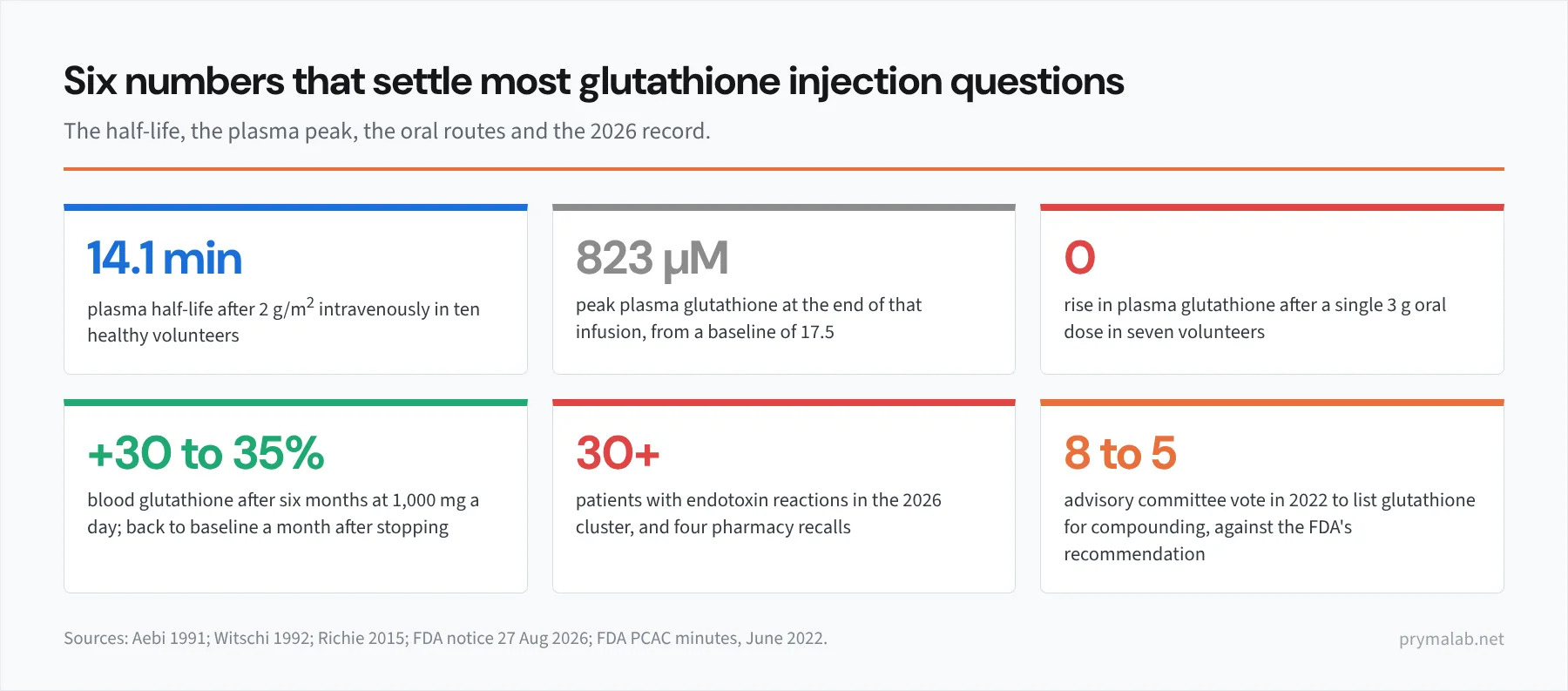
Intravenous: half-life 14.1 ± 9.2 min (n=10) and about 10 min (n=7). Plasma 17.5 to 823 µM at end of infusion; urinary GSH up 300-fold; cysteine up 13-fold. Distribution volume about 176 mL/kg, extracellular only.
Injection (IM/SC): used in 1990s trials; no human PK study for either route. FDA found none for inhaled or nasal routes either.
Oral: single dose, no plasma rise (n=7). After 6 months: +30 to 35% in erythrocytes, plasma and lymphocytes, +260% in buccal cells, back to baseline after one month off (n=54). Industry-funded; mechanism unresolved.
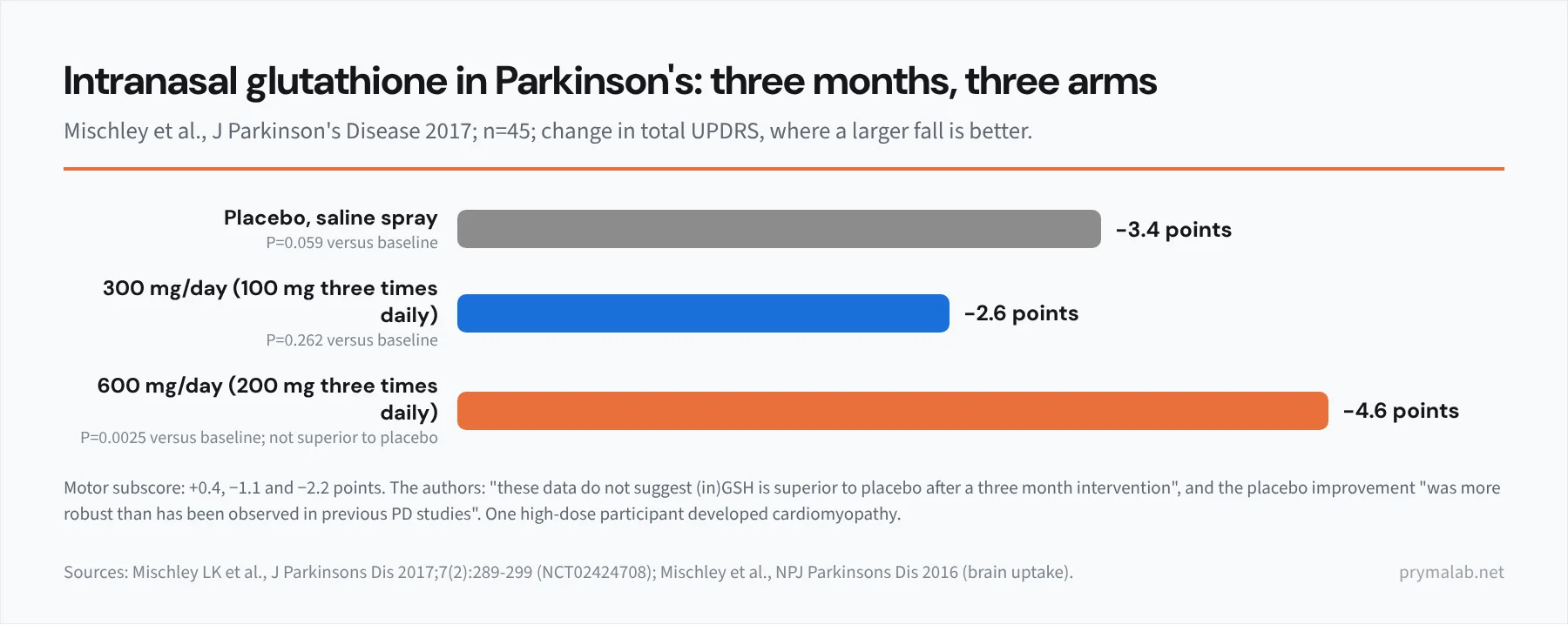
Intranasal: a single dose raised brain GSH on MRS for at least 1 h (n=15). Over 3 months: UPDRS −2.6 and −4.6 on the two active arms vs −3.4 on placebo; not superior (n=45).
Skin: oral, 4 weeks, n=60: melanin index lower at 2 of 6 sites. IV, 6 weeks, unblinded, n=32 completers: 37.5% vs 18.7%, p=0.054, adverse effects in all treated. No blinded IV trial exists.
Safety: FDA 2022: hepatotoxicity and life-threatening anaphylaxis with IV; Philippine FDA: SJS/TEN, thyroid and renal dysfunction, embolism, sepsis. Endotoxin clusters 2015 (Sydney, 7), 2019 (Letco, 7 plus 1), 2026 (Medisca lot 229536 tied to 30+; four Texas recalls).
Regulatory: not FDA-approved; supplement orally; 503A listing voted 8 to 5 against FDA's recommendation in June 2022, no final rule. WADA: not named; 100 mL per 12 h infusion limit applies.
Status: research use only.
What glutathione is: a tripeptide with a bond peptidases cannot cut
Glutathione is three amino acids long: glutamate, cysteine, glycine. Its molecular formula is C10H17N3O6S, its molecular weight 307.32 g/mol, its monoisotopic mass 307.084 Da, and its CAS number 70-18-8.[1] By the count-the-residues definition in the peptide boundary guide it is unambiguously a peptide, and the 590 people a month who ask Google "is glutathione a peptide" can have a one-word answer. The reason the question gets asked at all is that glutathione does not behave like the other peptides on a research shelf, and the reason for that is the first bond.
In an ordinary peptide the amino acids are joined through the alpha-carboxyl group of each residue. In glutathione the glutamate is joined to the cysteine through its gamma-carboxyl, the one on the side chain. Shelly Lu's 2013 review in Biochimica et Biophysica Acta puts the consequence in one sentence: "The only enzyme that can hydrolyze this unusual bond is γ-glutamyltranspeptidase (GGT), which is only present on the external surfaces of certain cell types. As a consequence, GSH is resistant to intracellular degradation and is only metabolized extracellularly by cells that express GGT."[2] The gamma bond is what lets a cell keep millimolar concentrations of a small peptide without its own peptidases chewing it up, and it is also, as the next section shows, what makes an injected dose disappear so fast: the surfaces of the kidney, liver and vasculature are exactly where GGT lives.
The second oddity is how it is made. Glutathione is not translated. Two cytosolic enzymes build it in two ATP-dependent steps: glutamate-cysteine ligase, the rate-limiting step, joins glutamate and cysteine, and glutathione synthetase adds the glycine.[2] Cysteine availability sets the pace, which is why every serious attempt to raise cellular glutathione in a trial has gone through cysteine rather than through glutathione itself; that is the precursors section further down. So the full answer to "is glutathione a peptide" is: yes, a tripeptide, but a non-ribosomal one with a gamma-glutamyl linkage, and both of those facts matter more than the label.
Reduced and oxidised, inside and outside
The thiol on the cysteine is the business end. Reduced glutathione (GSH) donates it; the product of two oxidised molecules joined by a disulfide bridge is glutathione disulfide (GSSG), a 612.6 Da dimer that the FDA's own review is careful to describe as "not the same substance as glutathione."[3] Inside a healthy cell more than 98 percent of the pool is reduced, GSSG is recycled back to GSH by glutathione reductase at the cost of NADPH, and the pool is large: "present in all mammalian tissues at 1-10 mM concentrations," highest in the liver, 80 to 85 percent of it in the cytosol and 10 to 15 percent in mitochondria.[2] Outside the cell the picture inverts. Measured human plasma totals run around 17.5 micromolar, of which the reduced fraction is about 7 micromolar in one study and 6 micromolar in another.[4][5] That is a gradient of five hundred to a thousandfold between where glutathione works and where an infusion puts it, and neurons sit at the extreme end: their intracellular concentration is "250- to 500-fold higher than in the CSF."[6] Keep those two numbers, 1 to 10 mM inside and 6 to 18 µM in plasma, in view for everything that follows.
The fourteen-minute half-life: what happens after an intravenous infusion
There are two human pharmacokinetic studies of intravenous glutathione worth the name, and they agree. In 1991 Aebi, Assereto and Lauterburg in Bern infused a high dose of glutathione into ten healthy volunteers.[4] Plasma total glutathione went from 17.5 ± 13.4 to 823 ± 326 micromolar at the end of the infusion. The distribution volume was 176 ± 107 mL/kg, which is the size of the extracellular space and tells you the dose did not go into cells. The elimination rate constant was 0.063 per minute, "corresponding to a half-life of 14.1 +/- 9.2 min." Plasma cysteine rose from 8.9 to 114 micromolar while total cyst(e)ine fell, "suggesting an increased uptake of cysteine from plasma into cells," and in the 90 minutes after the infusion urinary glutathione excretion rose roughly 300-fold.[4] Their conclusion was not that the glutathione had been delivered anywhere but that "the intracellular availability of cysteine increase markedly following parenteral glutathione." The infusion of the finished tripeptide functioned, in other words, as an expensive and very short-lived cysteine supplement.
Fourteen years later a Korean group gave a ten-minute intravenous infusion to seven young men and sampled for four hours.[7] Their abstract: "most of the GSH was oxidized to GSSG and disappeared immediately from circulation with a half-life of about 10 min." Glutamate and cysteine peaked at ten minutes, cystine at thirty. They then did the arithmetic that every IV clinic should have on the wall. Their model showed that holding plasma glutathione at a hypothetical 1 mM would take a continuous infusion of hundreds of grams an hour in an adult. "Because GSH has a very short half-life (of 10 min)," they wrote, "it is difficult to maintain it at a therapeutic concentration."[7] The FDA's 2022 evaluation, summarising this and older work, cites an apparent plasma half-life as short as 1.6 minutes from one review and describes systemic exposure from injectables as "associated with rapid metabolism."[3]
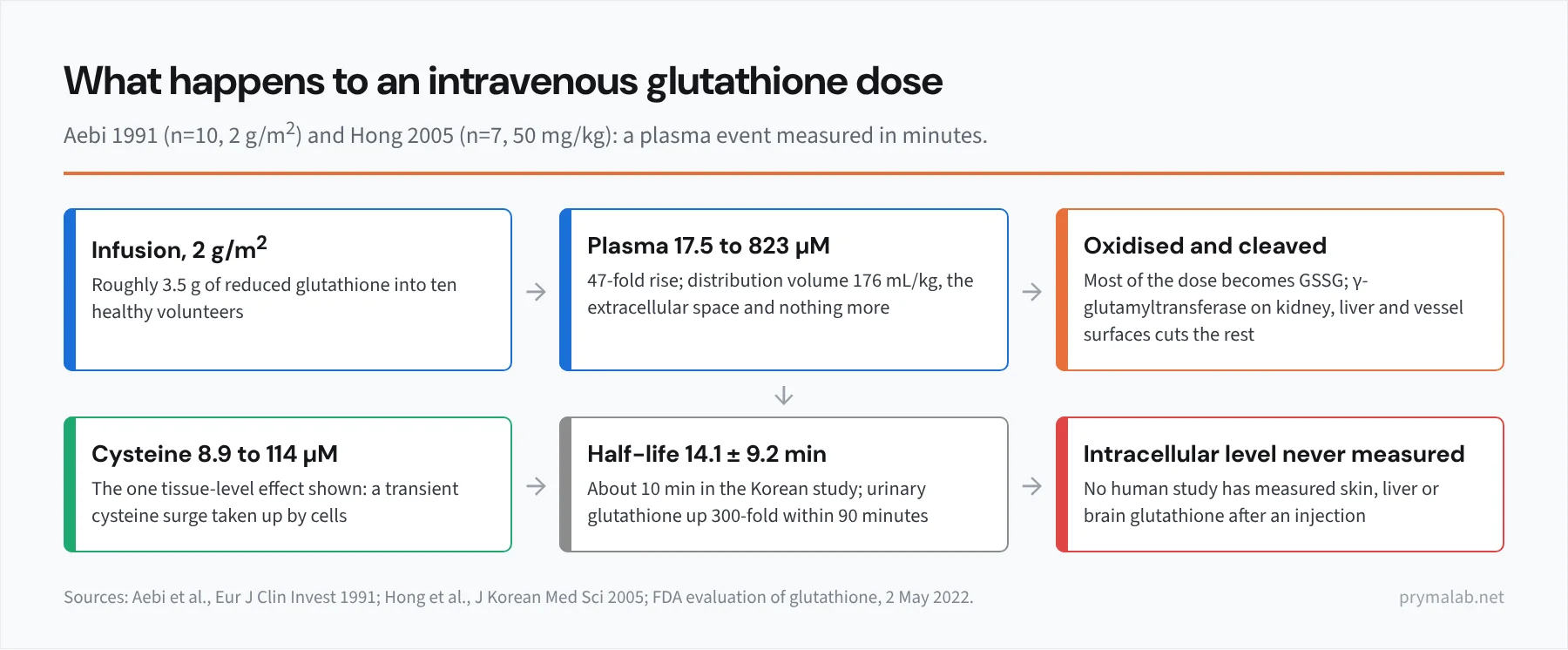
What this adds up to mechanistically: an intravenous dose distributes into plasma and interstitial fluid, is oxidised and cut by GGT at cell surfaces, briefly floods the plasma with cysteine, and leaves through the kidney. Epithelial cells of the gut, lung, kidney tubule and retina can take up intact glutathione; the FDA notes that other cell types "synthesize glutathione either by transporting the three amino acids... or by transpeptidase activity at the cell surface."[3] No human study has measured intracellular glutathione in skin, liver or brain after an intravenous dose. The whole premise of a glutathione drip, that the infused molecule ends up inside the cells that need it, is an inference from the fact that it went into a vein.
Routes compared: injection, IV, nasal, inhaled, oral, sublingual, topical
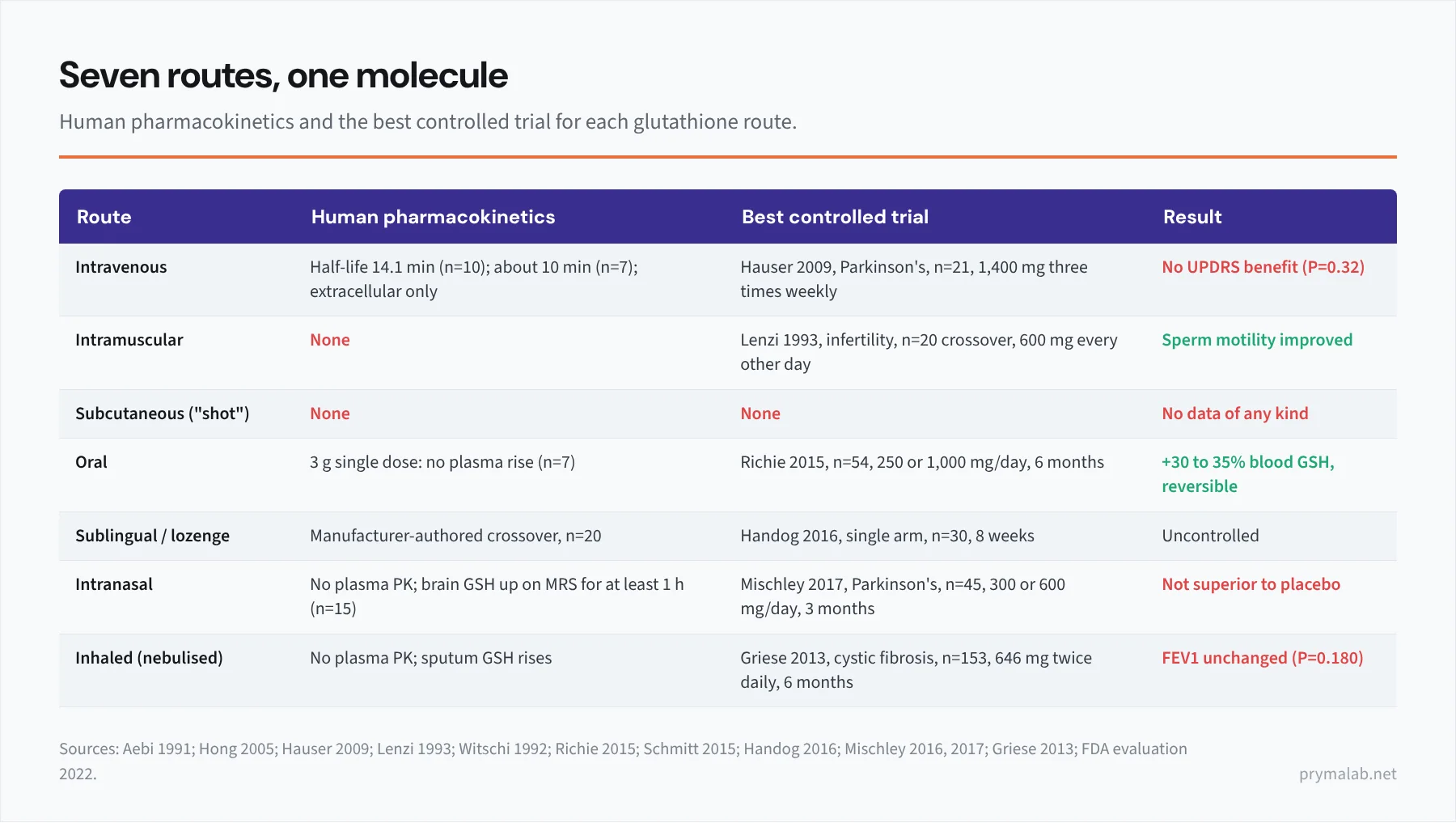
The useful way to read the glutathione literature is by route, because the molecule's fate is set by where it enters and the claims attached to each route were made for different reasons. The table lists, for each route, the best human measurement that exists and what it found. The rows are not comparable to each other, and none of them is a protocol.
| Route | Pharmacokinetics in humans | Best controlled outcome study | Verdict of the data |
|---|---|---|---|
| Intravenous | Half-life 14.1 min (n=10); about 10 min (n=7); extracellular distribution; 300-fold urinary spill[4][7] | Hauser 2009, Parkinson's, n=21, 4 weeks: no significant UPDRS difference[8] | Transient plasma peak; cysteine delivery shown; tissue delivery not shown |
| Intramuscular | None | Lenzi 1993, infertility, n=20 crossover, 2 months: sperm motility improved[9] | Used in trials, never characterised |
| Subcutaneous | None | None | Marketed as "shots"; no data of any kind |
| Oral | Single dose: no plasma rise (n=7)[5]; protein-bound plasma fraction rose at 60 to 120 min after a single dose[10] | Richie 2015, n=54, 6 months: +30 to 35% blood GSH in the higher-dose arm[11]; Arjinpathana 2012, n=60, 4 weeks: melanin index down at 2 of 6 sites[12] | Negligible acutely; modest, reversible compartment rise with months of dosing |
| Sublingual / lozenge | Higher plasma GSH than oral in a 20-person crossover (manufacturer co-authored)[13] | Handog 2016, n=30, single arm, lozenge, 8 weeks: melanin index fell[14] | Uncontrolled or industry-authored |
| Intranasal | No plasma PK; brain GSH up on MRS after a single dose, persisting at least 1 h (n=15)[6] | Mischley 2017, Parkinson's, n=45, 3 months: not superior to placebo[15] | Reaches the brain; did not beat placebo |
| Inhaled (nebulised) | No plasma PK; sputum GSH rises[16] | Griese 2013, cystic fibrosis, n=153, 6 months: FEV1 not different (P=0.180)[16] | Negative; bronchoconstriction in asthma via sulfite[17] |
| Topical | Transdermal did not raise plasma GSH in 13 children[18] | Watanabe 2014, n=30, 2% GSSG lotion split-face for 10 weeks: melanin index lower (manufacturer authors)[19] | Oxidised form, local effect, industry study |
The glutathione shot: two routes with no pharmacokinetics
The product called a glutathione shot is an intramuscular or subcutaneous injection, typically from a 200 mg/mL multi-dose vial, and it is the route with the least evidence of any in this article. I searched for a human pharmacokinetic study of intramuscular or subcutaneous glutathione and found none. The FDA's 2022 evaluation presents intravenous and oral pharmacokinetics only, states that "no PK studies associated with oral inhalation or nasal inhalation were found," and lists nothing for the intramuscular or subcutaneous routes.[3] The only animal distribution datum the agency cites is from 1951: mice given labelled glutathione subcutaneously showed the label in liver and spleen at 45 minutes.[3]
That is not to say intramuscular glutathione has never been used in a trial. Lenzi's 1993 double-blind crossover in twenty men with varicocele or genital-tract inflammation gave intramuscular glutathione for two months and reported improved sperm motility and morphology, and Cascinu's 1995 cisplatin trial added intramuscular glutathione after each chemotherapy cycle.[9][20] Those are efficacy studies that chose a route; neither measured what the route delivered. Given the intravenous data, the reasonable expectation is a slower, lower plasma peak that is still cleared in minutes once it arrives, but that is an expectation, not a measurement. The one hard datum about subcutaneous glutathione in 2026 is a recall notice: the fourth Texas pharmacy to pull product in October, Greenwich Rx, had labelled its 200 mg/mL vials for subcutaneous use, and two patients needed emergency care after the product was given intravenously instead.[21]
Oral glutathione: negligible in a day, 30 percent in six months
The oral story has two halves that are usually quoted against each other, and both are true. The first half is acute. In 1992 Witschi, Reddy, Stofer and Lauterburg, the same Bern group as the intravenous study, gave seven volunteers a single oral dose and sampled plasma for four and a half hours. Glutathione, cysteine and glutamate did not rise. Their conclusion, which is the most quoted sentence in the field: "the systemic availability of glutathione is negligible in man," and that a single oral dose cannot raise circulating glutathione "to a clinically beneficial extent."[5] They attributed this to hydrolysis by intestinal and hepatic gamma-glutamyltransferase, the same enzyme that cleans up the intravenous dose. A 2014 Japanese study refined the picture: after a single oral dose, free glutathione in deproteinised plasma did not change, but the protein-bound fraction rose significantly between 60 and 120 minutes, which suggests some intact molecule or its disulfide reaches the blood and attaches to proteins.[10] Rats are different, and the species gap is a trap: in rats, oral glutathione roughly doubles plasma levels, "mostly from absorption of intact GSH," which is why animal data on this question do not transfer.[22]
The second half is chronic. Allen and Bradley's 2011 randomised trial gave oral glutathione for four weeks to 40 volunteers and found "no significant changes... in biomarkers of oxidative stress, including glutathione status."[23] Then came the trial that supplement marketing is built on. Richie and colleagues at Penn State randomised 54 non-smokers to a lower or higher amount of oral glutathione or placebo for six months, followed by a one-month washout.[11] "At 6 months, mean GSH levels increased 30-35 % in erythrocytes, plasma and lymphocytes and 260 % in buccal cells in the high-dose group (P < 0.05)." The low dose produced a 17 percent rise in blood and 29 percent in erythrocytes. The GSSG-to-GSH ratio fell, natural-killer cytotoxicity more than doubled at three months, and the levels "returned to baseline after a 1-month washout period." The trial used the manufacturer's branded product and the manufacturer announced the result, no serious adverse events occurred, and the authors themselves noted that the extent to which direct absorption rather than precursor supply explains the result "is not known."[3][11] A 2018 open pilot of liposomal glutathione in twelve people reported comparable rises within two weeks, with no difference between the two amounts tested, and was funded by that product's maker.[24]
So: a single oral dose does nothing measurable to free plasma glutathione; months of oral supplementation raise several blood compartments by about a third, reversibly, in industry-linked trials, by a mechanism that may be the amino acids rather than the tripeptide. The FDA's summary is blunter: "The bioavailability of oral dosage forms is minimal."[3]
Intranasal: the only route shown to reach the brain, and the trial it then lost
The intranasal literature belongs almost entirely to Laurie Mischley and colleagues at Bastyr and the University of Washington, and it is the best-designed sequence of studies on any glutathione route, which makes its ending instructive. It began with a 2013 survey of practitioners prescribing intranasal glutathione, mostly for chemical sensitivity, sinus complaints and Parkinson's disease, which opened with the observation that it was "being prescribed as an intranasal spray, although no literature exists to support this mode of administration."[25] A 2015 randomised Phase I/IIa study in 30 people with Parkinson's compared saline with two intranasal glutathione arms for three months and found no difference in adverse events; all groups met the tolerability criteria.[26]
The 2016 study is the one that matters for the route. Fifteen people with mid-stage Parkinson's received a single intranasal dose inside the scanner while brain glutathione was tracked by magnetic resonance spectroscopy for about an hour. "Overall, (in)GSH increased brain GSH relative to baseline (P<0.001)," with no change at eight minutes but a significant rise at every later time point, and the authors' claim is precise: "This study is the first to demonstrate that intranasal administration of GSH elevates brain GSH levels. This increase persists at least 1 h."[6] No plasma pharmacokinetics were done, so how it got there is unknown, but it is the only human measurement in the whole glutathione literature of the molecule arriving in a target tissue after dosing, and it is a real result. The nasal spray reference covers the general case of what intranasal delivery can and cannot do for small peptides.
Then came the efficacy trial. In 2017 the group published a 45-person, double-blind, placebo-controlled Phase IIb study of two intranasal glutathione arms against placebo for three months, with a one-month washout.[15] Total UPDRS improved by 3.4 points on placebo, 2.6 on the lower dose and 4.6 on the higher; the motor subscore moved +0.4, −1.1 and −2.2. The authors' conclusion: "these data do not suggest (in)GSH is superior to placebo after a three month intervention," noting that "the improvement in the placebo arm was more robust than has been observed in previous PD studies." One participant in the high-dose arm developed cardiomyopathy around week five. The route that demonstrably reached the brain did not demonstrably help the brain, at least in this disease, at this dose, over this period. The 250mg nasal spray PrymaLab stocks is a research format of the same molecule; the human data above are what exist for the route, and none of it was generated with research-grade material.
Skin lightening: the evidence sorted by route
Skin lightening is the use that drives the injection market, and it has a plausible mechanism. Glutathione inhibits tyrosinase, the copper enzyme that starts melanin synthesis, and shifts production from the dark eumelanin toward the lighter pheomelanin; Villarama and Maibach set out four proposed mechanisms in 2005, including a fourth, modulation of melanocytotoxic agents, that is rarely quoted.[27] The same mechanism carries a warning that reviewers have made and clinics have not: a switch from brown to red melanin "may increase the risk of sun-induced skin cancers in previously protected individuals."[3]
The evidence for the effect is real and small, and it is oral and topical. Arjinpathana and Asawanonda's 2012 trial randomised 60 Thai medical students to oral glutathione or placebo for four weeks; melanin index was significantly lower on glutathione at two of six measured sites, the right side of the face and the left forearm.[12] Their conclusion: "Oral glutathione administration results in a lightening of skin color in a small number of subjects. However, long-term safety has not been established." The trial was run, the FDA notes, because Thai authorities had banned intravenous glutathione for whitening "for fear of severe adverse reactions, including anaphylaxis."[3] A 2017 trial from the same Bangkok group comparing reduced or oxidised glutathione with placebo for twelve weeks found the melanin index "tended to be lower" without reaching significance against placebo, and recorded two cases of reversible transaminase elevation.[28] Handog's 2016 single-arm study of a glutathione lozenge in 30 Filipino women reported a falling melanin index from week two, a result the FDA describes as "inconsistent with PK data that show that absorption of orally administered glutathione is minimal," requiring confirmation.[14][3] Watanabe's split-face trial of a 2 percent oxidised glutathione lotion in 30 women showed a lower melanin index at ten weeks, with authors from the manufacturer.[19]
The intravenous trial nobody blinded
Now the injected route. Every review I have read on this question, from Sonthalia's 2016 paper in the Indian Journal of Dermatology, Venereology and Leprology onward, says a version of the same thing: "Although the use of intravenous glutathione injections is popular, there is no evidence to prove its efficacy."[29] The 2019 systematic review by Dilokthornsakul found four studies, three randomised and one single-arm, all oral or topical, none intravenous, and concluded that "current evidence of the skin whitening effect of glutathione is still inconclusive."[30] Juhasz and Levin in 2018: "It is not suggested to use intravenous glutathione for skin lightening due to the increased risk of adverse events."[31] The Philippine FDA, in the country where the practice is most widespread, states on its current advisory page that injectable glutathione is approved there only as an adjunct to cisplatin chemotherapy and that "there are no published clinical trials that have evaluated the use of injectable glutathione for skin lightening."[32]
There is, strictly, one controlled study, and it is worth describing because it is what the "clinically proven" claims rest on when they rest on anything. Zubair, Hafeez and Mujtaba, in the Journal of the Pakistan Association of Dermatologists in 2016, enrolled 50 women and gave 25 of them intravenous glutathione with vitamin C for six weeks against 25 on placebo, assessing skin tone on sun-protected sites with a colour card.[33] The study was open-label. Nine of the 25 treated women dropped out, eight for deranged liver enzymes and one for anaphylaxis. Among the 32 completers, 6 of 16 on glutathione and 3 of 16 on placebo were judged lighter, 37.5 against 18.7 percent, p = 0.054, and at six months "only one patient maintained this improvement." The authors record that "adverse effects were noted in all subjects," listing warmth, abdominal cramps, a sensation of "heart sinking," diarrhoea, dizziness, vomiting and one anaphylactic shock, and conclude that "glutathione is not very effective for skin tone lightening" and that "the side effects of the treatment are common."[33][3] Sonthalia's 2018 follow-up review summarises the field as "limited to a single study with a dubious study design."[34] So the honest sentence is not "no trial exists." It is: the only controlled trial of injected glutathione for skin lightening was unblinded, negative, and reported adverse effects in every treated participant.
The trial record by indication
Away from cosmetics, glutathione has a genuine clinical trial history going back thirty years, and it is more negative than the wellness copy suggests. The table collects the controlled studies with retrievable numbers.
| Indication | Study | Route and duration | Result |
|---|---|---|---|
| Parkinson's disease | Hauser 2009, double-blind RCT, n=21[8] | IV, 4 weeks | No significant UPDRS difference (P=0.32); "possibility of a mild symptomatic effect" to be tested in a larger study, which was never run |
| Parkinson's disease | Mischley 2017, double-blind RCT, n=45[15] | Intranasal, 3 months | Not superior to placebo |
| Cisplatin neuropathy | Cascinu 1995, double-blind RCT, n=50[20] | IV before cisplatin, plus IM | Neuropathy at 15 weeks in 4 of 24 vs 16 of 18 (P=.0001) |
| Oxaliplatin neuropathy | Cascinu 2002, double-blind RCT, n=52[35] | IV before oxaliplatin | Grade 2 to 4 neuropathy after 8 cycles in 2 vs 11 (P=.003) |
| Cisplatin, ovarian cancer | Smyth 1997, double-blind RCT, n=151[36] | IV glutathione with cisplatin | 58% vs 39% completed six cycles (P=0.04); quality of life and neurotoxicity better |
| Paclitaxel/carboplatin neuropathy | Leal 2014, phase 3 double-blind RCT, n=185[37] | IV before each cycle | Negative: no benefit on neuropathy scales; time to grade 2 neuropathy favoured placebo (P=.039) |
| Platinum neuropathy, pooled | Cochrane 2014, 7 glutathione trials, n=387[38] | Various | RR 0.29 for grade 2 or worse neurotoxicity, but "data are insufficient to conclude" that any agent prevents platinum neurotoxicity on objective measures |
| Cystic fibrosis | Griese 2013, double-blind RCT, n=153[16] | Nebulised, 6 months | FEV1 not different; "did not demonstrate clinically relevant improvements in lung function" |
| Peripheral arterial disease | Arosio 2002, double-blind RCT, n=40[39] | IV, 5 days | Pain-free walking distance 196 vs 143 m (P<.04) |
| Male infertility | Lenzi 1993, double-blind crossover, n=20[9] | IM, 2 months | Sperm motility and morphology improved |
| Fatty liver | Honda 2017, open-label single arm, n=34[40] | Oral, 4 months | ALT and triglycerides fell; uncontrolled; "large-scale clinical trials are needed" |
Three patterns in that table. The positive results cluster in the 1990s and early 2000s, in small trials with subjective or composite endpoints, and the one modern, adequately powered phase 3 trial, 185 patients on paclitaxel and carboplatin, was negative with a nominal signal in the wrong direction.[37] The Parkinson's story ran twice, intravenous and intranasal, and both randomised trials came back null; Sechi's 1996 open-label report of a 42 percent fall in disability after a month of treatment is the source of the enthusiasm, and the blinded trial that followed did not confirm it.[41][8] And the largest trial of any route, 153 people with cystic fibrosis inhaling glutathione for half a year, found sputum glutathione went up and lung function did not.[16] Getting the molecule to a tissue, in the one case where that was documented, was not the same as helping the tissue.
Precursors: what actually raised cellular glutathione in a trial
If the goal is more glutathione inside cells, the trials that achieved it did not use glutathione. They used its rate-limiting ingredients. Rajagopal Sekhar's group at Baylor showed in 2011 that elderly people had red-cell glutathione of 1.12 mmol/L against 2.08 in the young, that the deficit tracked lower cysteine and glycine, and that two weeks of oral cysteine and glycine raised elderly red-cell glutathione by 94.6 percent and fractional synthesis by 78.8 percent.[42] The combination became GlyNAC, glycine plus N-acetylcysteine. An open-label 2021 pilot in eight adults aged 71 to 80, given glycine and N-acetylcysteine for 24 weeks, corrected red-cell glutathione deficiency, oxidative stress and mitochondrial dysfunction, with the benefits declining after twelve weeks off.[43] The 2023 randomised trial in 24 older adults against an isonitrogenous alanine placebo for 16 weeks reported that GlyNAC "and not placebo" corrected glutathione deficiency, oxidative stress, mitochondrial dysfunction, inflammation and insulin resistance, and improved gait speed, strength and six-minute walk.[44] Twenty-four people is a pilot, but it is a blinded, placebo-controlled pilot with a mechanism that the biochemistry predicts, which is more than any glutathione infusion study can say. The FDA's 2022 review explicitly set precursors aside as outside its scope, so none of the regulatory caution below applies to them.[3] For the parallel case of NAD+, where the same precursor-versus-molecule question has the same answer, see the NAD+ routes comparison and the NAD+ reference.
The 2019 and 2026 endotoxin events
None of the adverse events above is what sent people to hospital this year. Endotoxin, the lipopolysaccharide shed by Gram-negative bacteria, causes fever, rigors, hypotension and shock when injected, and it is the reason "sterile" and "pyrogen-free" are separate specifications. Glutathione is made by yeast fermentation, purified and sold in bulk, mostly for dietary supplements, and a supplement ingredient does not have to meet an endotoxin limit because nobody is supposed to inject it.[3] Three times in eleven years, somebody did.
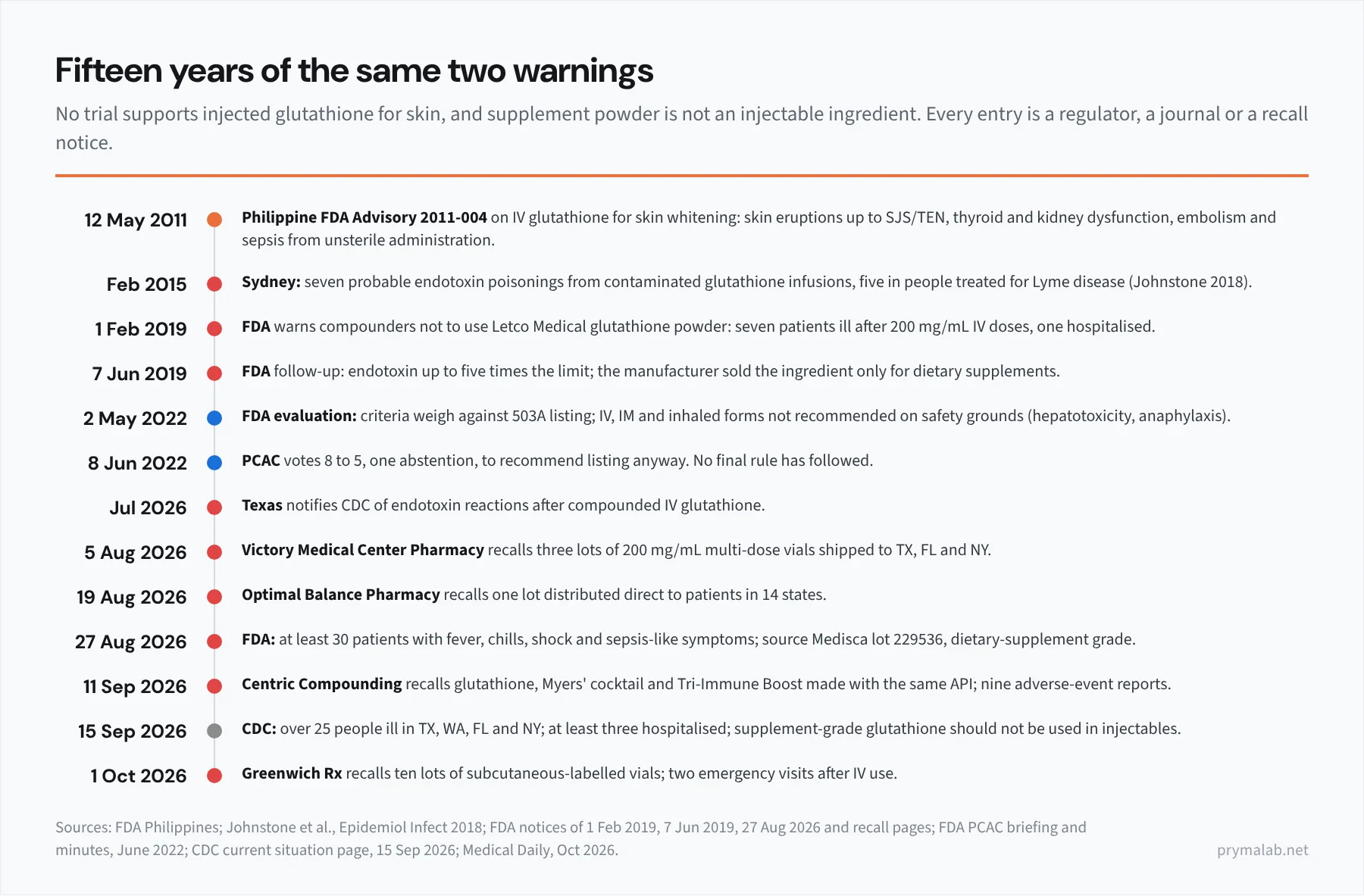
The first cluster was in Sydney in February 2015: seven cases of "probable endotoxin poisoning related to contaminated glutathione infusions," five of them in people being treated for Lyme disease, the index patient presenting with a fever of 39.5 °C and a blood pressure of 79/47 within fifteen minutes, traced to "contaminated glutathione powder."[45] The second was American. On 1 February 2019 the FDA warned compounders not to use L-glutathione powder distributed by Letco Medical after seven patients given 200 mg/mL intravenous glutathione developed symptoms "ranging from nausea and vomiting to difficulty breathing, which required one patient to be hospitalized."[46] Its June follow-up reported FDA testing had found "excessive bacterial endotoxin with some results as high as five times the appropriate limit," that the manufacturer "confirmed that its L-glutathione is only marketed in the U.S. for use in dietary supplements," and spelled out the principle: "Ingredients not intended for use in compounding sterile injectable drugs can be harmful when administered to patients because they may contain impurities and contaminants, including endotoxins."[47]
The third is current. In July 2026 the Texas Department of State Health Services notified CDC of a cluster of reactions after compounded intravenous glutathione. By the CDC's update of 15 September, more than 25 people in at least four states, Texas, Washington, Florida and New York, had become ill with fever and chills, body aches, headache, nausea, dizziness and low blood pressure, and at least three had been hospitalised.[48] The FDA's 27 August notice put the count at "at least 30 patients," with symptoms including "signs of shock and sepsis-like symptoms," and named the source: glutathione lot 229536 from Medisca Inc., "labeled as dietary supplement grade, which is not an appropriate ingredient to make injectable drugs."[49] The FDA notice said two Texas pharmacies had already recalled; by October there were four, each citing elevated endotoxin in the glutathione ingredient, though the recall notices themselves do not all name the lot and the fourth has not been publicly linked to it: Victory Medical Center Pharmacy in Austin on 5 August, with three lots of 200 mg/mL multi-dose vials shipped to Texas, Florida and New York; Optimal Balance Pharmacy in Houston on 19 August, one lot distributed direct to patients in fourteen states; Centric Compounding in Houston on 11 September, three glutathione lots plus Myers' cocktail and "Tri-Immune Boost" preparations made with the same API, after nine adverse-event reports; and Greenwich Rx in Tomball on 1 October, ten lots of subcutaneous-labelled vials shipped between June and September.[50][51][52][21] Victory's recall notice carries the risk statement for the whole episode: "Injectable products with elevated endotoxin levels could cause significant medical events including fevers, hypotension, inflammatory reactions, anaphylactic shock and death."[50] The CDC's one-line conclusion is the one to quote: "Glutathione ingredients made for use in dietary supplements should not be used to compound injectable drugs."[48]
Why this matters to a research supplier is not rhetorical. The failure mode in both American events was identical: material with a certificate of analysis showing fine purity by HPLC, because glutathione from a fermentation plant is usually pure, that nobody had tested for endotoxin, because the certificate was written for a capsule; the Sydney cluster was traced only to "contaminated glutathione powder" from imported ingredients, which is the same lesson with less detail. Purity and pyrogenicity are different tests. For any glutathione destined for a parenteral research model, the bacterial endotoxin test by Limulus amoebocyte lysate is the release assay that these clusters made non-negotiable, and the endotoxin (LAL) analysis and sterility testing services exist for exactly that question. A clean HPLC trace tells you what the molecule is; it tells you nothing about what grew in the fermenter.
Regulatory status: not approved, voted in, not yet listed
Glutathione's regulatory position in the United States is more tangled than most research compounds. It "is not a component of an FDA-approved drug," has no USP or NF monograph, and is sold by mouth as a dietary supplement with self-affirmed GRAS status for food use; the oxidised form appears at 0.184 mg/mL in an approved ophthalmic irrigation solution, which is the only approved product containing anything like it.[3] It was nominated for the 503A bulk drug substances list for 24 proposed uses, including skin lightening, cystic fibrosis, asthma, Parkinson's, autism and "oxidative stress." The FDA's evaluation of 2 May 2022 concluded that "the evaluation criteria weigh against placing glutathione on the 503A Bulks List," and went further on route: "glutathione injections (IV, IM) and glutathione inhalation preparations, which provide rapid, irreversible exposure, are not recommended for addition to the 503A list due to safety concerns," because "IV administration of glutathione has resulted in hepatotoxicity and life-threatening anaphylaxis, despite rapid elimination from systemic circulation."[3] The agency's adverse-event review found seventeen FAERS cases from 2000 to 2021 including seven anaphylaxis or hypersensitivity reactions, five intravenous, among them a 19-year-old given intravenous glutathione for Lyme disease who had anaphylaxis at thirty minutes and, on rechallenge ten days later, anaphylaxis "that required cardiopulmonary resuscitation."[3]
On 8 June 2022 the Pharmacy Compounding Advisory Committee heard that evaluation and voted 8 to 5, with one abstention, to recommend adding glutathione to the list anyway.[53] As of October 2026 no final rule placing it on the list has been published, so the practical position is the pre-vote one: not approved, not on the bulks list, compoundable only under the interim enforcement policy that applies to nominated substances, and, for injectable and inhaled forms, against the FDA's stated recommendation.[3][53] The peptide legality reference explains how the 503A categories and the PCAC process work; glutathione's docket is a decade older than the peptide dockets and still open.
Outside the US the warnings are older. The Philippine FDA issued Advisory 2011-004 on 12 May 2011 on the off-label use of intravenous glutathione for skin whitening, reporting skin eruptions up to Stevens-Johnson syndrome and toxic epidermal necrolysis, thyroid dysfunction, kidney dysfunction and renal failure, severe abdominal pain, and "lethal complications such as air embolism, or potentially fatal sepsis due to incorrect/unsterile method of IV administration and use of counterfeit GSH," and reiterated the position as recently as January 2024.[32][34] Thailand banned the intravenous cosmetic use; Ghana issued warnings; India's regulator approves the intravenous form only for liver indications.[3][34] For athletes, glutathione is not named on the WADA Prohibited List, but the method rule that governs infusions applies regardless of the molecule: intravenous infusions or injections of more than 100 mL per twelve-hour period are prohibited outside hospital admission, surgery or clinical investigation.[54] A standard glutathione drip exceeds that volume.
Research-grade glutathione: what to verify
Glutathione is a legitimate and heavily used research reagent, as a reducing agent, a redox buffer in cell culture and a substrate for the enzymes that handle it, and verifying a vial is a matter of three questions. The first is identity, which mass spectrometry answers: the protonated reduced molecule appears at m/z 308.09, and the oxidised disulfide at 613.16 singly charged or around 307.08 doubly charged, that last ion sitting about a dalton below the reduced peak with half-dalton isotope spacing, which is how to tell the two apart on a spectrum.[1] The second is the reduced-to-oxidised ratio, which matters more for this molecule than for any ordinary peptide because the certificate's HPLC purity can be high while a growing share of the material is GSSG; a certificate should report GSH and GSSG separately, since the FDA treats them as different substances.[3] The classical assay is Ellman's reagent, DTNB, read at 412 nm, with glutathione reductase recycling to capture GSSG, a method that takes under fifteen minutes in a plate format.[55] The analytical trap, documented for half a century and still routinely ignored, is artefactual oxidation of the thiol during sample handling, which Giustarini and colleagues called the "elephant in the room" of glutathione measurement; a sample has to be handled quickly and the thiol blocked or the number is wrong before the instrument sees it.[56] The glutathione analysis service runs identity, purity and the reduced fraction on a submitted sample, and the purity testing guide covers the general case.
| Field | Expected value | Why it matters |
|---|---|---|
| Identity, [M+H]+ | 308.09 (GSH); 613.16 (GSSG) | The doubly charged GSSG ion at about 307.08 sits next to GSH and needs isotope spacing to resolve |
| Reduced fraction | Reported separately from HPLC purity | Oxidation to GSSG does not lower HPLC purity in the way most degradation does; GSSG is a distinct substance |
| Solution stability | 65 to 80% remaining after 7 days at room temperature in one dataset | Aqueous solutions oxidise in air; make fresh, protect from air and light |
| Endotoxin (LAL) | Tested, with a limit, for anything used parenterally in a model | Every clinical cluster in 2015, 2019 and 2026 came from untested supplement-grade powder |
| Residual yeast / bioburden | Addressed in the manufacturing documentation | Fermentation origin; FDA lists bioburden among likely impurities |
| Storage | Solid: airtight, dry, cool, dark | Solid is stable for years; the thiol is the vulnerable group once in solution |
Handling follows from the chemistry. The solid is robust: kept in an airtight container at room temperature it was reported stable for up to 39 months, and a concentrated solution held at 5 °C and pH 6.4 in a specific buffer showed no loss over 112 days, which tells you cold, acid-neutral and oxygen-free is the recipe.[3] In ordinary aqueous solution open to air the thiol oxidises, and "only 65-80% of glutathione remains unchanged in aqueous solutions with various pH values after 7 days at room temperature"; the supplier datasheet says the same in fewer words, "Aqueous solutions readily oxidize in air to oxidized glutathione, GSSG," and recommends preparing solutions fresh.[3][57] Water solubility is about 50 mg/mL.[57] So: dissolve what the experiment needs, use it, and do not keep the remainder; the storage and stability guide sets out the general chemistry of thiol and disulfide degradation and the reconstitution guide covers diluent choice and the arithmetic, with the reconstitution calculator for the numbers. PrymaLab's Glutathione 1500mg vial is documented on the identity and reduced-fraction basis above; the 250mg nasal spray is a preformulated research format of the same molecule, and the NAD+ nasal spray is its usual companion on the shelf.
The version of the story the record supports: a tripeptide with an unusual bond that keeps it stable inside cells and destroys it outside them; an intravenous half-life of fourteen minutes and no evidence that the infused molecule reaches the inside of any human tissue; injection routes sold as "shots" that have never been measured; an oral route that does nothing acutely and a third of something chronically; an intranasal route that reaches the brain and then failed its trial; a skin-lightening claim supported by small oral and topical studies and contradicted by the one injected study; a trial record whose modern, adequately powered entries are negative; precursor trials that did what the infusions were supposed to do; and three endotoxin clusters in eleven years, two of them traced to supplement-grade powder compounded for injection.
What this article does not settle
Pharmacokinetics for the routes people actually buy. No human plasma data exist for intramuscular, subcutaneous, intranasal, inhaled or topical glutathione. The intranasal MRS study measured brain signal, not plasma.
Whether injected glutathione lightens skin. No blinded trial exists; the one controlled trial was unblinded and negative. The oral trials show small changes at some sites over weeks, with unknown long-term safety.
Whether a transient plasma peak changes intracellular glutathione anywhere. Only cysteine delivery has been demonstrated after an intravenous dose; skin, liver and brain intracellular levels were never measured in a human after injection.
How chronic oral dosing raises blood glutathione. Intact absorption versus precursor supply is unresolved, and the authors of the positive trial said so.
Any dose, frequency or duration for cosmetic or wellness use. None has been established; the FDA found "no specific population or dose exposure" supported by the literature.
Causality of the rarer adverse events. The FDA notes it is unclear whether glutathione itself or other components of the formulations caused particular reported events, apart from the endotoxin clusters, where the cause was established.
The final 503A status. Voted in by the committee in 2022, recommended against by the agency, no final rule as of October 2026.
What is well established: the structure, the gamma bond and the non-ribosomal synthesis; the intracellular and plasma concentrations; the intravenous half-life and the fate of the dose; the negligible single-dose oral availability and the reversible chronic rise; the brain uptake after intranasal dosing and the null trial that followed; the negative randomised trials in Parkinson's and cystic fibrosis and the negative phase 3 in taxane neuropathy; the Philippine, Thai and FDA positions on injected glutathione; the 2015, 2019 and 2026 endotoxin clusters and their common cause; and the laboratory chemistry of thiol oxidation.
Glutathione, GSH, GSSG, "glutathione peptide" and "master antioxidant": what the names refer to
Glutathione is the trivial name, coined in the 1920s, for γ-L-glutamyl-L-cysteinylglycine; GSH is the biochemists' abbreviation for the reduced form, the SH standing for the free thiol, and GSSG for glutathione disulfide, two molecules joined through their sulfurs.[1][2] L-glutathione reduced is the catalogue name for the reduced form and the one that appears on bulk certificates. "Glutathione peptide", the phrase 3,600 people a month search, is not a distinct product; it is a correct description of the same molecule, a tripeptide, usually used by people who have encountered it among research peptides and want to know whether it belongs there. "Master antioxidant" and "mother of all antioxidants" are marketing phrases the FDA quotes from compounding-pharmacy advertising; they describe glutathione's intracellular role and say nothing about whether an infusion reaches it.[3] N-acetylcysteine is a precursor, not glutathione, and GlyNAC is the glycine-plus-NAC combination used in the Baylor trials. Setria and Tri-Fortify are the branded oral products behind the Richie and Sinha trials respectively.
One correction to the GGT story: ChaC1 and ChaC2
The claim that only GGT can break this molecule down is the standard textbook line and it needs a qualifier, because a second degradation route was characterised after most of those reviews were written. GGT is the enzyme that initiates breakdown extracellularly, at the surfaces of cells that express it. Inside the cell, degradation runs through ChaC1 and ChaC2, glutathione-specific gamma-glutamylcyclotransferases that cleave the same unusual bond in the cytosol and release 5-oxoproline plus the cysteinylglycine dipeptide.
The practical effect on everything else in this article is small, because the pharmacokinetics are dominated by the extracellular route: an injected dose meets GGT on the kidney, liver and vascular surfaces long before intracellular enzymes are relevant. But the sharper statement is worth having. Glutathione resists ordinary peptidases, is broken down extracellularly by GGT, and is degraded intracellularly by ChaC1 and ChaC2. Saying one enzyme in the whole organism can touch it overstates a true point about why an injected dose vanishes.
What a dermatologist can say about the skin claims, sorted by route
Skin brightening is the reason most people search for this molecule, and the evidence is genuinely route-dependent in a way the marketing flattens. Melanin production is the target, and the two mechanisms usually given are postulated rather than established. The proposals are that the thiol group chelates the copper site of tyrosinase and so inhibits it directly, with further indirect inhibition through antioxidant action, and that glutathione shifts melanogenesis from darker eumelanin toward lighter pheomelanin. The 2016 dermatology review that lays these out presents them as postulated mechanisms and notes the clinical evidence for lightening remains limited. One consequence of the second mechanism is rarely mentioned by anyone selling it: pheomelanin is less photoprotective than eumelanin and is implicated in photocarcinogenesis and photoageing, so a shift in that direction is not a neutral cosmetic trade.
Oral is where the randomised evidence sits, and it is modest. A four-week oral trial in 60 people found the melanin index fell at all six measured sites but beat placebo significantly at only two of them. A twelve-week trial of either the reduced or oxidised form found melanin index only tended to be lower than placebo, reaching significance for wrinkles at some sites rather than for pigmentation. A 2025 systematic review covering melasma counts five oral randomised trials showing melanin-index reduction.
Topical performs better than its reputation. A split-face randomised trial of 2 per cent oxidised glutathione lotion over ten weeks produced a significantly lower melanin index than placebo, and the same 2025 review found 0.5 per cent superior to 0.1 per cent and to placebo. For melasma, hyperpigmentation and dark spots, the topical and oral literature is where a dermatologist has anything to point at.
Intravenous is the route with the least evidence and the most marketing. The 2025 review identified exactly one placebo-controlled intravenous study and concluded that intravenous glutathione is contraindicated because of lack of efficacy and side effects. That is a stronger statement than most dermatologist-authored reviews make about anything, and it is the opposite of how the IV route is sold. Any dermatologist asked about an infusion for skin health is working from that evidence base, not from a different one.
Two regulatory facts belong beside the clinical ones. FDA has approved no injectable drug for skin whitening and seized branded glutathione whitening kits in September 2014. The Philippine FDA, in the market where this practice is most widespread, states that no injectable product is approved for skin lightening there either, that no published clinical trials or dosing guidelines exist for the use, and that injectable glutathione is approved in the Philippines only as an adjunct in cisplatin chemotherapy, citing hepatic, renal and neurotoxicity and Stevens-Johnson syndrome. Hydration, incidentally, appears in the same marketing and has no trial behind it at all for this molecule by any route.
The IV drip market, and what happened to compounded glutathione injections in 2026
An IV drip containing this tripeptide, usually alongside vitamin C and B vitamins, is now a standard menu item in wellness clinics, and glutathione injection benefits is among the most searched phrases attached to the molecule. The pharmacology above is the reason to be sceptical of the premise: a 14-minute half-life, extracellular distribution only, and most of the dose leaving as cysteine through the kidney. The safety record is the reason to be sceptical of the practice.
Compounded glutathione injections have now caused two documented contamination episodes. In February 2019 FDA warned compounders not to use glutathione powder from one supplier, distributed to roughly a hundred compounders in thirty states; the June 2019 follow-up reported excessive bacterial endotoxin in every sample tested, some at five times the limit, with two adverse-event reports including a patient hospitalised with hypotension and breathlessness after an infusion.
The 2026 episode is larger and more recent. On 27 August 2026 FDA reported at least thirty patients with fever, chills, pain, dizziness, signs of shock and sepsis-like symptoms after intravenous glutathione, traced to a single lot of dietary-supplement-grade powder from one distributor who had told United States customers five days earlier to stop using it in injectables. Two Texas pharmacies recalled compounded glutathione injection for elevated endotoxin: one on 19 August 2026, and a second on 1 October 2026 withdrawing ten lots nationwide after two patients needed emergency care.
The pattern in both episodes is the same and is the single most useful thing to take from this section: supplement-grade powder was used to compound a sterile injectable. Dietary-supplement grade means identity and purity, not endotoxin limits, and endotoxin is not something a purity percentage reports. Allergic reactions, hives and infusion reactions are the symptoms people expect from an injectable; what these events produced instead was pyrogenic and septic illness from bacterial cell-wall fragments in otherwise pure material. For IM injections the same logic applies with less dilution. Any parenteral research use needs a bacterial endotoxin result on the lot, and a certificate of analysis without one does not address the hazard these episodes demonstrated.
Free radicals, detoxification and longevity: what the words are doing
This molecule attracts the whole antioxidant vocabulary, and some of it is literal while some is loose. The literal part: glutathione reduces hydrogen peroxide and lipid peroxides through glutathione peroxidase, and it conjugates electrophiles through glutathione S-transferases. Those two reactions are genuine and are what people mean by scavenging free radicals and by phase II detoxification. The conjugation chemistry is why glutathione depletion is the mechanism of paracetamol hepatotoxicity: the reactive metabolite N-acetyl-p-benzoquinoneimine is normally conjugated to glutathione and detoxified, and injury follows when glutathione runs low. N-acetylcysteine is the antidote, and the approved label gives two possible routes for that rather than one: it probably works by maintaining or restoring glutathione levels, and may also act as an alternate substrate for conjugating the reactive metabolite directly.
The loose part is everything downstream. Cellular health, cellular repair, immune system function and longevity are all associated with glutathione status because intracellular concentration falls with age and with most chronic disease, which makes it an excellent biomarker and a poor target. Supplementing the tripeptide itself has never been shown to change a clinical outcome in any of those domains. What raised cellular concentrations in controlled trials were the precursors: N-acetylcysteine raised whole-blood glutathione from 0.88 to 0.98 millimolar over eight weeks in 81 people, and glycine plus N-acetylcysteine corrected the deficiency in a randomised sixteen-week trial of 24 older adults, though every human trial of that combination comes from one group and the largest randomised arm is twelve people.
On composition, two neighbours get confused with it. The first residue is glutamic acid, attached through its side-chain carboxyl rather than its alpha-carboxyl, which is the gamma linkage this whole article turns on. Glutamine is a different amino acid, the amide of glutamic acid, and is not part of the tripeptide; it matters only as a nitrogen donor upstream. Cysteine, not glutamic acid or glutamine, is the rate-limiting residue for synthesis, which is why cysteine delivery is what the successful precursor trials manipulated.
Frequently asked questions
Is glutathione a peptide?
Yes, a tripeptide of glutamate, cysteine and glycine (307.3 Da). It differs from ordinary peptides in two ways: the glutamate is joined through its gamma-carboxyl, a bond only gamma-glutamyltransferase can cut, and it is assembled by two enzymes rather than a ribosome.
How long does a glutathione injection last?
In plasma, minutes. The half-life was 14.1 plus or minus 9.2 minutes after a high intravenous dose in ten volunteers and about 10 minutes in a second study of seven, with most of the dose oxidised to GSSG and excreted. No pharmacokinetic study exists for intramuscular or subcutaneous injection.
What are the benefits of glutathione injections according to trials?
In randomised trials, intravenous glutathione reduced platinum chemotherapy neuropathy in small 1990s studies, improved pain-free walking in 40 people with peripheral arterial disease over five days, and did not improve Parkinson's rating scales or prevent taxane neuropathy in a 185-person phase 3 trial. No controlled trial supports an anti-ageing, detox, immune or energy benefit of injected glutathione.
Do glutathione shots lighten skin?
No blinded trial has shown it. The one controlled intravenous trial was unblinded, found 37.5 versus 18.7 percent lightened (p=0.054), reported adverse effects in every treated subject and lost the effect by six months. The Philippine FDA states no published trial supports injectable glutathione for skin lightening; small oral and topical trials show modest, site-specific changes.
What are the side effects of glutathione injections?
FDA's 2022 review cites hepatotoxicity and life-threatening anaphylaxis with intravenous use; the Philippine FDA reports Stevens-Johnson syndrome, thyroid and kidney dysfunction, abdominal pain, embolism and sepsis from unsterile administration; and endotoxin-contaminated compounded product caused fever, chills, hypotension and hospitalisations in 2015, 2019 and 2026.
What did the glutathione injection studies measure?
Intravenous studies measured Parkinson's rating scales (an open-label report and a randomised trial that was null), platinum chemotherapy neuropathy, pain-free walking in peripheral arterial disease and skin tone (a negative, unblinded trial); an intramuscular trial measured sperm motility in male infertility. These were trials with pharmaceutical product, not guidance.
Is oral glutathione absorbed?
A single oral dose did not raise plasma glutathione, so acute availability is negligible. After six months of oral supplementation in a trial, blood compartments rose 30 to 35 percent and returned to baseline after a month off; whether that reflects intact absorption or amino-acid supply is unresolved.
Does glutathione nasal spray work?
A single intranasal dose raised brain glutathione on spectroscopy in 15 people with Parkinson's for at least an hour, the only demonstration of tissue delivery for any route. The 45-person three-month trial that followed found no advantage over placebo.
Glutathione injection vs IV vs oral: which is best?
Each has a different problem. IV produces a brief plasma peak that is cleared in minutes; IM and SC shots have never been measured; oral does nothing acutely and raises blood levels modestly after months. The trials that actually raised cellular glutathione used the precursors glycine and N-acetylcysteine.
Why were glutathione injections recalled in 2026?
Compounding pharmacies made injectable product from dietary-supplement-grade glutathione powder containing endotoxin. FDA tied at least 30 patient reports of fever, chills, pain, dizziness and sepsis-like symptoms to Medisca lot 229536, and four Texas pharmacies recalled glutathione injection between 5 August and 1 October 2026, at least two of them having used that lot.
Is glutathione FDA approved?
No. It is not a component of any approved drug; oral glutathione is a dietary supplement. FDA's 2022 evaluation recommended against adding it to the 503A compounding list and specifically against injectable and inhaled forms; the advisory committee voted 8 to 5 to include it, and no final rule has followed.
How should research-grade glutathione be stored and verified?
Keep the solid airtight, dry, cool and dark; make solutions fresh because the thiol oxidises in air, with only 65 to 80 percent remaining after a week at room temperature. Verify identity at m/z 308.09, ask for GSH and GSSG reported separately, and for any parenteral research use require an endotoxin (LAL) result.
Is GGT really the only enzyme that can break glutathione down?
It is the only one that initiates breakdown outside the cell, which is the route that governs an injected dose. Inside the cell, ChaC1 and ChaC2, glutathione-specific gamma-glutamylcyclotransferases, cleave the same bond in the cytosol. The accurate statement is that glutathione resists ordinary peptidases, is degraded extracellularly by GGT and intracellularly by ChaC1 and ChaC2.
Does glutathione work for melasma and hyperpigmentation?
By route, and on a postulated mechanism. Five oral randomised trials show melanin-index reduction, though one four-week trial beat placebo at only two of six measured sites. The proposed mechanisms, tyrosinase inhibition by copper chelation and a shift from eumelanin to pheomelanin, are described as postulated in the dermatology literature, and pheomelanin is the less photoprotective of the two pigments. Topical does better: 2 per cent oxidised glutathione beat placebo in a split-face trial, and 0.5 per cent beat 0.1 per cent and placebo. A 2025 systematic review found only one placebo-controlled intravenous study and concluded intravenous glutathione is contraindicated for lack of efficacy and side effects.
Are glutathione IV drips approved for skin brightening?
No. FDA has approved no injectable drug for skin whitening and seized branded whitening kits in 2014. The Philippine FDA states no injectable is approved for skin lightening there, that no published trials or dosing guidelines exist for the use, and that injectable glutathione is approved in that country only as an adjunct in cisplatin chemotherapy.
What happened with compounded glutathione injections?
Two contamination episodes. In 2019 FDA found excessive bacterial endotoxin in every tested sample of powder distributed to about a hundred compounders. In August 2026 FDA reported at least thirty patients with fever, chills, dizziness, shock and sepsis-like symptoms traced to one lot of supplement-grade powder, with two Texas pharmacies recalling compounded injection for elevated endotoxin in August and October 2026.
Why did supplement-grade powder cause those events?
Because dietary-supplement grade covers identity and purity, not endotoxin. Bacterial cell-wall fragments can be present in material that is chemically pure, and a purity percentage does not report them. Any parenteral research use needs a bacterial endotoxin result on the specific lot, whether for IV or IM injections.
Does taking glutathione improve detoxification or longevity?
Its conjugation chemistry through glutathione S-transferases is real phase II detoxification, and it genuinely reduces peroxides and scavenges free radicals through glutathione peroxidase. Depleting it is the mechanism of paracetamol liver injury, which is the clearest demonstration that the pathway matters. But intracellular glutathione falls with age and with most chronic disease, which makes it a good biomarker and a poor target, and supplementing the tripeptide has never changed a clinical outcome. The precursors did raise cellular levels in trials: N-acetylcysteine, and glycine plus N-acetylcysteine.
Is glutamine the same as the glutamic acid in glutathione?
No. The first residue is glutamic acid, linked through its side-chain carboxyl rather than its alpha-carboxyl, which is the gamma bond this molecule is defined by. Glutamine is a different amino acid, the amide of glutamic acid, and is not part of the tripeptide. Cysteine is the rate-limiting residue for synthesis.
References
- PubChem. Glutathione, CID 124886: formula, molecular weight, monoisotopic mass, CAS 70-18-8; Glutathione disulfide, CID 65359. PubChem
- Lu SC. Glutathione synthesis. Biochim Biophys Acta. 2013;1830(5):3143-3153. doi:10.1016/j.bbagen.2012.09.008. PMID 22995213. PMC
- US Food and Drug Administration. FDA Briefing Information for the June 8, 2022 Meeting of the Pharmacy Compounding Advisory Committee, including "FDA Evaluation of Glutathione" dated 2 May 2022: pharmacokinetics, adverse-event review, FAERS cases, regulatory history and recommendation. FDA
- Aebi S, Assereto R, Lauterburg BH. High-dose intravenous glutathione in man. Pharmacokinetics and effects on cyst(e)ine in plasma and urine. Eur J Clin Invest. 1991;21(1):103-110. doi:10.1111/j.1365-2362.1991.tb01366.x. PMID 1907548. PubMed
- Witschi A, Reddy S, Stofer B, Lauterburg BH. The systemic availability of oral glutathione. Eur J Clin Pharmacol. 1992;43(6):667-669. doi:10.1007/BF02284971. PMID 1362956. PubMed
- Mischley LK, Conley KE, Shankland EG, et al. Central nervous system uptake of intranasal glutathione in Parkinson's disease. NPJ Parkinsons Dis. 2016;2:16002. doi:10.1038/npjparkd.2016.2. PMID 28725693. PMC
- Hong SY, Gil HW, Yang JO, et al. Pharmacokinetics of glutathione and its metabolites in normal subjects. J Korean Med Sci. 2005;20(5):721-726. doi:10.3346/jkms.2005.20.5.721. PMID 16224142. PMC
- Hauser RA, Lyons KE, McClain T, Carter S, Perlmutter D. Randomized, double-blind, pilot evaluation of intravenous glutathione in Parkinson's disease. Mov Disord. 2009;24(7):979-983. doi:10.1002/mds.22401. PMID 19230029. PubMed
- Lenzi A, Culasso F, Gandini L, Lombardo F, Dondero F. Placebo-controlled, double-blind, cross-over trial of glutathione therapy in male infertility. Hum Reprod. 1993;8(10):1657-1662. PMID 8300824. PubMed
- Park EY, Shimura N, Konishi T, et al. Increase in the protein-bound form of glutathione in human blood after the oral administration of glutathione. J Agric Food Chem. 2014;62(26):6183-6189. doi:10.1021/jf501338z. PMID 24877771. PubMed
- Richie JP Jr, Nichenametla S, Neidig W, et al. Randomized controlled trial of oral glutathione supplementation on body stores of glutathione. Eur J Nutr. 2015;54(2):251-263. doi:10.1007/s00394-014-0706-z. PMID 24791752. NCT01044277. PubMed
- Arjinpathana N, Asawanonda P. Glutathione as an oral whitening agent: a randomized, double-blind, placebo-controlled study. J Dermatolog Treat. 2012;23(2):97-102. doi:10.3109/09546631003801619. PMID 20524875. PubMed
- Schmitt B, Vicenzi M, Garrel C, Denis FM. Effects of N-acetylcysteine, oral glutathione (GSH) and a novel sublingual form of GSH on oxidative stress markers: a comparative crossover study. Redox Biol. 2015;6:198-205. doi:10.1016/j.redox.2015.07.012. PMID 26262996. PubMed
- Handog EB, Datuin MS, Singzon IA. An open-label, single-arm trial of the safety and efficacy of a novel preparation of glutathione as a skin-lightening agent in Filipino women. Int J Dermatol. 2016;55(2):153-157. doi:10.1111/ijd.12999. PMID 26148180. PubMed
- Mischley LK, Lau RC, Shankland EG, Wilbur TK, Padowski JM. Phase IIb study of intranasal glutathione in Parkinson's disease. J Parkinsons Dis. 2017;7(2):289-299. doi:10.3233/JPD-161040. PMID 28436395. NCT02424708. PubMed
- Griese M, Kappler M, Eismann C, et al. Inhalation treatment with glutathione in patients with cystic fibrosis. A randomized clinical trial. Am J Respir Crit Care Med. 2013;188(1):83-89. doi:10.1164/rccm.201303-0427OC. PMID 23631796. PubMed
- Marrades RM, Roca J, Barberà JA, et al. Nebulized glutathione induces bronchoconstriction in patients with mild asthma. Am J Respir Crit Care Med. 1997;156(2 Pt 1):425-430. PMID 9279219. PubMed
- Kern JK, Geier DA, Adams JB, et al. A clinical trial of glutathione supplementation in autism spectrum disorders. Med Sci Monit. 2011;17(12):CR677-682. PMID 22129897. PubMed
- Watanabe F, Hashizume E, Chan GP, Kamimura A. Skin-whitening and skin-condition-improving effects of topical oxidized glutathione: a double-blind and placebo-controlled clinical trial in healthy women. Clin Cosmet Investig Dermatol. 2014;7:267-274. PMID 25378941. PubMed
- Cascinu S, Cordella L, Del Ferro E, Fronzoni M, Catalano G. Neuroprotective effect of reduced glutathione on cisplatin-based chemotherapy in advanced gastric cancer: a randomized double-blind placebo-controlled trial. J Clin Oncol. 1995;13(1):26-32. PMID 7799029. PubMed
- Medical Daily. Fourth Texas pharmacy, Greenwich Rx, recalls glutathione injection, 1 October 2026; and FDA Medisca lot alert coverage. Medical Daily
- Hagen TM, Wierzbicka GT, Sillau AH, Bowman BB, Jones DP. Bioavailability of dietary glutathione: effect on plasma concentration. Am J Physiol. 1990;259(4 Pt 1):G524-529. PMID 2221062. PubMed
- Allen J, Bradley RD. Effects of oral glutathione supplementation on systemic oxidative stress biomarkers in human volunteers. J Altern Complement Med. 2011;17(9):827-833. doi:10.1089/acm.2010.0716. PMID 21875351. PubMed
- Sinha R, Sinha I, Calcagnotto A, et al. Oral supplementation with liposomal glutathione elevates body stores of glutathione and markers of immune function. Eur J Clin Nutr. 2018;72(1):105-111. doi:10.1038/ejcn.2017.132. PMID 28853742. PubMed
- Mischley LK, Vespignani MF, Finnell JS. Safety survey of intranasal glutathione. J Altern Complement Med. 2013;19(5):459-463. doi:10.1089/acm.2011.0673. PMID 23240940. PubMed
- Mischley LK, Leverenz JB, Lau RC, et al. A randomized, double-blind phase I/IIa study of intranasal glutathione in Parkinson's disease. Mov Disord. 2015;30(12):1696-1701. doi:10.1002/mds.26351. PMID 26230671. PubMed
- Villarama CD, Maibach HI. Glutathione as a depigmenting agent: an overview. Int J Cosmet Sci. 2005;27(3):147-153. PMID 18492181. PubMed
- Weschawalit S, Thongthip S, Phutrakool P, Asawanonda P. Glutathione and its antiaging and antimelanogenic effects. Clin Cosmet Investig Dermatol. 2017;10:147-153. PMID 28490897. PubMed
- Sonthalia S, Daulatabad D, Sarkar R. Glutathione as a skin whitening agent: facts, myths, evidence and controversies. Indian J Dermatol Venereol Leprol. 2016;82(3):262-272. doi:10.4103/0378-6323.179088. PMID 27088927. PubMed
- Dilokthornsakul W, Dhippayom T, Dilokthornsakul P. The clinical effect of glutathione on skin color and other related skin conditions: a systematic review. J Cosmet Dermatol. 2019;18(3):728-737. doi:10.1111/jocd.12910. PMID 30895708. PubMed
- Juhasz MLW, Levin MK. The role of systemic treatments for skin lightening. J Cosmet Dermatol. 2018;17(6):1144-1157. doi:10.1111/jocd.12747. PMID 30133125. PubMed
- Food and Drug Administration, Republic of the Philippines. Advisory on injectable glutathione: approved only as an adjunct to cisplatin chemotherapy; no published clinical trials for skin lightening; Public Advisory 2019-182 reiterated January 2024. FDA Philippines
- Zubair S, Hafeez S, Mujtaba G. Efficacy of intravenous glutathione vs. placebo for skin tone lightening. J Pak Assoc Dermatol. 2016;26(3):177-181. JPAD
- Sonthalia S, Jha AK, Lallas A, Jain G, Jakhar D. Glutathione for skin lightening: a regnant myth or evidence-based verity? Dermatol Pract Concept. 2018;8(1):15-21. doi:10.5826/dpc.0801a04. PMID 29445569. PMC
- Cascinu S, Catalano V, Cordella L, et al. Neuroprotective effect of reduced glutathione on oxaliplatin-based chemotherapy in advanced colorectal cancer: a randomized, double-blind, placebo-controlled trial. J Clin Oncol. 2002;20(16):3478-3483. PMID 12177109. PubMed
- Smyth JF, Bowman A, Perren T, et al. Glutathione reduces the toxicity and improves quality of life of women diagnosed with ovarian cancer treated with cisplatin: results of a double-blind, randomised trial. Ann Oncol. 1997;8(6):569-573. PMID 9261526. PubMed
- Leal AD, Qin R, Atherton PJ, et al. North Central Cancer Treatment Group/Alliance trial N08CA: the use of glutathione for prevention of paclitaxel/carboplatin-induced peripheral neuropathy, a phase 3 randomized, double-blind, placebo-controlled study. Cancer. 2014;120(12):1890-1897. doi:10.1002/cncr.28654. PMID 24619793. PubMed
- Albers JW, Chaudhry V, Cavaletti G, Donehower RC. Interventions for preventing neuropathy caused by cisplatin and related compounds. Cochrane Database Syst Rev. 2014;(3):CD005228. doi:10.1002/14651858.CD005228.pub4. PMID 24687190. PubMed
- Arosio E, De Marchi S, Zannoni M, Prior M, Lechi A. Effect of glutathione infusion on leg arterial circulation, cutaneous microcirculation, and pain-free walking distance in patients with peripheral obstructive arterial disease: a randomized, double-blind, placebo-controlled trial. Mayo Clin Proc. 2002;77(8):754-759. PMID 12173710. PubMed
- Honda Y, Kessoku T, Sumida Y, et al. Efficacy of glutathione for the treatment of nonalcoholic fatty liver disease: an open-label, single-arm, multicenter, pilot study. BMC Gastroenterol. 2017;17(1):96. doi:10.1186/s12876-017-0652-3. PMID 28789631. PubMed
- Sechi G, Deledda MG, Bua G, et al. Reduced intravenous glutathione in the treatment of early Parkinson's disease. Prog Neuropsychopharmacol Biol Psychiatry. 1996;20(7):1159-1170. PMID 8938817. PubMed
- Sekhar RV, Patel SG, Guthikonda AP, et al. Deficient synthesis of glutathione underlies oxidative stress in aging and can be corrected by dietary cysteine and glycine supplementation. Am J Clin Nutr. 2011;94(3):847-853. doi:10.3945/ajcn.110.003483. PMID 21795440. PubMed
- Kumar P, Liu C, Hsu JW, et al. Glycine and N-acetylcysteine (GlyNAC) supplementation in older adults improves glutathione deficiency, oxidative stress, mitochondrial dysfunction, inflammation, insulin resistance, endothelial dysfunction, genotoxicity, muscle strength, and cognition: results of a pilot clinical trial. Clin Transl Med. 2021;11(3):e372. doi:10.1002/ctm2.372. PMID 33783984. PMC
- Kumar P, Liu C, Suliburk J, et al. Supplementing glycine and N-acetylcysteine (GlyNAC) in older adults improves glutathione deficiency, oxidative stress, mitochondrial dysfunction, inflammation, physical function, and aging hallmarks: a randomized clinical trial. J Gerontol A Biol Sci Med Sci. 2023;78(1):75-89. doi:10.1093/gerona/glac135. PMID 35975308. NCT01870193. PubMed
- Johnstone T, Quinn E, Tobin S, et al. Seven cases of probable endotoxin poisoning related to contaminated glutathione infusions. Epidemiol Infect. 2018;146(7):931-934. doi:10.1017/S0950268818000420. PMID 29673413. PMC
- US Food and Drug Administration. FDA warns compounders not to use glutathione from Letco Medical to compound sterile drugs. 1 February 2019. FDA
- US Food and Drug Administration. FDA highlights concerns with using dietary ingredient glutathione to compound sterile injectables. 7 June 2019. FDA
- Centers for Disease Control and Prevention. Healthcare-associated infections, current situation: endotoxin reactions after injectable glutathione, updated 15 September 2026. CDC
- US Food and Drug Administration. FDA reminds compounders not to use dietary supplement grade glutathione for injectables. 27 August 2026. FDA
- US Food and Drug Administration. Victory Medical Center Pharmacy issues voluntary nationwide recall of certain lots of compounded glutathione 200 mg/mL, 5 August 2026. FDA
- US Food and Drug Administration. Optimal Balance Pharmacy issues voluntary nationwide recall of certain lots of compounded glutathione 200 mg/mL, 19 August 2026. FDA
- US Food and Drug Administration. Centric Compounding issues nationwide recall of glutathione, Myers' cocktail and Tri-Immune Boost due to elevated endotoxin levels, 11 September 2026. FDA
- US Food and Drug Administration. June 8, 2022 meeting of the Pharmacy Compounding Advisory Committee: announcement, nominated uses and final summary minutes (vote 8 to 5, one abstention). FDA
- US Anti-Doping Agency. Is it prohibited or dangerous for athletes to use IV infusions for rehydration and recovery? The 100 mL per 12 hours rule (WADA M2). USADA
- Rahman I, Kode A, Biswas SK. Assay for quantitative determination of glutathione and glutathione disulfide levels using enzymatic recycling method. Nat Protoc. 2006;1(6):3159-3165. doi:10.1038/nprot.2006.378. PMID 17406579. PubMed
- Giustarini D, Tsikas D, Colombo G, et al. Pitfalls in the analysis of the physiological antioxidant glutathione (GSH) and its disulfide (GSSG) in biological samples: an elephant in the room. J Chromatogr B. 2016;1019:21-28. doi:10.1016/j.jchromb.2016.02.015. PMID 26905452. PubMed
- Sigma-Aldrich. L-Glutathione reduced, product G4251: solubility, solution oxidation to GSSG, storage. Sigma-Aldrich
Trial figures are taken from published abstracts, full texts, the FDA's 2022 evaluation and regulator notices, and should be verified against the primary sources before being relied upon. The 2026 endotoxin cluster is an ongoing public-health event; patient counts and recall lists are as reported by FDA and CDC on the dates cited. Status current as of 3 October 2026.
Final disclaimer: This article is an educational research reference. Glutathione supplied by PrymaLab, as a lyophilized vial or a nasal spray, is sold and studied for laboratory research use only and is not approved by any regulatory authority for human or veterinary use in that form. Statements have not been evaluated by the FDA. Nothing here is medical advice, administration guidance, or a treatment claim for Parkinson's disease, chemotherapy neuropathy, cystic fibrosis, liver disease, skin pigmentation, ageing or any other condition.
All clinical results described above were produced with pharmaceutical-grade or compounded product administered under medical supervision in registered or published studies, or, in the case of the recalls, with product that regulators state should never have been injected; none of it describes or supports any use of research-grade material. Always verify the legal status of any research compound in your jurisdiction before purchase or use.