AICAR (Acadesine): Not a Peptide, the Exercise-in-a-Pill Mouse, and the 3,080-Patient Trial Nobody Mentions
AICAR (acadesine, AICA riboside) is a 258 Da nucleoside analogue, 5-aminoimidazole-4-carboxamide 1-beta-D-ribofuranoside, C9H14N4O5, CAS 2627-69-2. It is not a peptide: it is an imidazole base joined to a ribose sugar, the same architectural class as adenosine, with no amino acids in it. Inside cells it is phosphorylated to ZMP, an AMP mimic that activates AMP-activated protein kinase, which is why a 2008 mouse study reported a 44% gain in running endurance and why WADA banned it in 2009. In humans it has been infused intravenously in cardiac surgery and leukaemia trials for three decades without a single approval: the one adequately powered trial, RED-CABG, randomised 3,080 patients and returned an odds ratio of 1.01. Oral bioavailability is reported below 5%. PrymaLab supplies AICAR 50 mg vials and a preloaded 50 mg autoinjector for laboratory research use only.
- Structure: 5-aminoimidazole-4-carboxamide 1-beta-D-ribofuranoside. C9H14N4O5, 258.23 g/mol, CAS 2627-69-2, PubChem CID 17513, DrugBank DB04944. A ribonucleoside: base plus sugar, no phosphate. The active species, ZMP, is its 5'-monophosphate, formed inside cells.
- Class: Nucleoside analogue and AMPK activator prodrug; originally classed as an adenosine-regulating agent. Not a peptide. WADA 2026 List S4.4.1, activators of AMPK, alongside BAM15 and MOTS-c; prohibited at all times since 2009.
- Studied for: Myocardial protection in coronary bypass surgery (1994 to 2012, Gensia, PeriCor, Schering-Plough, Merck); relapsed chronic lymphocytic leukaemia (Advancell, 2013); exercise capacity, neurogenesis and metabolic disease in rodents.
- Study designs in the literature: Cardiac trials gave acadesine by intravenous infusion during bypass surgery and added it to the cardioplegia solution; the leukaemia study used four-hour intravenous infusions in a dose-escalation design; the mouse studies used intraperitoneal injection for 4 weeks (endurance) or 7 to 14 days (neurogenesis). Oral bioavailability reported below 5%. Study design facts, not guidance.
- Storage: Dry powder at -20 °C, away from light and moisture; a tan crystalline solid with a melting point of 214 to 215 °C. ChemicalBook lists solubility of 2 mg/mL in DMSO and below 1 mg/mL in water or ethanol, so a 50 mg vial does not dissolve in a few millilitres of water; ask the supplier for the lot's solubility data.
- Forms and sizes at PrymaLab: AICAR 50 mg vial and AICAR preloaded autoinjector, 3 ml pen, 50 mg. Sold for laboratory research use only.
- Regulatory: Investigational; no marketing approval anywhere. Orphan designation for CLL held by Advancell (2011), never advanced. Not a controlled substance in the US and not on any FDA compounding list. Named on the WADA Prohibited List; no athlete has ever recorded an adverse analytical finding for it.
| AICAR (acadesine) | MOTS-c | GW1516 (cardarine) | |
|---|---|---|---|
| What it is | 258 Da nucleoside analogue | 16-residue mitochondrial-encoded peptide | Small-molecule PPAR-delta agonist |
| Route to AMPK | Phosphorylated to ZMP, an AMP mimic at the gamma subunit | Reported to activate AMPK via folate and methionine metabolism | Does not act on AMPK; nuclear receptor agonist |
| 2008 Cell result | +44% endurance in sedentary mice | Not in that study | No benefit alone; +68 to 70% with training |
| Human trials | Cardiac surgery and leukaemia, IV; no approval | None published for exercise | Abandoned in development after animal cancers |
| WADA | S4.4.1, at all times, since 2009 | S4.4.1, at all times | S4.4, PPAR-delta agonists, at all times |
| Is it a peptide | No | Yes | No |
Use the MOTS-c reference for the peptide that shares AICAR's WADA clause, the what counts as a peptide guide for the definition this article applies, and the purity testing guide for how identity is verified on a small molecule.
Also known as: Acadesine (INN), AICA riboside, AICAr, AICA-riboside, 5-aminoimidazole-4-carboxamide riboside, Z-riboside, Acadra (Advancell trade name), and, loosely, AICAR for the ribonucleotide ZMP (AICAR monophosphate).
AICAR is sold in peptide catalogues, priced like a peptide and searched for as one. It is a nucleoside, a small molecule built from an imidazole ring and a sugar, a quarter the mass of a short peptide and chemically a cousin of adenosine. Its reputation rests on a 2008 mouse study in which four weeks of AICAR injections let sedentary animals run 44% longer, and its notoriety on the fact that WADA banned it the following year and cycling has whispered about it ever since. What almost never gets mentioned is that the same molecule, under its drug name acadesine, spent three decades in human trials for heart surgery and leukaemia, that the largest of them randomised 3,080 patients and found nothing, and that no athlete has ever tested positive for it because until this year the test was run on about ten samples a year worldwide. This reference puts all of that in one place.
Research-use-only disclaimer: AICAR supplied by PrymaLab is intended strictly for laboratory research use and is not intended for human or veterinary use. The clinical trials described below were conducted with an investigational intravenous drug under regulatory oversight and do not describe or support any use of research-grade material. Study designs are described without doses. No dosing or administration guidance appears here. Nothing here is medical advice.

TL;DR
AICAR (acadesine) is a 258 Da nucleoside analogue, C9H14N4O5, with no amino acids and no peptide bonds. Cells take it up and phosphorylate it to ZMP, which mimics AMP at the gamma subunit of AMPK; a 2021 systematic review found that many of its effects, including antiproliferation and suppression of hepatic gluconeogenesis, persist in cells with no AMPK at all. In sedentary mice, four weeks of AICAR raised running endurance 44%; the same paper's PPAR-delta drug did nothing alone. In people, acadesine has been infused in cardiac surgery since 1994; RED-CABG (2012) randomised 3,080 patients and found 5.0% versus 5.1% on the primary endpoint, odds ratio 1.01, and was stopped for futility. A leukaemia programme hit grade 4 hyperuricaemia at its lowest dose and went no further. Oral bioavailability is reported below 5%. WADA has banned it since 2009; no athlete has ever tested positive, because the isotope-ratio test was run on roughly ten samples a year until a cheaper 2026 method. Research use only.
Identity: Nucleoside analogue, 258.23 g/mol, CAS 2627-69-2. Acadesine is the drug name; AICAr the riboside in the vial; ZMP the phosphorylated active form; AICAR is used for both.
Mechanism: Adenosine kinase converts it to ZMP, which binds the CBS3 site on AMPK's gamma subunit. Muscle glucose uptake and PGC-1alpha induction need AMPK; hepatic gluconeogenesis suppression, antiproliferation and some fat oxidation do not. In adipocytes it cuts insulin-stimulated glucose uptake by 62%.
Mouse result: Narkar 2008: four weeks of intraperitoneal AICAR, +44% running endurance in untrained mice. In a separate mouse study, seven days of treatment improved hippocampal neurogenesis and memory; 14 days abolished the benefit.
Human record: Cardiac: 821-patient trial 1995 with a subgroup win and flat mortality; a 26% pooled meta-analysis; then RED-CABG, 3,080 patients, OR 1.01, futility. Leukaemia: 24 patients, intravenous dose escalation, hyperuricaemia and tumour lysis, no Phase III.
Pharmacokinetics: Intravenous in every trial; oral bioavailability reported below 5%. Reaching 0.9 mM in blood took a high-dose four-hour intravenous infusion in the leukaemia study. ZMP persisted 5 to 22 days.
Doping: Banned since 2009, now WADA S4.4.1. Endogenous in every urine sample, so detection needs carbon isotope ratio analysis with a 40-hour window. No positive test on record; a 2026 LC-IRMS method may change that, including for stored samples.
Status: research use only.
What AICAR is: a nucleoside, not a peptide
The molecule in an AICAR vial is 5-aminoimidazole-4-carboxamide 1-beta-D-ribofuranoside: molecular formula C9H14N4O5, molecular weight 258.23, CAS number 2627-69-2, a tan powder melting at 214 to 215 °C.[1] Structurally it is a five-membered imidazole ring carrying an amino group and a carboxamide, attached to a ribose sugar. That is a nucleoside, the same class of molecule as adenosine, and it contains no amino acids and no peptide bond. Research peptides in the same catalogue run from about 1,000 to 5,000 Da and are chains of amino acids; AICAR is a single small molecule at a quarter of the low end. By the definition in the what counts as a peptide reference, it is not one, and the search term 'aicar peptide' is a shelving error propagated by supplier catalogues that file anything injectable and obscure under peptides.
Four names attach to it, and they are not interchangeable. Acadesine is the international non-proprietary name, the one every clinical trial uses; DrugBank lists it as investigational, 'a purine nucleoside analog with anti-ischemic properties'.[2] AICA riboside or AICAr is the ribonucleoside, base plus sugar with no phosphate, which is what is in the vial. AICAR, strictly, is the ribonucleotide, the 5'-monophosphate, better known as ZMP, which is the species that does the pharmacology. The 2021 systematic review in Cells writes 'AICAr' for the riboside on purpose to keep the distinction.[3] In the doping and supplement world the single word AICAR covers both, and the 2026 WADA list uses the bare term, which removes any doubt that the commercial riboside is covered.[4]
The practical consequence: what a laboratory buys is pharmacologically inert until a cell takes it up and adds a phosphate. Everything attributed to 'AICAR' in the mechanism literature is properly an effect of ZMP.
ZMP is not a foreign molecule. It is an intermediate of de novo purine synthesis, the step before the enzyme ATIC converts it towards inosine monophosphate, and that is why every human urine sample contains measurable AICAR. WADA's own research description states it flatly: 'AICAR is an endogenously produced substance and occurs in every urine specimen'.[5] That single fact drives the entire anti-doping detection problem, covered below.
How AICAR works: ZMP, AMPK, and the effects that survive without AMPK
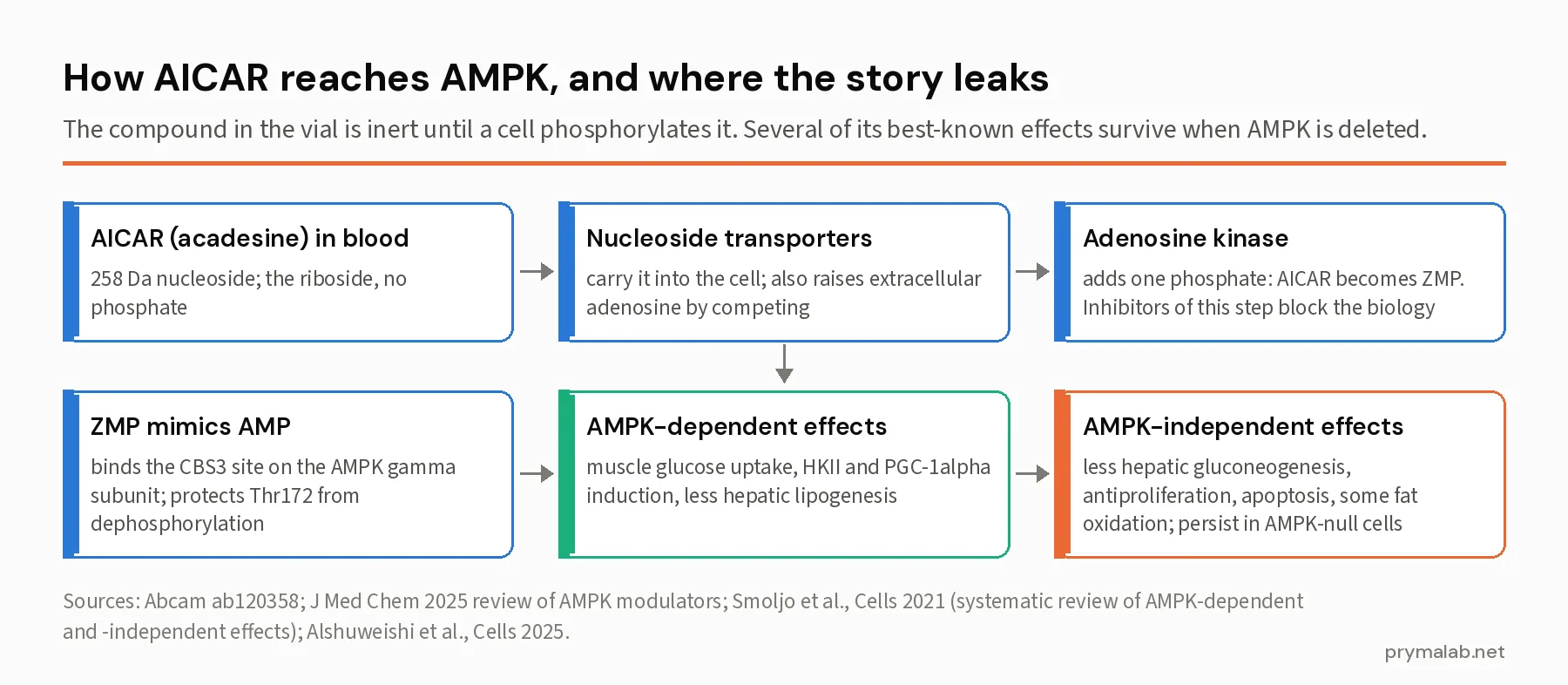
The canonical mechanism in one sentence, from a supplier's technical sheet that has it right: AICAR 'is taken up into cells by adenosine transporters and phosphorylated by adenosine kinase to the active nucleotide ZMP ... which mimics effects of AMP on the AMPK system'.[6] The doping-analysis literature says the same: 'AICAR transforms to ZMP (AICAR monophosphate) by adenosine kinase inside a cell, and ZMP can act as an AMP analogue to activate AMPK in an LKB1-dependent manner'.[7]
The binding site is the detail most write-ups skip. ZMP acts at the CBS3 site of the AMPK gamma subunit, producing 'direct allosteric activation and promotion of phosphorylation by AMPK kinase' and, like AMP, protecting the catalytic alpha subunit's Thr172 from dephosphorylation. The same 2025 review notes that AICAR 'does not perturb the cellular contents of ATP, ADP or AMP', which is why it became the standard laboratory tool for switching AMPK on without actually starving the cell of energy.[8] AMPK, once active, pushes cells toward catabolism: glucose uptake, fatty acid oxidation, PGC-1alpha and mitochondrial biogenesis. That is the textbook story, and it is where the exercise-mimetic idea comes from.
The knockout experiments
The textbook story does not survive contact with AMPK-knockout animals, and the 2021 systematic review by Smoljo and colleagues is unusually candid about it. Effects that are lost when AMPK is deleted: skeletal muscle glucose uptake, which 'was abolished in the knockout of the alpha2 and alpha3 isoforms of AMPK'; induction of hexokinase II and PGC-1alpha mRNA; and inhibition of hepatic lipogenesis. Effects that persist in AMPK-null cells: suppression of hepatic gluconeogenesis, 'observed in response to AICAr in mice lacking both AMPK alpha1 and alpha2 isoforms'; decreased hepatic glucose phosphorylation; inhibition of oxidative phosphorylation; increased fatty acid oxidation in muscle, which remained in muscle-specific AMPK alpha2 knockouts; and the antiproliferative and cell-cycle effects, which in fibroblasts lacking both catalytic isoforms were 'AMPK-independent' and whose effects on apoptosis 'were even more pronounced' without AMPK.[3]
Two examples from that review are close to clean falsifications of the AMPK story for particular endpoints. In glioma, 'AICAr inhibited proliferation in vitro and in vivo independent of AMPK, while A-769662 had no effects', A-769662 being a direct AMPK activator. In chronic lymphocytic leukaemia cells, 'AMPK activation with phenformin or A-769662 failed to induce apoptosis, and AICAr had effects in B lymphocytes from AMPK alpha1-null mice'.[3] The leukaemia programme described below was built on an AMPK rationale; its own biology says the anti-leukaemic effect probably runs through nucleotide-pool disruption instead, which fits the observation that S-phase arrest in leukaemia cells was 'attenuated with addition of uridine'.
There is a third, older mechanism. AICAR 'shares structural similarities with adenosine', raises extracellular adenosine by competing for the nucleoside transporter, and raises intracellular adenosine by inhibiting adenosine deaminase.[3] That is the mechanism the drug was originally developed on. Acadesine was 'the first in a new class of drugs termed adenosine regulating agents', designed to raise adenosine only 'at times and sites of pathology where there is net ATP breakdown but not in healthy settings or tissues', so as to protect the heart without the hypotension and bradycardia of adenosine itself, whose half-life in blood is under a second.[9] The drug was developed on an adenosine rationale, failed on that rationale, and was later re-marketed to consumers on an AMPK rationale that came from a different literature.
A 2025 result that runs backwards
In cultured 3T3-L1 adipocytes, sustained AICAR exposure did the opposite of what the marketing promises. One millimolar AICAR for 24 hours produced a 62% reduction in insulin-stimulated glucose uptake, with no effect on basal uptake, concentration-dependent across 0 to 2 mM. The direct AMPK activator 991 produced comparable ACC phosphorylation but 'had no effect on glucose uptake or GLUT4 translocation', so the effect is not AMPK; two adenosine kinase inhibitors, 5-iodotubercidin and ABT-702, 'significantly attenuated the inhibition', so it does require the phosphorylation step. The proposed route is reduced GLUT4 trafficking and suppressed MEK-ERK signalling.[10] 'AICAR activates AMPK, therefore better glucose handling' is too simple, tissue-dependent, and in fat tissue may run the wrong way.
The 2008 exercise-in-a-pill mouse
Every consumer claim about AICAR and endurance traces to one paper: Narkar and colleagues, 'AMPK and PPAR-delta agonists are exercise mimetics', Cell, August 2008.[11] It had two arms, and the supplement industry only ever quotes one.
The AICAR arm: sedentary adult mice received AICAR by intraperitoneal injection for four weeks, with no exercise training. The abstract reports that even in sedentary mice, four weeks of AICAR alone induced metabolic genes and raised running endurance by 44%.[11] The Salk Institute's release added the lab's gloss: untrained mice on AICAR 'ran 44% longer than untreated controls after four weeks', and Narkar is quoted, 'That's as much improvement as we get with regular exercise'.[12]
The other arm was GW1516, a PPAR-delta agonist later sold on the grey market as cardarine. On its own, in sedentary mice, it did nothing for endurance: it lowered fatty acids and glucose but produced no endurance improvement, and Ronald Evans, the senior author, called it 'a spectacular failure'. Combined with four weeks of treadmill training it produced a large joint effect, running time up 68% and distance up 70% over trained mice on placebo, with a 38% increase in slow-twitch oxidative fibres.[13][12] The proposed link between the two arms is that AMPK, activated in the nucleus, physically interacts with PPAR-delta and amplifies the training response; in Evans's phrase, 'it essentially puts a turbo charge on PPAR delta'.[12]
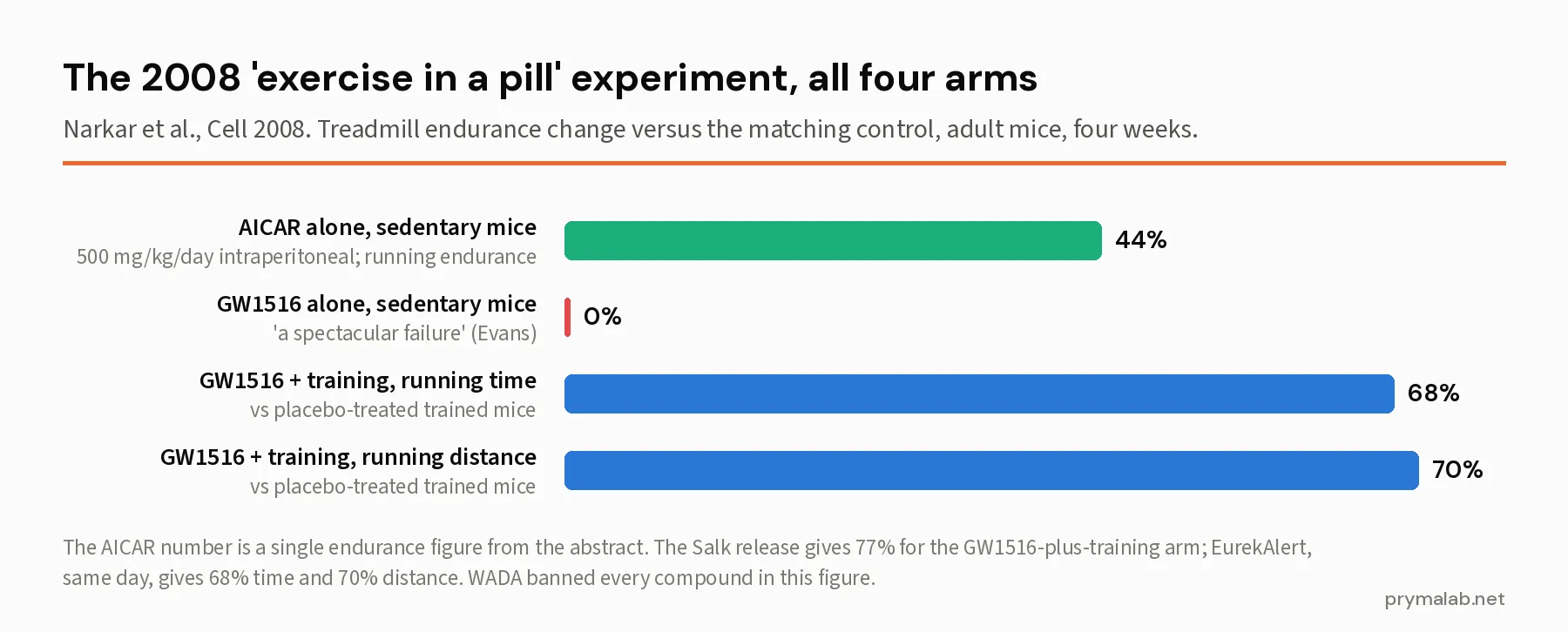
Two accuracy notes. The abstract gives a single 44% figure for endurance; the paper's figures report running time and distance separately, and I have not seen the figure legends, so do not read '44% longer' and '44% further' as two separate findings. And the Salk release states a 77% improvement over exercise alone for the GW1516 arm while EurekAlert, the same day, gives 68% time and 70% distance; both are lab-issued press materials describing the same figure panel, and the separable pair is the one to use.[12][13]
What the study is not: it is a four-week mouse treadmill experiment using a high intraperitoneal dose, with a drug that has almost no oral bioavailability. The 2015 Sports Medicine review that surveyed AMPK and exercise capacity found 'no direct evidence of performance enhancement in healthy humans'.[14] There has never been a human endurance trial of AICAR, and the anti-doping literature confirms the 2008 finding prompted WADA to add AMPK activators to its list.[14]
Three decades of human trials, and zero approvals
Acadesine has been given to people repeatedly, by four corporate owners, in two unrelated indications, and has never been approved for anything anywhere. This is the strongest honest content in the AICAR story and it is missing from almost every page that ranks for the name.
The 1990s heart-surgery trials. Gensia Pharmaceuticals developed acadesine to protect the heart during coronary artery bypass grafting. Leung and colleagues randomised 116 patients in 1994 and found no significant difference in myocardial ischaemia by ECG or echocardiography; the trial's lasting contribution was the first quantified safety signal, 'mild increases in plasma uric acid (a metabolite of acadesine)', a mean rise of 1.6 mg/dL at high doses.[15] Menasché and the Multinational Acadesine Study Group then randomised 821 patients to placebo or intravenous acadesine during surgery, with acadesine also added to the cardioplegia solution. In a high-risk subgroup, Q-wave myocardial infarction fell from 19.7% to 10.0% (p=0.032); overall mortality, 3.4% versus 2.7%, was not significantly different; 'no adverse events were related to acadesine treatment'.[16] The headline was a subgroup finding on a secondary-type endpoint with flat mortality, which is the pattern that later fails in a properly powered trial.
The meta-analysis that revived it. Mangano and the McSPI group pooled five randomised trials in JAMA in 1997.[17] When Schering-Plough licensed the drug from PeriCor Therapeutics on 19 July 2007, it summarised the result as 'a statistically significant 26% reduction in composite events (cardiac death, myocardial infarction, and stroke)' and claimed 'a 4.3-fold reduction in two-year mortality risk following acute post-reperfusion myocardial infarction, dropping from 27.8% in the control group to 6.5%'.[18] Both figures are the licensee's summary of a pooled 1990s dataset, and retrospective subgroup mortality claims of that size are exactly what the next trial existed to test.
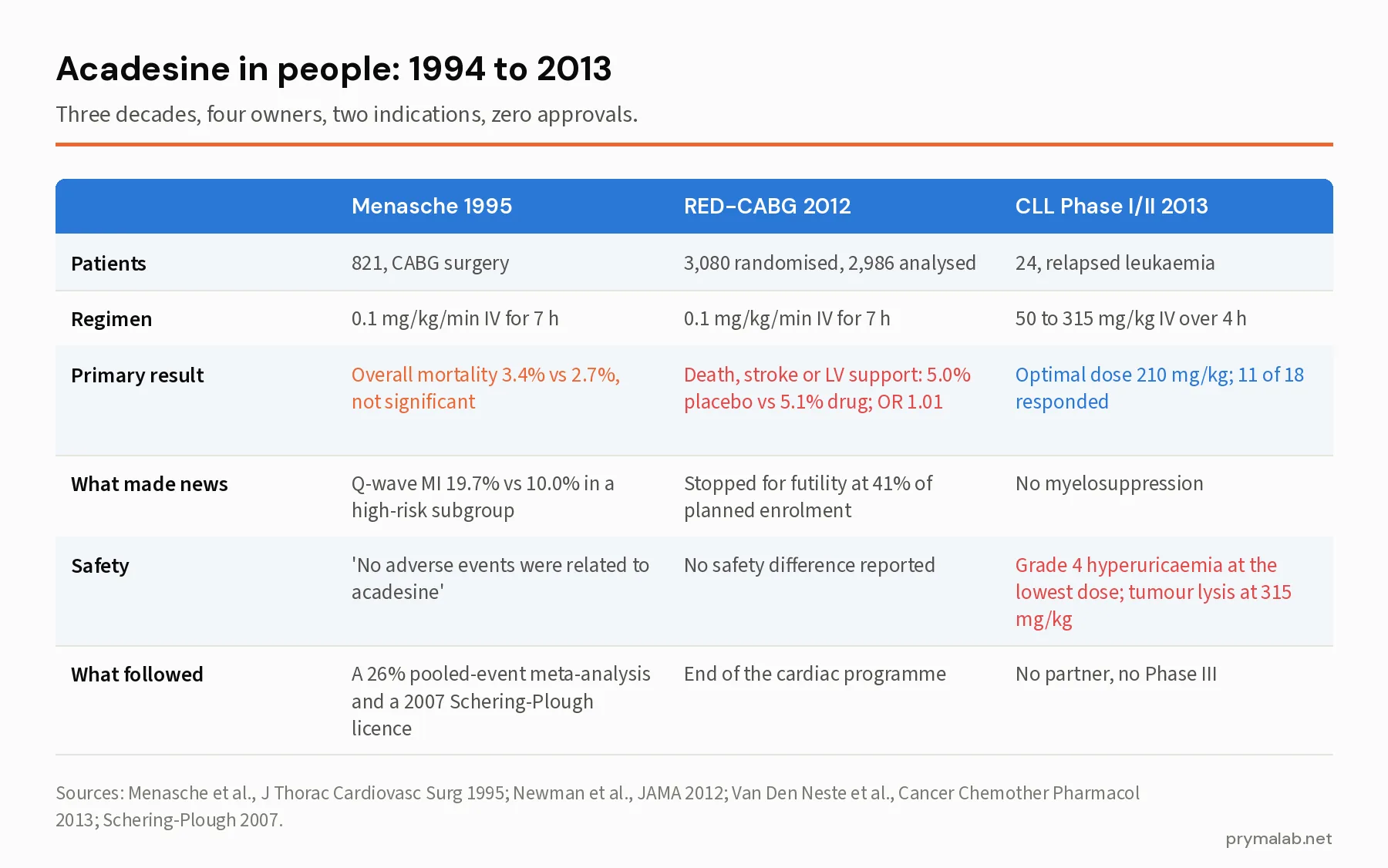
RED-CABG, the definitive failure. Newman and colleagues, JAMA 2012, registration NCT00872001. Intermediate- to high-risk patients undergoing bypass surgery at 300 sites in seven countries were randomised between 6 May 2009 and 30 July 2010 to intravenous acadesine, the same regimen as the 1995 trial, or placebo. The planned enrolment was 7,500; 3,080 were randomised and 2,986 analysed. The primary endpoint was the composite of all-cause mortality, non-fatal stroke, or need for mechanical support for severe left ventricular dysfunction through postoperative day 28. It occurred in 75 of 1,493 placebo patients (5.0%) and 76 of 1,493 acadesine patients (5.1%): odds ratio 1.01, 95% confidence interval 0.73 to 1.41, and 'there were no differences in key secondary end points measured'.[19] The trial was terminated early because a prespecified futility analysis, at 30% of planned enrolment, 'failed to indicate a reduction in morbidity or mortality'.[20] The confidence interval excludes a benefit of the size the meta-analysis had predicted. By then the programme had passed to Merck with the 2009 merger, and there has been no subsequent Phase III.
The leukaemia programme. Advancell, in Barcelona, took acadesine into relapsed or refractory chronic lymphocytic leukaemia as 'Acadra'. Van Den Neste and colleagues reported the Phase I/II in 2013: 24 patients, in a dose-escalation design using four-hour intravenous infusions, given once or repeated in later cohorts. Eleven of 18 dose-escalation patients showed more than 20% reduction in B-cell counts or lymph node size, and five of six in the expansion cohort showed activity. The dose-limiting toxicities were grade 4 hyperuricaemia in one patient at the lowest dose tested, and tumour lysis syndrome with renal impairment in two patients at the highest dose; four patients in all had renal impairment, all reversible without dialysis. Prophylactic allopurinol became mandatory from the second cohort. There was no myelosuppression at any dose.[21][22] Advancell held orphan designation and was seeking a partner in February 2011.[22] No further trials were published.
| Study | n | Route | Outcome |
|---|---|---|---|
| Leung 1994, CABG | 116 | IV, two regimens | No significant difference in ischaemia; uric acid up 1.6 mg/dL at high dose |
| Menasché 1995, CABG | 821 | IV during surgery + cardioplegia | Subgroup Q-wave MI 10.0% vs 19.7%; overall mortality 2.7% vs 3.4%, not significant |
| Mangano 1997, meta-analysis | 5 trials | Pooled | 26% fewer composite events (sponsor summary) |
| RED-CABG 2012 | 3,080 randomised | IV during surgery | 5.1% vs 5.0%; OR 1.01 (0.73 to 1.41); stopped for futility |
| Van Den Neste 2013, CLL | 24 | IV infusion, dose escalation | Activity in 11 of 18; grade 4 hyperuricaemia at the lowest dose; tumour lysis at the highest; no Phase III |
Pharmacokinetics: intravenous, barely oral, and a metabolite that lingers
Every human trial of acadesine used intravenous infusion: seven hours in the cardiac studies, four hours in leukaemia. The leukaemia investigators note that their study 'did not evaluate oral administration or bioavailability via alternative routes'.[21] The 2021 review characterises the clinical experience as 'poor oral bioavailability, the rapid decline of post-infusion plasma concentrations', with oral estimates below 5%.[3] That figure comes from a review's summary of early Phase I work rather than a retrievable primary paper, so treat it as an order of magnitude. It is consistent with the doping data, where four volunteers dosed orally showed urinary AICAR that 'significantly increase within 16 hours', and WADA's method detects a single oral dose for more than 40 hours.[7][5] Oral AICAR is absorbed enough to be detected, and nowhere near enough to matter clinically.
The number that reframes the whole consumer market comes from the leukaemia study. At the optimal dose identified in that study, given as a four-hour infusion, acadesine peaked at 38,736 ng/mL and ZMP at 270,988 ng/mL, a combined molar concentration of about 0.9 mM, which the authors note exceeded the 0.5 mM threshold for apoptosis in vitro.[21] Most cell-culture work on AICAR uses 1 to 2 mM.[3][10] Reaching even 0.9 mM in human blood took a high-dose four-hour intravenous infusion in a hospital, with allopurinol on board.
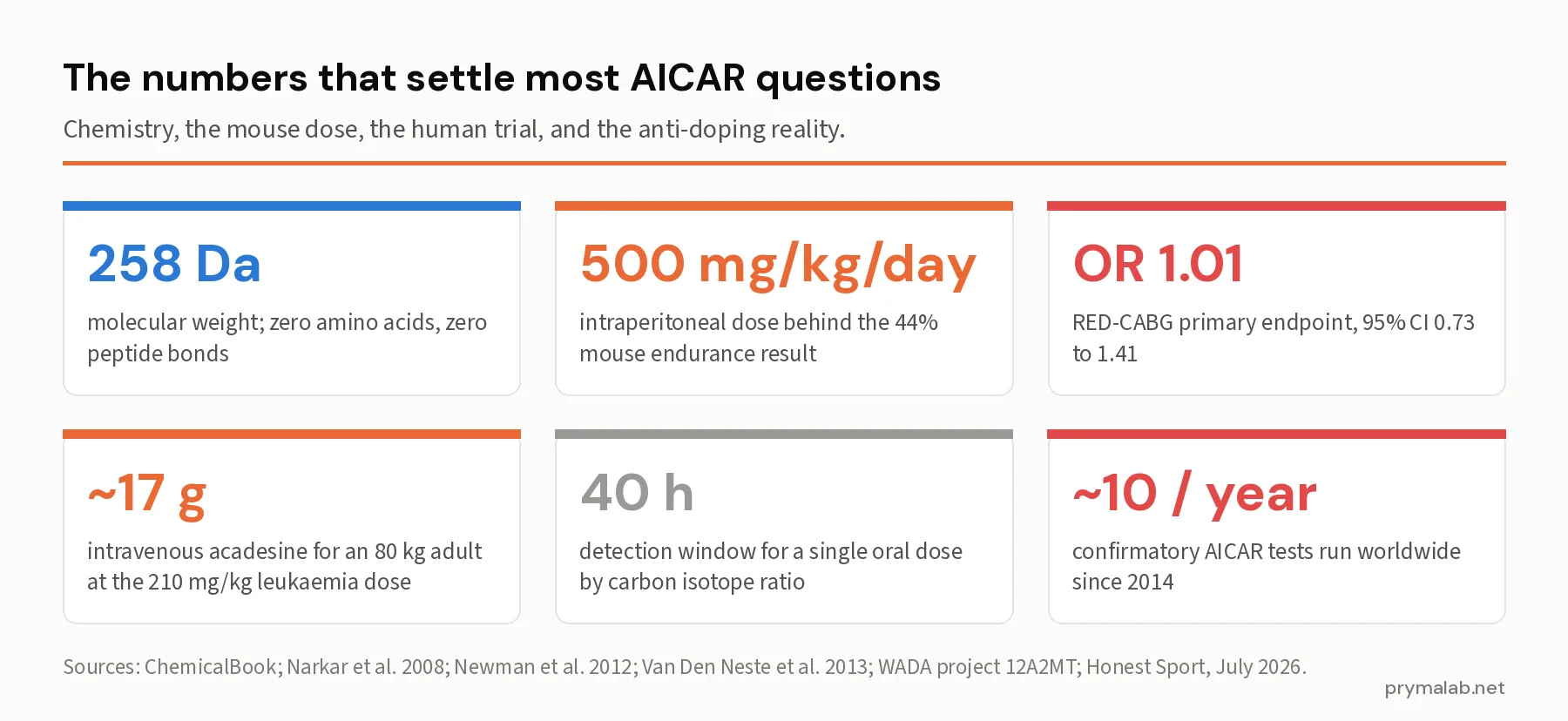
Elimination is slow at the tail. Parent acadesine fell below the quantification limit between 20 hours and 15 days after infusion, and ZMP 'started decreasing progressively from 1 h on ... reaching the LLOQ between 5 and 22 days'.[21] No clean terminal half-life in hours is available from the retrievable literature, so I will not invent one. Uric acid is a metabolite of acadesine, which is the mechanistic basis of the hyperuricaemia seen in every trial that looked.[15] And the activation step is obligatory: the 2025 adipocyte work showed that blocking adenosine kinase blocks the biology, which is one reason the effects are so tissue-dependent, since tissues differ in adenosine kinase expression and transporter density.[10]
The safety signals, consolidated
| Signal | Evidence |
|---|---|
| Hyperuricaemia | Dose-dependent. Uric acid up 1.6 mg/dL at high dose in 1994; grade 4 at the lowest leukaemia dose; grade 2 or worse 'occurred commonly' until allopurinol prophylaxis was made mandatory |
| Renal impairment | Four leukaemia patients (two at the highest single dose, two on repeated dosing); all reversible without dialysis; judged functional rather than nephrotoxic |
| Tumour lysis syndrome | Dose-limiting at the highest leukaemia dose |
| Lactic acidosis, mild asymptomatic hypoglycaemia | Listed among clinical adverse effects in the 2021 review; primary trial sources not retrieved |
| Infusion-related hypotension; transient anaemia and thrombocytopenia | Reported in the leukaemia study; no myelosuppression at any dose |
| Cardiac surgery infusion | No safety difference between arms reported in RED-CABG; the trial failed on efficacy |
The hyperuricaemia point deserves emphasis for anyone reading a consumer page: a grade 4 event occurred at the lowest dose studied, in a supervised hospital, and the oncology programme responded by mandating allopurinol.[21] That is not a theoretical risk.
WADA: banned since 2009, never a positive test
On the 2026 Prohibited List, effective 1 January 2026, AICAR sits in section S4, hormone and metabolic modulators, item S4.4.1: 'Activators of the AMP-activated protein kinase (AMPK), e.g. 5-N,6-N-bis(2-fluorophenyl)-[1,2,5]oxadiazolo[3,4-b]pyrazine-5,6-diamine (BAM15), AICAR, mitochondrial open reading frame of the 12S rRNA-c (MOTS-c)'. It is prohibited at all times, in and out of competition, and its neighbours in the same subsection are the PPAR-delta agonists (GW1516) and the Rev-erb agonists (SR9009, SR9011).[4] WADA effectively banned the entire 2008 Cell paper. The ban dates from 2009: 'doping with the substance AICAR was prohibited by the World Anti-Doping Agency (WADA) in 2009', and the 2008 list contains no mention of AICAR, AMPK or PPAR-delta.[7]
The detection problem is that AICAR is a normal human metabolite. Thomas and colleagues measured mean urinary AICAR of 2,186 ng/mL in 499 athlete doping-control samples, with concentrations that 'differ depending on gender, type of sport and type of sample collection'.[23] Other populations reported 647 ng/mL in 12,377 North American athletes and 1,528 ng/mL in 290 Asian athletes, with individual values in one cohort spanning 53 to 6,284 ng/mL.[7] Across two orders of magnitude of natural variation, no concentration threshold has been set, and none can be.
The answer is carbon isotope ratio analysis, the same principle used for synthetic testosterone: synthetic AICAR is made from plant-derived feedstocks with a different carbon-13 signature from the body's own. Mario Thevis of the Cologne laboratory explained it to the cycling press in 2013: 'If you produce a synthetic product, this ratio, the signature of the carbon, is different and that can be distinguished with the help of modern analytical methods'.[24] WADA funded the method in 2012; the Cologne group built a 63-person reference population, found 'a larger variability in CIR of AICAR as for endogenous steroids', and established thresholds that detect 'a single oral AICAR administration for more than 40 h'.[5] A 40-hour window is short. A second WADA project has been developing liquid-chromatography IRMS to avoid the derivatisation the gas-chromatography method needs.[25]
What exists instead of positive tests is a chain of intelligence, seizures and journalism. A Colombian doctor working with cycling teams was arrested with AICAR in 2012, prompting the UCI to send Tour de France samples to Cologne for isotope testing.[24] The 2013 RusVelo case often cited as an AICAR positive was a GW501516 positive. Dutch press reported AICAR in the 2019 Tour peloton; Portuguese police found it in the W52-FC Porto raids of April 2022, with no rider testing positive; a 2025 ARD documentary called it cycling's primary doping substance on whistleblower testimony. In July 2026, Michael Polet and Peter Van Eenoo of the Ghent WADA-accredited laboratory published a validated LC-IRMS method that is cheaper and less instrument-hungry than the gas-chromatography approach, and could allow routine screening and retrospective re-analysis of stored samples; the barrier is an instrument costing roughly 340,000 pounds with no other anti-doping use.[26] An athlete reasoning from 'nobody has ever tested positive' is reasoning from testing economics, and testing economics changed this year.
Seven days helps, fourteen days does not: the neurogenesis reversal
The most instructive rodent result on AICAR is one the supplement pages never cite, because it argues against chronic use. Kobilo, Yuan and van Praag gave two-month-old female mice AICAR by intraperitoneal injection for either 7 or 14 days. After 7 days, new-cell proliferation in the hippocampus rose from 11,750 to 13,612 BrdU-positive cells, survival at four weeks improved, more of the new cells became neurons, and spatial memory in the water maze was better at both 4 and 24 hours after training. After 14 days there was no neurogenic effect and no memory benefit.[27] Doubling the exposure abolished the gain. The same group's 2015 follow-up carries the point in its title: 'Exercise-mimetic AICAR transiently benefits brain function'.[28]
A 2023 paper in a mouse model of severe spinal muscular atrophy makes a related point from the other direction: chronic AICAR 'prevents skeletal muscle pathology but fails to improve clinical outcome'.[29] Tissue-level improvement without functional benefit is a paradigmatic AICAR result, and nobody has established whether the muscle endurance effect in the 2008 mice behaves like the neurogenesis effect over longer exposure.
AICAR vs MOTS-c and the other AMPK activators
AICAR gets compared with MOTS-c because both are sold for the same reasons and both sit in the same WADA clause. They are different kinds of molecule. MOTS-c is a 16-amino-acid peptide encoded in mitochondrial DNA, so it is a peptide; AICAR is a nucleoside. MOTS-c is reported to reach AMPK through folate and methionine metabolism; AICAR reaches it by being phosphorylated to an AMP mimic. Neither has a published human performance trial. The MOTS-c reference covers that molecule in full.
Against the other 2008 compound, the comparison is starker. GW1516 did nothing for endurance on its own in the mice, produced its effect only with training, and was abandoned in development; AICAR produced its effect alone.[11][13] Against metformin, the AMPK activator that people actually take, the difference is that metformin activates AMPK indirectly through mitochondrial complex I and has decades of human outcome data; AICAR activates it directly through ZMP and has RED-CABG. For the wider class of research compounds that are not peptides but get sold beside them, the SARMs versus peptides guide draws the same distinction this article draws for AICAR.
Research-grade AICAR: 50 mg vials and what to verify
AICAR is not a controlled substance in the United States, is not on any FDA compounding list, and is an investigational compound with no approval anywhere, which puts it in the same legal space as most of what the legal status guide describes: legal to sell and hold for laboratory research, not for human use. It is prohibited at all times for athletes under any WADA-code programme.
Because it is a small molecule rather than a peptide, the verification questions are different from the ones on a peptide vial, and the purity testing guide covers the general principles. Identity is by mass spectrometry or NMR against the 258.23 Da parent and its known spectrum, not by an HPLC peptide method. Purity is by HPLC with the right column and detector for a polar nucleoside. Water content matters, because the powder is hygroscopic. And solubility is the practical trap: ChemicalBook lists 2 mg/mL in DMSO and below 1 mg/mL in water or ethanol,[1] while other catalogues quote higher aqueous figures with warming or sonication, so a 50 mg vial does not reliably dissolve in the few millilitres of water a peptide would take. PrymaLab's AICAR 50 mg vials and 50 mg autoinjector are documented on those points; ask the same of any other supplier, and ask them to stop calling it a peptide.
The version of the story the record supports: a nucleoside that switches on AMPK in cells and does several other things AMPK cannot account for; a real 44% endurance result in sedentary mice at a dose no human could take; three decades of intravenous trials that ended with an odds ratio of 1.01 in 3,080 patients and a leukaemia study that hit grade 4 hyperuricaemia at its lowest dose; a WADA ban since 2009 that has produced no positive test because almost nobody ran the test; and a market that sells it as something it is not.
What this article does not settle
Human performance. There is no human endurance or performance trial of AICAR, not one, and the 2015 Sports Medicine review found no direct evidence of performance enhancement in healthy humans.
Any oral regimen. All clinical use was intravenous. Oral bioavailability is reported below 5% from a review-level source; the primary 1993 disposition paper was not retrievable.
Whether in-vitro concentrations mean anything for a person. Most cell work uses 1 to 2 mM; reaching 0.9 mM in blood took a high-dose intravenous infusion in a hospital.
The mechanism. A large share of AICAR's documented effects persist in AMPK-null cells. 'AICAR activates AMPK' is true and incomplete, and in adipocytes the direction of effect on glucose uptake is the wrong one.
Persistence with longer exposure. Seven days improved neurogenesis in mice; fourteen days did not. Nobody has run the equivalent time course for muscle.
Long-term safety in healthy people. Human exposure has been limited to short courses of intravenous infusion in surgical and leukaemia patients. No study has given acadesine for months, and the toxicity that exists appeared at high doses under supervision.
What is in a grey-market vial. A compound sold under the wrong chemical class in a market without pre-market testing gives no assurance of identity or purity, and its solubility alone should make a buyer ask questions.
What is well established: the structure, formula and mass; that it is a nucleoside and not a peptide; the adenosine-kinase activation step and the ZMP binding site; the 2008 mouse result and its GW1516 arm; the RED-CABG outcome; the leukaemia toxicities; the WADA listing since 2009; and the endogenous-baseline detection problem with its isotope-ratio solution.
AICAR: what the acronym refers to
AICAR stands for 5-aminoimidazole-4-carboxamide ribonucleotide, which, read strictly, is the phosphorylated form, ZMP, an intermediate in the cell's own purine synthesis. The compound in the vial is the ribonucleoside, without the phosphate, properly called AICA riboside, AICAr or by its drug name acadesine; the 2021 systematic review keeps the lower-case r for that reason.[3] The two are used interchangeably in the doping and supplement literature, and the WADA list uses the bare word AICAR to cover the commercial riboside.[4] Acadra was the trade name Advancell used in its leukaemia programme.[22] None of the names denotes a peptide: the molecule has no amino acids, and 'AICAR peptide' is a catalogue category, not a chemical description.
Frequently asked questions
What is AICAR?
A 258 Da nucleoside analogue (acadesine) that cells convert to ZMP, an AMP mimic that activates AMPK. Developed for heart surgery, failed a 3,080-patient trial, famous for a 2008 mouse endurance study, banned by WADA since 2009.
Is AICAR a peptide?
No. It is a nucleoside (imidazole base plus ribose sugar, 258 Da) with no amino acids. 'AICAR peptide' is a catalogue category, not chemistry.
How does AICAR work?
Cells phosphorylate it to ZMP, which mimics AMP at the AMPK gamma subunit. Some effects depend on AMPK (muscle glucose uptake, PGC-1alpha); others, like antiproliferation and reduced hepatic gluconeogenesis, persist without AMPK. It also raises adenosine.
What did the AICAR exercise-in-a-pill study actually show?
Four weeks of AICAR injections raised running endurance 44% in sedentary mice. The companion drug GW1516 did nothing alone and helped only with training. No human endurance trial exists.
Has AICAR been tested in humans?
Yes, intravenously, for three decades. The definitive trial, RED-CABG 2012, randomised 3,080 bypass patients and found 5.0% vs 5.1% on the primary endpoint (odds ratio 1.01). A 24-patient leukaemia study hit grade 4 hyperuricaemia at its lowest dose. No approvals.
What are the side effects of AICAR in the trials?
Hyperuricaemia above all: grade 4 at the lowest leukaemia dose, so allopurinol became mandatory. Also reversible renal impairment, tumour lysis at the top dose, infusion hypotension, transient cytopenias, and reported lactic acidosis and mild hypoglycaemia.
Is AICAR banned by WADA?
Yes, at all times since 2009; S4.4.1 on the 2026 list with BAM15 and MOTS-c. Detection needs carbon isotope ratio analysis because everyone excretes natural AICAR.
Why has nobody tested positive for AICAR?
Because the isotope-ratio test was run on about ten samples a year since 2014 with a 40-hour window. The cited 'cases' are seizures and journalism; the 2013 RusVelo positive was GW501516. A cheaper 2026 method may change that.
Does AICAR work orally?
Barely: every trial was intravenous and oral bioavailability is reported below 5%. Oral doses are detectable in urine for about 40 hours but come nowhere near the concentrations used in cell studies.
AICAR vs MOTS-c: what is the difference?
MOTS-c is a 16-residue peptide; AICAR is a 258 Da nucleoside. Both activate AMPK by different routes, both sit in WADA S4.4.1, neither has a human performance trial, and only AICAR has a clinical record (cardiac surgery, leukaemia).
How should AICAR be stored and dissolved?
Dry powder at -20 degrees, away from light and moisture. Solubility is the trap: ChemicalBook lists 2 mg/mL in DMSO and under 1 mg/mL in water, so a 50 mg vial does not simply dissolve in a few millilitres; ask for the lot's data.
Related reading
- 5-Amino-1MQ: what it is, benefits, dosage and research
- SLU-PP-332: exercise mimetic, dosage and research
References
- ChemicalBook. AICAR (acadesine), CAS 2627-69-2: systematic name, C9H14N4O5, 258.23, melting point, solubility and storage. ChemicalBook
- DrugBank. Acadesine, DB04944. Investigational; 'a purine nucleoside analog with anti-ischemic properties'. DrugBank
- Smoljo T, et al. Acadesine (AICAr): the pleiotropic effects of a molecule with AMPK-dependent and -independent actions. Cells. 2021;10(5):1095. Systematic review: nomenclature, knockout findings, adenosine mechanisms, oral bioavailability and clinical adverse effects. MDPI
- World Anti-Doping Agency. The 2026 Prohibited List, International Standard. S4.4.1 wording. WADA
- World Anti-Doping Agency. Detection of AICAR administration by carbon isotope ratio mass spectrometry, project 12A2MT (Thevis M, German Sport University Cologne). Endogenous occurrence, 63-person reference population, 40-hour detection. WADA
- Abcam. AICAR (acadesine), ab120358, product data: uptake by adenosine transporters, phosphorylation by adenosine kinase to ZMP, AMP mimicry. Abcam
- Quantification of AICAR and study of metabolic markers after administration. PMC11170270. The 2009 ban, oral administration in four volunteers, urinary reference concentrations by population. PMC
- Review of small-molecule AMPK modulators. J Med Chem. 2025. doi:10.1021/acs.jmedchem.4c02354. CBS3 site on the gamma subunit, Thr172 protection, no perturbation of adenine nucleotides. ACS
- Gruber HE. Acadesine: preclinical overview. In: Purine and Pyrimidine Metabolism in Man VIII. Adv Exp Med Biol vol 370. Springer; 1995. Adenosine regulating agents. Springer
- Alshuweishi Y, Alghamdi A, Patrick R, Salt IP. Sustained AICAR exposure inhibits insulin-stimulated glucose uptake in 3T3-L1 adipocytes. Cells. 2025;14(22):1811. 62% reduction; AMPK-independent, adenosine-kinase-dependent. MDPI
- Narkar VA, Downes M, Yu RT, et al. AMPK and PPAR-delta agonists are exercise mimetics. Cell. 2008;134(3):405-415. doi:10.1016/j.cell.2008.06.051. PMID 18674809. Abstract quoted. Cell
- Salk Institute. Exercise in a pill. Press release, 31 July 2008. The 44% quote, the 77% figure and the Evans and Narkar quotations. Salk
- EurekAlert. Exercise in a pill. 31 July 2008. GW1516 alone 'a spectacular failure'; 68% running time and 70% distance with training. EurekAlert
- Niederberger E, et al. Activation of AMPK and its impact on exercise capacity. Sports Med. 2015;45(11):1497-1509. No direct evidence of performance enhancement in healthy humans; the 2008 finding and the WADA listing. Springer
- Leung JM, Stanley T, Mathew J, et al. An initial multicenter, randomized controlled trial on the safety and efficacy of acadesine in patients undergoing coronary artery bypass graft surgery. Anesth Analg. 1994;78(3):420-434. 116 patients; uric acid as a metabolite. Duke Scholars
- Menasché P, et al.; Multinational Acadesine Study Group. Acadesine: a new drug that may improve myocardial protection in coronary artery bypass grafting. J Thorac Cardiovasc Surg. 1995;110(4 Pt 1):1096-1106. PMID 7475138. PubMed
- Mangano DT; Multicenter Study of Perioperative Ischemia Research Group. Effects of acadesine on myocardial infarction, stroke, and death following surgery: a meta-analysis of the 5 international randomized trials. JAMA. 1997;277(4):325-332. Full text not retrieved; figures taken from reference 18. JAMA
- Schering-Plough Corporation. Schering-Plough announces licensing of acadesine, an investigational agent being studied for prevention of complications from cardiac surgery. 19 July 2007, via BioSpace. The 26% and 4.3-fold claims. BioSpace
- Newman MF, Ferguson TB, White JA, et al.; RED-CABG Steering Committee and Investigators. Effect of adenosine-regulating agent acadesine on morbidity and mortality associated with coronary artery bypass grafting: the RED-CABG randomized controlled trial. JAMA. 2012;308(2):157-164. doi:10.1001/jama.2012.7633. NCT00872001. Abstract verified via Duke Scholars and Weill Cornell VIVO. JAMA
- Acadesine fails to reduce morbidity and mortality after CABG. Nat Rev Cardiol. 2012. doi:10.1038/nrcardio.2012.111. The 30% futility analysis. Nature Reviews Cardiology
- Van Den Neste E, et al. Acadesine for patients with relapsed/refractory chronic lymphocytic leukemia (CLL): a multicenter phase I/II study. Cancer Chemother Pharmacol. 2013;71(3):581-591. doi:10.1007/s00280-012-2033-5. NCT00559624. Doses, toxicities, pharmacokinetics and the 0.9 mM exposure. Springer
- Advancell. Advancell announces positive Phase I/IIa results with Acadra (acadesine) in chronic lymphocytic leukemia. PR Newswire, 21 February 2011. Trade name, orphan designation, no myelosuppression, partnering. PR Newswire
- Thomas A, Beuck S, Eickhoff JC, et al. Quantification of urinary AICAR concentrations as a matter of doping controls. Anal Bioanal Chem. 2010;396:2899-2908. 499 athlete samples, mean 2,186 ng/mL. Springer
- Cyclingnews. Tour de France samples to be tested for AICAR. 16 December 2013. Thevis quotation; the 2012 arrest. Cyclingnews
- World Anti-Doping Agency. LC-IRMS anti-doping analysis for confirming exogenous administration of AICAR (de la Torre X, 2022 project). WADA
- Honest Sport. Report: the undetectable doping powder, a new test developed. 28 July 2026. No positive test on record, about ten samples a year since 2014, the W52-FC Porto raids, the Ghent LC-IRMS method and its cost. Honest Sport
- Kobilo T, Yuan C, van Praag H. Endurance factors improve hippocampal neurogenesis and spatial memory in mice. Learn Mem. 2011;18(2):103-107. doi:10.1101/lm.2001611. Seven versus fourteen days. Learning and Memory
- Guerrieri D, van Praag H. Exercise-mimetic AICAR transiently benefits brain function. Oncotarget. 2015. PMC4621892. Title-level citation; full text not retrieved. PMC
- Chronic treatment with the AMPK agonist AICAR prevents skeletal muscle pathology but fails to improve clinical outcome in a mouse model of severe spinal muscular atrophy. Neurotherapeutics. 2023. Title-level citation; full text not retrieved. Neurotherapeutics
Figures come from the published papers, regulatory documents and company disclosures named above, current to 23 September 2026. Where a primary paper could not be retrieved and a figure was taken from a review, a press release or an institutional abstract record, the reference says so.
Final disclaimer: This article is an educational research reference on the chemistry, pharmacology, clinical record and anti-doping status of AICAR (acadesine). Compounds supplied by PrymaLab are sold for laboratory research use only and are not approved by any regulator for human or veterinary use. Statements have not been evaluated by the FDA. Nothing here is medical advice or a treatment claim.
Clinical trial designs and outcomes are reported as facts about an investigational intravenous drug given under medical supervision, and animal studies by model and design; they do not describe or support any use of research-grade material. Always verify the legal status of any research compound in your jurisdiction before purchase or use.