Pancragen peptide (KEDW): nine monkeys with no placebo arm, an expired patent, zero trial registrations, and what the pancreatic cell studies actually measured
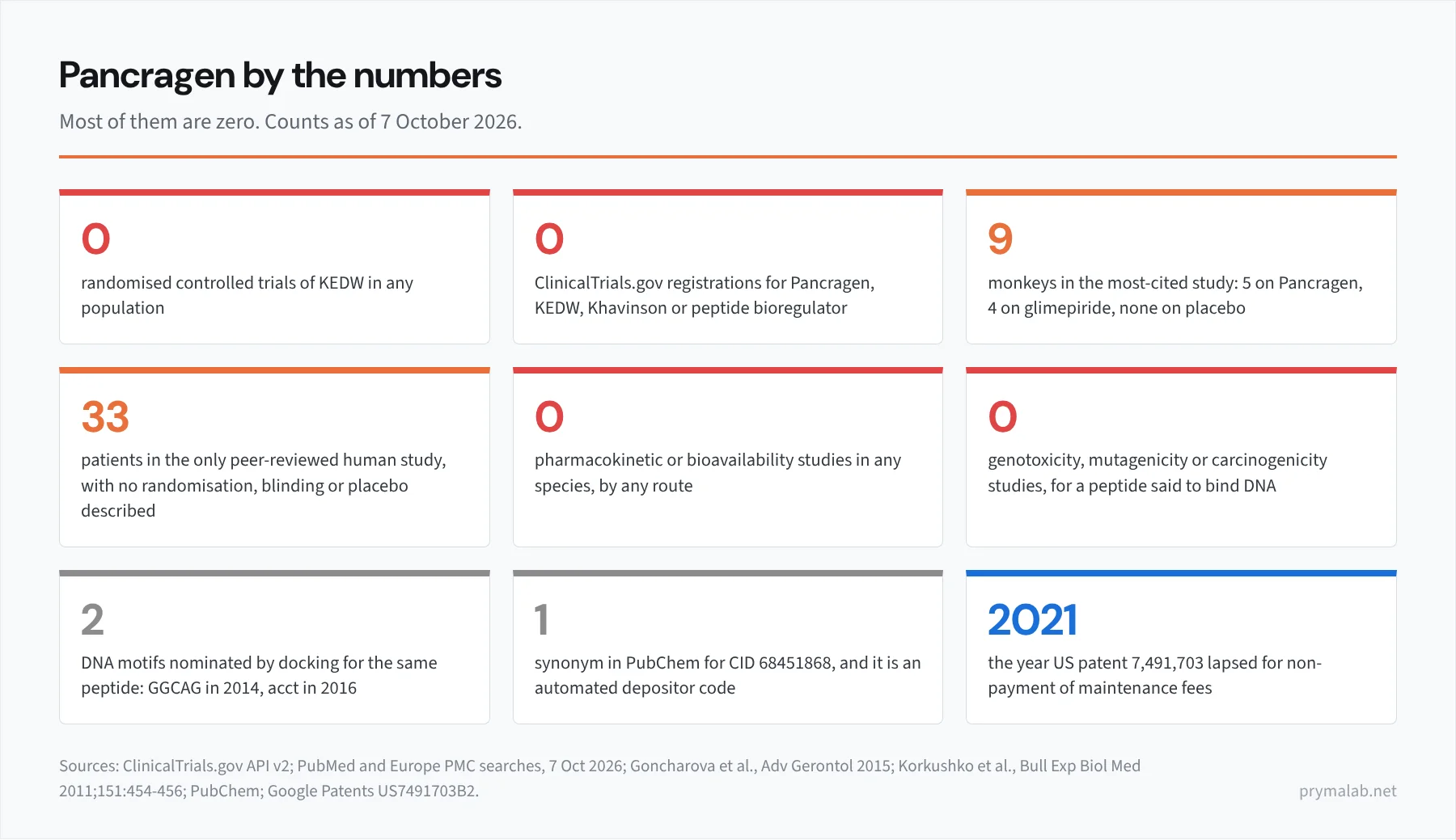
Pancragen is the trade name for the synthetic tetrapeptide Lys-Glu-Asp-Trp-NH2 (KEDW), one of the "peptide bioregulators" from the St Petersburg Institute of Bioregulation and Gerontology, assigned by its developers to the pancreas, with a patent filed in 2003 as a "tetrapeptide regulating blood glucose level in diabetes mellitus". The published record is one research programme: a handful of cell-culture papers reporting higher expression of pancreatic differentiation factors such as Pdx1 and Pax6, four rat papers with no numbers in their abstracts, a study in nine aged rhesus monkeys with no placebo arm, and one non-randomised series of 33 older patients with type 2 diabetes. There is no randomised controlled trial, no ClinicalTrials.gov registration, no pharmacokinetic study, no genotoxicity study, and no approval from any regulator. The richest quantitative data sit in a US patent that expired in 2021. Pancragen is not a treatment for diabetes or anything else, and nothing in this article is a reason to change any medicine. PrymaLab supplies Pancragen 20 mg for laboratory research only.
- Structure: Lys-Glu-Asp-Trp with a C-terminal amide, C26H37N7O8, 575.6 g/mol, PubChem CID 68451868. The amide is what the patent claims. No CAS registry number could be verified from a primary registry. PubChem carries exactly one synonym for the compound, an automated depositor code, and does not recognise "Pancragen" or "KEDW".
- Origin: the group's 2005 paper describes KEDW as a synthetic analogue of a four-residue fragment shared by insulinotropic polypeptides. The patent describes chemical synthesis and names no natural source. "Pancramin", the pancreatic extract it is often said to derive from, returns zero records in PubMed and Europe PMC.
- Cell studies: in human embryonic pancreatic cell cultures, KEDW was reported to raise expression of Pdx1, Ptf1a, Pax6, Pax4, Foxa2 and Nkx2.2, raised Ki-67, PCNA and the anti-apoptotic protein Mcl-1, and lowered p53. The direction is pro-proliferative and anti-apoptotic, and no tumourigenicity endpoint has followed.
- Animals: nine old female rhesus monkeys, five on Pancragen and four on glimepiride, ten days, no vehicle group; rats with streptozotocin diabetes in a 2007 paper whose abstract gives no doses, group sizes or glucose values; alloxan-rat experiments in the patent with roughly 5 to 11 animals per group, P-values but no named test, and a thousand-fold unit discrepancy in the text.
- Humans: 33 older patients with type 2 diabetes plus 30 healthy comparators, no randomisation, blinding or placebo described, no numbers in the abstract; a 36-patient, 10-day patent example mixing type 1 and type 2 diabetes, with a saline placebo claimed but no blinding or statistics. ClinicalTrials.gov: zero registrations for Pancragen, KEDW or Khavinson as of 7 October 2026.
- Regulatory status: not FDA approved; absent from all three categories of the FDA 503A bulk-substance list (14 May 2026); no documented approval for human therapeutic use in any jurisdiction; falls under WADA S0, non-approved substances, prohibited at all times.
| Pancragen (KEDW) | Livagen (KEDA) | Vilon (KE) | Epitalon (AEDG) | Semaglutide (for scale) | |
|---|---|---|---|---|---|
| Sequence | Lys-Glu-Asp-Trp-NH2 | Lys-Glu-Asp-Ala | Lys-Glu | Ala-Glu-Asp-Gly | 31-residue GLP-1 analogue |
| Tissue assigned by the developers | Pancreas | Liver | Thymus, immune | Pineal, aging | Not applicable |
| Largest human study | 33 patients, non-randomised | Open-label series only | Open-label series only | Open-label series only | 17,604 patients, randomised, placebo-controlled (SELECT, 2023) |
| Randomised controlled trial | None | None | None | None | Dozens |
| Approved as a medicine | None found | None found | None found | None found | FDA, EMA and others |
| Pharmacokinetic data | None published | None published | None published | None published | Full |
See the bioregulator overview for how the Khavinson family is organised, the Livagen reference and Ovagen reference for the sister peptides, the Vilon reference for the dipeptide whose lifespan and tumour data set the pattern for the class, the pinealon reference for the tripeptide with the FITC uptake data that Pancragen lacks, and the purity testing guide for what an identity test on a 575 Da amidated tetrapeptide can establish.
Also known as: Pancragen, Pancragen®, KEDW, KEDW-NH2, Lys-Glu-Asp-Trp, Lys-Glu-Asp-Trp-NH2, H-Lys-Glu-Asp-Trp-NH2, lysyl-glutamyl-aspartyl-tryptophanamide (the NLM MeSH supplementary concept name), "pancreas bioregulator", "pancreatic peptide bioregulator". Sometimes written Pancragene or misspelled Pancreagen. Not Pancramin, which is the name given to a pancreatic extract. Not pancreatic polypeptide, which is a 36-residue hormone. Not a GLP-1 receptor agonist, an insulin, a sulfonylurea or any other class of glucose-lowering drug.
Searches for Pancragen started climbing in June 2026, and most of what comes back for them is catalogue copy: supports pancreatic function, regulates blood sugar, restores insulin sensitivity. I sell the molecule, so I went and read the literature those phrases are supposed to rest on. It took an afternoon, because there is not much of it: about sixteen relevant papers, nearly all with the same senior author, in three Russian journals, plus a patent. The patent turned out to be the most detailed document in the file, which is not a good sign for a compound that has been on the market for twenty years. The monkey study that every summary cites enrolled nine animals and had no placebo group. The one peer-reviewed human study had no randomised or placebo control either, and its abstract gives no numbers. Nobody has measured whether the molecule is absorbed, how long it lasts, or whether it damages DNA, which matters because the proposed mechanism is that it binds DNA. If you came here to find out whether Pancragen lowers blood sugar, the honest answer is that nobody has tested that in a way that could tell you, and it is not a treatment for anything. What follows is the record, with the design of every study beside its result.
Research-use-only disclaimer: This article is a critical appraisal of the published literature on the tetrapeptide KEDW. PrymaLab supplies Pancragen as a research reagent for laboratory use. Pancragen is not an approved medicine anywhere, it is not a treatment for diabetes, impaired glucose tolerance or any other condition, and no controlled human study supports any effect on blood glucose. Nothing here is a reason for anyone to start, stop, change or delay any prescribed medicine. Animal amounts and schedules from the cited studies, and the human figures in the cited patent, are not reproduced; the article describes study designs and measured outcomes. Nothing here is medical advice.

TL;DR
Pancragen is KEDW, a four-residue amidated peptide from the Khavinson laboratory, filed for patent in 2003 as a glucose-regulating tetrapeptide; the US patent lapsed in 2021. The evidence is a single programme. In cultured human pancreatic cells it raised Pdx1, Pax6 and other differentiation factors and pushed Ki-67 and PCNA up and p53 down. In nine old rhesus monkeys, five given Pancragen and four given glimepiride for ten days with no placebo group, basal glucose was reported to fall in both arms. In a series of 33 older patients with type 2 diabetes, some given Pancragen and some not, with no randomisation, blinding or placebo described, fasting glucose and insulin resistance were reported lower, with no figures in the abstract. There is no randomised trial, no trial registration, no pharmacokinetic data and no genotoxicity data, and "Pancramin", the extract it supposedly came from, has zero records in PubMed. Not FDA approved, not on any 503A list, prohibited in sport under WADA S0. It is not a diabetes treatment. Research use only.
Identity: Lys-Glu-Asp-Trp-NH2, C26H37N7O8, 575.6 g/mol, PubChem CID 68451868. US patent 7,491,703 B2, priority 10 December 2003, granted 17 February 2009, lapsed 2021. No verifiable CAS number. One PubChem synonym, and it is a depositor code.
Origin: designed, per a 2005 group paper, as a protease-protected analogue of a four-residue fragment common to insulinotropic polypeptides; called "endogenous" in one 2010 title without isolation data; the supposed source extract, Pancramin, has no indexed record anywhere.
Mechanism: class hypothesis of DNA and histone binding. Measured for KEDW: fluorescence quenching with wheat histones in a cuvette, and expression changes in cultured cells. Predicted only: DNA binding, with two docking papers nominating two different motifs (GGCAG and acct). Never measured: cell entry, in vivo target engagement, sirtuin effects (those belong to Vilon).
Cells: higher Pdx1, Ptf1a, Pax6, Pax4, Foxa2, Nkx2.2, CXCL12 and Hoxa3 in aging human pancreatic cell cultures; MMP2, MMP9, Mcl-1, PCNA and Ki-67 up, p53 down. Promoter methylation of PDX1, PAX6 and NGN3 changed; PAX4 methylation did not, though its expression did.
Animals: rhesus monkeys, n=9, no placebo, 10 days. Streptozotocin rats, 2007, no numbers in the abstract. Alloxan rats in the patent: 13 to 23 per experiment, P-value footnotes but no named test, glucose reported down 22% to 38% at some doses and up at the lowest.
Humans: 33 patients with type 2 diabetes, non-randomised, 2011. 36 patients in the patent, 10 days, mixed type 1 and type 2, saline placebo claimed, no blinding, no statistics. No RCT. Zero ClinicalTrials.gov registrations.
Safety: the patent asserts non-toxicity with no species, dose or duration. No pharmacokinetics, no genotoxicity, no carcinogenicity, no reproductive toxicity, no adverse-event dataset. The detailed toxicology that exists for the sister peptide EDR is not KEDW data.
Status: research use only.
What is Pancragen peptide?
Pancragen is the trade name for the synthetic tetrapeptide Lys-Glu-Asp-Trp carrying a C-terminal amide, written KEDW or KEDW-NH2. It was developed at the St Petersburg Institute of Bioregulation and Gerontology, filed for patent in 2003 (Russian grant 2004, US grant 2009) as a "tetrapeptide regulating blood glucose level in diabetes mellitus", and is sold as a research peptide. It is not an approved medicine and has no randomised trial behind it.
The amide matters, because it is what the inventors claimed. Claim 1 of US patent 7,491,703 B2 reads "Tetrapeptide Lys-Glu-Asp-Trp-NH2", and the specification gives a molecular weight of 575.62 for the peptide "without ion pair" and an HPLC peptide content of 97.48% for the synthesised material.[1] The National Library of Medicine files the substance as a MeSH supplementary concept under the name lysyl-glutamyl-aspartyl-tryptophanamide, with entry terms Lys-Glu-Asp-Trp-NH2, KEDW-NH2 and pancragen.[2] The group's own papers write it H-Lys-Glu-Asp-Trp-NH2.[3] PubChem's record is CID 68451868: C26H37N7O8, 575.6 g/mol, monoisotopic mass 575.27036, InChIKey WKJHPWJUFPYRSF-LEAZDLGRSA-N.[4]
Something about that PubChem record is worth a sentence, because it says a lot about how far this molecule has travelled outside its originating laboratory. The record carries exactly one synonym, the automated depositor code SCHEMBL2942999. A name lookup for "Pancragen", "KEDW" or "lysyl-glutamyl-aspartyl-tryptophanamide" returns no compound.[4] Compare Vilon, the group's dipeptide, which has 48 PubChem synonyms including its trade name, a CAS number and an FDA UNII.[5] I could not verify a CAS registry number for KEDW from any primary registry source, and I am not going to repeat one from a vendor page. A compound promoted commercially for two decades with that small a chemical-database footprint has not been worked on by many people.
The patent family is a single priority document, RU 2003135605 of 10 December 2003, which produced RU 2242241, WO 2005/056580, CA 2547873, EP 1697401, EA 008541, Lithuanian and Latvian members, and US 7,491,703 B2, filed in the US on 9 August 2004 and granted on 17 February 2009. The inventors are Khavinson, Malinin, Grigoriev and Ryzhak; the original assignee was Access Bioscience CJSC. The US patent lapsed for non-payment of maintenance fees in 2021.[1] Every title in the family is a variant of "Tetrapeptide regulating blood glucose level in diabetes mellitus", which tells you what the molecule was built to claim.
Where did the KEDW sequence come from?
From sequence analysis, by the group's own account, not from a pancreatic extract. A 2005 paper by Khavinson states that analysis of the amino-acid sequences of insulinotropic polypeptides revealed a common four-residue fragment, and that KEDW was synthesised as an analogue of that fragment, protected from gut proteinases. No paper reports isolating it from tissue, and "Pancramin" has no indexed record.
The one statement of origin in the indexed literature is a 2005 paper in Bulletin of Experimental Biology and Medicine with Khavinson as sole author: "Analysis of amino acid sequences of insulinotropic polypeptides revealed a common short fragment consisting of four amino acid residues. We synthesized KEDWa tetrapeptide, analog of this fragment protected from the effects of gastrointestinal proteinases." The same abstract proposes that the tetrapeptide "activates the preproinsulin gene promotor site via complementary interactions with the ggcagg and cctgcc nucleotide sequences", which is where the GGCAG motif of the 2014 docking paper first appears.[6] That is a design story, and it parallels the group's account of Vilon, designed from the amino-acid analysis of Thymalin,[7] and the independent account of Epitalon, synthesised from the amino-acid composition of Epithalamin.[8] The paper does not say which modification does the protecting; the C-terminal amide is the only modification the patent claims.[1]
The extract story is different, and it is the one vendor pages tell: that KEDW was derived from Pancramin, a pancreatic extract, as a distilled active principle. Nothing in the indexed literature supports it. The patent describes the peptide as made by "a classical method of peptide synthesis in a solution" and names no natural source.[1] One 2010 paper calls KEDW "endogenous" in its title and a "natural tetrapeptide" in its abstract, and its entire abstract is one sentence that reports no isolation, no source tissue and no analytical identification of the sequence in any mammalian tissue.[9] Searching PubMed and Europe PMC for "pancramin" or "pancramine" returns nothing at all.[10]
Whether KEDW occurs in a mammalian pancreas is therefore an open question. The four-letter sequence is short enough to occur by chance inside many proteins, and a fragment shared by several insulinotropic polypeptides is not the same as an endogenous signalling molecule that is cut out and released. I do not think the point is pedantic. "Endogenous pancreatic peptide" and "synthetic analogue of a sequence motif found in insulinotropic proteins" describe two different things, and only the second is in the literature.
How is Pancragen supposed to work, and what has been measured?
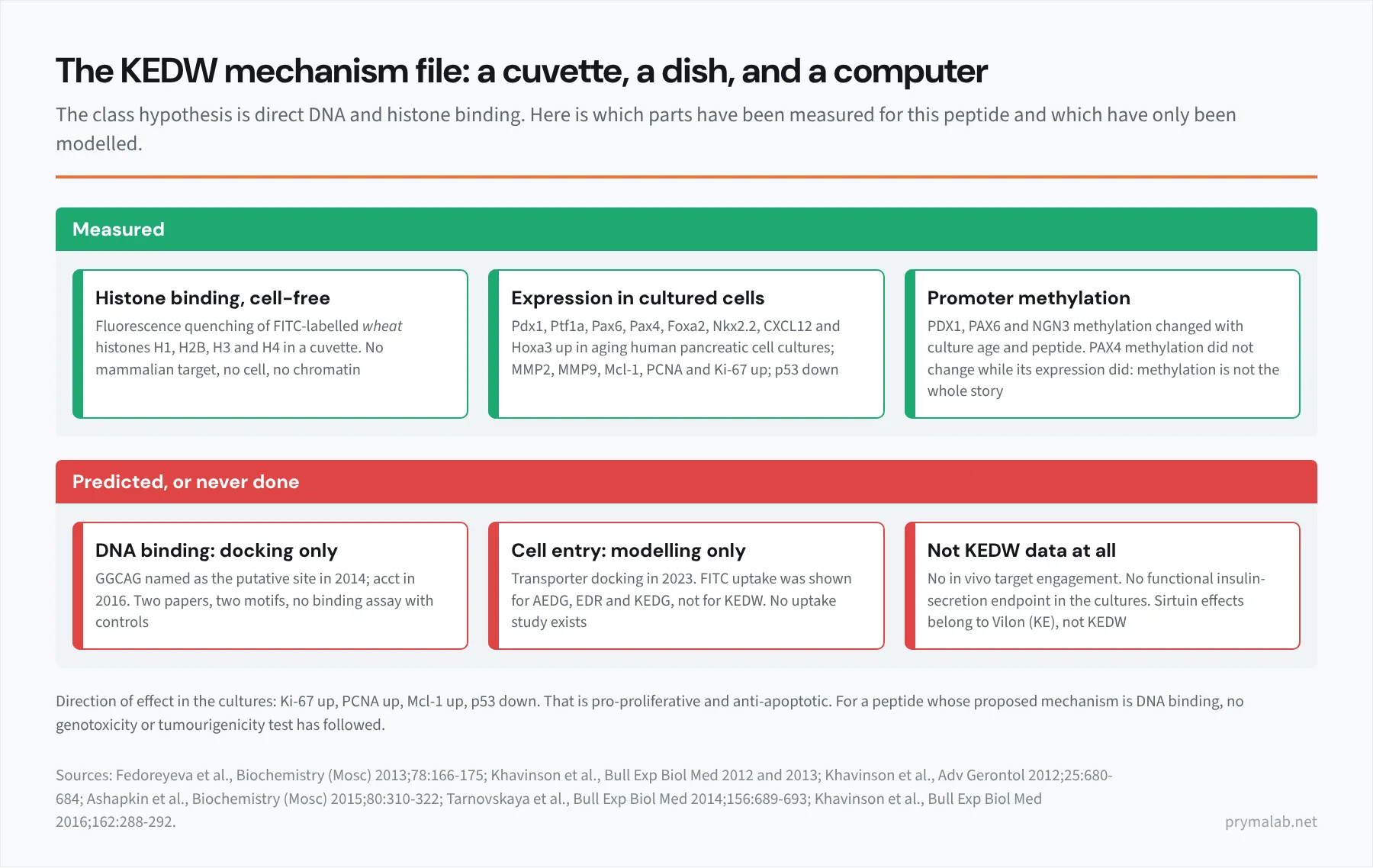
The class hypothesis is that ultrashort peptides enter cells, reach the nucleus and change gene expression by binding DNA directly or by binding histone tails. For KEDW the measured evidence is a cell-free fluorescence-quenching experiment with wheat histones and a set of expression changes in cultured cells. DNA binding itself rests on computer docking, and the two docking papers nominate different sequences.
Measured: histone binding, in a cuvette, in a plant system. Fedoreyeva, Vanyushin and colleagues in Moscow, collaborating with Khavinson, tested six short peptides including KEDW against FITC-labelled wheat histones H1, H2B, H3 and H4, inferring binding from fluorescence quenching and reporting Stern-Volmer constants. Binding depended on the histone, the peptide sequence and the oligonucleotide present, which the authors read as site specificity.[11] What that cannot show is any of the following: a mammalian target, cellular entry, chromatin occupancy in a living cell, a transcriptional consequence, or relevance to pancreatic tissue. Quenching is an indirect readout and the paper reports no orthogonal method such as calorimetry, surface plasmon resonance or chromatin immunoprecipitation.
Measured: gene and protein expression in cultured cells. This is the body of the KEDW literature and the next section goes through it. The short version: in human embryonic pancreatic cell cultures passaged to an "aged" state, KEDW raised expression of pancreatic differentiation factors, raised proliferation markers and the anti-apoptotic protein Mcl-1, and lowered p53.[12][13][3] A methylation study found that promoter methylation of some of those genes changed with culture age and peptide treatment, and that for PAX4 it did not change while expression still did, so methylation cannot be the whole mechanism.[14]
Predicted, not measured: DNA binding. The 2005 abstract had already presumed binding to "ggcagg and cctgcc" in the preproinsulin promoter.[6] A 2014 molecular-mechanics paper placed KEDW in both the minor and the major groove of DNA, described the major-groove interaction as more sequence-specific, and named GGCAG as "the putative binding site for the tetrapeptide".[15] A 2016 docking survey of 19 short peptides from the same group assigned "peptides KEDW and AED to acct sequence".[16] GGCAG and acct are not the same motif, and neither paper measures binding. No KEDW-DNA co-crystal, footprint, gel shift or ChIP result exists.
Predicted, not measured: getting into the cell. The claim that these peptides enter cells rests, for KEDW, on a 2023 modelling paper that docked 26 ultrashort peptides into the LAT1, LAT2 and PEPT1 transporters and found them to score well.[17] The fluorescence microscopy that showed Khavinson peptides entering HeLa cells and their nuclei used FITC-labelled epithalon (AEDG), pinealon (EDR) and testagen (KEDG), not KEDW.[18] A PubMed search for KEDW or pancragen combined with FITC, penetration or uptake returns one review and the 2016 docking paper, and no uptake data.[10] The FITC in the KEDW literature labels wheat histones, not the peptide.
Not KEDW data at all: sirtuins. Secondary sources sometimes credit Pancragen with SIRT1 effects. PubMed returns zero records for KEDW or pancragen combined with sirtuin or SIRT1.[10] The sirtuin and PARP dataset belongs to the dipeptide KE, Vilon, which raised SIRT1 expression 6-fold in cultured mesenchymal stem cells.[19] Attaching it to KEDW is a cross-attribution from a different molecule.
What did the pancreatic cell culture studies show?
In passaged human embryonic pancreatic cell cultures, KEDW increased the expression of transcription factors that mark acinar and islet differentiation, increased proliferation and anti-apoptotic markers, and decreased p53, with larger effects in late-passage "aged" cultures. All of it is immunocytochemistry or expression measurement in a dish, from one laboratory, with no functional endpoint such as insulin secretion.
The 2012 paper established the pattern the group would reuse. Expression of the differentiation factors CXCL12 and Hoxa3 fell in late-passage cultures of human embryonic pancreatic and bronchial cells, and was "tissue-specifically stimulated" by pancragen in pancreatic cells, by bronchogen (AEDL) in bronchial cells, and CXCL12 and WEGC1 by vesugen (KED) in prostatic fibroblasts, with the effect "more pronounced in aged cultures".[12] The 2013 paper extended it to pancreatic lineage factors: in the authors' words, KEDW stimulates the expression of the differentiation factors of acinar cells (Pdx1, Ptf1a) and of islet cells (Pdx1, Pax6, Pax4, Foxa2, Nkx2.2) in both "young" and "aged" cultures.[13] A companion paper in Russian reported that the tetrapeptide "increases the expression of matrix metalloproteinase MMP2, MMP9, serotonin, glycoprotein CD79alpha, antiapoptotic protein Mcl1, proliferation markers PCNA and Ki67 and decreases the expression of proapoptotic protein p53 in aged pancreatic cell cultures".[3]
The 2015 methylation study is the most careful paper in the set, and its honesty is useful. Promoter methylation of PDX1, PAX6 and NGN3 changed with culture age in correlation with expression and was affected by KEDW. The methylation patterns of PAX4 "do not change upon aging and are unaffected by peptides, whereas their expression levels change in both cases", and FOXA2 methylation changed without any correlation to expression. The authors conclude that PAX4 and FOXA2 expression "seem to be controlled by some other mechanisms".[14] In other words, the group's own data say that promoter methylation does not explain everything they see, which is a more modest claim than most summaries of this work make.
What these studies cannot show, and one thing they might be showing
Replicative senescence of a cell line is a model of cellular aging, not of a human pancreas and not of diabetes. The published abstracts do not report blinding of the people scoring the immunocytochemistry, the number of independent biological replicates, or effect sizes with any measure of dispersion for most endpoints. No paper measures insulin secretion, glucose-stimulated or otherwise, in these cultures. The 2013 paper nevertheless ends by calling the tetrapeptide "an effective tool in the treatment of diabetes mellitus and pancreatitis",[13] which is a leap no culture dish can support.
There is also a direction-of-effect question that nobody has followed. Ki-67 up, PCNA up, Mcl-1 up and p53 down describes a pro-proliferative, anti-apoptotic shift. In a pancreas that is not self-evidently a good thing. The paper presents it as "functional activity", and in an aging culture it may be. But a molecule whose proposed mechanism is direct DNA and histone binding, which lowers p53 and raises proliferation markers in pancreatic cells, has had no genotoxicity or tumourigenicity testing of any kind, and the sister dipeptide Vilon, with a similar mechanistic story, shortened tumour latency and raised tumour incidence in HER-2/neu transgenic mice in its own developers' hands.[20] That is not evidence that KEDW does the same. It is a reason the missing experiment should have been run.
What did the rat studies and the patent experiments find?
Four peer-reviewed rat papers exist, from 2005, 2007, 2007 and 2010, and none gives doses, group sizes or glucose values in its abstract: a 2005 alloxan paper that says the peptide "partially restored insulin synthesis", a 2007 morphology paper whose abstract is one sentence, a 2007 streptozotocin study reporting "a pronounced hypoglycemic effect" of oral Pancragen, and a 2010 paper whose abstract reports no results at all. The quantitative animal data are in the patent, which has not been peer reviewed and contradicts itself on units.
The 2005 paper, the one that states the design origin, reports that KEDW "partially restored insulin synthesis in rats with alloxan-induced diabetes" and that "the slope of the sugar curve in this case was similar to that in normal animals", with no numbers in the abstract.[6] A 2007 paper on pancreatic morphology in diabetic rats has a one-sentence abstract stating that a regulatory effect "was shown".[21] The 2007 paper in Wistar rats with streptozotocin-induced diabetes reports that "oral pancragen produced a pronounced hypoglycemic effect during treatment", while "intramuscular pancragen normalized the adhesion of mesenteric capillary endothelium, but did not modify capillary permeability".[22] That is the whole of what the published abstract contains. The 2010 paper evaluated the peptide "during the ontogeny and in experimental streptozotocin-induced diabetes mellitus (a model of rapid experimental aging) by the sum of metabolic parameters characterizing apoptosis", and that sentence is the complete abstract: no n, no dose, no direction of effect.[9] It cannot support any claim. In organotypic culture, Pancragen was one of four peptides tested on explants of heart, lung, prostate and pancreas from 3-week-old and 18-month-old rats; at 0.05 ng/ml it stimulated growth of the tissue-matched explants relative to controls in all age groups, with no counts or statistics in the abstract.[23]
The alloxan experiments in the patent
The richest animal dataset is in US 7,491,703, in rats given alloxan to destroy beta cells. Summarising the examples as the patent states them: Example 2, 21 male rats, glucose reduced 38.4% (range 30 to 47.7%), lethality at day 84 of 70% in controls against 36.4% treated. Example 3, 15 rats, treated in two courses before and after alloxan, glucose down 22 to 30% after one course while control glucose rose 2- to 4.2-fold. Example 4, 23 rats given one of two amounts: the lower amount raised glucose (17.3% on day 1, 12.3% on day 4) while the higher amount lowered it (30%, 23.8%, 26% and 12.7% on days 1, 4, 7 and 17). Example 5, 18 rats, insulin "3.9 fold higher" than control for 8 days after treatment. Example 6, a glucose tolerance test on day 44. Example 7, an insulin challenge on day 28 in which glucose fell 64.8% in healthy rats, 23.4% in diabetic controls and 44.2% in treated animals.[1]
Why that should be discounted heavily: the experiments ran 13 to 23 rats each, roughly 5 to 11 per group, with no power calculation; the tables carry P-value footnotes (P<0.05 to P<0.001 against control) but name no test and define no dispersion measure; the animals are described as "divided at random" with no method given, and blinding is not described; and the document contradicts itself on units. The alloxan amount is given in milligrams per kilogram in Example 2 and in micrograms per kilogram in Example 4, a thousand-fold discrepancy, and the claimed range for the peptide is in micrograms per kilogram in the description but in milligrams per kilogram in Claim 8.[1] A non-monotonic response in which the lower amount moves glucose the wrong way is presented without comment. Patent examples are written to support patentability, not to survive peer review, and these would not.
What did the rhesus monkey study find?
Nine old female rhesus monkeys, aged 20 to 25 years, were split into five given Pancragen intramuscularly for ten days and four given oral glimepiride for ten days. Basal glucose was reported to fall in both groups, and the Pancragen group's insulin and C-peptide responses to a glucose load were described as normalised. There was no placebo or vehicle arm, no randomisation statement, no blinding, and no effect sizes or p-values in the published abstract.
This is the most-cited piece of KEDW evidence, so the design deserves to be spelled out. Goncharova's primate group, with Khavinson as senior author, published two reports in Advances in Gerontology. The 2014 paper compared old and young female Macaca mulatta: after a standard glucose load, old animals cleared glucose more slowly and had higher insulin and C-peptide peaks at 5 and 15 minutes. Pancragen given intramuscularly for 10 days "markedly increased the glucose 'disappearance' rate, normalized the plasma insulin and C-peptide dynamics", and the effect "partially remained 3 weeks after discontinuation".[24] The abstract gives no n for either age group and no numeric effect sizes.
The 2015 paper is the one with a comparator. It "involved 9 old (20-25 years) clinically healthy rhesus monkey females", of whom five received Pancragen intramuscularly for 10 days and four received oral glimepiride for 10 days. Glucose, insulin and C-peptide were measured before, during and after dosing, basally and during glucose tolerance testing. "Pancragen and glimepiride administration induced the decrease of blood glucose basal levels in both groups of old monkeys. Pancragen also normalized insulin and C peptide levels", while glimepiride "led to a more expressed and delayed hypoglycemic effect and C peptide secretion stimulation without any significant effect on insulin secretion".[25]
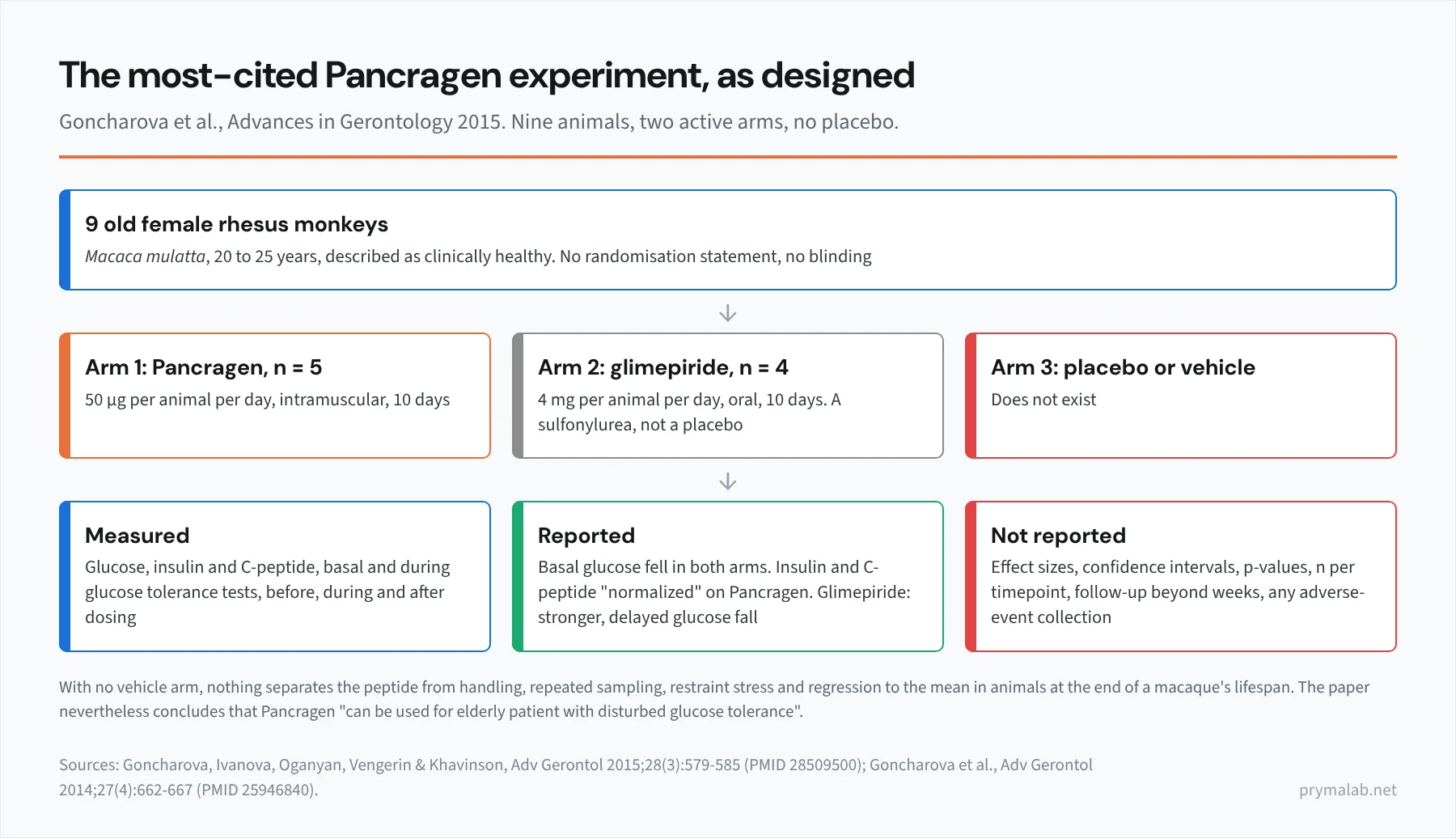
What it cannot show. With no vehicle arm, nothing separates the peptide from the effects of handling, repeated blood sampling, restraint stress and regression to the mean in animals at the end of a macaque's lifespan. Both groups received an active compound, so "both fell" is consistent with both drugs working and equally consistent with neither. Five animals cannot support a stable estimate of anything. The abstract reports no numbers for the changes, no dispersion and no statistics, and the follow-up was ten days of dosing with no durable clinical endpoint. The paper's closing sentence, that Pancragen "is effective and safe for correction of age-related imbalance of endocrine pancreatic function, and can be used for elderly patient with disturbed glucose tolerance",[25] is a clinical recommendation that nine monkeys without a control group cannot license, and I would say so about any compound, including ones I do not sell.
Has Pancragen been tested in humans?
Once, in a peer-reviewed paper, and once more inside the patent. Neither was blinded; only the patent example claims randomisation and a saline placebo, without a method or any statistics. The 2011 paper examined 33 older patients with type 2 diabetes and 30 healthy comparators and reported lower fasting glucose, glucose-tolerance glucose, insulin and insulin resistance index on Pancragen, with no figures in the abstract. No randomised controlled trial exists and ClinicalTrials.gov has no registration.
Korkushko and colleagues at the Institute of Gerontology in Kyiv, with Khavinson as second author, examined two groups of older people, 30 healthy and 33 with type 2 diabetes. Nocturnal melatonin production was 70% lower in the diabetic group. "In patients with DM2, pancragen significantly decreased glucose level on an empty stomach and in standard glucose tolerance test and reduced plasma concentrations of insulin and insulin resistance index. In patients receiving no pancragen, no changes in carbohydrate metabolism indices were observed."[26] The abstract describes no randomisation, no blinding, no placebo and no allocation method; the comparison group is "patients receiving no pancragen", which is an untreated non-randomised comparison. Treatment duration is not stated. No numeric results, dispersion or p-values appear. The design cannot separate a drug effect from regression to the mean, seasonal or dietary change, the effect of being observed, or changes in the patients' other glucose-lowering medicines, which the abstract does not say were held constant. The melatonin finding is cross-sectional and establishes an association only. The paper's title, "Prospects of using pancragen", is an accurate description of its evidentiary status.
The patent contains a second human example: 36 patients aged 16 to 83, 23 with type 1 and 13 with type 2 diabetes, described as "stratified randomly" into 20 treated (16 by injection, 4 by oral tablet) and 16 controls given saline as a placebo "following the same scheme", over 10 days, with change in insulin requirement as the outcome. Insulin dose decreased in 8 treated patients against 0 controls, was unchanged in 6 against 2, and increased in 2 against 14.[1] No statistical test is reported, no randomisation method or blinding is described, and the patent's Table 8 covers only the 16 injected patients and the 16 controls; the 4 oral patients are reported in prose only. An insulin-titration outcome adjusted by unblinded clinicians over ten days, in a mixed type 1 and type 2 population, is a study whose outcome is the clinicians' behaviour. The amounts given to patients in this example are left out of this article; they describe an unreviewed experiment.
Registration status. Queries to the ClinicalTrials.gov API on 7 October 2026 for "Pancragen", "KEDW", "Khavinson" and "peptide bioregulator" each returned a total count of zero.[27] A PubMed search for KEDW or pancragen combined with randomised, placebo or double-blind returns one record, an unrelated atrial-fibrillation cost-effectiveness paper that matches on an author's initials.[10] There is no randomised controlled trial of Pancragen anywhere I can find, and no registered trial that might become one.
What is known about Pancragen's safety?
Almost nothing that would normally be required. The only toxicology statement is the patent's assertion that the peptide "was experimentally proved to be non-toxic", with no species, group size, dose, route, duration or observation to support it. There is no pharmacokinetic, genotoxicity, carcinogenicity, reproductive or immunotoxicity study, and no adverse-event dataset in any human report.
Each of those absences is a search that returned zero records. KEDW or pancragen combined with pharmacokinetic or bioavailability: none, so there is no absorption, half-life, clearance or metabolism data by any route, which means the oral activity claimed in rats[22] and the oral arm in the patent[1] rest on no demonstrated absorption. Combined with genotoxicity, mutagenicity or carcinogenicity: none.[10] For a compound whose proposed mechanism is direct DNA and histone binding and which raised Ki-67 and PCNA while lowering p53 in pancreatic cells,[3] that is the most consequential gap in the file. Reproductive, developmental and immunotoxicity: none found. Adverse events: no human report describes graded adverse events, laboratory safety panels or discontinuations.[26][1] "No adverse events reported" in a file like this means nobody looked systematically, not that nothing happens.
One trap to name. A detailed acute, subacute and chronic toxicology package in mice, rats and guinea pigs exists in a related Khavinson patent, RU 2301678, for a different peptide, H-Glu-Asp-Arg-OH, the tripeptide sold as Pinealon.[28] That data is for EDR and must not be attributed to KEDW, and any secondary source that does so is manufacturing a safety file that does not exist. Likewise the Vilon patent toxicology belongs to Lys-Glu.[29] Each of these peptides has to stand on its own data, and KEDW's is a single unsupported sentence.
What the studies measured, and what they cannot support
The experiments ran in rat explant culture (0.05 ng/ml in the medium), in alloxan-treated rats in the patent, in nine monkeys and in two small human series. None of them connects to the others through a dose-response study, no pharmacokinetic measurement exists in any species, and the patent's own data show the lower of two amounts moving glucose the wrong way.
| Study | System | Route and duration | What was measured | Control |
|---|---|---|---|---|
| Explant culture, 2006[23] | Rat heart, lung, prostate, pancreas explants | In culture medium | Explant growth | Untreated explants |
| Pancreatic cell cultures, 2012 to 2015[12][13][3][14] | Human embryonic pancreatic cells, passaged | Not stated in abstracts | Transcription factor and marker expression; promoter methylation | Not stated in abstracts |
| Streptozotocin rats, 2007[22] | Wistar rats | Oral and intramuscular; doses not in abstract | Glucose; capillary adhesion and permeability | Not described in abstract |
| Alloxan rats, patent[1] | Rats, roughly 5 to 11 per group | Intraperitoneal or intravenous, 7 to 11 days | Glucose, insulin, lethality, glucose tolerance | Alloxan rats given saline; P-values without a named test |
| Rhesus monkeys, 2014[24] | Old and young females, n not stated | Intramuscular, 10 days | Glucose disappearance, insulin, C-peptide | Young animals in separate experiments |
| Rhesus monkeys, 2015[25] | 9 old females | Intramuscular, 10 days (n=5) | Glucose, insulin, C-peptide, GTT | Oral glimepiride (n=4); no placebo |
| Human series, 2011[26] | 33 patients with type 2 diabetes | Not stated in abstract | Fasting and GTT glucose, insulin, insulin resistance index | Patients "receiving no pancragen", non-randomised |
| Human example, patent[1] | 36 patients, type 1 and 2 mixed | Injected or oral, 10 days | Insulin requirement | 16 controls given saline as placebo; randomisation claimed without method; no blinding |
Two observations from the table. First, in no row is the amount given connected to a measured exposure: nobody knows what concentration of KEDW any of these animals or people had in their blood, or for how long. Second, the only dose-ranging data in the whole file, the patent's Example 4, found that the lower amount raised glucose and the higher amount lowered it, which is the opposite of what a simple dose-response would predict and which the document does not discuss.[1] The literature does not contain the dose-response and pharmacokinetic experiments that would be needed to relate any of these amounts to one another.
How does Pancragen differ from Livagen, Ovagen, Vilon and Epitalon?
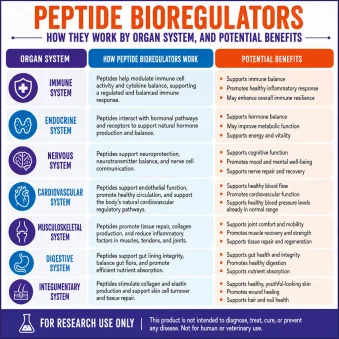
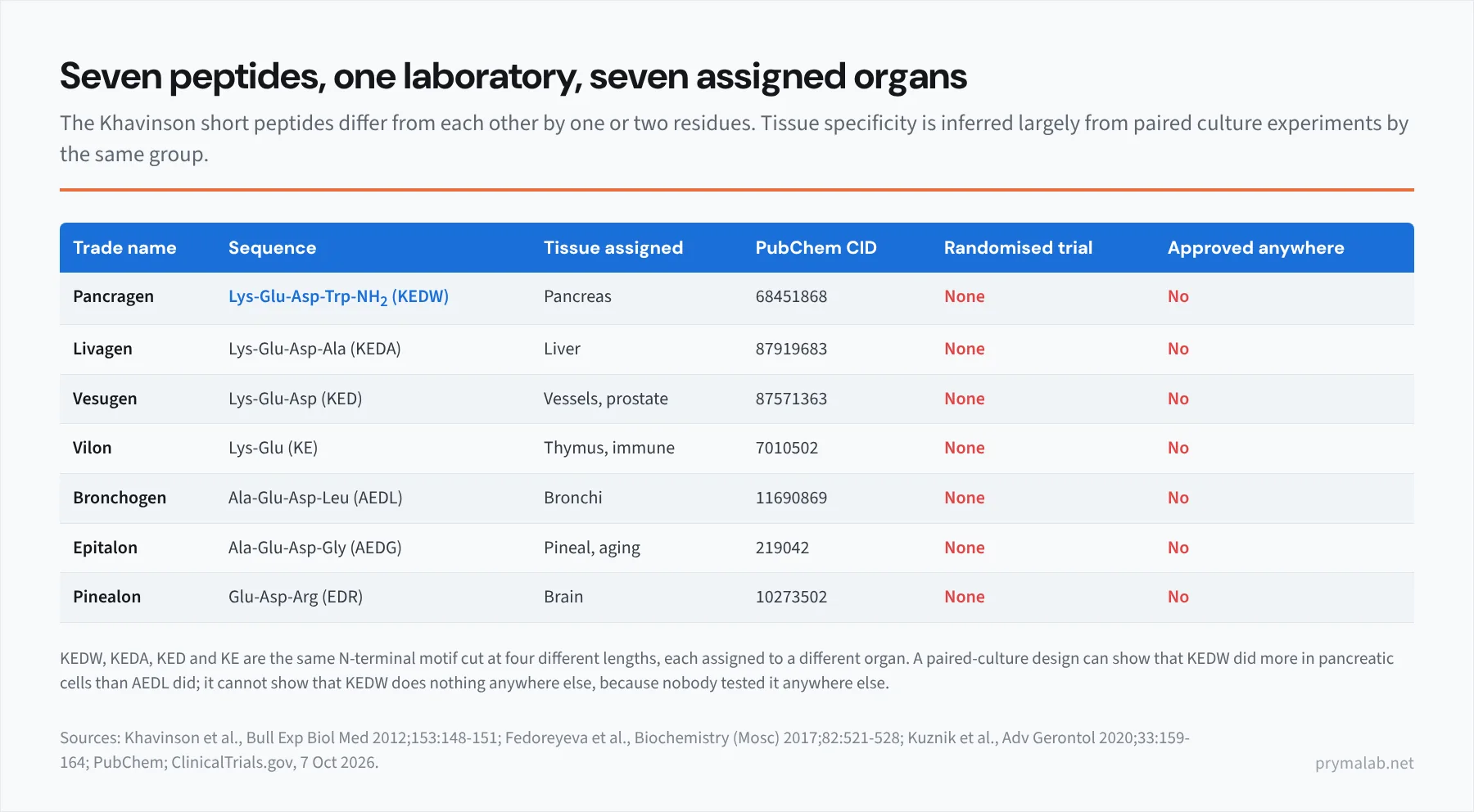
They are different two-to-four-residue sequences from the same programme, each assigned a tissue: Pancragen KEDW to the pancreas, Livagen KEDA to the liver, Vilon KE to the thymus and immune system, Epitalon AEDG to the pineal gland and aging. They share the same evidentiary structure: single-laboratory origin, cell and animal data, open-label human series, no randomised trial and no approval anywhere.
The sequences, verified from primary indexed papers: Vilon is KE, Lys-Glu;[30][19] Epitalon is AEDG, Ala-Glu-Asp-Gly, the most-studied member with well over a hundred PubMed records;[30] Livagen is KEDA, Lys-Glu-Asp-Ala, reviewed alongside the liver polypeptide complex Ventvil;[31] Bronchogen is AEDL, Ala-Glu-Asp-Leu, used as the tissue-specific contrast to KEDW in the pancreatic experiments;[12][14] Vesugen is KED, Lys-Glu-Asp;[12] Pinealon is EDR, Glu-Asp-Arg.[18] Ovagen is marketed as the tripeptide EDL, Glu-Asp-Leu; EDL appears in the group's docking work,[16] but I could not find a primary indexed paper that attaches the trade name to the sequence, so that mapping rests on catalogue descriptions.
Look at the sequences side by side and the structural fact is plain: Pancragen, Livagen, Vesugen and Vilon are KEDW, KEDA, KED and KE. They differ by one or two residues, and each is asserted to act on a different organ. The tissue specificity is inferred largely from paired culture experiments by one group, in which each peptide was tested on its assigned tissue and a sibling tissue.[12][14] That design can show that KEDW did more in pancreatic cells than AEDL did; it cannot show that KEDW does nothing anywhere else, because nobody tested it anywhere else. The family's internal logic is largely self-referential.
Where the siblings have data KEDW lacks: Vilon has a lifespan experiment, a carcinogenesis file in both directions, patent toxicology with actual doses and durations, and docking papers of its own.[7][20][29][32] Epitalon has the FITC uptake data, a telomere-length experiment in human lymphocytes and a 2025 independent review.[18][33][8] Pinealon and Testagen have the HeLa uptake data.[18] KEDW has the histone-quenching experiment and the pancreatic culture series, and nothing in vivo that is both peer-reviewed and quantified. Among the peptides on this list, it has one of the thinnest files.
Why is this evidence a different order from GLP-1 trial evidence?
Because one class has been tested in a way capable of establishing whether it works and what it costs, and the other has not been tested that way at all. This is a statement about study design, not about effect size, and it is not a comparison of efficacy; no efficacy comparison is possible when one side has no controlled data.
GLP-1 receptor agonists were put through large, randomised, blinded, pre-registered, multicentre phase 3 programmes with pre-specified primary endpoints, independent event adjudication and published statistical analysis plans, and then approved by the FDA, the EMA and other regulators on that basis. SUSTAIN-6 randomised 3,297 patients with type 2 diabetes to semaglutide or placebo for 104 weeks against an adjudicated cardiovascular composite.[34] STEP 1 randomised 1,961 adults double-blind, two to one, for 68 weeks.[35] SURPASS-2 randomised 1,879 patients across four arms for 40 weeks against an active comparator.[36] SELECT, the largest semaglutide trial, randomised 17,604 adults with cardiovascular disease and overweight or obesity to semaglutide or placebo.[37]
| Study | Participants | Randomised | Blinded | Placebo or active control | Pre-registered | Duration |
|---|---|---|---|---|---|---|
| SUSTAIN-6, semaglutide[34] | 3,297 | Yes | Yes | Placebo | Yes | 104 weeks |
| STEP 1, semaglutide[35] | 1,961 | Yes | Yes | Placebo | Yes | 68 weeks |
| SURPASS-2, tirzepatide[36] | 1,879 | Yes | Open-label | Semaglutide | Yes | 40 weeks |
| Korkushko 2011, KEDW[26] | 33 with type 2 diabetes; number treated not stated | Not described | Not described | Patients not given Pancragen, non-randomised | No | Not stated |
| Patent example, KEDW[1] | 20 treated, 16 controls | Stated, method not given | Not described | Saline placebo; blinding not described | No | 10 days |
| Goncharova 2015, KEDW[25] | 9 monkeys | Not described | No | Glimepiride; no placebo | No | 10 days |
The KEDW file, set against that: one uncontrolled 33-patient series,[26] one unblinded 36-patient patent example with no statistics,[1] nine monkeys with no placebo arm,[25] a handful of cell-culture expression studies,[12][13][3][14] one plant-histone binding assay,[11] two mutually inconsistent docking papers,[15][16] zero randomised trials, zero registrations,[27] zero pharmacokinetic data and zero genotoxicity data.[10] PrymaLab writes about GLP-1 class compounds elsewhere, including the dual and triple agonist comparison; the point of putting the two side by side here is only that the word "evidence" is doing very different work in the two cases.
Is Pancragen approved or legal anywhere?
No approval for human therapeutic use could be documented from any primary regulatory source. It is not FDA approved and appears on none of the three 503A bulk-substance categories as of 14 May 2026. In Russia it appears to be sold as a non-prescription product; its registration status could not be verified from an official registry. Under the WADA Code it is prohibited at all times as a non-approved substance.
United States. KEDW has no FDA approval for any indication and no marketing application is evident. The FDA's list of bulk drug substances nominated for compounding under section 503A, updated 14 May 2026, covers Category 1 (under evaluation), Category 2 (significant safety concerns) and Category 3 (nominated without adequate support); KEDW, Pancragen and Lys-Glu-Asp-Trp appear in none of them.[38] That means there is no lawful 503A compounding route: the substance has no USP or NF monograph, is not a component of an approved drug, and is not on the list. No FDA warning letter naming KEDW or Pancragen was found. The enforcement context is relevant anyway. In a 31 March 2026 warning letter to a peptide seller, the FDA cited injectable peptides as unapproved new drugs and stated that despite labelling reading "laboratory research purposes only" and "not for human consumption", website evidence showed the products were intended for human use.[39] That letter named GLP-1 class analogues, not any Khavinson peptide, but its reasoning about research-use labelling is general.
Russia and neighbouring states. Pancragen appears to be sold in Russia as a non-prescription product associated with the originating institute and the patent assignees, Access Bioscience and later "Peptid Products".[1] I was unable to verify its registration status or any certificate number from an official registry; the only sources returning such details were sponsored placements and content farms, and I am not going to launder those into a reference. The defensible statement is narrower: KEDW is not an approved medicine in the United States, the European Union, the United Kingdom, Canada, Japan or Australia, and no approval for human therapeutic use in any jurisdiction could be documented from a primary source.
WADA. KEDW is not named on the 2026 Prohibited List. It falls under S0, Non-Approved Substances, which prohibits at all times "any pharmacological substance which is not addressed by any of the subsequent sections of the List and with no current approval by any governmental regulatory health authority for human therapeutic use (e.g. drugs under pre-clinical or clinical development or discontinued, designer drugs, substances approved only for veterinary use)". All S0 substances are specified substances, and the class text gives BPC-157 and 2,4-dinitrophenol as examples.[40] Absence of the name from the list is not permission.
Where PrymaLab fits
PrymaLab supplies Pancragen 20 mg as a lyophilised research reagent, and offers a Pancragen analysis for laboratories verifying identity and content. All of it is for research use only. This page is here so that anyone working with the molecule can see what the literature does and does not contain before relying on a catalogue description, including this site's own.
Two analytical points follow from the chemistry. First, the amide. Lys-Glu-Asp-Trp-NH2 at 575.6 Da and the free-acid Lys-Glu-Asp-Trp-OH at 576.6 Da differ by one dalton, which a low-resolution method can miss; a certificate for Pancragen should state which terminus it is reporting, and a reference standard with the wrong terminus will produce a confident wrong answer. Second, tryptophan. The indole side chain absorbs at 280 nm, which makes UV quantification easier than for the tryptophan-free siblings KE, KED and KEDA, and is also photosensitive and oxidation-prone, so a solution product left in light is a different sample from the one that was tested. The purity testing guide covers what HPLC, mass spectrometry and amino-acid analysis can each establish.
What this article does not settle
- Whether KEDW occurs in a mammalian pancreas. No isolation data exist and the supposed source extract has no indexed record.[1][9][10]
- Whether it enters a mammalian cell. Shown by FITC labelling for AEDG, EDR and KEDG; modelled, not measured, for KEDW.[18][17]
- Which DNA or histone site, if any, it occupies. GGCAG in one paper, acct in another, no binding assay with controls in either.[15][16]
- Whether the culture findings mean anything for insulin secretion in vivo. No study measured insulin secretion in the cultures or connected the expression changes to a physiological endpoint.[13][3]
- Whether anything survives a placebo control. No peer-reviewed human or primate study has included one; the patent example describes a saline placebo group with no blinding and no statistics.[25][26][1]
- Whether an oral formulation is absorbed. Oral activity is claimed in rats and in the patent with no bioavailability data.[22][1]
- Whether a pro-proliferative, p53-lowering profile in pancreatic cells carries risk. Nobody has tested it.[3][10]
- The Russian product status. It appears to be on sale there; its registration status could not be verified from an official registry.
- The Ovagen sequence. Marketed as EDL; not attached to the trade name in any primary indexed paper I could find.[16]
Pancragen, KEDW, Pancramin and pancreatic polypeptide: what the names refer to
Pancragen (Russian Панкраген, often Pancragen®) is the trade name the St Petersburg Institute of Bioregulation and Gerontology gave to the tetrapeptide.[1] KEDW and KEDW-NH2 are the one-letter sequence, with the amide shown explicitly; Lys-Glu-Asp-Trp-NH2 and H-Lys-Glu-Asp-Trp-NH2 are the three-letter forms the group's papers use.[22][3] Lysyl-glutamyl-aspartyl-tryptophanamide is the NLM MeSH supplementary concept name.[2] PubChem CID 68451868 is the compound record, under a depositor code with no common name.[4] Pancreagen is a misspelling. Pancramin is the name given to a pancreatic extract from which KEDW is often said to derive; it has no indexed scientific record.[10] Pancreatic polypeptide is an unrelated 36-residue hormone secreted by PP cells of the islets. Livagen (KEDA), Vesugen (KED), Vilon (KE), Bronchogen (AEDL), Epitalon (AEDG) and Pinealon (EDR) are sibling peptides from the same laboratory, each assigned to a different organ.[12][30][31] None of these is a GLP-1 receptor agonist, an insulin, a sulfonylurea, a DPP-4 inhibitor or any other class of glucose-lowering medicine, and none has the trial record those classes have.
What a certificate of analysis can and cannot settle for KEDW
This tetrapeptide is easier to verify than most of its family, because of one residue. Tryptophan at position four gives the molecule a real chromophore: it absorbs at 280 nm, so a UV purity check works here where it fails for Lys-Glu, Glu-Asp-Arg and the other sequences in the catalogue that contain no aromatic ring at all. A useful CoA for this compound reports purity by HPLC at both 214 and 280 nm, accurate mass against 576.6 g/mol, water content, and the counter-ion with its percentage.
Tryptophan is also the liability. It oxidises readily, and its oxidation products sit 16 and 32 daltons above the parent, which a mass check will see if the method is looking for them and will miss if it is not. Light and dissolved oxygen are what drive it, so the storage instruction is mechanistic rather than conventional. Ask for the lot-specific certificate of analysis rather than a representative one, and if the material is supplied in solution rather than as a solid, ask for the fill date, because the oxidation clock starts there and no CoA written against a powder describes it.
Two things a CoA cannot settle. It cannot confirm the trade name: Pancragen is a vendor designation that does not appear as a PubChem synonym, so the only unambiguous identifier is the sequence Lys-Glu-Asp-Trp or the compound record itself, and a certificate naming the brand rather than the sequence has identified nothing. And it cannot say anything about biological activity. Purity and identity are chemistry. Whether a correctly identified, 99 per cent pure tetrapeptide does what the literature proposes is a separate question that no certificate addresses.
The proposed mechanism of action, and the empty safety file
The mechanism of action proposed for this compound is the class hypothesis of the Khavinson school, applied to pancreatic tissue: a short peptide enters the cell and the nucleus, binds DNA directly in promoter regions, and changes the transcription rate of specific genes. The pancreatic version is unusually specific and therefore unusually checkable, because the genes named are the real master regulators of the organ. What the cell-culture work reported was increased expression of PDX1 and PTF1A for acinar differentiation, and PDX1, PAX6, PAX4, FOXA2 and NKX2.2 among islet factors, in cultures from young and aged human pancreatic tissue, with a follow-up paper reporting altered promoter methylation at PDX1, PAX6 and NGN3.
The step that mechanism needs and has never been shown is transit. No study in any species has traced intact KEDW from the site of administration to a pancreatic cell nucleus, and a tetrapeptide is a ready substrate for serum peptidases. The direct DNA-binding model rests on molecular docking and gel-shift work rather than on a structure.
Glucose metabolism is where the claims land and where the gap between measurement and outcome is widest. Transcription factor expression in dispersed cells is several steps from insulin secretion, and insulin secretion is several steps from glucose handling in a living animal. The rat diabetes study measured blood glucose, capillary permeability and adhesion; the rhesus study, nine old female macaques with five on the peptide and four on glimepiride, reported lower basal glucose with normalised insulin and C-peptide, with no randomisation or blinding described; the single human study, 30 healthy elderly plus 33 elderly patients with type 2 diabetes in Kiev, reported lower fasting and post-load glucose and a lower insulin resistance index in the diabetic group. All of it is from one school, none of it is registered, and none of it has been replicated independently.
On safety the file is empty rather than reassuring. No side effects have been catalogued for this peptide in any species, because no study has been designed to detect them: there is no toxicology package, no pharmacokinetic data, and no systematic adverse-event collection in the human study. Pancreatic disease is a serious category with approved treatments and established monitoring, and nothing here is a treatment for any pancreatic disease. The absence of reported side effects measures how little has been done rather than how safe the compound is.
Frequently asked questions
What is Pancragen peptide?
Pancragen is the trade name for the synthetic tetrapeptide Lys-Glu-Asp-Trp-NH2 (KEDW), developed at the St Petersburg Institute of Bioregulation and Gerontology, with a patent filed in 2003 as a "tetrapeptide regulating blood glucose level in diabetes mellitus". The US patent lapsed in 2021. It is sold as a research peptide and is not an approved medicine anywhere.
What is KEDW peptide?
KEDW is the same molecule written as its one-letter sequence: lysine (K), glutamic acid (E), aspartic acid (D) and tryptophan (W), with a C-terminal amide. C26H37N7O8, 575.6 g/mol, PubChem CID 68451868. No CAS registry number could be verified from a primary source, and PubChem carries only a depositor code as a synonym.
How was the KEDW sequence derived?
By sequence analysis, according to the one group paper that addresses it. Khavinson's 2005 paper states that analysis of the amino-acid sequences of insulinotropic polypeptides revealed a common four-residue fragment and that KEDW was synthesised as an analogue of it, protected from gastrointestinal proteinases. No paper reports isolating it from pancreatic tissue, and the extract it is often said to come from, Pancramin, returns zero records in PubMed and Europe PMC.
Has Pancragen been tested in humans?
Minimally and without controls. One peer-reviewed series examined 33 older patients with type 2 diabetes and 30 healthy comparators, with no randomisation, blinding or placebo described and no numeric results in the abstract. A 36-patient, 10-day example inside the patent mixed type 1 and type 2 diabetes, describes a saline placebo group, and reports no blinding and no statistical test. That is the entire human record.
Is there a randomised controlled trial of Pancragen?
No. No randomised controlled trial exists in the indexed literature, and ClinicalTrials.gov returned zero registrations for Pancragen, KEDW, Khavinson or peptide bioregulator when queried on 7 October 2026.
What did the Pancragen rhesus monkey study find?
In nine old female rhesus monkeys aged 20 to 25, five received intramuscular Pancragen for 10 days and four received oral glimepiride. Basal glucose was reported to fall in both groups, and Pancragen was reported to normalise insulin and C-peptide. There was no placebo arm, no randomisation statement, no blinding, and no effect sizes or p-values in the abstract, so the study cannot show that the peptide caused the change.
Does Pancragen treat diabetes?
No. There is no controlled evidence that it treats diabetes or any other condition, it is not approved as a treatment anywhere, and it should not be used in place of or alongside prescribed diabetes therapy. The whole human record is one non-randomised series and one unblinded, unreviewed patent example, together fewer than seventy patients. Nothing in this article is a reason to change any medicine.
Is Pancragen approved anywhere?
No approval for human therapeutic use could be documented from any primary regulatory source. It is not approved in the United States, the European Union, the United Kingdom, Canada, Japan or Australia. In Russia it appears to be sold as a non-prescription product; its registration status could not be verified from an official registry.
Is Pancragen on any FDA list?
No. It is not FDA approved, and it appears in none of the three categories of the FDA's 503A bulk drug substances list as updated 14 May 2026, so there is no lawful 503A compounding route. No FDA warning letter naming it was found, though in a March 2026 letter to a peptide seller the FDA stated that "laboratory research purposes only" labelling does not control when other evidence shows human-use intent.
Is Pancragen banned by WADA?
It is not named on the WADA 2026 Prohibited List, but it is prohibited at all times under S0, Non-Approved Substances, which covers any pharmacological substance with no current approval by any governmental regulatory health authority for human therapeutic use. Absence of the name is not permission.
How is Pancragen different from Livagen or Ovagen?
They are different sequences from the same programme assigned to different tissues: Pancragen is KEDW (pancreas), Livagen is KEDA, Lys-Glu-Asp-Ala (liver), and Ovagen is marketed as EDL, Glu-Asp-Leu, though that trade-name mapping is not attached to the sequence in any primary indexed paper. Pancragen and Livagen differ by a single C-terminal residue. All share the same evidentiary weakness: single-laboratory origin, no randomised trials, no approvals.
What is unknown about Pancragen's safety?
Almost everything a regulator would require. There is no pharmacokinetic data, no genotoxicity, mutagenicity or carcinogenicity study, no reproductive or developmental toxicity data, and no systematic adverse-event dataset. The only toxicology statement is the patent's bare assertion of non-toxicity with no supporting species, dose, route or duration. Detailed toxicology that exists for the related peptide EDR must not be attributed to KEDW.
What should a certificate of analysis show for Pancragen?
Purity by HPLC at both 214 and 280 nm, since the C-terminal tryptophan gives this compound a real chromophore, plus accurate mass against 576.6 g/mol, water content and counter-ion percentage. Oxidation products sit 16 and 32 daltons above the parent. Ask for the lot-specific CoA, and for the fill date if the material is in solution, because no CoA written against a powder describes a solution's age.
Can a CoA confirm this is Pancragen?
Only by sequence. Pancragen is a vendor designation and is not a PubChem synonym, so the unambiguous identifier is Lys-Glu-Asp-Trp or the compound record. A certificate naming the brand rather than the sequence has identified nothing. No CoA addresses biological activity either; purity and identity are chemistry questions.
What is the proposed mechanism of action?
The Khavinson class hypothesis applied to the pancreas: the peptide enters the nucleus, binds promoter DNA directly, and changes transcription. The cell work reported increased PDX1 and PTF1A for acinar differentiation and PDX1, PAX6, PAX4, FOXA2 and NKX2.2 among islet factors, with a follow-up on promoter methylation. The missing step is transit: no study has traced intact KEDW to a pancreatic nucleus in any species.
Does it affect glucose metabolism?
The measurements are several steps removed from the claim. A rat diabetes study measured blood glucose, capillary permeability and adhesion; a rhesus study of nine old macaques, five on peptide and four on glimepiride, reported lower basal glucose without randomisation or blinding; one human study of 30 healthy elderly plus 33 with type 2 diabetes reported lower fasting and post-load glucose. All from one school, none registered, none independently replicated.
What side effects are known?
None have been catalogued in any species, because no study was designed to detect them. There is no toxicology package, no pharmacokinetic data and no systematic adverse-event collection in the human study. Pancreatic disease has approved treatments and established monitoring, and nothing here is a treatment for any pancreatic disease.
References
- Khavinson VK, Malinin VV, Ryzhak GA, Grigoriev EI. Tetrapeptide regulating blood glucose level in diabetes mellitus. US patent 7,491,703 B2, granted 17 February 2009; priority RU 2003135605, 10 December 2003; PCT/RU2004/000318; family RU2242241, WO2005056580, CA2547873, EP1697401, EA008541. Lapsed for non-payment of maintenance fees, 2021. Contains the alloxan-rat examples, the 36-patient human example and the non-toxicity assertion discussed in the text. Google Patents
- National Library of Medicine, MeSH Supplementary Concept Record: lysyl-glutamyl-aspartyl-tryptophanamide (entry terms Lys-Glu-Asp-Trp-NH2; KEDW-NH2; pancragen), mapped to Oligopeptides. Retrieved 7 October 2026. NCBI MeSH
- Khavinson VKh, Sevost'ianova NN, Durnova AO, et al. [Tetrapeptide stimulates functional activity of the pancreatic cells in aging]. Adv Gerontol. 2012;25(4):680-4. PMID 23734516
- PubChem, National Library of Medicine: CID 68451868 (H-Lys-Glu-Asp-Trp-NH2). C26H37N7O8, 575.6 g/mol, InChIKey WKJHPWJUFPYRSF-LEAZDLGRSA-N; single synonym SCHEMBL2942999. PUG-REST retrieval 7 October 2026. PubChem
- PubChem, National Library of Medicine: CID 7010502 (lysylglutamic acid, Lys-Glu, Vilon), CID 100094 (Glu-Trp, Thymogen), CID 219042 (Ala-Glu-Asp-Gly, Epitalon). Synonym and identifier records retrieved 7 October 2026. PubChem
- Khavinson VK. Effect of tetrapeptide on insulin biosynthesis in rats with alloxan-induced diabetes. Bull Exp Biol Med. 2005;140(4):452-4. The one indexed statement of how the sequence was derived. PMID 16671579
- Anisimov VN, Khavinson VK, Mikhalski AI, et al. Effect of synthetic thymic and pineal peptides on biomarkers of ageing, survival and spontaneous tumour incidence in female CBA mice. Mech Ageing Dev. 2001;122(1):41-68. PMID 11163623
- Araj SK, Brzezik J, Mądra-Gackowska K, et al. Overview of Epitalon-Highly Bioactive Pineal Tetrapeptide with Promising Properties. Int J Mol Sci. 2025;26(6). PMID 40141333
- Khavinson VKh, Gapparov MM, Sharanova NE, et al. Study of biological activity of Lys-Glu-Asp-Trp-NH2 endogenous tetrapeptide. Bull Exp Biol Med. 2010;149(3):351-3. The published abstract consists of a single sentence and reports no results. PMID 21246099
- NCBI PubMed E-utilities and Europe PMC REST searches run 7 October 2026. Zero-record queries: (KEDW OR pancragen) AND pharmacokinetic* OR bioavailability; AND genotox* OR mutagen* OR carcinogen*; AND sirtuin OR SIRT1; AND FITC OR penetration OR uptake (one review and the 2016 docking paper only); "pancramin" OR "pancramine" in both databases. (KEDW OR pancragen) AND randomi* OR placebo OR double-blind returns one unrelated record (PMID 33280436). PubMed
- Fedoreyeva LI, Smirnova TA, Kolomijtseva GY, et al. Interaction of short peptides with FITC-labeled wheat histones and their complexes with deoxyribooligonucleotides. Biochemistry (Mosc). 2013;78(2):166-75. PMID 23581987
- Khavinson VKh, Linkova NS, Polyakova VO, et al. Peptides tissue-specifically stimulate cell differentiation during their aging. Bull Exp Biol Med. 2012;153(1):148-51. PMID 22808515
- Khavinson VKh, Durnova AO, Polyakova VO, et al. Effects of pancragen on the differentiation of pancreatic cells during their ageing. Bull Exp Biol Med. 2013;154(4):501-4. PMID 23486591
- Ashapkin VV, Linkova NS, Khavinson VKh, et al. Epigenetic mechanisms of peptidergic regulation of gene expression during aging of human cells. Biochemistry (Mosc). 2015;80(3):310-22. PMID 25761685
- Tarnovskaya SI, Yakutseni PP, Khavinson VKh. Study of interactions between DNA and tetrapeptides using methods of molecular mechanics. Bull Exp Biol Med. 2014;156(5):689-93. PMID 24770759
- Khavinson VK, Lin'kova NS, Tarnovskaya SI. Short Peptides Regulate Gene Expression. Bull Exp Biol Med. 2016;162(2):288-292. PMID 27909961
- Khavinson VK, Linkova NS, Rudskoy AI, et al. Feasibility of Transport of 26 Biologically Active Ultrashort Peptides via LAT and PEPT Family Transporters. Biomolecules. 2023;13(3). PMID 36979488
- Fedoreyeva LI, Kireev II, Khavinson VKh, et al. Penetration of short fluorescence-labeled peptides into the nucleus in HeLa cells and in vitro specific interaction of the peptides with deoxyribooligonucleotides and DNA. Biochemistry (Mosc). 2011;76(11):1210-9. PMID 22117547
- Khavinson VK, Linkova NS, Ashapkin VV, et al. [KE peptide regulates SIRT1, PARP1, PARP2 gene expression and protein synthesis in human mesenchymal stem cells aging.]. Adv Gerontol. 2023;36(3):302-312. PMID 37782636
- Anisimov VN, Khavinson VK, Provinciali M, et al. Inhibitory effect of the peptide epitalon on the development of spontaneous mammary tumors in HER-2/neu transgenic mice. Int J Cancer. 2002;101(1):7-10. PMID 12209581
- Kvetnoi IM, Ryzhak AP, Kostyuchek IN, et al. Effect of tetrapeptide pancragene on functional morphology of the pancreas in rats with experimental diabetes mellitus. Bull Exp Biol Med. 2007;143(3):368-71. PMID 18225766
- Khavinson VKh, Gavrisheva NA, Malinin VV, et al. Effect of pancragen on blood glucose level, capillary permeability and adhesion in rats with experimental diabetes mellitus. Bull Exp Biol Med. 2007;144(4):559-62. PMID 18642713
- Zakutskiĭ AN, Chalisova NI, Ryzhak GA, et al. [The tissue-specific effect of synthetic peptides-biologic regulators in organotypic tissues culture in young and old rats]. Adv Gerontol. 2006;19:93-6. PMID 17152728
- Goncharova ND, Ivanova LG, Oganian TÉ, et al. [Impact of tetrapeptide pancragen on endocrine function of the pancreas in old monkeys]. Adv Gerontol. 2014;27(4):662-7. PMID 25946840
- Goncharova ND, Ivanova LG, Oganyan TE, et al. [Correction of impaired glucose tolerance using tetrapeptide (Pancragen) in old female rhesus monkeys]. Adv Gerontol. 2015;28(3):579-585. PMID 28509500
- Korkushko OV, Khavinson VKh, Shatilo VB, et al. Prospects of using pancragen for correction of metabolic disorders in elderly people. Bull Exp Biol Med. 2011;151(4):454-6. PMID 22448364
- ClinicalTrials.gov API v2, queries "Pancragen", "KEDW", "Khavinson" and "peptide bioregulator", run 7 October 2026: total count 0 for each. A free-text query for "Lys-Glu-Asp-Trp" returns only unrelated amino-acid and ketosis studies. ClinicalTrials.gov
- Khavinson VKh, et al. Peptide stimulating regeneration of central nervous system neurons (H-Glu-Asp-Arg-OH, Pinealon). Russian patent RU 2301678 C1. Contains acute, subacute and chronic toxicology for EDR, not for KEDW. Google Patents
- Khavinson VKh, Morozov VG, Malinin VV, Seryi SV. Use of a dipeptide for stimulating repair processes. US patent 6,642,201 B1, filed 27 May 1999, granted 4 November 2003 (expired). Includes the applicant toxicology summaries. Google Patents
- Fedoreyeva LI, Dilovarova TA, Ashapkin VV, et al. Short Exogenous Peptides Regulate Expression of CLE, KNOX1, and GRF Family Genes in Nicotiana tabacum. Biochemistry (Mosc). 2017;82(4):521-528. Gives the sequences of Vilon (KE), Epitalon (AEDG) and Bronchogen (AEDL). PMID 28371610
- Kuznik BI, Khasanova NB, Ryzhak GA, et al. [The influence of polypeptide liver complex and tetrapeptide KEDA on organism physiological function in norm and age-related pathology.]. Adv Gerontol. 2020;33(1):159-164. PMID 32362099
- Khavinson VK, Linkova NS, Ashapkin VV, et al. [KE peptide regulates SIRT1, PARP1, PARP2 gene expression and protein synthesis in human mesenchymal stem cells aging.]. Adv Gerontol. 2023;36(3):302-312. PMID 37782636
- Khavinson VK, Pendina AA, Efimova OA, et al. Effect of Peptide AEDG on Telomere Length and Mitotic Index of PHA-Stimulated Human Blood Lymphocytes. Bull Exp Biol Med. 2019;168(1):141-144. PMID 31761987
- Marso SP, Bain SC, Consoli A, et al. Semaglutide and Cardiovascular Outcomes in Patients with Type 2 Diabetes. N Engl J Med. 2016;375(19):1834-1844. PMID 27633186
- Wilding JPH, Batterham RL, Calanna S, et al. Once-Weekly Semaglutide in Adults with Overweight or Obesity. N Engl J Med. 2021;384(11):989-1002. PMID 33567185
- Frías JP, Davies MJ, Rosenstock J, et al. Tirzepatide versus Semaglutide Once Weekly in Patients with Type 2 Diabetes. N Engl J Med. 2021;385(6):503-515. PMID 34170647
- Lincoff AM, Brown-Frandsen K, Colhoun HM, et al. Semaglutide and Cardiovascular Outcomes in Obesity without Diabetes. N Engl J Med. 2023;389(24):2221-2232. PMID 37952131
- US Food and Drug Administration. Bulk drug substances nominated for use in compounding under section 503A of the FD&C Act, Categories 1 to 3. Updated 14 May 2026. KEDW, Pancragen and Lys-Glu-Asp-Trp absent from all categories. FDA (PDF)
- US Food and Drug Administration. Warning letter to Lovega LLC d/b/a Pink Pony Peptides, CMS 721088, 31 March 2026. Addresses "laboratory research purposes only" and "not for human consumption" labelling on injectable peptide products. FDA
- World Anti-Doping Agency. World Anti-Doping Code International Standard: Prohibited List 2026, effective 1 January 2026. Section S0, Non-Approved Substances. WADA
Final disclaimer: This article is an educational research reference appraising published cell, animal and uncontrolled human studies and regulatory records. Pancragen (KEDW) is not approved by the FDA or by any regulator this review could identify, and it is not a treatment for diabetes or any other condition. PrymaLab supplies it for laboratory research only. Statements have not been evaluated by the FDA. Nothing here is medical advice, no dosing or administration guidance is given or implied, and nothing here is a reason to change any prescribed medicine.
Research-grade material is not a pharmaceutical product and none of the findings above describe or support any use of it in people. Always verify the legal status of any research compound in your jurisdiction before purchase or use.
Formats stocked for the compounds in this article
Pancragen: Pancragen 20mg preloaded 3ml pen. Every listing is supplied for laboratory research use with a batch certificate of analysis.