

$45.99 / month – $389.99
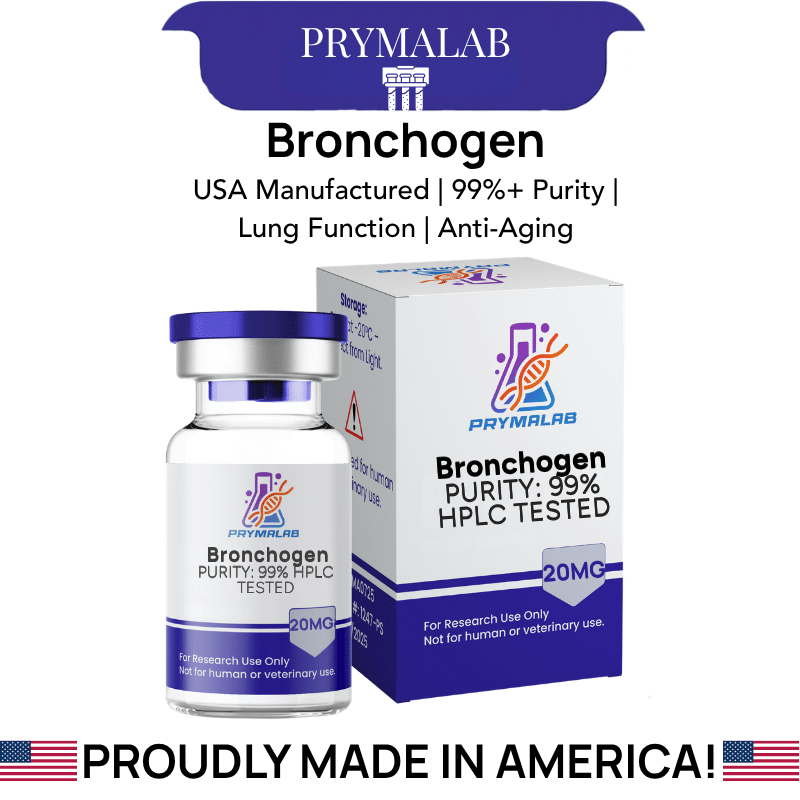
Bronchogen peptide (AEDL) is a Khavinson tetrapeptide bioregulator targeting bronchial and pulmonary tissue. This research-grade compound modulates gene expression in bronchial epithelial cells and alveolar pneumocytes for preclinical respiratory aging and lung function research. 20mg lyophilized powder, =98% purity, COA included.
Bronchogen peptide is a synthetic tetrapeptide bioregulator with the amino acid sequence Ala-Glu-Asp-Leu (AEDL), developed by Professor Vladimir Khavinson at the St. Petersburg Institute of Bioregulation and Gerontology. Bronchogen targets bronchial and pulmonary tissue, functioning as a lung bioregulator that modulates gene expression in bronchial epithelial cells, alveolar type II pneumocytes, and supporting respiratory structures. It belongs to the Khavinson bioregulator peptides class — short regulatory peptides that exhibit tissue-specific gene expression modulation at physiological concentrations — and has been studied in preclinical models of respiratory aging, chronic bronchial disease, pulmonary tissue repair, and age-related lung functional decline.
The respiratory system faces a unique aging challenge: continuous exposure to environmental oxidants, particulate matter, and pathogens creates cumulative tissue damage that compounds epigenetic aging of bronchial and alveolar cells. Unlike the liver or skin, pulmonary tissue has limited regenerative capacity, making the preservation and restoration of existing respiratory cell function critical to maintaining lung health during aging. Bronchogen addresses this challenge at the transcriptional level, modulating the gene expression programs that govern bronchial epithelial integrity, mucociliary clearance, and alveolar gas exchange. PrymaLab Bronchogen 20mg is manufactured to high purity standards and supplied exclusively for qualified preclinical research.
| Specification | Detail |
|---|---|
| Compound | Bronchogen (tetrapeptide bioregulator) |
| Sequence | Ala-Glu-Asp-Leu (AEDL) |
| Quantity | 20mg |
| Target Tissue | Bronchial epithelium, alveolar pneumocytes, pulmonary parenchyma |
| Class | Khavinson bioregulator peptide (short regulatory peptide) |
| Purity | ≥98% (HPLC-verified per batch) |
| Testing | HPLC, mass spectrometry, identity verification |
| Form | Lyophilized powder |
| Storage | Store at −20°C desiccated; protect from light |
| Intended Use | Preclinical research only — not for human or veterinary therapeutic use |
Bronchogen operates through the peptide-DNA interaction mechanism described by Professor Khavinson’s research group, wherein the AEDL sequence selectively binds specific DNA motifs within gene promoter regions of respiratory cells and modulates chromatin conformation. In bronchial and alveolar tissue, bronchogen influences the expression of genes governing epithelial barrier function, mucin production, surfactant synthesis, and inflammatory response regulation. This epigenetic mechanism operates at physiologically relevant concentrations, distinguishing bioregulator peptides from pharmacological bronchodilators or anti-inflammatory agents.
The bronchial epithelium serves as the primary barrier between the external environment and pulmonary tissue. Age-related decline in epithelial tight junction protein expression, ciliary beat frequency, and mucin composition compromises this barrier, increasing susceptibility to infection and environmental damage. Bronchogen research has demonstrated modulation of genes governing epithelial cell-cell adhesion, ciliary protein expression, and mucin glycoprotein production, positioning it as a research tool for studying the maintenance of bronchial barrier function during aging.
At the alveolar level, bronchogen targets type II pneumocytes — the cells responsible for surfactant production and alveolar epithelial renewal. Age-related decline in surfactant synthesis impairs gas exchange efficiency and reduces alveolar compliance. Preclinical research has shown that bronchogen modulates surfactant protein gene expression and supports type II pneumocyte function, addressing the alveolar component of respiratory aging that directly impacts oxygen transfer capacity.
Published studies on bronchogen peptide benefits report multiple respiratory-specific effects relevant to lung aging and pulmonary research. All findings described below are from preclinical animal and cell culture models.
The most consistently reported bronchogen peptide benefit is the restoration of bronchial epithelial integrity in aged and damaged respiratory tissue models. Studies demonstrate improved tight junction protein expression, normalized mucociliary clearance rates, and enhanced epithelial cell renewal in aged bronchial tissue exposed to bronchogen. These findings suggest that epigenetic modulation can counteract the progressive breakdown of the bronchial barrier that characterizes respiratory aging.
Chronic low-grade airway inflammation accelerates pulmonary aging and contributes to age-related respiratory diseases. Among the documented bronchogen benefits, suppression of pro-inflammatory gene expression in bronchial tissue (including reduced NF-κB pathway activation, decreased IL-8 and TNF-α expression) and enhanced anti-inflammatory mediator production have been consistently reported. These anti-inflammatory effects distinguish bronchogen from conventional bronchodilators that address symptoms rather than underlying inflammatory gene programs.
Adequate surfactant production is essential for alveolar stability and efficient gas exchange. Bronchogen research reports enhanced surfactant protein gene expression (SP-A, SP-B, SP-D) and improved alveolar type II pneumocyte function in aged pulmonary tissue models. These findings have particular relevance to research on age-related declines in respiratory capacity and oxygen saturation.
Progressive pulmonary fibrosis reduces lung compliance and impairs respiratory function during aging. Preclinical bronchogen studies report modulation of fibrotic gene expression in lung tissue, including reduced collagen deposition and decreased transforming growth factor beta signaling in respiratory interstitium. These anti-fibrotic effects position bronchogen as a research compound for studying the reversibility of age-related pulmonary stiffening.
Long-term animal studies by the Khavinson group have reported that bronchogen administration is associated with preserved lung function parameters, maintained respiratory capacity, and reduced histological signs of pulmonary aging in chronically treated cohorts compared to controls. These respiratory anti-aging observations support the broader bioregulatory hypothesis that tissue-specific gene expression modulation can slow organ-specific aging trajectories.
Published research provides context for bronchogen dosage parameters across experimental paradigms. The following represents reported dosage ranges from preclinical literature and is intended solely to inform research protocol design.
| Research Application | Reported Dosage Range | Protocol Context |
|---|---|---|
| Cell Culture (Bronchial Epithelial) | 10–100 nM | Gene expression and barrier function studies |
| Respiratory Aging Models | 1–10 µg/kg | Chronic administration in aged rodent pulmonary studies |
| Airway Inflammation Models | 5–20 µg/kg | Anti-inflammatory protocols in chronic bronchial paradigms |
| Combined Respiratory Protocols | 1–10 µg/kg each | Multi-peptide regimens (e.g., bronchogen + chonluten) |
Important: These are reported research dosages from published preclinical literature. Optimal dosing depends on experimental design, animal model, route of administration, and research objectives. This product is not intended for therapeutic use.
Researchers studying respiratory aging often compare bronchogen and chonluten because both target the respiratory system within the Khavinson bioregulator framework. Understanding their distinct tissue targets and mechanisms is essential for selecting the appropriate respiratory bioregulator peptide for specific research applications.
| Feature | Bronchogen | Chonluten |
|---|---|---|
| Classification | Lung bioregulator (bronchial/pulmonary tissue) | Respiratory bioregulator (bronchopulmonary mucosa) |
| Sequence | Ala-Glu-Asp-Leu (AEDL) | Glu-Asp-Gly (EDG) |
| Primary Target | Bronchial epithelium, alveolar pneumocytes | Respiratory mucosal epithelium, submucosal glands |
| Mechanism Focus | Epithelial barrier, surfactant production, gas exchange | Mucosal immunity, secretory function, mucosal renewal |
| Anti-Inflammatory Profile | NF-κB suppression, IL-8 and TNF-α reduction | Mucosal immune modulation, secretory IgA support |
| Key Research Application | Bronchial integrity, alveolar function, pulmonary fibrosis | Mucosal barrier defense, respiratory mucosal aging |
| Best For | Structural lung aging: epithelium, alveoli, fibrosis | Mucosal respiratory aging: immunity, secretion, defense |
| Combined Use | Complementary: structural + mucosal respiratory support | Complementary: mucosal + structural respiratory support |
The bronchogen-chonluten combination represents the most comprehensive respiratory bioregulator research approach in the Khavinson system, with bronchogen addressing the structural and functional components of the lung (epithelial barrier, alveolar gas exchange, surfactant) and chonluten targeting the mucosal immune defense layer. Researchers investigating systemic respiratory aging may benefit from protocols incorporating both peptides for complete airway coverage.
PrymaLab supplies Bronchogen 20mg as a high-purity research-grade lung bioregulator peptide verified at ≥98% purity by reverse-phase HPLC and identity-confirmed by mass spectrometry. Each batch ships with a unique lot number and Certificate of Analysis. Independent third-party testing ensures unbiased quality verification and full traceability for GLP-compliant pulmonary and respiratory research.
Bronchogen is a synthetic tetrapeptide bioregulator (Ala-Glu-Asp-Leu, AEDL) developed by Professor Khavinson targeting bronchial and pulmonary tissue. It modulates gene expression in bronchial epithelial cells, alveolar type II pneumocytes, and supporting respiratory structures. Research applications include respiratory aging, chronic bronchial disease, pulmonary fibrosis, and lung function preservation in preclinical models.
Published preclinical research reports bronchogen peptide benefits including restored bronchial epithelial barrier function (improved tight junctions and mucociliary clearance), anti-inflammatory gene modulation in airway tissue, enhanced surfactant protein expression in alveolar cells, reduced pulmonary fibrotic gene expression, and preserved lung function parameters in longitudinal aging models. All benefits are from preclinical research.
Both bronchogen (AEDL) and chonluten (EDG) target the respiratory system, but they address different tissue layers. Bronchogen focuses on structural lung components (bronchial epithelium, alveolar pneumocytes, surfactant production) while chonluten targets the mucosal defense layer (mucosal immunity, secretory function, mucosal renewal). Combined protocols may provide comprehensive respiratory bioregulation.
Published bronchogen peptide dosage ranges include 10–100 nM for cell culture studies and 1–10 µg/kg for in vivo respiratory aging models. Dosing depends on experimental design, model system, and research objectives. This product is for preclinical research only and is not intended for therapeutic dosing.
Store lyophilized bronchogen at −20°C, desiccated and protected from light, for 24+ months stability. After reconstitution, store at 2–8°C and use within 2–4 weeks. Aliquot to avoid freeze-thaw cycles.
For Research Use Only. PrymaLab Bronchogen 20mg is intended exclusively for qualified preclinical research use. This product is not intended for human consumption, therapeutic use, veterinary treatment, or any application outside controlled research environments. Bronchogen has not been approved by the FDA or any equivalent regulatory authority for therapeutic use. All research applications described are from published preclinical and gerontological literature. Researchers are responsible for regulatory compliance.
| Weight | N/A |
|---|---|
| Dimensions | N/A |
Only logged in customers who have purchased this product may leave a review.

support@prymalab.net info@prymalab.net

30 Day return window. Satisfaction guaranteed or your money back.

All orders over %150 in value will receive free shipping.
Reviews
There are no reviews yet.