
Description
PrymaLab · Research use only
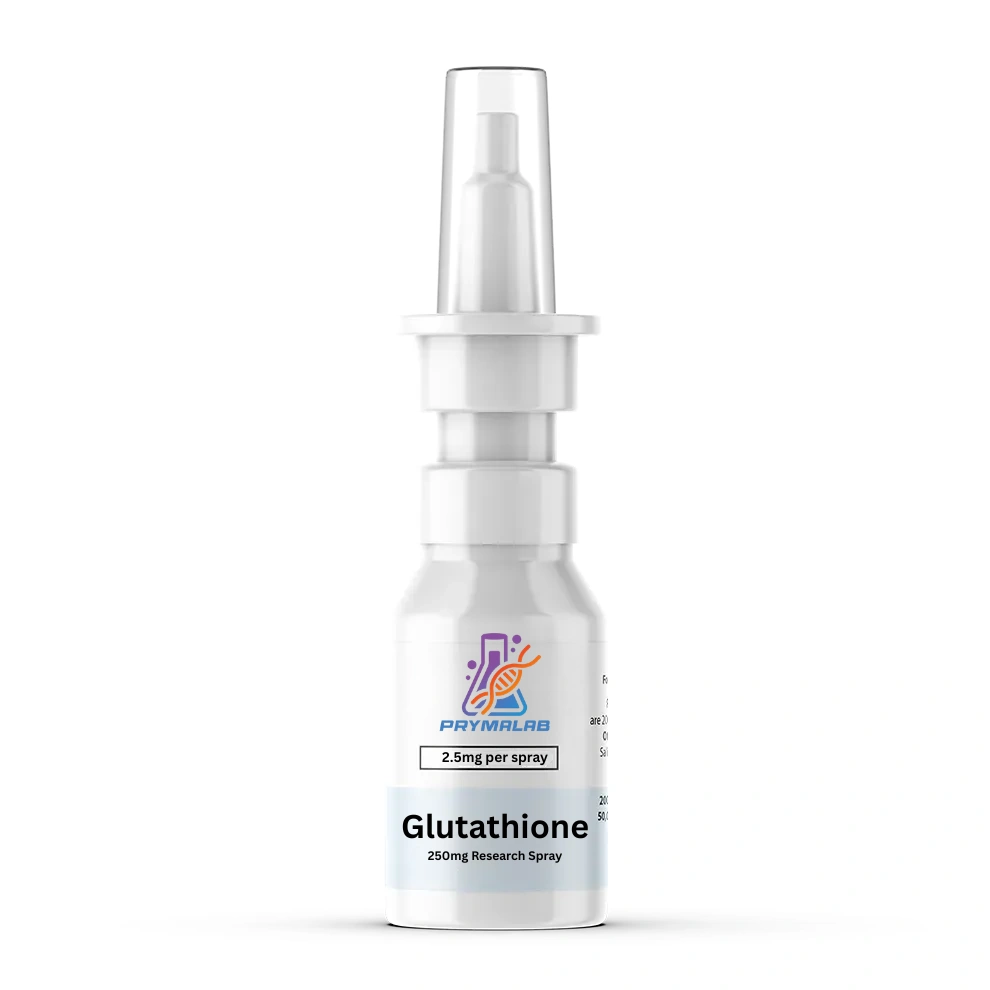
Glutathione 250mg Nasal Spray
Reduced glutathione (GSH), 250 mg in bacteriostatic water, in a metered nasal spray
Reduced glutathione, GSH, is the tripeptide γ-glutamyl-cysteinyl-glycine, and it is the most plentiful thiol in mammalian cells outside of proteins. This listing is a metered nasal spray bottle holding 250 mg of GSH dissolved in sterile bacteriostatic water. Glutathione research ranges from its synthesis and turnover inside cells to its antioxidant role, and a smaller body of work asks what happens when it is delivered through the nose, including whether it reaches the brain.
Specifications
| Property | Value |
|---|---|
| Compound | Glutathione (reduced) GSH; γ-L-glutamyl-L-cysteinyl-glycine |
| CAS number | 70-18-8 |
| Molecular formula | C10H17N3O6S |
| Theoretical mass | 307.3 Da |
| Sequence / structure | H-γGlu-Cys-Gly-OH (γ-glutamyl linkage; free thiol; free N- and C-termini) |
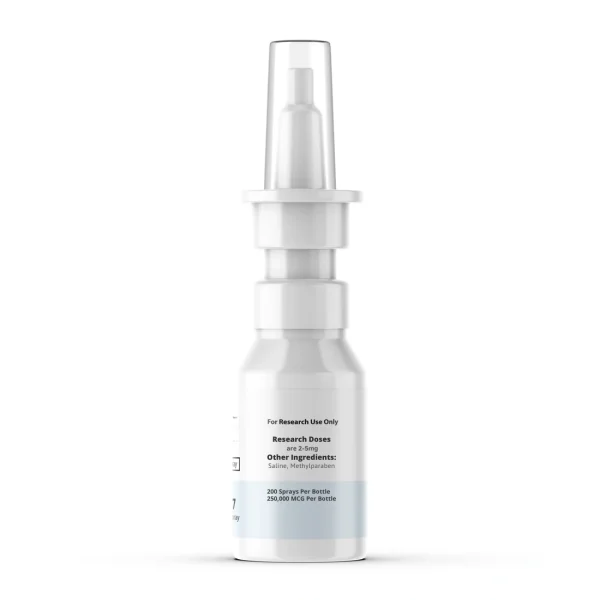
| Contents | Glutathione (reduced): 250 mg per bottle (≤ 2.5% w/v) |
| Form | Sterile aqueous solution in bacteriostatic water (0.9% benzyl alcohol), supplied in a metered nasal spray bottle |
| Storage, sealed | Store at 2–8 °C, protected from light; do not freeze |
| Safety data sheet | PL-SDS-073 |
What is in the bottle
The safety data sheet lists 250 mg of reduced glutathione per bottle, at no more than 2.5% w/v, in bacteriostatic water that contains 0.9% benzyl alcohol as an antimicrobial preservative, with sterile water making up the balance. In molar terms 250 mg of a 307.3 Da tripeptide is about 0.81 mmol. Glutathione itself is not classified as hazardous. Benzyl alcohol is listed as harmful if swallowed or inhaled, a serious eye irritant and a possible skin sensitiser.
The free thiol on the cysteine can oxidise to the disulfide form, GSSG, so keep the bottle closed: upright and capped at 2 to 8 °C, away from light, and never frozen. The same tripeptide is sold as a dry solid in the glutathione 1500 mg vial, which stays dry until the lab dissolves it.
What the research covers
Every mammalian tissue makes glutathione, and Lu’s review placed it at the centre of the cell’s defence against oxidative stress and of redox signalling1. Its production is limited by two things, the cysteine supply and the activity of glutamate cysteine ligase, an enzyme whose genes respond to Nrf2 and other transcription factors1. The breakdown side has been revised more recently: a 2018 review argued that findings on glutathione transport and degradation contradict much of the γ-glutamyl cycle that textbooks have taught since 19702.
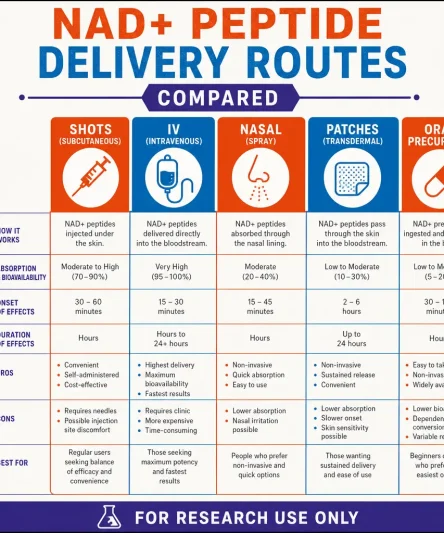
The nasal format rests on a separate question. Illum’s 2002 review of nasal drug delivery discussed the finding that some drugs travel straight from nose to brain by the olfactory pathway, and gave proof-of-concept examples in humans3. Glutathione was not among the drugs it studied. The glutathione-specific work, summarised in the glutathione routes guide, comes almost entirely from one research group: an open-label imaging study reported a rise in brain glutathione after nasal delivery, and a later placebo-controlled trial in Parkinson’s disease found no advantage over placebo.
The guide also notes that no human plasma data exist for intranasal glutathione, so how much of a spray is absorbed, and where it goes, is not established. None of these studies used this product.
How each lot is tested
Every lot is tested in PrymaLab’s own laboratory in Ashland, Kentucky before release: RP-HPLC for purity, LC-MS for identity, Karl Fischer titration for water, LAL for endotoxin and USP <71> for sterility. Published certificates are listed on the results page and can be checked by number and key on the verify page. The certificate covers the peptide lot used to fill the bottle, not the finished solution. These are in-house results from PrymaLab Analytical, not an independent test, and the lab is not accredited to ISO 17025. The third-party testing guarantee on this page still applies: if any independent laboratory finds the wrong compound, or less than the stated purity or amount, the order is refunded and the cost of the test is reimbursed.
Frequently asked questions
How does the spray differ from the 1500 mg vial?
The spray holds 250 mg of reduced glutathione already dissolved in bacteriostatic water and is kept at 2 to 8 °C. The vial holds 1500 mg as a dry solid stored at −20 °C, which the lab dissolves itself at whatever concentration a study calls for.
Has nasal glutathione been shown to reach the brain?
One open-label imaging study reported higher brain glutathione after nasal delivery, but a later placebo-controlled trial found no advantage over placebo, and no human plasma data exist for this route. None of that work used this product.
What does the certificate cover for the spray?
It covers the lot of glutathione used to fill the bottle, not the finished solution. Check the lot number on the bottle against the testing results page, then confirm the certificate by number and key on the verify page.
Is the spray for human use?
No. It is a laboratory research material, not a medicine or a supplement, and it is not approved by the FDA or any other authority for use in people or animals.
References
- Lu SC. Glutathione synthesis. Biochim Biophys Acta. 2013;1830(5):3143-53. DOI · PubMed
- Bachhawat AK, Yadav S. The glutathione cycle: Glutathione metabolism beyond the γ-glutamyl cycle. IUBMB Life. 2018;70(7):585-592. DOI · PubMed
- Illum L. Nasal drug delivery: new developments and strategies. Drug Discov Today. 2002;7(23):1184-9. DOI · PubMed
Research use only
For laboratory research use only. Glutathione 250mg Nasal Spray is not a drug, food, cosmetic or dietary supplement, is not approved by the FDA or any comparable authority for human or veterinary use, and must not be given to people or animals. It is sold to qualified researchers and institutions, and the buyer is responsible for lawful handling and disposal.







Reviews
There are no reviews yet.