

Pinealon (EDR): The Brain Tripeptide Named After the Pineal Gland, the Inverted-U Response Curve, and the 72-Patient Trial Nobody Can Find
Pinealon is the trade name of EDR, the synthetic tripeptide Glu-Asp-Arg (418.4 Da, CAS 175175-23-2), designed by Vladimir Khavinson's group at the St Petersburg Institute of Bioregulation and Gerontology with a patent filed in 2006 for a "peptide stimulating regeneration of central nervous system neurons." Its name points at the pineal gland; its origin does not. The paper that first characterised it says the sequence was synthesized after analysing the amino-acid composition of bovine brain extracts and is the most common motif in the cortex preparation Cortexin, and in a pineal-gland culture it did nothing that Epitalon did. In cells it lowers reactive oxygen species at nanomolar concentrations, raises serotonin and Ki-67 expression in rat cortex cultures, and restores dendritic spines in an amyloid model; in rats and transgenic mice it improves maze learning and spine density. No placebo-controlled trial in humans exists and none is registered. It is a dietary supplement in Russia and an unscheduled research chemical in the US. PrymaLab supplies Pinealon 5mg, 10mg and 20mg vials, a 10mg nasal spray and a 6mg preloaded pen for laboratory research use only.
- Structure: H-Glu-Asp-Arg-OH, C15H26N6O8, 418.40 g/mol (monoisotopic 418.181), CAS 175175-23-2, PubChem CID 10273502. Three residues, two acidic side chains, one guanidinium; XLogP −6.1. In the developer's early papers it is coded "T-33".
- Class: Khavinson "cytogen" short peptide, marketed as a brain bioregulator. The developer's proposed mechanism is direct binding to DNA and histones with downstream changes in gene expression; the gene list (CASP3, SOD2, PPARA, PPARG, APOE, NES, GAP43, GPX1, TPH1) comes from molecular docking, not from measured binding.
- Studied for: Oxidative stress and viability in neuronal cultures; serotonin and proliferation markers in cortex explants; dendritic spines in amyloid-treated neurons; prenatal hyperhomocysteinaemia, hypoxia and carotid occlusion in rats; a 5xFAD Alzheimer's mouse model. Human reports are open-label, Russian-language and developer-affiliated.
- Figures in the cell literature: 0.05 to 200 ng/mL in vitro, with suppression of the proliferation endpoint at 20 to 100 ng/mL; 100 nM to 500 nM for ROS effects. The animal work used rats and 5xFAD mice, and the human reports are open-label and uncontrolled. Study-design facts, not guidance.
- Storage: Lyophilized powder at −20 °C, desiccated and dark. Dissolves in water (about 84 mg/mL) and not in DMSO or ethanol. The Asp residue can isomerise and the N-terminal Glu can cyclise to pyroglutamate in solution, so working solutions are made fresh and not stored.
- Forms and sizes at PrymaLab: Pinealon 5mg, Pinealon 10mg and Pinealon 20mg lyophilized vials; Pinealon 10mg Nasal Spray; Pinealon 6mg preloaded 3ml pen. Sibling Khavinson peptides: Cortagen 20mg (AEDP, the other cortex tetrapeptide) and Epitalon 10mg (AEDG, the pineal one).
- Regulatory: No drug approval anywhere. Registered in Russia as a dietary supplement. Not on the FDA 503A nominated bulk-substances list (14 May 2026 update) and not reviewed at the July 2026 PCAC meeting. Not named on the 2026 WADA List but captured by S0 (non-approved substances), prohibited at all times.
| Pinealon (EDR) | Epitalon (AEDG) | Cortagen (AEDP) | |
|---|---|---|---|
| Sequence, mass | Glu-Asp-Arg, 418.40 Da | Ala-Glu-Asp-Gly, 390.35 Da | Ala-Glu-Asp-Pro, 430.41 Da |
| Parent preparation | Cortexin (cerebral cortex) | Epithalamin (pineal gland) | Cortexin (cerebral cortex) |
| Headline animal result | Morris-maze latency 170 to 137 s in hyperhomocysteinaemic rat pups; +11% spine density in 5xFAD mice | Lifespan and tumour incidence in mice and rats; telomerase in cultured cells | Chronic cerebral ischaemia models in rats |
| Controlled human trials | None | None (open cohort studies from the same institute) | None |
| US regulatory docket | None | Removed from 503A Category 2 in April 2026; PCAC voted 7 to 4 in favour (insomnia) in July 2026 | None |
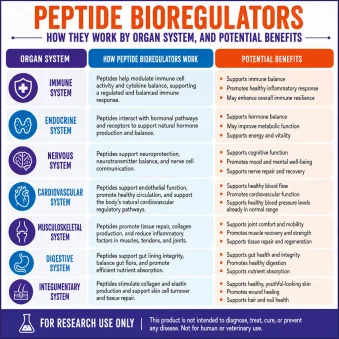
See the Epitalon reference for the pineal sibling, the bioregulators by organ system overview for how the Khavinson family is organised, the Semax versus Selank guide for the Russian heptapeptides it is usually compared with, and the purity testing guide for what a tripeptide certificate can and cannot show.
Also known as: Pinealon, EDR, EDR peptide, Glu-Asp-Arg, E-D-R, glutamyl-aspartyl-arginine, H-Glu-Asp-Arg-OH, T-33 (developer's early code), "pineal peptide" and "brain peptide" in supplement listings, Пинеалон in Russian. Not the same molecule as Epitalon/Epithalon (AEDG), Epithalamin (an extract) or Cortagen (AEDP).
Every page I checked while writing this calls Pinealon a pineal peptide. Its developers do not. The 2011 paper that first set out what it does in cells says the sequence was synthesized "after analysis of amino acid composition of bovine brain extracts" and is "the most common motif" in Cortexin, a cortex preparation; a 2020 review by the same laboratory calls it a tripeptide "isolated from the polypeptide neuroprotective drug Cortexin." When the group put it on cultured pineal tissue, it did nothing that its pineal sibling Epitalon did. The name is marketing, the biology is cortical, and the two have been confused for fifteen years. That is the first of three things this reference corrects. The second is a number: the "72 patients" with traumatic brain injury who improved on Pinealon, quoted on nearly every vendor page, cite back to a Russian review article rather than to any trial. The third is a borrowed claim: the telomere and telomerase language attached to Pinealon belongs to Epitalon and has never been tested with EDR. What remains after those corrections is a real and fairly interesting body of cell and animal work, almost all of it from one institute, with a dose curve that bends the wrong way above 20 ng/mL.
Research-use-only disclaimer: Pinealon (EDR) supplied by PrymaLab is intended strictly for laboratory research use and is not intended for human or veterinary use. The cell, animal and open-label human reports described below were conducted by academic laboratories, mostly the developer's own, and do not describe or support any use in people. Cell-culture concentrations are reported as study-design facts. No dosing or administration guidance appears here. Nothing here is medical advice.

TL;DR
Pinealon is EDR, Glu-Asp-Arg, a 418 Da synthetic tripeptide patented by the Khavinson group in 2006 and derived, by the developers' own account, from the cortex preparation Cortexin rather than the pineal gland. In cells it suppressed ouabain-induced ROS completely at 100 nM, raised serotonin and Ki-67 expression in young rat cortex cultures at 20 ng/mL, and restored mushroom dendritic spines by 71 percent in amyloid-treated mouse neurons at 200 ng/mL. The one careful dose series is biphasic: stimulation at 0.05 and 1.0 ng/mL, suppression at 20 to 100 ng/mL. In rats, Pinealon cut Morris-maze latency from 170 to 137 seconds in a prenatal hyperhomocysteinaemia model; in ten 5xFAD mice, spine density rose 11 percent while long-term potentiation did not reach significance. No controlled human trial exists, none is registered, and the widely quoted 72-patient result cites a review. Not approved anywhere; a Russian dietary supplement; captured by WADA's S0 clause. Research use only.
Identity: Glu-Asp-Arg (EDR), C15H26N6O8, 418.40 g/mol, CAS 175175-23-2. Patent RU2301678C1, priority 30 May 2006; US8524674B2 granted 2013. Inventors Khavinson, Grigoriev, Malinin and Ryzhak. Early papers call it T-33.
Origin: Synthesized from the amino-acid composition of cortex extract (Cortexin). Did not stimulate Ki-67 in pineal culture, where Epitalon did. "Pineal peptide" is a name, not a derivation.
Mechanism as proposed: Enters HeLa nuclei as a FITC conjugate; binds CNG- and CAG-containing oligonucleotides; an independent physics group found it partly enters the DNA major groove at guanine N7 and O6. Gene targets are docking predictions.
Cell record: ROS suppression complete at 100 nM against ouabain; 500 nM abolished the homocysteine ROS rise; serotonin +1.9x and Ki-67 +2.2x in young cortex cultures; +71% mushroom spines at 200 ng/mL in an amyloid model; stimulation at 0.05 and 1.0 ng/mL, suppression at 20 to 100 ng/mL.
Animal record: In rats with prenatal hyperhomocysteinaemia: maze latency 170 to 137 s, necrotic cerebellar cells 17.7% to 7.0%. In 5xFAD mice: spine density +11% (p=0.039), LTP not significant, no mushroom-spine effect in females.
Human record: Zero randomised, blinded or placebo-controlled trials; zero ClinicalTrials.gov registrations. "72 patients" cites a review. One open study reported prooxidant activity and fewer CD34+ cells.
Regulatory: Russian dietary supplement; no approval anywhere; absent from the FDA 503A nominated list and the July 2026 PCAC agenda; WADA S0, prohibited at all times for tested athletes.
Status: research use only.
What Pinealon is: a cortex tripeptide with a pineal name
Pinealon's chemical identity is simple. It is the linear tripeptide L-glutamyl-L-aspartyl-L-arginine, written Glu-Asp-Arg or EDR in one-letter code, molecular formula C15H26N6O8, average molecular weight 418.40 g/mol, monoisotopic mass 418.181 Da, CAS number 175175-23-2.[1] Two of its three residues carry acidic side chains and the third carries a guanidinium, which makes it one of the most water-loving molecules on the shelf: PubChem's computed XLogP is −6.1, with eight hydrogen-bond donors and ten acceptors.[1] It is three amino acids long, so it is a peptide by any definition, and it sits at the very bottom of the size range the peptide boundary guide describes.
Its legal identity is a patent. Vladimir Khavinson, Evgeny Grigoriev, Vladimir Malinin and Galina Ryzhak filed the Russian application that became patent RU2301678 on 30 May 2006, granted 27 June 2007, for a "peptide stimulating regeneration of central nervous system neurons," assigned to a company called Sia Peptides.[2] The US member of the family, US8524674B2, was granted on 3 September 2013 and its first claim is narrower than the marketing: a method of improving "the conditioned reflex habit, the muscle tonus, or the motion coordination of a patient after suffering trauma to the brain cortex" by administering H-Glu-Asp-Arg-OH.[3] Note the organ in that sentence. The patent claims a cortex indication, not a pineal one.
Where the sequence came from
The question of origin matters because the name has done a lot of work it was not entitled to do. The 2011 Rejuvenation Research paper that first characterised the peptide's cellular effects introduces it this way: "the tripeptide pinealon (Glu-Asp-Arg), which has been synthesized after analysis of amino acid composition of bovine brain extracts," and continues, "The Glu-Asp-Arg sequence is the most common motif in a complex peptide from the cerebral cortex called cortexin that demonstrates neuroprotective properties."[4] Nine years later a review by Khavinson, Linkova and colleagues in Molecules says it even more plainly: EDR is "a tripeptide isolated from the polypeptide neuroprotective drug Cortexin."[5] Cortexin is a Russian preparation of low-molecular-weight peptides extracted from cattle cerebral cortex.[36] Cortagen, the tetrapeptide Ala-Glu-Asp-Pro, was built from the same extract by the same method.[6]
The pineal-derived Khavinson peptide is a different molecule. Epitalon, Ala-Glu-Asp-Gly, is the synthetic descendant of Epithalamin, a bovine pineal extract, and it is the one whose literature concerns telomerase, melatonin and lifespan.[7][28] The Epitalon reference covers that record. The group has in fact run the experiment that separates the two. In organotypic cultures of rat pineal gland treated at 10 ng/mL, Epitalon (AEDG) and Vesugen (KED) increased the area of Ki-67 expression three-fold and 1.7-fold, and Glu-Asp-Arg did not; its Ki-67 optical density fell 1.6-fold instead.[8] That was a single concentration, and one that the cortex explant series described below later placed inside the suppressive part of the dose curve, so the negative is narrower than "inactive in pineal tissue." It is still the only pineal experiment the developers ran with the peptide, and it went the other way.
So the honest description is a cortex-derived tripeptide with a pineal brand name. If you came here to find a pineal peptide, you are looking for Epitalon. If you came here to find out what EDR actually does, keep reading.
The Russian product and the research chemical are not the same thing
In Russia, Pinealon is registered as a biologically active food supplement, not as a medicine, with the functional claim of being an "additional source of peptides (arginine, glutamic acid, aspartic acid)," sold as 0.2 g capsules and 0.16 g and 0.3 g tablets with a five-year shelf life, plus a separately registered sublingual line.[9] No label page I could find discloses how much tripeptide is in a capsule. The only capsule report in the literature is a 2012 occupational study of railway locomotive crews, and it gave no data on whether an intact tripeptide survives the gut.[10] The research-grade material in the primary papers was supplied by a firm called Garmonika, and the lyophilized vials sold to laboratories in the US are a different product again: 5, 10 or 20 mg of peptide, as free base or acetate, meant to be dissolved and used in experiments.[4][11] PrymaLab's 5mg, 10mg and 20mg vials, the 10mg nasal spray and the 6mg pen belong to that third category and are sold for laboratory research only.
How the developers say it works: DNA, histones and a docking model
The Khavinson programme has one unifying hypothesis for all of its short peptides: that they enter the cell and the nucleus, bind to DNA or histones in a sequence-dependent way, and change gene expression. For EDR the evidence for that hypothesis comes in three layers of decreasing strength, and it is worth keeping them apart.
The first layer is a 2011 fluorescence study. Fedoreyeva, Kireev, Khavinson and Vanyushin attached a FITC label to Epitalon, Pinealon and Testagen, added them to HeLa cells at 1.2 micromolar and 0.12 micromolar, and photographed the cells after six to twelve hours. The labelled peptides appeared in the nucleus, with fluorescence "markedly expressed" for Pinealon and Epitalon. In the same paper they titrated the peptides against short fluorescent oligonucleotides and found that Pinealon and Epitalon "bind preferentially with deoxyribooligonucleotides containing CNG sequence," with a preference for CAG-containing sequences, and that the peptides appeared to "recognize even their cytosine methylation status."[12] A 2013 follow-up extended the binding work to wheat histones H1, H2B, H3 and H4.[13] Two caveats sit on this layer. A FITC group is about as large as the tripeptide it is attached to, so what entered the nucleus was a conjugate roughly twice the size of EDR; and fluorescence quenching tells you two things interact, not where or how.
The second layer is the only independent primary study of EDR I could find anywhere. In 2019, Silanteva and colleagues at the Faculty of Physics of St Petersburg State University, with no affiliation to the Institute of Bioregulation, used spectroscopy, NMR, viscometry and molecular dynamics to look at how Glu-Asp-Arg interacts with DNA. Their conclusion: "EDR can partly penetrate into the major groove of DNA and affect the base atoms, mainly the N7 and O6 of guanine," with magnesium ions promoting the interaction by screening the phosphate backbone.[14] That is a physical-chemistry result, not a biological one, but it is the single piece of EDR evidence in the literature that does not come from the developer's network, and it supports the weakest version of the hypothesis: the peptide can sit in the major groove.
The third layer is where the gene names come from, and it is computational. A 2021 paper in Pharmaceuticals reports that "EDR peptide has binding sites in the promoter region of CASP3, NES, GAP43, APOE, SOD2, PPARA, PPARG, GDX1 genes," identified by molecular docking against a binding motif the group writes as SWSWSS.[15] The serotonin paper from 2014 similarly reports a predicted site, d(CCTGCC), in the tryptophan hydroxylase promoter with a modelled complex energy of −23.0 kcal/mol.[16] These are predictions. No chromatin immunoprecipitation, no gel shift with the endogenous promoter, no reporter assay and no in-vivo expression series after treatment has been published for any of them. A 2023 paper from the same group adds a docking-based proposal that EDR is a substrate for the LAT1, LAT2 and PEPT1 transporters, which would explain how it gets into cells, and that too is modelling.[17]
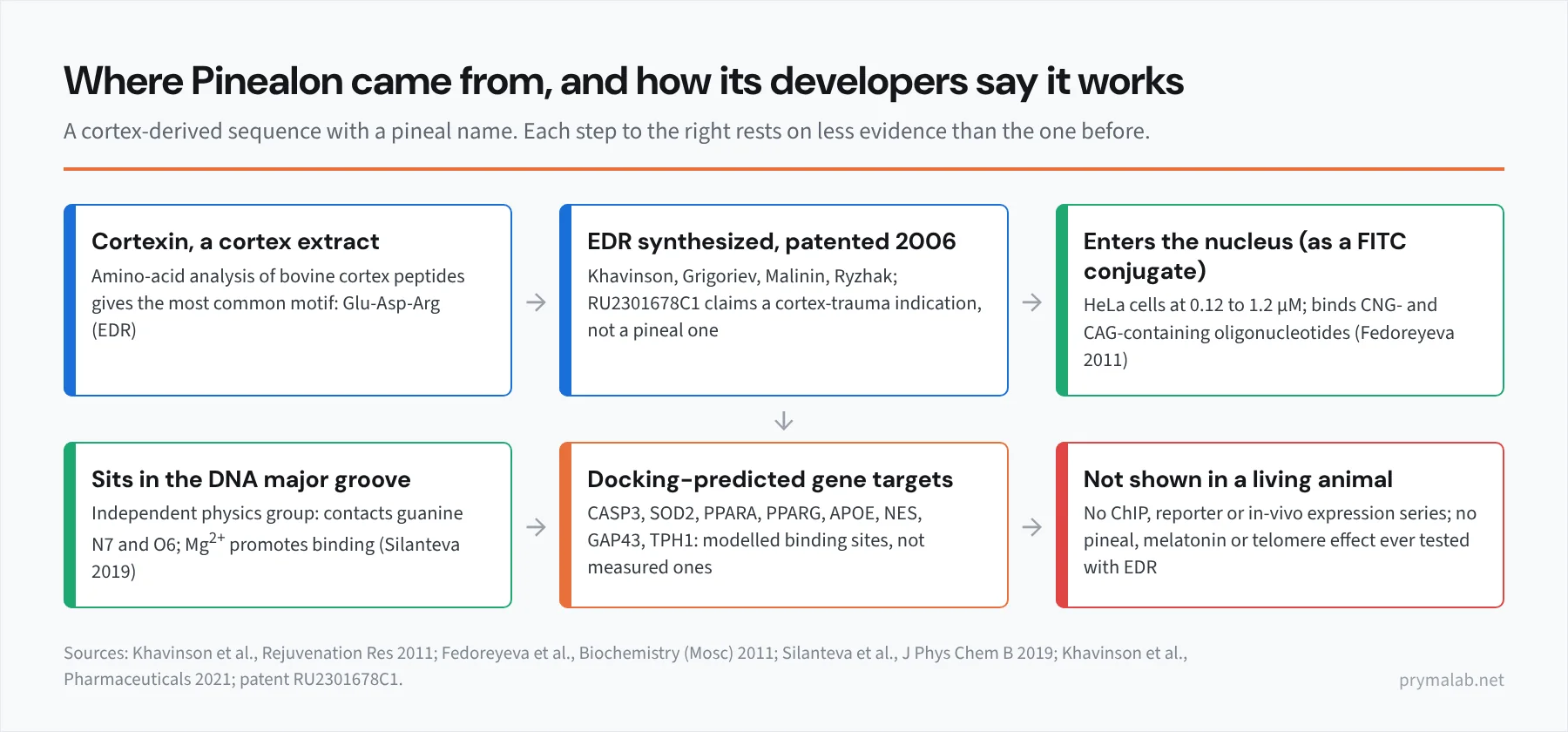
I do not think the hypothesis is silly. Short acidic peptides binding DNA in a sequence-dependent way is a testable idea, and the independent physics result keeps it alive. But the step from "sits in the major groove" to "regulates CASP3 and SOD2 in the ageing brain" has been taken in reviews and on product pages, not in experiments.
The cell record: ROS, serotonin, spines and the inverted U
The strongest single paper on Pinealon is the 2011 Rejuvenation Research study by Khavinson, Ribakova, Boldyrev and colleagues, and it is worth reporting in detail because its numbers are the ones that get rounded into "antioxidant" on the shelf.[4] The group used cerebellar granule cells from seven-to-ten-day-old Wistar pups, stressed them with 100 nM ouabain, and found that Pinealon suppressed the resulting rise in reactive oxygen species dose-dependently: "A 100 nM concentration of pinealon is enough to prevent ouabain-induced ROS accumulation completely." When they used 500 micromolar homocysteine instead, which raised stationary ROS by 92 percent, "this activation was abolished in the simultaneous presence of HC and pinealon (500 nM)." At 10 nM the peptide delayed the activation of ERK1/2 kinase that homocysteine normally triggers within two and a half minutes. In PC12 cells hit with 1 mM hydrogen peroxide, an hour of pre-incubation reduced both the ROS burst and the number of propidium-iodide-positive dead cells, with no effect on resting cells. And across 50 to 500 nM, 24 hours of exposure moved cells out of G1 and into S and G2, which the authors read as a proliferative signal. Their summary sentence is the one to remember: "besides its known antioxidant activity, pinealon is able to interact directly with the cell genome."[4]
Here is the complication, and it comes from the same laboratory three years earlier. A 2008 paper by Kozina, Arutjunyan, Stvolinsky and Khavinson tested the short peptides in cell-free, lipoprotein and cell systems and reported that they "were found not to demonstrate direct antioxidant activity," and could in fact "elevate the stationary level of intracellular reactive oxygen species."[18] So the group's own early data say EDR is not a radical scavenger. Whatever lowered ROS in the 2011 cells was a signalling or expression effect, not the chemistry of the tripeptide mopping up oxidants, and that distinction matters when the product page says "antioxidant."
Serotonin and proliferation markers in cortex cultures
Two 2014 papers in the Bulletin of Experimental Biology and Medicine looked at rat cortex cultures from young and old sources. The first used dissociated cultures across passages, treating early-passage cultures as "young" and fourteenth-passage cultures as "old." With EDR at 20 ng/mL at each passage, serotonin expression area rose 1.9-fold in young cultures. It did not rise significantly in the old ones, a detail the abstract does not make obvious; the companion peptide KED managed a 1.2-fold rise in old cultures.[16] The second paper, by Umnov, Linkova and Khavinson, is the one careful dose series in the entire EDR literature. They ran organotypic cortex explants from young and old Wistar rats against peptide T-33, their code for Glu-Asp-Arg, at 0.01, 0.05, 1.0, 10, 20, 50 and 100 ng/mL, with twenty-odd explants per condition. The peptide "increased the area index in concentrations of 0.05 and 1.0 ng/ml and decreased it in concentrations of 20, 50, and 100 ng/ml."[19] In young cultures Ki-67 and serotonin expression rose 2.2-fold and vimentin 3.6-fold; in old cultures Ki-67 rose 1.7-fold and vimentin did not move.
Dendritic spines in an amyloid model
The largest effect size in the record comes from a 2017 study in primary mouse hippocampal neurons treated with amyloid to model Alzheimer's synaptotoxicity. EDR at 200 ng/mL increased the number of mushroom-type dendritic spines by 71 percent, restoring them to the normal level; KED at the same concentration managed 20 percent.[20] Mushroom spines are the mature, stable synaptic contacts that amyloid preferentially eliminates, so this is a meaningful endpoint, and it is the experiment that justifies the Alzheimer's framing in the group's later reviews. It is also one dish, one concentration, one laboratory.
The 2024 human-cell study and a p value worth reading twice
The most recent in-vitro work used a human system for the first time: dermal fibroblasts from elderly donors transdifferentiated into induced cortical neurons, treated with EDR, KED or AEDG at 10 micrograms per millilitre daily for ten days.[21] All three peptides increased dendritic arborisation. None affected mitochondrial or lysosomal activity or the senescence marker p16. For oxidative DNA damage, measured as 8-OHdG, EDR brought the signal from 0.40 to 0.31 relative units, a 23 percent fall, at p = 0.0566. The results section calls that "very close to significant." The abstract says the EDR peptide "reduces oxidative DNA damage." Both sentences are in the same paper, and only one of them is what the data show. A 2025 follow-up from the same group, in a fetal-stem-cell version of the model, found that AEDG and KED reduced p21 and senescence-associated beta-galactosidase; EDR was not among the peptides with a reported effect.[22]
Note that 10 micrograms per millilitre is roughly 24 micromolar, which is roughly 50 to 2,500 times the 10 to 500 nM range of the 2011 ROS work and 500 times the 20 ng/mL of the serotonin work. The in-vitro literature on this peptide spans five orders of magnitude of concentration, and nobody has reconciled the ranges.
The animal record: hyperhomocysteinaemia, hypoxia and ten transgenic mice
The best-documented animal study is a 2012 paper in the International Journal of Clinical and Experimental Medicine, freely available in PubMed Central, in which Arutjunyan, Kozina and Khavinson gave pregnant Wistar rats methionine to induce hyperhomocysteinaemia and treated a third group with Pinealon before the methionine load.[23] Groups were 23 animals. Maternal plasma homocysteine reached 33.0 micromolar against 5.9 in controls. At 45 days the offspring were tested in a Morris water maze: platform latency was 112 seconds in intact pups, 170 seconds in the methionine group, and 137 seconds in the methionine-plus-Pinealon group, a significant partial rescue. Pups weighed 25.03 g at ten days with the peptide against 17.86 g without it. In cerebellar granule cells taken from the offspring and challenged with hydrogen peroxide, ROS fluorescence fell from 158.7 to 108.6 units and the proportion of necrotic cells from 17.7 to 7.0 percent. This is a coherent study with a clear design and real numbers, and it is the one I would cite if asked for the best evidence that EDR does something in a living animal.
| Model | Route and timing | Result reported | Source |
|---|---|---|---|
| Prenatal hyperhomocysteinaemia, Wistar rats, 23 per group | Intraperitoneal, before methionine loading | Maze latency 170 to 137 s (intact 112 s); pup weight 17.9 to 25.0 g; necrotic cerebellar cells 17.7% to 7.0% | Arutjunyan 2012[23] |
| Hypobaric hypoxia, rats | Not stated in abstract | "Most pronounced effect" among Pinealon, Vilon, Epitalon and Vesugen | Kozina 2008[24] |
| Bilateral carotid occlusion, old rats | Before occlusion; amount not stated | Survival improved; caspase-3 activity moderately increased; exploratory and motor behaviour down | Mendzheritskii 2011[25] |
| Acute hypoxia, young and old rats | Not stated | Better Morris-maze learning than Cortexin at both ages | Mendzheritski 2013[26] |
| Acute hypoxia plus hypothermia, 18-month rats | Not stated | Cortexin "more pronounced" than Pinealon on free-radical processes and caspase-3 | Mendzheritsky 2015[27] |
| 5xFAD transgenic Alzheimer's mice, 10 per group | Intraperitoneal, age 2 to 4 months | Spine density +11% (p=0.039); mushroom spines +25% in males, not significant in females; LTP trend only | Khavinson 2021[15] |
| Severe compression brain injury, 24 outbred rats, 15 treated | Intramuscular | Twice as many animals "capable of learning" at 96 hours (patent, unrefereed) | RU2301678C1[2] |
The hypoxia series from Rostov, run with Ryzhak of the developer institute, is harder to use because the English abstracts do not state doses, and it is not uniformly positive. The 2011 carotid-occlusion paper reports improved survival in old rats but also a moderate increase in caspase-3 activity and reduced exploratory and motor behaviour.[25] The 2015 paper in 18-month-old rats under hypoxia and hypothermia concludes that Cortexin, the parent extract, "shows a more pronounced effect on free radical processes and caspase 3 activity in brain than Pinealon."[27] The tripeptide is not consistently better than the preparation it was derived from.
The transgenic mouse study
The only in-vivo study in a neurodegeneration model is the 2021 Pharmaceuticals paper. 5xFAD mice, which carry five familial Alzheimer's mutations and develop amyloid pathology early, received EDR from two to four months of age, ten animals per group, five of each sex.[15] Hippocampal dendritic spine density rose 11 percent overall (p = 0.039). In males the rise was 13 percent with a 25 percent increase in mushroom spines (p = 0.004); in females spine density rose 12 percent but the mushroom-spine change did not approach significance (p = 0.681). Long-term potentiation, the electrophysiological readout that would connect spines to memory, showed what the authors describe as a positive trend that "has not reached the statistical significance level." Ten mice, a modest structural change, a sex difference nobody has explained, and a null on the functional endpoint. That is the whole in-vivo Alzheimer's record.
Two claims that circulate about the animal work have no primary source. The group's 2020 review states that EDR "interferes with the elimination of dendritic spines in neuronal cultures obtained from mice with Alzheimer's (AD) and Huntington's diseases," but the paper it cites tested only the amyloid model; I could not find a Huntington's experiment with EDR anywhere.[5][20] And no radiation or lifespan study of Pinealon exists; the irradiation and lifespan work in this programme belongs to Epithalamin and Epitalon.[28]
The human record: open-label, Russian, and a figure that leads to a review
I will state the bottom line first and then show the work. There is no randomised, blinded or placebo-controlled trial of Pinealon in people. ClinicalTrials.gov returns no registered study for it, past or present.[29] Every human report is in Russian, in the journal Advances in Gerontology, authored by the developer's institute or its regional collaborators, and none describes blinding. A 2026 review of therapeutic peptides in an American orthopaedics journal, listing Pinealon among "recovery-enhancing agents," reaches a verdict on the class that applies to it without qualification: "Although preclinical studies are promising, there is a current lack of clinical trials."[30]
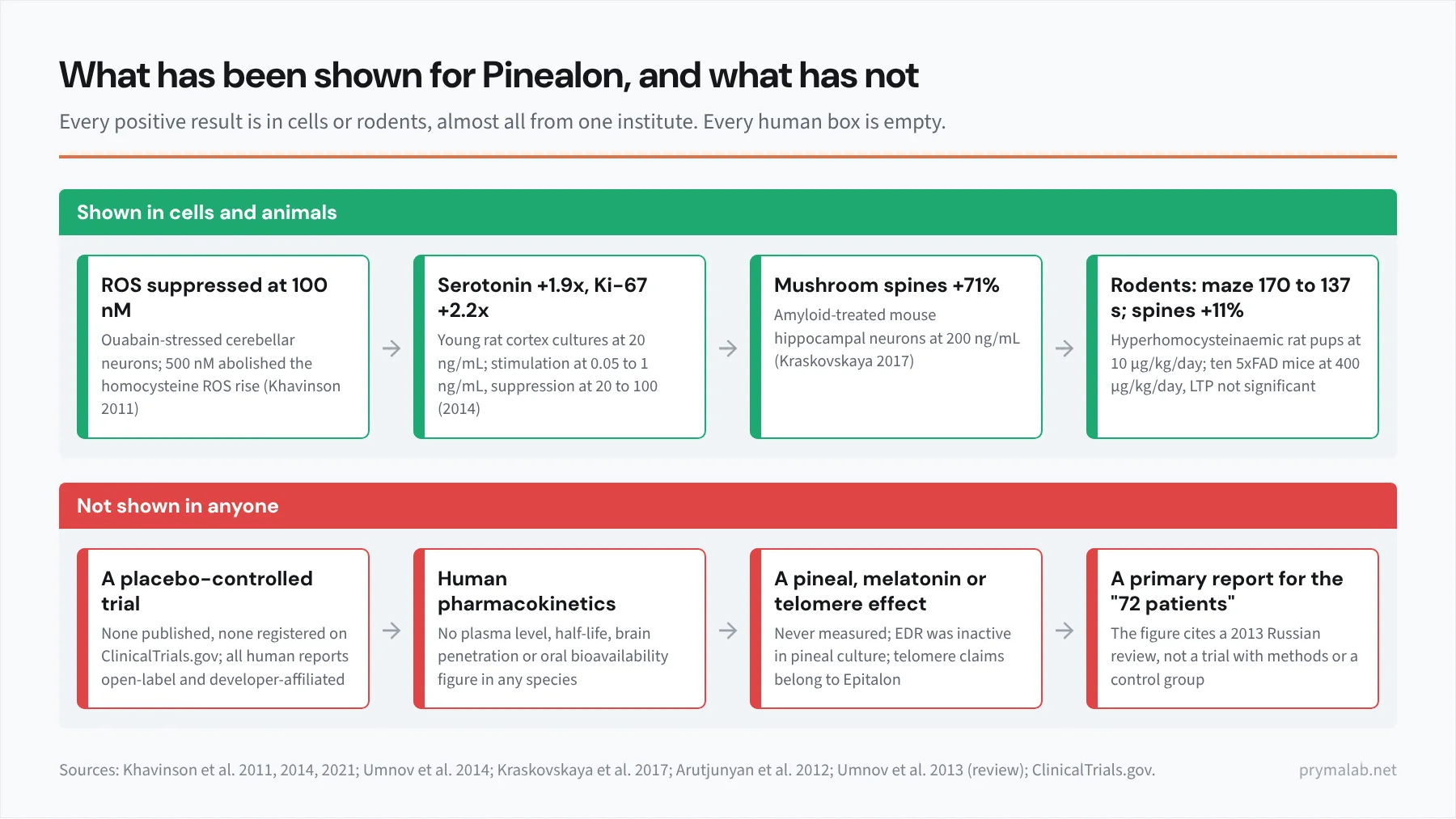
The 72 patients
The number quoted most often in vendor copy is that oral Pinealon improved memory in 72 patients with the consequences of traumatic brain injury. The sentence appears in the group's 2020 Molecules review: "Oral administration of Pinealon in addition to standard therapy in 72 patients with traumatic brain injury consequences and cerebrasthenia led to improved memory."[5] Follow the citation and it lands on a 2013 article by Umnov, Linkova and Khavinson in Advances in Gerontology, which is itself a review of neuroprotective peptides in people of different ages, covering Cortexin, Cerebrolysin, Semax, Cortagen and Pinealon together.[31] I could not locate a primary report with a method section, a control group or outcome measures for those 72 patients. The figure may well describe a real case series, but as published it is a review citing a review, and that is how it should be described.
The patent example
The only human data with any methodological detail at all is Example 8 of the 2006 patent, which is not peer-reviewed. Twenty-five patients aged 31 to 60, one to ten years after traumatic brain injury, were "divided into 2 groups by randomization" and given the peptide in three severity-stratified subgroups, against saline. No blinding is mentioned. The reported outcome is that "good clinical results were observed in patients in 59.4% of cases, satisfactory in 31.9%, and the absence of a positive effect - 8.7%," with an improved proof-reading test and a rise in EEG alpha index.[2] Two things about those percentages. They are quoted to one decimal place, and no division of 25 patients across three dose subgroups and a control produces 59.4, 31.9 and 8.7 percent of anything. And the three subgroups received amounts 5,000-fold apart inside a single 25-patient study, with no rationale offered. I report it because it is the source of the human figures in circulation, not because it establishes anything.
| Report | People | Design | What it says |
|---|---|---|---|
| Patent RU2301678C1, Example 8 | 25, TBI sequelae, aged 31 to 60 | Open, saline control, three severity-stratified subgroups | 59.4% "good", 31.9% "satisfactory"; percentages incompatible with n=25 |
| "72 patients" with TBI consequences | 72 | Add-on, uncontrolled; cited to a review | "Improved memory"; no primary report found |
| Nazimko 2012, locomotive crews | Not stated in abstract | Occupational, uncontrolled, capsules | Improved biological-age and adaptation indices |
| Meshchaninov 2015, polymorbid patients with organic brain syndrome | "32 people (18 men, 12 women)" aged 41 to 83 | Open, Pinealon and Vesugen, no placebo | Vesugen more effective; prooxidant activity on chemiluminescence; reduced CD34+ cells read as haemopoietic inhibition |
| Myakotnykh 2016, geroprophylaxis methods | 110 | Comparative, non-randomised | Combined oligopeptides gave the largest biological-age effect; judged among the safest methods |
| Bashkireva 2012, lorry drivers and metalworkers | 150 + 150 | Occupational, combined Pinealon and Vesugen, no placebo | Best effect with the two peptides combined |
The occupational studies deserve a word because they are the largest. Bashkireva and Artamonova gave peptides to professional lorry drivers against a comparison group of metal craftsmen and reported that "the best effect was obtained in case of combined application of several cytogens (pinealon and vezugen)."[32] One hundred and fifty treated workers is a respectable number, but the craftsmen were the comparison group rather than a second treated arm, the design is a workplace intervention without a placebo, the outcome measures are questionnaire and biological-age indices, and the peptide was given alongside another one, so nothing can be attributed to EDR alone. The same applies to the 110-person comparison of geroprophylactic methods, where the peptide pair was ranked against dry carbon-dioxide baths, hyperbaric oxygen and massage.[33]
What the cell studies measured
This section collects the concentrations the published cell studies used and what each one measured. The animal and human studies are described by model, design and outcome in the sections above, without amounts.
| System | Concentration | Endpoint | Source |
|---|---|---|---|
| Rat cortex explants | 0.01 to 100 ng/mL | Area index up at 0.05 and 1.0 ng/mL; down at 20, 50 and 100 ng/mL | Umnov 2014[19] |
| Rat cortex cultures, young and old | 20 ng/mL per passage | Serotonin +1.9x (young only) | Khavinson 2014[16] |
| Rat cerebellar granule cells | 10, 100, 500 nM (about 4 to 210 ng/mL) | ERK delay at 10 nM; ROS prevented at 100 nM; homocysteine ROS abolished at 500 nM | Khavinson 2011[4] |
| Mouse hippocampal neurons plus amyloid | 200 ng/mL | Mushroom spines +71% | Kraskovskaya 2017[20] |
| Human induced neurons from elderly donors | 10 µg/mL for 10 days | 8-OHdG −23% (p=0.0566); arborisation up | Kraskovskaya 2024[21] |
Read down the table and two things stand out. The in-vitro effects live at nanograms per millilitre, and the one dose series bends over above 20 ng/mL. The 10 µg/mL used on human induced neurons is far above both. For how the mass in a vial converts to a concentration in solution, the peptide reconstitution calculator and the reconstitution guide cover the arithmetic.
What has been reported on safety
The toxicology that exists is in the patent, and it was generated by the applicants. Seventy-two outbred mice received single intramuscular doses; sixty-five rats received one of three dose levels with haematology at 30, 60 and 90 days; eighty-four guinea pigs received the same three levels for six months with full pathomorphology of brain, spinal cord, endocrine organs, heart, lung, liver, kidney, gut, thymus, spleen and marrow. The applicants reported no toxic reactions after the single doses and no side effects on prolonged dosing.[2] No LD50, no NOAEL, no GLP statement, and no reproductive, genotoxicity or carcinogenicity testing appear anywhere. None of this has been published in a refereed journal.
In humans there is no Phase 1 study, no pharmacokinetics in any species, no oral bioavailability figure and no formal adverse-event collection. The two safety statements I could find point in opposite directions. The 2016 methods comparison judged oligopeptide drugs, with therapeutic massage, "the most safe" of the approaches it compared on biochemical and immunological measures.[33] The 2015 study of elderly polymorbid patients, which gave Pinealon and Vesugen, reported that "we've found the prooxidant activity through chemiluminescence" and that a "decrease of markers CD34+ positive hematopoietic polypotent cells in blood has shown significant inhibition of hemopoiesis," then recommended continued use anyway, adding of the chromatin findings that "this property should be studied in future."[34] A prooxidant signal in people from a peptide sold as an antioxidant is the kind of finding that deserves a follow-up. It has not had one.
One structural point applies to every efficacy paper above except the physics study: each includes at least one author from the St Petersburg Institute of Bioregulation and Gerontology or a named inventor on the patent, and each declares no conflict of interest. I am not suggesting the data are fabricated. I am noting that the inventors of a patented, commercially sold peptide have authored essentially its entire evidence base, that the papers say there is nothing to disclose, and that a reader is entitled to weigh that.
Pinealon vs Epitalon, Cortagen, Semax and Cerebrolysin
Pinealon is often grouped with four other Russian neuro-peptides, and the five have very different records. Putting them side by side is the quickest way to see what each one has and has not got.
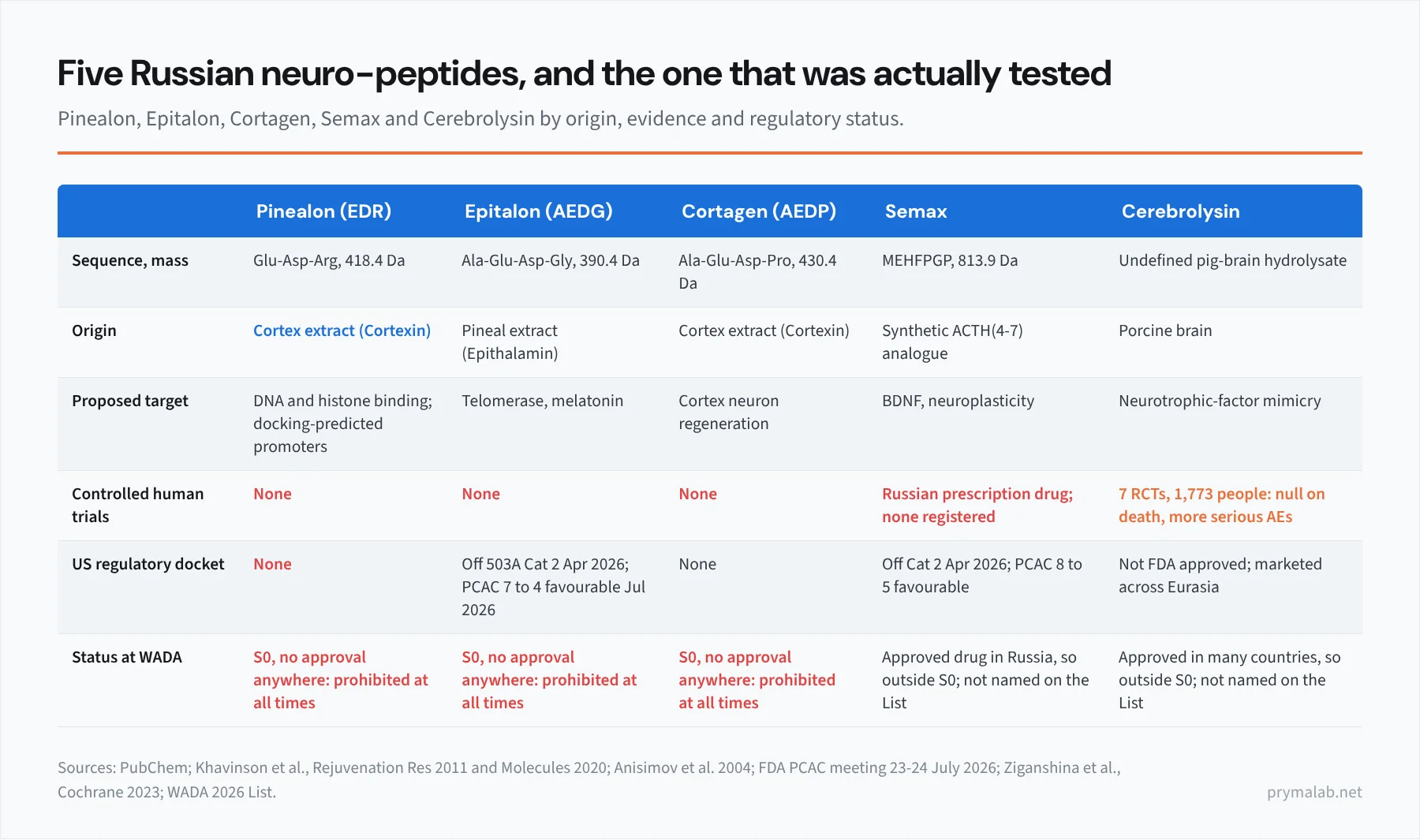
Against Epitalon. Different sequence (AEDG, 390.35 Da), different parent tissue (pineal), different claims (telomerase, melatonin, lifespan). The two share a laboratory, a decade and a marketing category, and that is where the "pinealon lengthens telomeres" claim comes from: it is an Epitalon claim transplanted onto a molecule that has never been tested for it. The Epitalon reference sets out what that telomerase evidence actually consists of. Epitalon has also reached a US regulatory docket that Pinealon has not: it was removed from the FDA's 503A Category 2 list in April 2026 and received a 7 to 4 favourable vote for insomnia at the July 2026 Pharmacy Compounding Advisory Committee meeting.[35][44]
Against Cortagen. The closer sibling. Ala-Glu-Asp-Pro is the other sequence built from Cortexin's amino-acid composition, and its literature concerns chronic cerebral ischaemia models in rats and gene-expression changes in mouse heart.[6][45] Neither has human trials. The Cortagen reference covers it; PrymaLab stocks Cortagen 20mg alongside Pinealon.
Against Semax. Semax is a seven-residue ACTH fragment analogue, a registered prescription drug in Russia with a BDNF-centred mechanism, and it too has no ClinicalTrials.gov registration.[29] It was removed from Category 2 in April 2026 and voted 8 to 5 favourable in July.[35][44] The Semax versus Selank guide covers the pair.
Against Cerebrolysin. The instructive one. Cerebrolysin is not a defined sequence but a porcine brain hydrolysate, and it is the only compound in this group with multiple randomised placebo-controlled trials. The 2023 Cochrane review of Cerebrolysin and Cortexin in acute ischaemic stroke included seven trials and 1,773 participants and concluded, from six trials and 1,689 participants, that the preparations "probably result in little to no difference in all-cause death" (risk ratio 0.96, 95% CI 0.65 to 1.41), with an increase in non-fatal serious adverse events across three trials and 1,335 participants (risk ratio 2.39, 95% CI 1.10 to 5.23).[36] So the one member of the family that has been properly tested came back null on the hard endpoint with a safety signal. That is worth holding in mind when reading open-label reports on the untested ones. The Cerebrolysin reference goes through the trials.
Regulatory status: supplement in Russia, research chemical in the US, S0 at WADA
Pinealon has no marketing authorisation as a drug anywhere. In its home market it is a dietary supplement.[9] In the United States it is not an approved drug, and it has not entered the compounding pathway that several of its neighbours have. The FDA's list of bulk drug substances nominated for use under section 503A, updated on 14 May 2026, does not contain Pinealon or Glu-Asp-Arg in any category.[37] The Pharmacy Compounding Advisory Committee that met on 23 and 24 July 2026 considered BPC-157, KPV, TB-500, MOTS-c, DSIP, Semax and Epitalon, and voted favourably on six of them; Pinealon was not on the agenda, and it was not among the twelve peptides the agency removed from Category 2 in April.[35][44] The peptide legality reference explains what those votes did and did not change. For a compound with no nomination, the practical status is unchanged: unscheduled, unapproved, sold and held for laboratory research and not for human use, on the footing the legality reference sets out.
For athletes the position is clearer than the product pages suggest. Pinealon is not named on the 2026 WADA Prohibited List. It does not need to be. Section S0 prohibits, at all times, "any pharmacological substance which is not addressed by any of the subsequent sections of the List and with no current approval by any governmental regulatory health authority for human therapeutic use (e.g. drugs under pre-clinical or clinical development or discontinued, designer drugs, substances approved only for veterinary use)."[38] A dietary-supplement registration in Russia is not an approval for human therapeutic use, so EDR sits inside S0 and is banned in and out of competition for anyone subject to testing.
Research-grade Pinealon: what to verify
EDR is a legitimate research tool with a specific job, which is testing the Khavinson DNA-binding hypothesis and the neuronal-culture findings above, and verifying a vial of it is easy because the molecule is small and distinctive. Mass spectrometry settles identity in one number. The free peptide has a monoisotopic mass of 418.181 Da and a protonated ion at m/z 419.19; Epitalon, the molecule it is most often confused with, gives 391.15, and Cortagen gives 431.18, so the three are separated by 28 and 12 Da and any unit-resolution instrument tells them apart.[1] If the certificate reports the acetate salt, expect roughly 60 Da more per acetate. HPLC purity by lot follows, and for a tripeptide the single-wavelength purity figure is more meaningful than it is for a forty-residue molecule, because there are fewer co-eluting deletion sequences to hide. The purity testing guide covers the general case, and the Pinealon analysis service runs identity and purity on a submitted sample.
| Peptide | Sequence | Formula | [M+H]+ | Note |
|---|---|---|---|---|
| Pinealon | Glu-Asp-Arg | C15H26N6O8 | 419.19 | Pyroglutamate degradation product appears at 401.18 |
| Epitalon | Ala-Glu-Asp-Gly | C14H22N4O9 | 391.15 | 28 Da below Pinealon |
| Cortagen | Ala-Glu-Asp-Pro | C17H26N4O9 | 431.18 | 12 Da above Pinealon |
| Vesugen | Lys-Glu-Asp | C15H26N4O8 | 391.18 | Nominally isobaric with Epitalon; 0.036 Da apart, needs high resolution or MS/MS |
| Semax | Met-Glu-His-Phe-Pro-Gly-Pro | C37H51N9O10S | 814.36 | Not confusable by mass |
There are two things mass spectrometry will not tell you, and both are specific to this sequence. The aspartate in position 2 can isomerise through a succinimide intermediate to isoaspartate, a rearrangement with the same mass as the parent, so an aged or badly stored sample can read as pure on MS while containing a different molecule; only chromatography separates the two.[39] That reaction is fastest around pH 4 to 5 in solution and continues in the solid state, where residual moisture and the bulking agent set the rate.[40] And the N-terminal glutamate can cyclise to pyroglutamate with the loss of 18.011 Da, favoured at pH 4 and pH 8 and slower at neutrality, which does show up on MS as a peak at 401.18.[41] The arginine contributes no particular chemical liability but, together with the two acidic residues, makes the powder hygroscopic enough that it should be brought to room temperature in a desiccator before the vial is opened.[42]
Handling follows from the chemistry. The powder is stored at −20 °C, dry and dark; one supplier's datasheet gives three years for the solid, one year for a stock solution at −80 °C and one month at −20 °C.[11] It dissolves readily in water, about 84 mg/mL, and not at all in DMSO or ethanol, which is unusual on a shelf where most research compounds want the opposite.[11] Because the two degradation routes above both run in solution, working solutions are made fresh, aliquoted rather than re-thawed, and not kept; the storage and stability guide sets out the general chemistry and the pen versus vial guide explains what a preformulated solution changes. PrymaLab's Pinealon 5mg, 10mg and 20mg vials are documented on the identity basis above; the 10mg nasal spray and 6mg pen are preformulated research formats of the same peptide, and the nasal spray reference covers what is and is not known about intranasal delivery of short peptides generally, since nothing is known about it for EDR specifically.
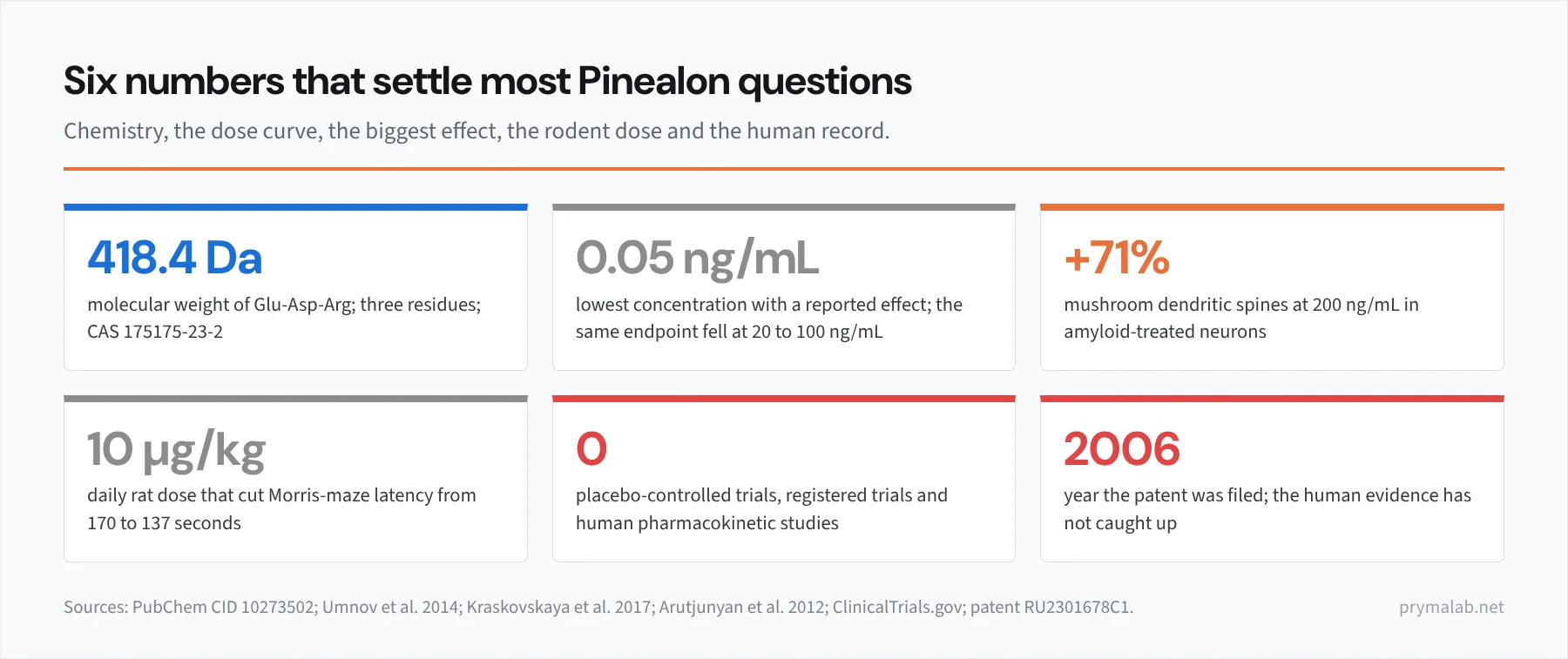
The version of the story the record supports: a tripeptide designed from a cortex extract and named after a different gland; a credible set of culture results from one laboratory, with a dose curve that peaks at a fraction of a nanogram per millilitre and turns down above twenty; a coherent rat study and a ten-mouse transgenic study with a null functional endpoint; a human literature made of open occupational reports and a patent example whose percentages do not add up; a prooxidant and haemopoietic signal that nobody has followed; no approval, no trial, no registration; and a set of product-page claims about telomeres, melatonin and milligram dosing that belong to other molecules or to no study at all.
What this article does not settle
Whether Pinealon does anything in people under controlled conditions. No blinded or placebo-controlled trial exists. The human reports are open-label, developer-affiliated and published in one Russian journal.
Whether the 72-patient result exists as a trial. The citation chain ends in a review. If a primary report with methods exists, I could not find it.
Whether it affects the pineal gland, melatonin or sleep. No study has measured melatonin, dim-light melatonin onset, actigraphy or sleep architecture with EDR, and in pineal culture it did not do what Epitalon did.
Whether it touches telomeres. No EDR telomere or telomerase experiment has been published. Those claims belong to Epitalon.
Whether the DNA-binding mechanism operates in a living animal. Nuclear entry of a FITC conjugate and major-groove binding in a cuvette are the evidence; the gene lists are docking predictions without ChIP, reporter or in-vivo expression data.
Any pharmacokinetic parameter. No plasma level, half-life, brain penetration or oral bioavailability figure exists in any species. Whether an oral capsule delivers intact tripeptide is unknown.
A usable dose-response relationship. The one in-vitro series is biphasic, and the animal studies used different species, routes and designs with no bridging study between them.
Human safety. The toxicology is unrefereed patent material; the only human safety findings reported are unfavourable and unreplicated.
What is well established: the structure, mass and CAS number; the cortical origin as stated by the developers; the 2011 ROS and cell-cycle findings in cultured neurons; the biphasic explant dose series; the serotonin and Ki-67 changes in young cortex cultures; the 71 percent spine result in the amyloid dish; the hyperhomocysteinaemia rat study; the 5xFAD mouse spine result and its null on LTP; the absence of any registered or controlled human trial; the Russian supplement status; and the US and WADA positions as of October 2026.
Pinealon, EDR, T-33 and "pineal peptide": what the names refer to
Pinealon is the trade name under which the Khavinson institute and its distributors sell Glu-Asp-Arg; it was coined for the supplement and carries no chemical information, and its pineal reference is a branding choice that the originating paper's own description of the sequence contradicts.[4][9] EDR is the one-letter code for the sequence and is how the molecule appears in the group's English-language papers from about 2017 onward.[5][20] T-33 is the serial code the group used in earlier culture studies, where it sits between T-32 (Glu-Asp-Ala) and T-34 (Glu-Asp-Gly) in a series of tripeptides that share the Glu-Asp core.[43] Glu-Asp-Arg, glutamyl-aspartyl-arginine and H-Glu-Asp-Arg-OH are the chemical names. "Pineal peptide" and "pineal bioregulator", as used in listings, are category labels the developers apply to Epitalon and Epithalamin; applied to Pinealon they describe the name, not the molecule. Cortagen (AEDP) is the other cortex-derived Khavinson peptide, and Cortexin is the extract both were built from.
The irisin claim traces to exactly one paper, and it is a hypothesis piece
Irisin turns up in almost every description of this tripeptide and the whole connection rests on one three-page item. Khavinson, Kuznik, Tarnovskaya and Linkova published Short Peptides and Telomere Length Regulator Hormone Irisin in the Bulletin of Experimental Biology and Medicine in 2016. It names three peptides, Lys-Glu, Glu-Asp-Arg and Ala-Glu-Asp-Gly, and concludes that the immunomodulatory Lys-Glu and the neuroprotective Glu-Asp-Arg modulate lifespan by modulating the hormone's gene expression.
What that paper is matters as much as what it says. It reads as a hypothesis and mini-review rather than as primary experimental data, and it is the only publication linking any Khavinson-school short peptide to the hormone. Searches pairing it with Khavinson, Linkova, Kuznik, pinealon or EDR return that item and nothing else. The other papers from the same authors on the subject concern exercise, kinesitherapy and salivary FNDC5, and do not involve these peptides at all.
Irisin itself is real and interesting: a myokine cleaved from FNDC5, released from skeletal muscle during exercise, studied for effects on adipose browning and on bone and brain. Its own literature has had reproducibility difficulties, chiefly over antibody specificity in the early measurement work. None of that is a reason to doubt the hormone exists. It is a reason to be careful about one whose own measurement history is contested being invoked to explain a peptide whose mechanism is also unsettled.
The honest statement is short. No study has shown that this peptide, or any peptide in its family, raises irisin in a human. One paper proposes a relationship between three short peptides and the hormone's gene expression as a lifespan mechanism, and no experimental follow-up has tested it.
Cognitive function, mental performance and what the inverted U means
Cognitive enhancement is how the Pinealon peptide is marketed and cognitive function is the endpoint implied, so it is worth stating plainly which of those has been measured. The mechanisms of action proposed for it do not include anything that would act within hours. The cell work reported lower radical load, changed serotonin handling and altered dendritic spine density. The animal work used hyperhomocysteinaemia and hypoxia models plus a small transgenic cohort. The human work is open-label and Russian. A controlled measurement in a healthy person has not been made at all, and neither has mental performance by any instrument.
The inverted U reported in the cell studies deserves more weight than it usually gets, because it undermines the simplest version of the cognitive enhancement claim. If the effect on neuronal survival rises and then falls with concentration, there is no monotonic dose-response to extrapolate from, and a result obtained at one concentration in culture says nothing about a higher or lower one. That shape is common for neuroactive compounds and it is the reason dose-finding exists. For a compound with no pharmacokinetic data in any species, there is no way to know where a given amount of material would place a tissue concentration on that curve.
Apoptosis is the measured endpoint behind most of the neuroprotection language. Reduced apoptosis in cultured neurons under peroxide or hypoxic stress, by TUNEL or caspase staining, is what the papers report, and apoptosis in a stressed culture is a defensible measurement. Translating it into protection against neurodegenerative diseases is not: no study of this peptide has used a model of any progressive neurodegenerative disease, and the neurodegenerative diseases it is associated with in marketing material appear nowhere in its experimental record.
Melatonin, sleep and the name problem
The pineal association in this compound's name does a lot of work that its chemistry does not support. Glu-Asp-Arg was assigned to brain tissue in the organ-mapping scheme behind this family, and the pineal and melatonin literature belongs to Epitalon, the other pineal-assigned member. Claims about melatonin production or melatonin synthesis attached to this tripeptide are generally Epitalon findings migrating across a catalogue page, and the same goes for sleep quality: no study of the Pinealon peptide has measured sleep quality by polysomnography, actigraphy or a validated questionnaire.
That is a substitution worth naming because it is easy to make. Both compounds come from the same institute, both are described as pineal peptides in vendor copy, and the melatonin rhythm result that circulates for both was reported for the tetrapeptide and for the pineal extract Epithalamin, not for the tripeptide. Research peptide listings that group them by claimed effect rather than by what was studied are where the confusion starts.
The oxidative stress account is the part of the mechanism with the most internal consistency. Reactive oxygen species accumulate when mitochondrial function is impaired, they damage lipids, proteins and DNA, and a bioregulator peptide that lowered those markers would plausibly reduce the downstream damage. The reported peroxidation reductions in treated tissue fit that account. What has never been shown is the peptide scavenging a radical itself, so the mechanism remains an inference from downstream markers rather than a demonstrated chemistry.
Frequently asked questions
What is Pinealon?
The trade name of EDR, the synthetic tripeptide Glu-Asp-Arg (418.4 Da, CAS 175175-23-2), designed by Vladimir Khavinson's group and patented in 2006 as a peptide that stimulates regeneration of central nervous system neurons. It is a dietary supplement in Russia and a research chemical in the US, where PrymaLab supplies it in 5, 10 and 20 mg vials, a 10 mg nasal spray and a 6 mg pen for laboratory research only.
Is Pinealon a pineal peptide?
Not by origin. The developers' 2011 paper says the sequence was synthesized from the amino-acid composition of bovine brain extracts and is the most common motif in the cortex preparation Cortexin, and their 2020 review calls it a tripeptide isolated from Cortexin. In pineal-gland culture it did not stimulate Ki-67, while Epitalon did. Epitalon is the pineal-derived Khavinson peptide.
What does Pinealon do in cells and animals?
In cultured neurons it prevented ouabain-induced ROS at 100 nM, raised serotonin and Ki-67 in young rat cortex cultures at 20 ng/mL and increased mushroom spines by 71 percent in an amyloid model at 200 ng/mL. In rats, it partly rescued maze learning in a prenatal hyperhomocysteinaemia model, and in 5xFAD mice it raised spine density by 11 percent.
What concentrations were used in the Pinealon studies?
In vitro, 0.05 to 200 ng/mL, with the proliferation endpoint suppressed at 20 to 100 ng/mL. The animal studies used rats and 5xFAD mice, and the human reports are one uncontrolled occupational study and an unrefereed patent example. These are study-design facts; no amount has been established for any use.
Has Pinealon been tested in a clinical trial?
No randomised, blinded or placebo-controlled trial exists, and ClinicalTrials.gov lists none. The human reports are open-label Russian studies from the developer's institute and collaborators. The "72 patients" result quoted on vendor pages cites a 2013 review rather than a primary trial.
What are the reported side effects of Pinealon?
There is no formal adverse-event data because no controlled trial has been run. The patent's animal toxicology reports no toxic reactions after single doses in mice and none on repeat dosing in rats and guinea pigs, but it is unrefereed. One 2015 open study in elderly patients reported prooxidant activity and a fall in CD34+ cells read as inhibition of haemopoiesis. Research-grade material carries no clinical safety data of its own.
What is the difference between Pinealon and Epitalon?
Epitalon is Ala-Glu-Asp-Gly (390.35 Da), derived from the pineal extract Epithalamin, with a literature about telomerase, melatonin and animal lifespan. Pinealon is Glu-Asp-Arg (418.40 Da), derived from the cortex preparation Cortexin, with a literature about neuronal cultures and hypoxia models. No telomere or melatonin study has been run with Pinealon.
Is Pinealon an antioxidant?
It lowered ROS in stressed neurons at nanomolar concentrations in the 2011 study, but the same laboratory reported in 2008 that its short peptides showed no direct antioxidant activity and could raise intracellular ROS, and a 2015 human study reported prooxidant activity. Any ROS effect is a signalling effect rather than radical scavenging by the tripeptide itself.
Is Pinealon legal and FDA approved?
It is not approved by the FDA or any drug regulator; in Russia it is a dietary supplement. It is absent from the FDA 503A nominated bulk-substances list (14 May 2026) and was not reviewed at the July 2026 PCAC meeting. In the US it is an unscheduled, unapproved research chemical sold for laboratory use and not for human use.
Is Pinealon banned by WADA?
It is not named on the 2026 Prohibited List, but it falls under S0, non-approved substances, which prohibits at all times any pharmacological substance without approval by a governmental health authority for human therapeutic use. A Russian supplement registration does not count as such approval.
How should Pinealon be stored and how do I verify it?
Lyophilized powder at minus 20 degrees Celsius, dry and dark; it dissolves in water at about 84 mg/mL and not in DMSO or ethanol. Make solutions fresh, because the aspartate can isomerise and the N-terminal glutamate can cyclise. Verify identity by mass spectrometry at m/z 419.19 for the protonated free peptide; Epitalon reads 391.15 and Cortagen 431.18.
Does Pinealon work as a nasal spray?
Nobody knows. No pharmacokinetic study of EDR by any route exists, so intranasal uptake, brain penetration and plasma exposure are unmeasured. A nasal spray is a research format of the same peptide; the general evidence on intranasal short peptides is covered in the nasal spray reference, and none of it was generated with Pinealon.
Does Pinealon raise irisin?
No study has shown that it does, in any species. The entire connection is one three-page item from 2016 in the Bulletin of Experimental Biology and Medicine, naming Lys-Glu, Glu-Asp-Arg and Ala-Glu-Asp-Gly and proposing that the first two modulate lifespan through the hormone's gene expression. It reads as a hypothesis piece rather than primary data, and it is the only publication linking any peptide in this family to it.
What is irisin?
A myokine cleaved from FNDC5 and released from skeletal muscle during exercise, studied for effects on adipose browning, bone and brain. Its own literature has had reproducibility problems, chiefly over antibody specificity in early measurement work, which is worth knowing before it is used to explain another unsettled mechanism.
Has cognitive function been measured for this peptide?
Not in a controlled trial and not in a healthy person. The cell work reported lower radical load, changed serotonin handling and altered dendritic spine density; the animal work used hyperhomocysteinaemia and hypoxia models; the human work is open-label and Russian. Mental performance has not been measured by any instrument.
Why does the inverted U matter?
Because it removes the dose-response you would need to extrapolate. If the effect on neuronal survival rises and then falls with concentration, a result at one concentration in culture says nothing about a higher or lower one. With no pharmacokinetic data in any species, there is no way to know where a given amount of material would land on that curve.
Does Pinealon affect melatonin or sleep?
No study of this tripeptide has measured melatonin production, melatonin synthesis, or sleep by polysomnography, actigraphy or a validated questionnaire. The melatonin rhythm findings that circulate belong to Epitalon, the other pineal-assigned member of this family, and to the pineal extract Epithalamin. The pineal association here comes from the organ-mapping scheme and the name, not from the chemistry.
What is the strongest part of the mechanism?
The oxidative stress account. Reactive oxygen species accumulate when mitochondrial function is impaired, they damage lipids, proteins and DNA, and reduced peroxidation markers in treated tissue fit that story. What has never been shown is this peptide scavenging a radical itself, so the mechanism is an inference from downstream markers rather than demonstrated chemistry.
References
- PubChem. Pinealon (Glu-Asp-Arg), CID 10273502: formula, molecular weight, monoisotopic mass, CAS 175175-23-2, computed properties. PubChem
- Khavinson VKh, Grigoriev EI, Malinin VV, Ryzhak GA. Peptide stimulating regeneration of central nervous system neurons, pharmaceutical composition based on thereof and method for its using. Patent RU2301678C1, priority 30 May 2006, published 27 June 2007. Toxicology examples, animal models and the 25-patient Example 8. Google Patents
- Khavinson VK, Grigoriev EI, Malinin VV, Ryzhak GA. Method of improving the conditioned reflex habit, the muscle tonus, or the motion coordination of a patient after suffering trauma to the brain cortex. US8524674B2, granted 3 September 2013. Google Patents
- Khavinson V, Ribakova Y, Kulebiakin K, Vladychenskaya E, Kozina L, Arutjunyan A, Boldyrev A. Pinealon increases cell viability by suppression of free radical levels and activating proliferative processes. Rejuvenation Res. 2011;14(5):535-541. doi:10.1089/rej.2011.1172. PMID 21978084. PubMed
- Khavinson V, Linkova N, Kozhevnikova E, Trofimova S. EDR peptide: possible mechanism of gene expression and protein synthesis regulation involved in the pathogenesis of Alzheimer's disease. Molecules. 2020;26(1):159. doi:10.3390/molecules26010159. PMID 33396470. Molecules
- Anisimov SV, Khavinson VKh, Anisimov VN. Elucidation of the effect of brain cortex tetrapeptide Cortagen on gene expression in mouse heart by microarray. Neuro Endocrinol Lett. 2004;25(1-2):87-93. PMID 15159690. PubMed
- Wikipedia. Epitalon (AEDG): synthetic analogue of the pineal extract Epithalamin; PubChem CID 219042. Wikipedia
- Khavinson VKh, Linkova NS, Chalisova NI, Dudkov AV, Koncevaya EA. Effect of short peptides on expression of signaling molecules in organotypic pineal cell culture. Bull Exp Biol Med. 2011;152(1):138-141. doi:10.1007/s10517-011-1473-y. PMID 22803060. PubMed
- RLS Register of Medicines of Russia. Пинеалон (Pinealon): biologically active food supplement entry, forms, storage and shelf life. RLS
- Nazimko VA, Morgul' EV, Petrova OA, et al. [Analysis of some parameters of biological age and adaptation possibilities of workers of locomotive brigades]. Adv Gerontol. 2012;25(1):57-62. PMID 22708445. PubMed
- Selleck Chemicals. Pinealon (E0848) datasheet: purity, water solubility 84 mg/mL, insolubility in DMSO and ethanol, storage conditions. Selleck
- Fedoreyeva LI, Kireev II, Khavinson VKh, Vanyushin BF. Penetration of short fluorescence-labeled peptides into the nucleus in HeLa cells and in vitro specific interaction of the peptides with deoxyribooligonucleotides and DNA. Biochemistry (Mosc). 2011;76(11):1210-1219. doi:10.1134/S0006297911110022. PMID 22117547. PubMed
- Fedoreyeva LI, Smirnova TA, Kolomijtseva GY, Khavinson VKh, Vanyushin BF. Interaction of short peptides with FITC-labeled wheat histones and their complexes with deoxyribooligonucleotides. Biochemistry (Mosc). 2013;78(2):166-175. PMID 23581987. PubMed
- Silanteva IA, Komolkin AV, Morozova EA, Vorontsov-Velyaminov PN, Kasyanenko NA. Role of mono- and divalent ions in peptide Glu-Asp-Arg-DNA interaction. J Phys Chem B. 2019;123(9):1896-1902. doi:10.1021/acs.jpcb.8b10359. PMID 30762356. The only primary EDR study without a developer affiliation. PubMed
- Khavinson V, Ilina A, Kraskovskaya N, Linkova N, Kolchina N, Mironova E, Erofeev A, Petukhov M. Neuroprotective effects of tripeptides, epigenetic regulators, in mouse model of Alzheimer's disease. Pharmaceuticals (Basel). 2021;14(6):515. doi:10.3390/ph14060515. PMID 34071923. Correction: Pharmaceuticals. 2025;18(1):111. PMC
- Khavinson VKh, Lin'kova NS, Tarnovskaya SI, Umnov RS, Elashkina EV, Durnova AO. Short peptides stimulate serotonin expression in cells of brain cortex. Bull Exp Biol Med. 2014;157(1):77-80. doi:10.1007/s10517-014-2496-y. PMID 24909721. PubMed
- Khavinson VK, Linkova NS, Rudskoy AI, Petukhov MG. Feasibility of transport of 26 biologically active ultrashort peptides via LAT and PEPT family transporters. Biomolecules. 2023;13(3):552. doi:10.3390/biom13030552. PMID 36979488. PubMed
- Kozina LS, Arutiunian AV, Stvolinskiĭ SL, Khavinson VKh. [Biological activity of regulatory peptides in model experiments in vitro]. Adv Gerontol. 2008;21(1):68-73. PMID 18546826. PubMed
- Umnov RS, Lin'kova NS, Khavinson VKh. Peptides stimulate expression of signal molecules in neuronal cultures from animals of different age. Bull Exp Biol Med. 2014;157(5):701-704. doi:10.1007/s10517-014-2646-2. PMID 25257443. PubMed
- Kraskovskaya NA, Kukanova EO, Lin'kova NS, Popugaeva EA, Khavinson VK. Tripeptides restore the number of neuronal spines under conditions of in vitro modeled Alzheimer's disease. Bull Exp Biol Med. 2017;163(4):550-553. doi:10.1007/s10517-017-3847-2. PMID 28853087. PubMed
- Kraskovskaya N, Linkova N, Sakhenberg E, et al. Short peptides protect fibroblast-derived induced neurons from age-related changes. Int J Mol Sci. 2024;25(21):11363. doi:10.3390/ijms252111363. PMID 39518916. PMC
- Sakhenberg E, Linkova N, Kraskovskaya N, et al. The influence of short peptides on cell senescence and neuronal differentiation. Curr Issues Mol Biol. 2025;47(9):739. doi:10.3390/cimb47090739. PMID 41020860. PubMed
- Arutjunyan A, Kozina L, Stvolinskiy S, Bulygina Y, Mashkina A, Khavinson V. Pinealon protects the rat offspring from prenatal hyperhomocysteinemia. Int J Clin Exp Med. 2012;5(2):179-185. PMID 22567179. PMC
- Kozina LS. [Investigation of antihypoxic properties of short peptides]. Adv Gerontol. 2008;21(1):61-67. PMID 18546825. PubMed
- Mendzheritskiĭ AM, Karantysh GV, Ivonina KO. [Effects of introduction of short peptides before carotid artery occlusion on behaviour and caspase-3 activity in the brain of old rats]. Adv Gerontol. 2011;24(1):74-79. PMID 21809624. PubMed
- Mendzheritski AM, Karantysh GV, Abramchuk VA, Ryzhak GA. [Effect of peptide geroprotectors on the navigation system learning and caspase-3 in brain structures in rats of different age]. Adv Gerontol. 2013;26(2):252-257. PMID 28976148. PubMed
- Mendzheritsky AM, Karantysh GV, Ryzhak GA, Prokofiev VN. [Pinealon and Cortexin influence on behavior and neurochemical processes in 18-month aged rats within hypoxia and hypothermia]. Adv Gerontol. 2015;28(3):532-539. PMID 28509493. PubMed
- Anisimov VN, Khavinson VKh. Peptide bioregulation of aging: results and prospects. Biogerontology. 2010;11(2):139-149. doi:10.1007/s10522-009-9249-8. PMID 19830585. PubMed
- ClinicalTrials.gov. Searches for registered studies with the interventions "pinealon", "epitalon" and "semax": no results for any of the three, accessed 3 October 2026. ClinicalTrials.gov
- Rahman OF, Lee SJ, Seeds WA. Therapeutic peptides in orthopaedics: applications, challenges, and future directions. J Am Acad Orthop Surg Glob Res Rev. 2026;10(1):e25.00236. doi:10.5435/JAAOSGlobal-D-25-00236. PMID 41490200. PubMed
- Umnov RS, Lin'kova NS, Khavinson VKh. [Neuroprotective effects of peptides bioregulators in people of various age: review of the literature]. Adv Gerontol. 2013;26(4):671-678. PMID 24738258. The source cited for the 72-patient figure. PubMed
- Bashkireva AS, Artamonova VG. [The peptide correction of neurotic disorders among professional truck-drivers]. Adv Gerontol. 2012;25(4):718-728. PMID 23734521. PubMed
- Myakotnykh VS, Torgashov MN, Egorin KV, Meshchaninov VN, et al. [Comparative analysis of different methods of geroprotective]. Adv Gerontol. 2016;29(4):594-601. PMID 28539017. PubMed
- Meshchaninov VN, Tkachenko EL, Zharkov SV, Gavrilov IV, Katyreva IuE. [Effect of synthetic peptides on aging of patients with chronic polymorbidity and organic brain syndrome of the central nervous system in remission]. Adv Gerontol. 2015;28(1):62-67. PMID 26390612. PubMed
- US Food and Drug Administration. July 23-24, 2026: Meeting of the Pharmacy Compounding Advisory Committee; peptides considered and votes. FDA
- Ziganshina LE, Abakumova T, Nurkhametova D, Ivanchenko K. Cerebrolysin for acute ischaemic stroke. Cochrane Database Syst Rev. 2023;10:CD007026. doi:10.1002/14651858.CD007026.pub7. PMID 37818733. PubMed
- US Food and Drug Administration. Bulk drug substances nominated for use in compounding under section 503A, updated 14 May 2026. FDA
- World Anti-Doping Agency. The 2026 Prohibited List, effective 1 January 2026; section S0, non-approved substances. WADA
- Geiger T, Clarke S. Deamidation, isomerization, and racemization at asparaginyl and aspartyl residues in peptides. J Biol Chem. 1987;262(2):785-794. PMID 3805008; and Oliyai C, Borchardt RT. Chemical pathways of peptide degradation. IV. Pathways, kinetics, and mechanism of degradation of an aspartyl residue in a model hexapeptide. Pharm Res. 1993;10(1):95-102. PMID 8430066. PubMed
- Oliyai C, Patel JP, Carr L, Borchardt RT. Chemical pathways of peptide degradation. VII. Solid state chemical instability of an aspartyl residue in a model hexapeptide. Pharm Res. 1994;11(6):901-908. PMID 7937533. PubMed
- Yu L, Vizel A, Huff MB, Young M, Remmele RL Jr, He B. Investigation of N-terminal glutamate cyclization of recombinant monoclonal antibody in formulation development. J Pharm Biomed Anal. 2006;42(4):455-463. PMID 16828250. PubMed
- Bachem. Handling and storage guidelines for peptides; GenScript. Peptide storage and handling (deliquescent residues, desiccator practice, freeze-thaw). Bachem
- Voicekhovskaya MA, Chalisova NI, Kontsevaya EA, Ryzhak GA. Effect of bioregulatory tripeptides on the culture of skin cells from young and old rats. Bull Exp Biol Med. 2012;152(3):357-359. PMID 22803085. Names T-33 as Glu-Asp-Arg. PubMed
- McDermott Will & Emery. Bulk list bound: PCAC backs majority of peptides in two-day public meeting. Summary of the 23-24 July 2026 Pharmacy Compounding Advisory Committee votes, including Epitalon 7 to 4 and Semax 8 to 5. McDermott
- Zarubina IV, Shabanov PD. [Cortexin and cortagen as correcting agents in functional and metabolic disorders in the brain in chronic ischemia]. Eksp Klin Farmakol. 2011;74(2):8-15. PMID 21476278. PubMed
Figures are taken from the cited abstracts, full texts and regulatory documents and should be verified against the primary sources before being relied upon. Several Russian-language reports are available in English abstract only; where a dose or sample size is absent from the abstract, the table says so rather than guessing. Status current as of 3 October 2026.
Final disclaimer: This article is an educational research reference. Pinealon (EDR, Glu-Asp-Arg) supplied by PrymaLab is sold and studied for laboratory research use only and is not approved by any regulatory authority for human or veterinary use. It has not received marketing authorisation as a drug anywhere. Statements have not been evaluated by the FDA. Nothing here is medical advice, administration guidance, or a treatment claim for traumatic brain injury, Alzheimer's disease, cognitive decline, sleep or any other condition.
All cell, animal and human findings described above were produced in academic or developer laboratories with their own materials and do not describe or support any use of research-grade material. Always verify the legal status of any research compound in your jurisdiction before purchase or use.