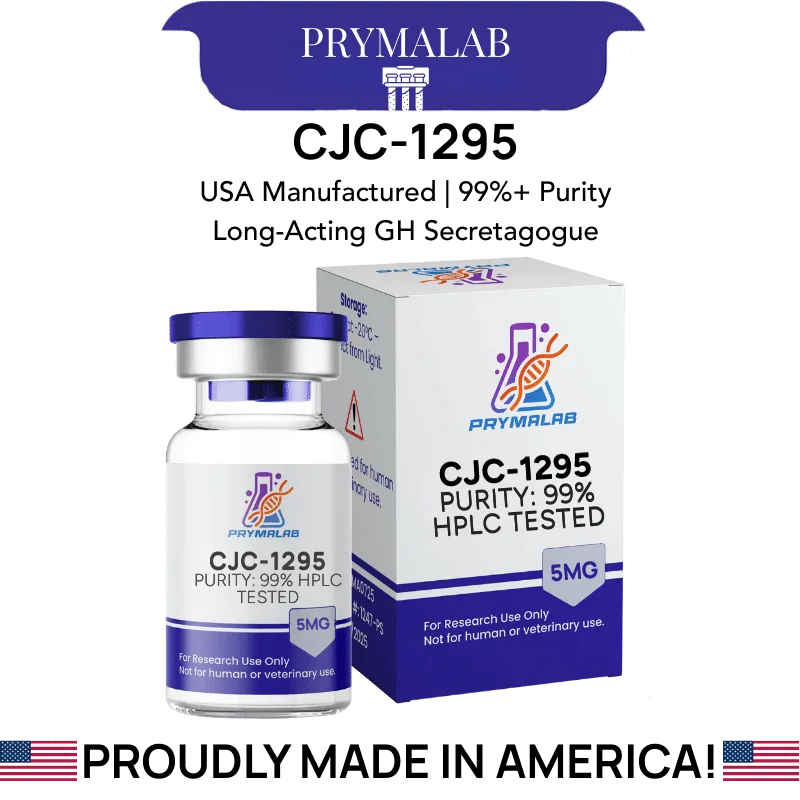
CJC 1295 Peptide 5MG | Growth Hormone GH Research Peptide
Overview
CJC 1295 peptide, also known as CJC-1295 No DAC or Modified GRF 1-29, is a synthetic analog of growth hormone-releasing hormone (GHRH). It is used in research settings to study natural growth hormone GH release, IGF-1 signaling, body composition changes, recovery biology, and age-related growth hormone decline.
Unlike CJC-1295 with DAC, the No DAC form has a shorter activity window and is commonly studied for its ability to support a more pulsatile growth hormone response. This distinction makes it useful for researchers who want to examine timed growth hormone pulses rather than a longer, sustained elevation.
What Is CJC-1295 Peptide?
CJC-1295 peptide is a 29-amino-acid modified version of the active portion of natural GHRH. Natural GHRH is rapidly degraded by dipeptidyl peptidase-IV (DPP-IV), which limits its duration of activity. CJC-1295 No DAC was modified at key amino acid positions to improve stability, receptor activity, and resistance to enzymatic breakdown while preserving its ability to activate GHRH receptors.
The “No DAC” designation is important. DAC stands for Drug Affinity Complex, a modification that extends peptide half-life by promoting albumin binding. CJC-1295 with DAC may remain active for several days, while CJC-1295 No DAC has a much shorter half-life of roughly 30 minutes. For research focused on natural hormone rhythms, this shorter profile can be an advantage because it allows more precise timing around sleep, training, or other experimental variables.
In practical research terms, CJC-1295 peptide is studied as a GHRH analog that encourages the pituitary gland to release endogenous growth hormone. The released growth hormone then stimulates downstream production of insulin-like growth factor 1 (IGF-1), which is involved in anabolic signaling, tissue repair, bone metabolism, and changes in body composition.
Featured Snippet Summary: What Does CJC 1295 Peptide Do?
CJC 1295 peptide supports research into growth hormone GH physiology by activating GHRH receptors in the pituitary gland. This can increase endogenous growth hormone release, raise downstream IGF-1 signaling, and help researchers study muscle growth, fat metabolism, recovery, bone density, sleep quality, and body composition outcomes under controlled conditions.
How CJC-1295 Works
After administration in a research protocol, CJC-1295 peptide circulates to the pituitary gland and binds to GHRH receptors on somatotroph cells. These receptors are G-protein-coupled receptors. Once activated, they increase cyclic AMP (cAMP), activate protein kinase A (PKA), and trigger cellular signaling that supports growth hormone synthesis and secretion.
The growth hormone released in response to CJC-1295 then travels through the bloodstream and binds to growth hormone receptors in tissues such as liver, muscle, adipose tissue, and bone. In the liver, growth hormone promotes IGF-1 production. IGF-1 is a major downstream mediator of growth hormone’s effects and is closely tied to protein synthesis, tissue repair, and anabolic research outcomes.
Because the No DAC version has a shorter duration of action, researchers often study it for pulsatile release patterns. Growth hormone is naturally secreted in pulses, especially during deep sleep and after intense exercise. A shorter-acting GHRH analog allows research protocols to examine how timed stimulation affects growth hormone GH output without creating the same extended exposure profile associated with DAC-modified compounds.
Growth Hormone and GHRH Physiology
Growth hormone is produced by somatotroph cells in the anterior pituitary gland. Its secretion is regulated by two primary hypothalamic signals: GHRH, which stimulates release, and somatostatin, which suppresses release. The balance between these signals creates the natural pulse pattern that characterizes growth hormone physiology.
Natural GHRH is a 44-amino-acid peptide, but it is rapidly broken down in circulation. CJC-1295 was designed to improve on this limitation by modifying the active GHRH fragment. These changes help the peptide remain active long enough to trigger a measurable growth hormone response while still supporting a more natural, pulse-like research profile than longer-acting analogs.
Growth hormone production typically declines with age. This decline is associated with reduced lean mass, increased fat mass, changes in bone density, lower recovery capacity, and shifts in metabolic function. For this reason, CJC-1295 peptide is often discussed in research involving age-related growth hormone changes, anti-aging biology, and body composition.
CJC-1295 No DAC vs. CJC-1295 With DAC
The main difference between CJC-1295 No DAC and CJC-1295 with DAC is duration of action. CJC-1295 No DAC has a shorter half-life and is used to study pulsatile growth hormone release. CJC-1295 with DAC binds albumin and remains active much longer, supporting sustained growth hormone and IGF-1 elevation.
| Feature | CJC-1295 No DAC | CJC-1295 With DAC |
|---|---|---|
| Common Name | Modified GRF 1-29 | CJC-1295 DAC |
| Approximate Half-Life | About 30 minutes | About 6–8 days |
| Research Profile | Pulsatile growth hormone release | Sustained GH and IGF-1 elevation |
| Best Suited For | Timed GH pulse research and combination protocols | Longer-duration IGF-1 elevation studies |
Research Benefits of CJC 1295 Peptide
The research interest around CJC 1295 peptide comes from its role in the growth hormone and IGF-1 axis. Studies have evaluated how GHRH analogs influence lean mass, fat metabolism, recovery, bone health, sleep quality, and markers related to aging. These areas make the peptide useful for researchers studying body composition and metabolic outcomes.
Body Composition Research
CJC-1295 peptide is frequently studied in relation to body composition because growth hormone and IGF-1 signaling are involved in muscle protein synthesis, fat mobilization, and tissue remodeling. Research protocols often track lean mass, fat mass, waist measurements, strength changes, and recovery markers to evaluate whether increased endogenous growth hormone activity correlates with measurable changes.
Muscle Growth and Recovery
Growth hormone and IGF-1 help regulate amino acid uptake, protein synthesis, satellite cell activation, and connective tissue repair. For this reason, CJC-1295 peptide is often discussed in research related to muscle growth, exercise recovery, injury recovery, and training adaptation. The goal in these studies is not simply to increase size, but to understand how the growth hormone axis supports functional tissue repair and performance-related outcomes.
Fat Metabolism
Growth hormone supports lipolysis, the process by which stored triglycerides are broken down into free fatty acids and glycerol. CJC-1295 research may evaluate changes in fat oxidation, visceral fat, metabolic rate, and nutrient partitioning. These mechanisms help explain why the compound is often included in research on fat loss and body recomposition.
Bone and Connective Tissue
Growth hormone and IGF-1 are also involved in bone formation, collagen synthesis, and connective tissue remodeling. Researchers may study CJC-1295 peptide in relation to bone mineral density, tendon recovery, ligament health, and broader regenerative biology.
Sleep and Recovery Biology
Natural growth hormone secretion is closely tied to deep sleep. The largest daily GH pulse often occurs during the early part of the sleep cycle. Because CJC-1295 No DAC can be timed around natural GH rhythms, it is useful in research exploring sleep quality, recovery, and the relationship between rest and hormone signaling.
Clinical Research and Study Context
CJC-1295 and related GHRH analogs have been evaluated in studies focused on pharmacokinetics, pharmacodynamics, GH response, IGF-1 response, and safety. Research has generally shown that modified GHRH analogs can increase growth hormone and IGF-1 levels in a dose-responsive manner, though individual response varies based on age, baseline hormone status, body composition, sleep quality, nutrition, training status, and overall health.
Phase 1 research has focused on safety, tolerability, and hormone-response patterns. Later research has explored outcomes such as lean mass, fat mass, recovery, and metabolic markers. While the peptide remains a research compound and is not approved for general therapeutic use, it continues to be valuable for studying the growth hormone axis under controlled conditions.
CJC-1295 Compared With Other Growth Hormone Secretagogues
Researchers often compare CJC-1295 peptide with other growth hormone secretagogues to select the best compound for a specific study design. Sermorelin is closer to natural GHRH but has a shorter duration. Tesamorelin is another GHRH analog with specific approved medical uses. Ipamorelin works through ghrelin receptors rather than GHRH receptors, which makes it mechanistically different and useful in combination research. MK-677 is an oral ghrelin mimetic with a longer duration, but it does not offer the same timing control as an injectable shorter-acting peptide.
CJC-1295 No DAC is often preferred when the research goal is to preserve a more pulse-like GH release pattern. This makes it especially relevant for studies focused on natural hormone timing, sleep-related GH secretion, and combination protocols with compounds such as Ipamorelin.
Research Dosage and Administration Considerations
Research protocols vary depending on study design, subject characteristics, and endpoints. In published and applied research contexts, CJC-1295 No DAC is often discussed in microgram-level dosing ranges, with timing selected to match research goals such as pre-sleep GH pulses, post-exercise responses, or multiple daily pulse studies. Protocols should be designed by qualified professionals and conducted with appropriate oversight.
For reconstitution, CJC-1295 peptide is commonly supplied as a lyophilized powder and mixed with sterile or bacteriostatic water according to protocol requirements. Researchers should use sterile technique, avoid vigorous shaking, label mixed vials clearly, and store reconstituted solutions under refrigerated conditions as directed by stability guidance.
Administration in research settings is typically subcutaneous. Common research injection sites include the abdomen, thigh, or upper arm, with site rotation used to reduce local irritation. Accurate measurement, sterile handling, and consistent documentation are essential for reliable research outcomes.
Safety Profile and Side Effects
The reported safety profile of CJC-1295 peptide is generally favorable in controlled research, but safety monitoring is still essential. Commonly discussed side effects include mild injection-site redness, temporary swelling, flushing, warmth, headache, and occasional water retention. These effects are usually transient, but all adverse events should be documented and evaluated.
Because CJC-1295 affects growth hormone and IGF-1 signaling, researchers should monitor relevant biomarkers. Safety assessments may include baseline and follow-up IGF-1, fasting glucose, insulin, lipids, liver markers, kidney markers, blood pressure, body composition, and adverse-event reporting. Subjects with cancer history, uncontrolled diabetes, proliferative retinopathy, severe organ disease, pregnancy, or other high-risk conditions require exclusion or careful review depending on the research protocol.
Any research involving human subjects should be conducted with informed consent, institutional review where applicable, and appropriate medical supervision. CJC-1295 peptide is not intended for unsupervised consumer use, and research use should follow applicable laws, ethics standards, and safety procedures.
Storage and Handling
Unreconstituted CJC-1295 peptide should be stored according to supplier instructions, protected from heat, light, and moisture. Refrigerated or frozen storage is commonly used for long-term stability. After reconstitution, the solution should be refrigerated, protected from light, and discarded if it becomes cloudy, discolored, or contains visible particles.
Researchers should document lot numbers, mixing dates, concentration, storage conditions, and handling procedures. Consistent documentation improves reproducibility and helps maintain quality control across study protocols.
Research Use and Regulatory Notes
CJC-1295 peptide is sold for research purposes and is not approved for general human therapeutic use. It may also be prohibited in competitive sports under anti-doping rules. Researchers working with athletes, clinical populations, or human participants should confirm all regulatory, institutional, and ethical requirements before beginning any protocol.
Why Researchers Buy CJC 1295 Peptide From PrymaLab
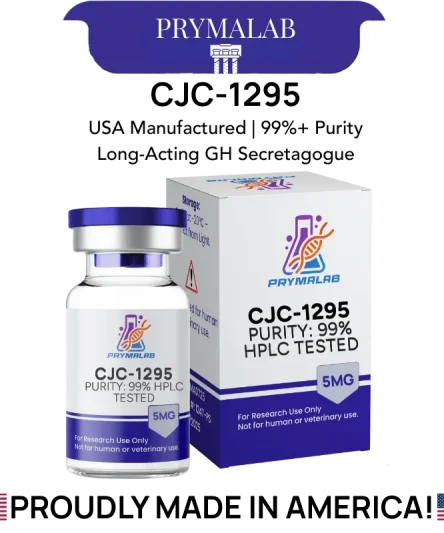
Researchers who buy CJC 1295 peptide from PrymaLab receive a research-grade peptide intended for controlled laboratory or research applications. The product is supplied as a lyophilized powder for stability and is intended to be reconstituted when the research protocol begins. Quality documentation, careful handling, and reliable sourcing are essential for reproducible peptide research.
For studies involving growth hormone GH signaling, IGF-1 response, recovery, and body composition, CJC-1295 No DAC remains a useful research tool because it supports timed, pulse-oriented investigation of the growth hormone axis.
Frequently Asked Questions
Is CJC 1295 peptide the same as Modified GRF 1-29?
Yes. CJC-1295 No DAC is commonly referred to as Modified GRF 1-29. The name highlights that it is a modified version of the first 29 amino acids of natural GHRH.
What is the main difference between CJC-1295 No DAC and CJC-1295 DAC?
The main difference is half-life. CJC-1295 No DAC is shorter acting and supports pulsatile growth hormone release, while CJC-1295 with DAC is longer acting and supports more sustained GH and IGF-1 elevation.
Why is CJC-1295 peptide used in body composition research?
CJC-1295 peptide is used in body composition research because growth hormone and IGF-1 influence muscle protein synthesis, lipolysis, tissue repair, bone metabolism, and nutrient partitioning.
Does CJC-1295 require medical supervision?
Any human-subject research involving CJC-1295 should be conducted under appropriate medical supervision, informed consent, and institutional or regulatory oversight where required.
Is CJC-1295 peptide approved for general human use?
No. CJC-1295 peptide is a research compound and is not approved for general therapeutic or consumer use. It should be handled only within appropriate research settings.











15 reviews for CJC-1295 (NO DAC) 5MG