Description
PrymaLab · Research use only
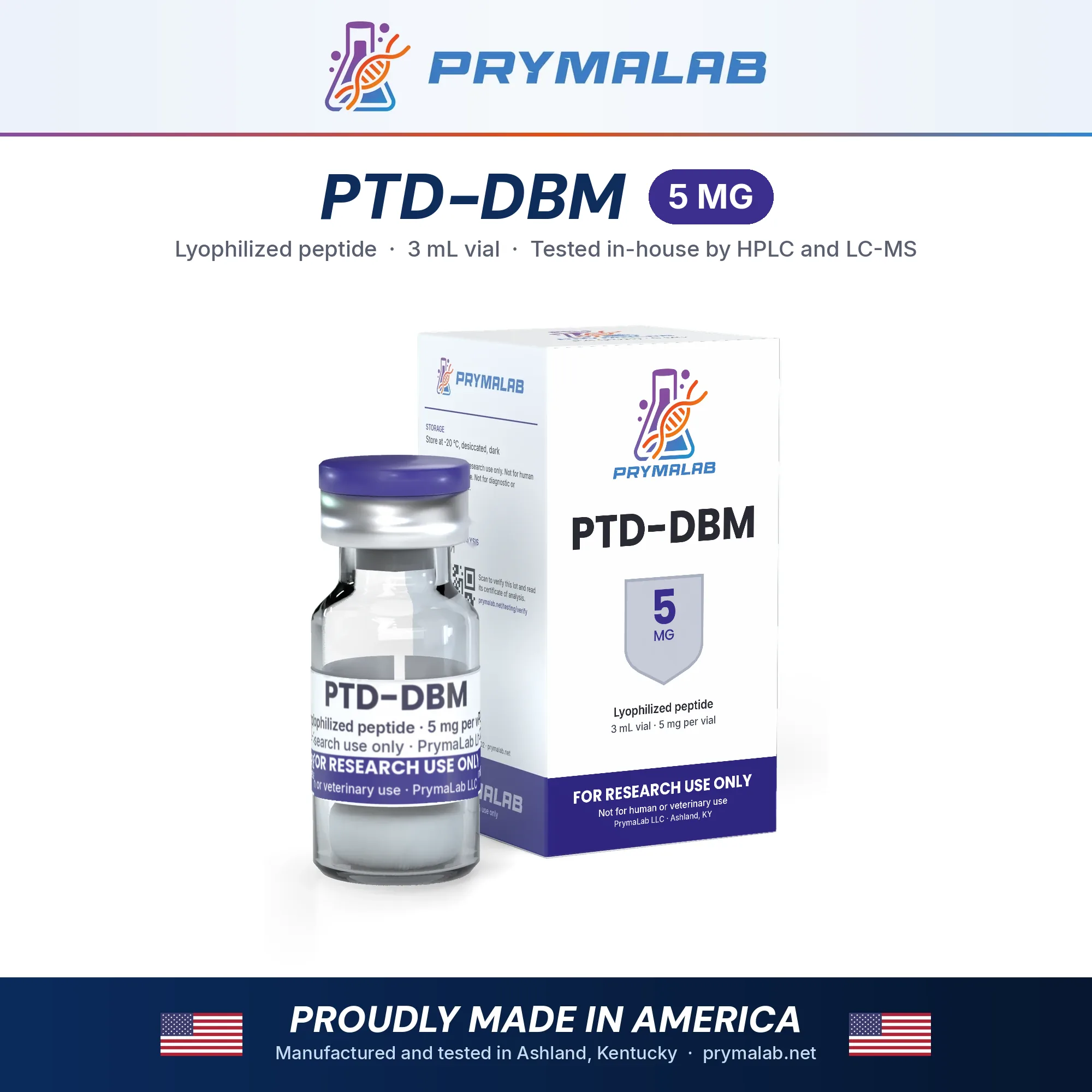
PTD-DBM 5mg
The cell-penetrating CXXC5 Dishevelled-binding motif peptide R8-G4-RKTGHQICKFRKC, 5 mg freeze-dried
PTD-DBM is a 25-residue synthetic peptide from Kang-Yell Choi’s laboratory at Yonsei University: eight arginines as a protein transduction domain, a four-glycine linker, and the 13-residue Dishevelled-binding motif of the protein CXXC5. It was built to stop CXXC5 from binding Dishevelled and so to release a negative-feedback brake on Wnt/β-catenin signalling. This listing is the 5 mg vial of freeze-dried powder, the main fill; a 1 mg vial is also sold. The hair-regrowth and wound-healing data behind its reputation are all from mice and cultured cells in that one laboratory.
Specifications
| Property | Value |
|---|---|
| Compound | PTD-DBM, octa-arginine protein transduction domain + tetraglycine linker + CXXC5 Dvl-binding motif (residues 284-296) |
| CAS number | 1609454-11-6 |
| Molecular formula | C124H225N61O28S2 |
| Theoretical mass | 3082.6 Da |
| Sequence / structure | H-RRRRRRRRGGGGRKTGHQICKFRKC-OH; 25 residues, two free Cys, no disulfide specified. |
| Label claim | 5 mg per vial |
| Form | Lyophilized (freeze-dried) powder or cake in a sealed glass vial with a rubber stopper and aluminium crimp cap |
| Storage, sealed | −20 °C, desiccated, dark |
| Purity specification | 99.0% or higher by RP-HPLC |
| Lot certificate | Certificate for the first lot: in preparation. Published certificates appear on the results page and can be checked on the verify page. |
Fills in this range
PTD-DBM is sold in 2 fills. The compound and the testing are the same in every fill; only the amount in the vial changes.
| Fill | Listing |
|---|---|
| 1 mg | PTD-DBM 1mg |
| 5 mg | PTD-DBM 5mg (this page) |
What the structure is
RRRRRRRR-GGGG-RKTGHQICKFRKC, 25 L-amino acids, free at both ends, with two unpaired cysteines. Formula C124H225N61O28S2, theoretical mass 3082.6 Da (PubChem CID 176453931, CAS 1609454-11-6). The DBM segment matches residues 284-296 of human CXXC5 (UniProt Q7LFL8) and contains the KTXXXI motif that docks into the Dvl PDZ domain. Ten arginines and three lysines make it highly basic and very water-soluble; the two free cysteines make solutions prone to disulfide dimerisation.
The constructs in the 2015 and 2017 papers carried an extra C-terminal lysine conjugated to FITC for imaging; the research peptide is the unlabelled 25-mer. The same group’s later small-molecule CXXC5-Dvl inhibitors (KY-02327, KY19382, KY19334) are not peptides and not this product.
What the research covers
Mechanism: releasing the CXXC5 brake on Wnt/beta-catenin
CXXC5 is induced by Wnt/beta-catenin signalling and feeds back on the pathway by binding the PDZ domain of Dishevelled through a C-terminal Dvl-binding motif; deleting that motif abolishes its inhibitory activity1,3. PTD-DBM is a synthetic peptide composed of a protein transduction domain, a flexible linker and the DBM, intended to occupy the Dvl PDZ domain and so prevent CXXC5 from binding1. In MC3T3-E1 osteoblastic cells, 5 microM PolyR-DBM increased TOPFLASH Wnt-reporter activity, and NMR titration showed the DBM peptide inducing chemical-shift changes in the Dvl PDZ domain that overlapped those of the small-molecule inhibitor KY-020614. The DBM contains an internal KTXXXI motif of the type shown by NMR to bind the mouse Dvl-1 PDZ domain with an estimated affinity of about 56 microM in the paralogue Idax7.
Cutaneous wound healing in mice
In human dermal fibroblasts, 2-10 microM PTD-DBM for 2 days increased beta-catenin, alpha-smooth-muscle actin, collagen I and endothelin-1 in a concentration-dependent manner, increased nuclear beta-catenin, Wnt-reporter and Col1a2-promoter activity, collagen secretion, collagen-gel contraction and scratch-wound migration; beta-catenin siRNA or the endothelin-receptor antagonist bosentan blocked the collagen and alpha-SMA increases1. On 1.5 cm full-thickness dorsal wounds in C3H mice treated topically each day, PTD-DBM or valproic acid (a GSK-3beta inhibitor) each accelerated closure to about the same degree as the EGF positive control, and the combination was faster still, with 42.8% re-epithelialisation at day 3 versus 4.9% in controls and higher beta-catenin, keratin 14, collagen I and PCNA in the wound bed1. A 2023 follow-up delivered PTD-DBM with or without valproic acid from an adhesive pyrogallol-hyaluronic acid hydrogel patch and reported reduced scar formation, lower alpha-SMA, and induction of collagen III and the stem-cell markers CD105 and nestin in mouse wounds6.
Hair regrowth and wound-induced hair neogenesis in mice
CXXC5 was up-regulated in miniaturised hair follicles and arrector pili muscles of human balding scalp, and CXXC5 suppressed alkaline-phosphatase activity and proliferation in cultured human dermal papilla cells2. Cxxc5-/- mice showed accelerated hair regrowth after depilation, which valproic acid increased further, and topical treatment with the competitor peptide PTD-DBM activated Wnt/beta-catenin signalling and accelerated both hair regrowth and wound-induced hair follicle neogenesis in wild-type mice2. In a later study from the same laboratory, prostaglandin D2 (PGD2) induced CXXC5 through BMP signalling; topical PTD-DBM (300 microL of a 10 mM solution every other day on depilated 7-week-old C57BL/6N mice) restored PGD2-suppressed hair shaft length, nuclear beta-catenin and PCNA, and daily PTD-DBM restored PGD2-suppressed neogenic follicle counts and the WIHN markers Fgf9 and keratin 17 after 1 cm2 wounds in 3-week-old mice; the authors place CXXC5 downstream of dihydrotestosterone-driven PGD2 production5.
Bone: the original competitor-peptide experiments
The DBM competitor peptide was first used to test CXXC5 function in bone. Cxxc5-deficient mice had higher bone mineral density without gross developmental defects, CXXC5 bound Dvl in a Wnt-dependent manner during osteoblast differentiation, and the competitor peptide activated Wnt/beta-catenin signalling, promoted osteoblast differentiation and increased thickness growth of ex vivo-cultured calvariae3. The group then used a FITC-labelled PolyR-DBM/Dvl-PDZ binding assay to screen for small molecules that mimic the peptide, leading to the orally active osteoporosis candidate KY-023274.
What is not established
Every in vivo and in vitro study of PTD-DBM comes from a single laboratory (Kang-Yell Choi, Yonsei University) and its collaborators; no independent replication of the peptide’s hair or wound effects was found1,2,5,6. All efficacy data are in mice (C3H, C57BL/6N) or cultured human cells; there are no human pharmacokinetic, safety or efficacy data for the peptide. The hair studies use topical application to depilated or wounded mouse skin, a model that does not reproduce human androgenetic alopecia, and in several experiments PTD-DBM was combined with valproic acid, so single-agent effect sizes are not always separable1,2,6. Skin penetration, stability of the free-cysteine peptide, and off-target effects of a polyarginine carrier have not been characterised in the published work. Sustained activation of Wnt/beta-catenin in skin carries theoretical tumour-promotion concerns that these short-term studies were not designed to address. None of the published work used this supplier’s material.
Clinical and regulatory status
No clinical development found. PTD-DBM is not an approved drug anywhere, and a search of ClinicalTrials.gov (November 2026) returned no registered trial for PTD-DBM or for any CXXC5-Dvl inhibitor. It appears in the literature only as a preclinical research tool; the same group has pursued non-peptide CXXC5-Dvl inhibitors (KY-02327, KY19382, KY19334) as drug candidates in mice4. This listing is a research-grade material.
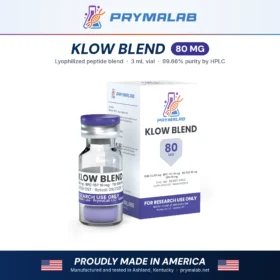
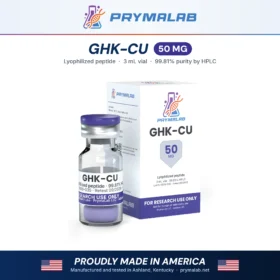
Related listings: GHK-CU 50MG, AHK-Cu 10mg, BPC-157 5MG, TB-500 (Thymosin Beta-4) 5mg, KLOW Blend (80mg). The skin, hair and beauty peptides category lists the rest of the range.
How each lot is tested
Every lot is tested in PrymaLab’s own laboratory in Ashland, Kentucky before release: RP-HPLC for purity, LC-MS for identity, Karl Fischer titration for water, LAL for endotoxin and USP <71> for sterility. Published certificates are listed on the results page and can be checked by number and key on the verify page. These are in-house results from PrymaLab Analytical, not an independent test, and the lab is not accredited to ISO 17025. The third-party testing guarantee on this page still applies: if any independent laboratory finds the wrong compound, or less than the stated purity or amount, the order is refunded and the cost of the test is reimbursed.
Frequently asked questions
What exactly is PTD-DBM?
A 25-residue synthetic peptide: eight arginines (the protein transduction domain), a four-glycine linker, and the 13-residue Dvl-binding motif of human CXXC5 (RKTGHQICKFRKC, residues 284-296). PubChem CID 176453931 gives C124H225N61O28S2, 3082.6 Da. It was designed to block the CXXC5-Dishevelled interaction and thereby remove a negative-feedback brake on Wnt/beta-catenin signalling.
Where does the DBM sequence come from?
From the C-terminal region of CXXC5 itself. The segment contains an internal KTXXXI motif (KTGHQI) of the kind shown by NMR to dock into the Dvl PDZ domain in the related protein Idax/CXXC4. Deleting this motif from CXXC5 removes its ability to inhibit the pathway.
How does PTD-DBM differ from valproic acid or from GHK-Cu?
Valproic acid activates Wnt/beta-catenin by inhibiting GSK-3beta, a step downstream of Dvl; the Choi group combined the two because they act at different nodes and reported additive or synergistic effects on mouse wounds and hair. GHK-Cu is an unrelated copper tripeptide with no reported action on CXXC5 or Dvl.
Did the hair studies use human subjects?
No. Human balding-scalp tissue was examined only for CXXC5 expression, and human dermal papilla cells were used in vitro. All regrowth and neogenesis data are from depilated or wounded mice.
Is the research peptide the same as the one in the papers?
Nearly. The 2015 and 2017 constructs carried an extra C-terminal lysine conjugated to FITC so the peptide could be visualised; the commercial peptide is the unlabelled 25-mer deposited in PubChem. The pharmacologically relevant PTD-linker-DBM portion is the same.
How should the lyophilized peptide be stored?
As for other cysteine-containing research peptides: sealed at −20 °C, desiccated and protected from light. The two free cysteines can oxidise to disulfide-linked dimers or intramolecular bridges on repeated exposure to air or in solution, so reconstituted material is best used promptly and kept at 2 to 8 °C for short periods only.
References
- Lee SH, Kim MY, Kim HY, Lee YM, Kim H, Nam KA, Roh MR, Min DS, Chung KY, Choi KY. The Dishevelled-binding protein CXXC5 negatively regulates cutaneous wound healing. J Exp Med. 2015;212(7):1061-1080. DOI · PubMed
- Lee SH, Seo SH, Lee DH, Pi LQ, Lee WS, Choi KY. Targeting of CXXC5 by a Competing Peptide Stimulates Hair Regrowth and Wound-Induced Hair Neogenesis. J Invest Dermatol. 2017;137(11):2260-2269. DOI · PubMed
- Kim HY, Yoon JY, Yun JH, Cho KW, Lee SH, Rhee YM, Jung HS, Lim HJ, Lee H, Choi J, Heo JN, Lee W, No KT, Min D, Choi KY. CXXC5 is a negative-feedback regulator of the Wnt/beta-catenin pathway involved in osteoblast differentiation. Cell Death Differ. 2015;22(6):912-920. DOI · PubMed
- Kim HY, Choi S, Yoon JH, Lim HJ, Lee H, Choi J, Ro EJ, Heo JN, Lee W, No KT, Choi KY. Small molecule inhibitors of the Dishevelled-CXXC5 interaction are new drug candidates for bone anabolic osteoporosis therapy. EMBO Mol Med. 2016;8(4):375-387. DOI · PubMed
- Ryu YC, Park J, Kim YR, Choi S, Kim GU, Kim E, Hwang Y, Kim H, Han G, Lee SH, Choi KY. CXXC5 Mediates DHT-Induced Androgenetic Alopecia via PGD2. Cells. 2023;12(4):555. DOI · PubMed
- Lee SH, An S, Ryu YC, Seo SH, Park S, Lee MJ, Cho SW, Choi KY. Adhesive Hydrogel Patch-Mediated Combination Drug Therapy Induces Regenerative Wound Healing through Reconstruction of Regenerative Microenvironment. Adv Healthc Mater. 2023;12(18):e2203094. DOI · PubMed
- London TB, Lee HJ, Shao Y, Zheng J. Interaction between the internal motif KTXXXI of Idax and mDvl PDZ domain. Biochem Biophys Res Commun. 2004;322(1):326-332. DOI · PubMed
Research use only
For laboratory research use only. PTD-DBM 5mg is not a drug, food, cosmetic or dietary supplement, is not approved by the FDA or any comparable authority for human or veterinary use, and must not be given to people or animals. It is sold to qualified researchers and institutions, and the buyer is responsible for lawful handling and disposal.








Reviews
There are no reviews yet.