$124.99 / month – $1,049.99
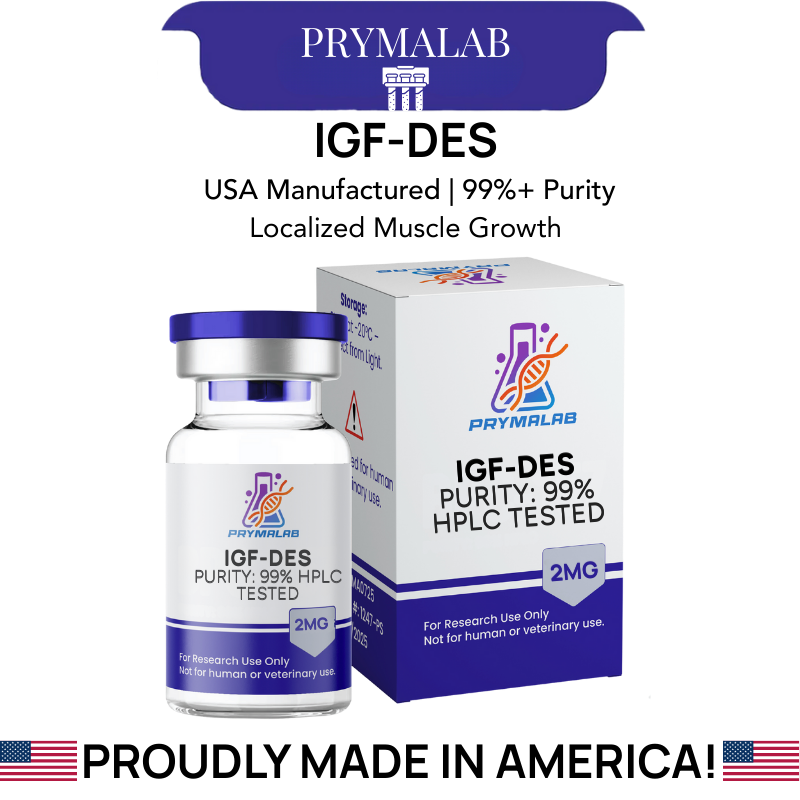
IGF-DES 2MG is a highly potent, site-specific insulin-like growth factor peptide designed for targeted muscle hypertrophy, accelerated tissue repair, and localized anabolic effects. Ideal for bodybuilding and injury recovery research.
IGF-DES 2MG represents one of the most potent and specialized peptides available for targeted muscle growth and localized tissue repair. This pharmaceutical-grade igf-1 des peptide is a truncated form of insulin-like growth factor 1 (IGF-1), specifically lacking the first three N-terminal amino acids, which gives it remarkable properties that distinguish it from both native IGF-1 and other IGF-1 variants like IGF-1 LR3. Understanding what is igf-1 des requires appreciating how this structural modification creates a peptide with dramatically enhanced local potency, reduced binding to IGF binding proteins, and a short half-life that makes it ideal for site-specific intramuscular injection.
The igf-1 des peptide consists of 67 amino acids compared to the 70 amino acids in native IGF-1. This seemingly small structural difference creates profound functional changes. The removal of the N-terminal Gly-Pro-Glu tripeptide significantly reduces the peptide’s affinity for IGF binding proteins (IGFBPs), the carrier proteins that normally sequester IGF-1 in circulation and limit its bioavailability. In the body, more than 99% of native IGF-1 is bound to IGFBPs, with less than 1% existing in free, bioactive form. The des igf-1 structure shows dramatically reduced IGFBP binding, resulting in much higher concentrations of free, bioactive peptide at injection sites. This explains the approximately 10-fold increase in local potency compared to native IGF-1.
The short half-life of igf-1 des, approximately 20-30 minutes, represents another crucial characteristic that defines its use. Unlike IGF-1 LR3 which has a half-life of 20-30 hours and produces systemic effects throughout the body, igf-1 des remains highly localized to the injection site. This short duration of action ensures that anabolic effects concentrate in the injected muscle rather than spreading systemically. For bodybuilders and athletes seeking to bring up lagging muscle groups or target specific areas for development, this localized effect represents a major advantage. When you buy igf-1 des, you’re accessing a tool for precise, targeted muscle development that systemic approaches cannot replicate.
The mechanism of action of igf-1 des involves binding to IGF-1 receptors on muscle cells, satellite cells, and fibroblasts, triggering powerful anabolic signaling cascades. The IGF-1 receptor is a tyrosine kinase receptor that, when activated, initiates multiple intracellular pathways including the mTOR pathway which drives protein synthesis and muscle growth, the PI3K/Akt pathway which promotes cell survival and hypertrophy, and the MAPK pathway which supports cellular proliferation. These signaling cascades result in increased muscle protein synthesis, enhanced satellite cell activation, improved nutrient uptake, and accelerated tissue repair. The enhanced receptor binding affinity of igf-1 des peptide means these effects occur more powerfully and rapidly compared to native IGF-1.
One of the most exciting potential benefits of igf-1 des is its ability to activate satellite cells, the dormant muscle stem cells that can differentiate into new muscle fibers. While muscle hypertrophy (growth of existing fibers) represents the primary mechanism of muscle growth in adults, satellite cell activation raises the possibility of muscle hyperplasia (formation of new fibers). Research suggests that igf peptides like IGF-DES can stimulate satellite cell proliferation and differentiation, potentially supporting not just larger muscle fibers but also increased muscle fiber number. This potential for hyperplasia represents one of the most compelling reasons advanced bodybuilders buy igf-1 des for specialized muscle development protocols.
The applications of IGF-DES 2MG span both muscle building and injury recovery contexts. Bodybuilders use igf-1 des for sale to target lagging muscle groups that don’t respond well to training alone, such as calves, arms, or specific portions of larger muscle groups. The site-specific injection allows for precise targeting of exactly which muscles receive anabolic stimulation. Physique competitors use igf-1 des during preparation phases to enhance muscle density and fullness in specific areas. Athletes recovering from injuries utilize des igf-1 to accelerate healing of muscle strains, tendon damage, and ligament injuries. The peptide’s effects on collagen synthesis and fibroblast proliferation support connective tissue repair, while its anabolic effects help restore muscle mass lost during injury periods.
The practical use of igf-1 des differs significantly from systemic peptides. Rather than subcutaneous injection for whole-body effects, igf-1 des peptide is injected intramuscularly directly into target muscles, typically 15-30 minutes before training those muscles. This pre-workout timing ensures that peak peptide concentration coincides with training-induced blood flow, nutrient delivery, and mechanical tension, maximizing anabolic effects. The short half-life means timing is critical – injecting too early or too late reduces effectiveness. Typical protocols involve 4-6 week cycles of daily injections followed by 2-4 week breaks to prevent receptor downregulation and maintain long-term effectiveness.
When you buy igf-1 des online from PrymaLab, you receive pharmaceutical-grade peptide manufactured in the USA following strict GMP standards. Each 2mg vial undergoes comprehensive third-party testing including HPLC verification of identity and purity, mass spectrometry confirmation of molecular weight, sterility testing to ensure absence of contamination, and endotoxin testing to verify injection safety. This rigorous quality control ensures that the igf-1 des for sale at PrymaLab meets pharmaceutical standards for purity, potency, and safety, providing reliable, reproducible results across research applications.
The growing popularity of igf-1 des reflects increasing recognition within the bodybuilding and athletic communities that targeted, site-specific approaches can produce results that systemic interventions cannot achieve. While growth hormone and systemic IGF-1 elevation through peptides like MK-677 or CJC-1295 provide valuable whole-body anabolic effects, they cannot selectively target specific muscles for enhanced development. The igf-1 des peptide fills this niche, offering a tool for precise muscle targeting that complements rather than replaces systemic anabolic approaches. Many advanced users combine igf-1 des with growth hormone secretagogues or other peptides for comprehensive muscle building and recovery support.
The scientific foundation supporting igf-1 des use comes from decades of research on IGF-1 biology and its role in muscle growth and tissue repair. While specific research on the DES(1-3) variant remains more limited than research on native IGF-1, the well-characterized mechanisms of IGF-1 receptor signaling provide strong theoretical support for the observed effects. Clinical observations from thousands of bodybuilders and athletes using igf peptides consistently report significant localized muscle growth, enhanced recovery, and improved tissue repair when proper protocols are followed. This real-world validation complements the scientific understanding of IGF-1 mechanisms.
The future of igf-1 des research will likely focus on optimizing protocols for specific applications, better understanding the potential for muscle hyperplasia in humans, exploring combinations with other peptides and growth factors, and establishing long-term safety profiles. As our understanding deepens, protocols for buy igf-1 des use will continue to evolve and improve. Researchers working with IGF-DES 2MG are participating in the cutting edge of targeted anabolic interventions, exploring the potential of site-specific growth factor administration to transform how we approach muscle development and tissue repair.
For researchers seeking to understand where to buy igf-1 safely and effectively, PrymaLab offers pharmaceutical-grade igf-1 des with verified purity, comprehensive quality testing, detailed usage protocols, and ongoing research support. The 2mg vial size provides sufficient peptide for complete 4-6 week cycles at typical doses, with proper storage ensuring stability throughout the research period. Simply reconstitute with bacteriostatic water, calculate precise doses using our Peptide Calculator, and inject intramuscularly into target muscles for remarkable localized anabolic effects. Part of our comprehensive peptides for sale portfolio featuring the most advanced muscle building and recovery peptides available for research applications.
To fully appreciate the power and potential of igf-1 des, we must first understand the broader context of insulin-like growth factors and their critical role in human growth, development, and tissue maintenance. IGF-1, or insulin-like growth factor 1, represents one of the most important anabolic hormones in the human body, mediating many of the growth-promoting effects of growth hormone while also exerting independent effects on muscle growth, tissue repair, and metabolic function. The igf-1 des peptide represents a specialized variant of this crucial growth factor, optimized for specific applications that native IGF-1 cannot address effectively.
Insulin-like growth factors were first discovered in the 1950s when researchers identified growth-promoting substances in blood serum that could stimulate cellular proliferation and differentiation. These factors were initially called “sulfation factors” due to their ability to stimulate sulfate incorporation into cartilage, a marker of growth. Later research revealed their structural similarity to insulin, leading to the name “insulin-like growth factors.” Despite this structural similarity, IGF-1 and insulin have distinct receptors and different primary functions, though some cross-reactivity exists at high concentrations. Understanding this evolutionary relationship helps explain why igf peptides can affect both anabolic processes and glucose metabolism.
The IGF system consists of multiple components working together to regulate growth and metabolism. IGF-1 and IGF-2 represent the two primary ligands, with IGF-1 being the more important for postnatal growth and adult tissue maintenance. The IGF-1 receptor mediates most biological effects of IGF-1, though IGF-2 can also bind this receptor. IGF binding proteins (IGFBPs) represent a family of six proteins that bind IGF-1 and IGF-2 in circulation, regulating their bioavailability and half-life. IGFBP proteases can cleave IGFBPs, releasing free IGF-1 to interact with receptors. This complex regulatory system ensures tight control over IGF-1 activity, preventing excessive or inappropriate growth stimulation.
Native IGF-1 is produced primarily in the liver in response to growth hormone stimulation, though virtually all tissues can produce IGF-1 locally in response to various stimuli. The liver-derived endocrine IGF-1 circulates throughout the body bound to IGFBPs, particularly IGFBP-3 in a ternary complex with acid-labile subunit (ALS). This complex has a half-life of 12-15 hours, providing stable circulating IGF-1 levels. However, less than 1% of circulating IGF-1 exists in free, bioactive form due to tight IGFBP binding. Local tissue production of IGF-1 (autocrine/paracrine IGF-1) can act locally without entering circulation, providing tissue-specific growth regulation. This dual endocrine and autocrine/paracrine system allows for both systemic coordination of growth and local tissue-specific regulation.
The development of igf-1 des and other IGF-1 variants aimed to overcome limitations of native IGF-1 for therapeutic and research applications. Native IGF-1 has a very short half-life when not bound to IGFBPs (approximately 10-20 minutes), making it impractical for most applications. The tight IGFBP binding limits bioavailability, requiring very high doses to achieve therapeutic effects. Systemic administration of native IGF-1 can cause hypoglycemia and other side effects due to insulin receptor cross-reactivity. The des igf-1 variant was developed to address some of these limitations while creating unique properties suited for specific applications.
The structural modification that creates igf-1 des – removal of the first three N-terminal amino acids (Gly-Pro-Glu) – produces several crucial functional changes. The truncated N-terminus dramatically reduces binding affinity to all six IGFBPs, particularly IGFBP-3 which is the major carrier protein in circulation. This reduced IGFBP binding means that when igf-1 des peptide is injected, much more remains in free, bioactive form compared to native IGF-1. Studies show that des igf-1 has approximately 10-fold lower affinity for IGFBPs while maintaining or even slightly enhancing affinity for the IGF-1 receptor. This combination creates a peptide with dramatically enhanced local potency.
The short half-life of igf-1 des (20-30 minutes) results from rapid clearance combined with minimal IGFBP binding to extend circulation time. While this might seem like a disadvantage, it actually creates the peptide’s most valuable property for bodybuilding and targeted muscle development applications: highly localized effects. When igf-1 des is injected intramuscularly into a specific muscle, it acts locally on that muscle’s cells before being cleared from the system. This prevents the systemic effects that would occur with longer-acting variants, allowing for precise targeting of which muscles receive anabolic stimulation. This is why researchers buy igf-1 des specifically for bringing up lagging body parts rather than for general muscle building.
The IGF-1 receptor through which igf-1 des exerts its effects is a tyrosine kinase receptor consisting of two alpha subunits and two beta subunits linked by disulfide bonds. The alpha subunits contain the ligand binding domain that recognizes and binds IGF-1, while the beta subunits contain the tyrosine kinase domain that initiates intracellular signaling when the receptor is activated. When igf-1 des peptide binds to the receptor, it causes conformational changes that activate the tyrosine kinase, leading to autophosphorylation of tyrosine residues on the receptor itself. These phosphorylated tyrosines serve as docking sites for various signaling proteins, initiating multiple downstream pathways.
The primary signaling pathways activated by IGF-1 receptor stimulation include the PI3K/Akt pathway, the MAPK pathway, and direct effects on mTOR. The PI3K/Akt pathway is particularly important for the anabolic and anti-catabolic effects of igf peptides. Activation of this pathway promotes protein synthesis, inhibits protein breakdown, enhances glucose uptake, and promotes cell survival. The MAPK pathway contributes to cellular proliferation and differentiation, important for satellite cell activation and tissue remodeling. The mTOR pathway, which can be activated both through Akt and through direct mechanisms, serves as the master regulator of protein synthesis and muscle growth. Understanding these pathways helps explain the comprehensive anabolic effects observed when researchers buy igf-1 des and use it for muscle development.
The role of IGF-1 in muscle growth extends beyond simple protein synthesis stimulation. IGF-1 is crucial for satellite cell activation, the process by which dormant muscle stem cells are recruited to support muscle repair and growth. Satellite cells normally remain quiescent (inactive) but can be activated by mechanical stress, injury, or growth factors including IGF-1. Once activated, satellite cells proliferate and differentiate into myoblasts that can fuse with existing muscle fibers to support hypertrophy or potentially form new fibers (hyperplasia). The igf-1 des variant appears particularly effective at stimulating satellite cell activation due to its enhanced receptor binding and high local concentrations at injection sites.
The potential for muscle hyperplasia (increase in muscle fiber number) represents one of the most exciting theoretical benefits of igf-1 des for sale. While most adult muscle growth occurs through hypertrophy (increase in existing fiber size), some evidence suggests that hyperplasia may also contribute under certain conditions. Animal studies have demonstrated that IGF-1 overexpression can lead to increased muscle fiber number, and some human studies suggest that extreme muscle growth may involve hyperplastic components. The satellite cell activation properties of des igf-1 raise the possibility that consistent use could support not just larger muscle fibers but also increased fiber number, potentially creating permanent changes in muscle architecture. While definitive proof of hyperplasia in humans using igf-1 des remains elusive, the theoretical potential drives significant interest in this peptide among advanced bodybuilders.
The tissue repair and regeneration effects of IGF-1 extend beyond muscle to include connective tissues like tendons and ligaments. IGF-1 stimulates fibroblast proliferation and collagen synthesis, supporting the repair of damaged connective tissues. It also promotes angiogenesis (formation of new blood vessels), ensuring adequate blood supply to healing tissues. These properties make igf-1 des peptide valuable not just for muscle building but also for injury recovery. Athletes recovering from tendon or ligament injuries often buy igf-1 des online to accelerate healing and improve tissue quality in the repaired structures.
The metabolic effects of IGF-1 include enhanced glucose uptake into muscle cells, improved insulin sensitivity, and increased fat oxidation. These metabolic effects contribute to the muscle-building properties of igf peptides by ensuring adequate nutrient delivery to growing muscles. The enhanced glucose uptake can occasionally cause transient hypoglycemia, particularly at higher doses or when injecting in fasted states, representing the most common side effect of igf-1 des. Understanding these metabolic effects helps researchers use the peptide safely and effectively.
The evolution of IGF-1 variants for research and therapeutic use continues, with igf-1 des representing one of several modifications designed to optimize specific properties. IGF-1 LR3, another popular variant, uses a different approach – extending the peptide with additional amino acids and making an arginine substitution to reduce IGFBP binding while extending half-life. This creates a peptide with systemic effects suitable for whole-body muscle building. The igf-1 des approach of truncating the N-terminus creates the opposite profile – very short half-life with highly localized effects. These different variants serve different purposes, with igf-1 des for sale being optimal for targeted, site-specific applications.
The regulatory status of IGF-1 and its variants reflects their powerful biological effects. Native IGF-1 (mecasermin) is FDA-approved for treatment of severe primary IGF-1 deficiency, but variants like igf-1 des and IGF-1 LR3 remain research compounds without approved therapeutic indications. They are available for research purposes but not for human therapeutic use outside of approved clinical trials. Athletes should note that all forms of IGF-1 are prohibited by WADA (World Anti-Doping Agency) and will result in positive doping tests. Understanding this regulatory context is important for anyone considering whether to buy igf-1 des for research applications.
The future of IGF-1 research and therapeutic development will likely focus on tissue-specific delivery methods, combination approaches with other growth factors, and better understanding of optimal protocols for different applications. The igf-1 des peptide represents current state-of-the-art for site-specific IGF-1 delivery, but future innovations may further refine and improve targeted anabolic interventions. Researchers working with des igf-1 today are exploring the frontiers of targeted muscle development and tissue repair, contributing to our evolving understanding of how to harness growth factor biology for human benefit.
Understanding the broader context of IGF-1 biology and the specific properties of igf-1 des enables informed, effective use of this powerful peptide. The combination of enhanced receptor binding, reduced IGFBP binding, short half-life, and localized effects creates a unique tool for targeted muscle development that cannot be replicated by systemic approaches. When researchers buy igf-1 des from PrymaLab, they’re accessing not just a peptide but a sophisticated tool backed by decades of IGF-1 research and optimized for specific applications that native IGF-1 cannot address effectively.
The remarkable effects of igf-1 des on muscle growth and tissue repair result from its interaction with multiple cellular and molecular pathways that collectively create powerful localized anabolic effects. Understanding the detailed mechanism of action helps researchers optimize protocols, predict outcomes, and appreciate why this peptide produces results that other approaches cannot replicate. The igf-1 des peptide works through a cascade of events beginning with intramuscular injection and culminating in enhanced protein synthesis, satellite cell activation, and tissue remodeling.
The journey of des igf-1 begins with intramuscular injection directly into the target muscle. Unlike subcutaneous injection which delivers peptides into fat tissue for gradual systemic absorption, intramuscular injection places the peptide directly into muscle tissue where it can immediately interact with local cells. The igf-1 des rapidly diffuses through the muscle tissue, encountering muscle fibers, satellite cells, fibroblasts, endothelial cells, and other cell types. The short half-life of 20-30 minutes means that peak concentrations occur quickly and decline rapidly, ensuring effects remain localized to the injected muscle rather than spreading systemically.
The first critical interaction occurs when igf-1 des encounters IGF-1 receptors on the surface of muscle cells. The IGF-1 receptor is a transmembrane protein consisting of two extracellular alpha subunits that bind the ligand and two transmembrane beta subunits that contain the intracellular tyrosine kinase domain. The igf-1 des peptide binds to the alpha subunits with approximately 10-fold greater affinity than native IGF-1, due to the structural changes created by removing the N-terminal tripeptide. This enhanced binding affinity means that lower concentrations of des igf-1 can achieve maximal receptor activation compared to native IGF-1.
Upon binding, the IGF-1 receptor undergoes conformational changes that activate its intrinsic tyrosine kinase activity. The activated kinase phosphorylates tyrosine residues on the receptor itself (autophosphorylation) and on intracellular substrate proteins. The primary substrates include insulin receptor substrate (IRS) proteins, particularly IRS-1 and IRS-2, and Shc proteins. These phosphorylated proteins serve as docking sites for downstream signaling molecules, initiating multiple parallel signaling cascades that collectively produce the anabolic effects of igf peptides.
The PI3K/Akt pathway represents one of the most important signaling cascades activated by igf-1 des. Phosphorylated IRS proteins recruit and activate phosphoinositide 3-kinase (PI3K), which phosphorylates phosphatidylinositol lipids in the cell membrane to generate PIP3. PIP3 serves as a docking site for proteins containing pleckstrin homology (PH) domains, including PDK1 and Akt. PDK1 phosphorylates and activates Akt, a serine/threonine kinase that serves as a central node in anabolic signaling. Activated Akt phosphorylates numerous downstream targets that collectively promote muscle growth and inhibit muscle breakdown.
One crucial Akt target is mTOR (mammalian target of rapamycin), the master regulator of protein synthesis and cell growth. Akt activates mTOR complex 1 (mTORC1) both directly through phosphorylation and indirectly by inhibiting TSC2, a negative regulator of mTOR. Activated mTORC1 phosphorylates two key substrates: p70S6 kinase (p70S6K) and 4E-BP1. Phosphorylated p70S6K activates ribosomal protein S6, enhancing the translation of mRNAs encoding ribosomal proteins and translation factors, effectively increasing the cell’s protein synthesis capacity. Phosphorylated 4E-BP1 releases eIF4E, a translation initiation factor, allowing it to participate in the formation of the translation initiation complex. Together, these effects dramatically increase the rate of protein synthesis, the fundamental process underlying muscle growth. This mTOR activation explains much of the muscle-building effect observed when researchers buy igf-1 des for hypertrophy applications.
Akt also inhibits FOXO transcription factors, which normally promote the expression of genes involved in protein breakdown (atrophy). By phosphorylating FOXO proteins, Akt causes them to be excluded from the nucleus, preventing them from activating atrophy-related genes including muscle-specific ubiquitin ligases (atrogenes) like MAFbx and MuRF1. This anti-catabolic effect complements the pro-anabolic effects of mTOR activation, creating a cellular environment strongly favoring net protein accretion and muscle growth. The combination of increased synthesis and decreased breakdown explains the powerful anabolic effects of igf-1 des peptide.
Another important Akt target is glycogen synthase kinase 3 (GSK3), which Akt inhibits through phosphorylation. GSK3 normally inhibits glycogen synthase, the enzyme responsible for glycogen synthesis. By inhibiting GSK3, Akt indirectly activates glycogen synthase, promoting glycogen storage in muscle. This contributes to the muscle fullness and enhanced pump that users report with des igf-1 use, as increased glycogen storage draws water into muscle cells, increasing their volume. The enhanced glycogen storage also provides readily available energy for subsequent training sessions, supporting training intensity and recovery.
Akt also promotes glucose uptake into muscle cells by stimulating the translocation of GLUT4 glucose transporters from intracellular vesicles to the cell membrane. This increases the muscle’s capacity to take up glucose from the bloodstream, improving nutrient partitioning and supporting glycogen synthesis. However, this enhanced glucose uptake can occasionally cause transient hypoglycemia, particularly at higher doses of igf-1 des or when injecting in fasted states. This represents the most common side effect of igf-1 des for sale and can be managed by ensuring adequate carbohydrate intake around injection times.
The MAPK (mitogen-activated protein kinase) pathway represents another important signaling cascade activated by igf-1 des. Phosphorylated Shc proteins recruit Grb2 and SOS, leading to activation of Ras, a small GTPase. Activated Ras initiates a kinase cascade involving Raf, MEK, and ERK (extracellular signal-regulated kinase). ERK translocates to the nucleus where it phosphorylates and activates various transcription factors that promote cell proliferation and differentiation. This pathway is particularly important for satellite cell activation and proliferation, contributing to the potential hyperplastic effects of igf peptides.
Satellite cell activation represents one of the most unique and exciting aspects of igf-1 des mechanism of action. Satellite cells are muscle stem cells that normally remain quiescent beneath the basal lamina of muscle fibers. When activated by mechanical stress, injury, or growth factors like IGF-1, satellite cells enter the cell cycle, proliferate, and differentiate into myoblasts. These myoblasts can then fuse with existing muscle fibers to donate nuclei (supporting hypertrophy) or potentially fuse with each other to form new muscle fibers (hyperplasia). The igf-1 des peptide appears particularly effective at stimulating satellite cell activation due to its high local concentrations and enhanced receptor binding.
The process of satellite cell activation by des igf-1 involves several steps. First, the peptide binds to IGF-1 receptors on quiescent satellite cells, triggering their entry into the cell cycle. The activated satellite cells begin expressing myogenic regulatory factors including MyoD and myogenin, transcription factors that drive muscle-specific gene expression. The cells proliferate, expanding the pool of myogenic cells available for muscle repair and growth. Finally, the myoblasts differentiate and fuse, either with existing muscle fibers or with each other. This process can support both hypertrophy and potentially hyperplasia, though the relative contribution of each mechanism in humans using igf-1 des remains an area of active investigation.
The potential for muscle hyperplasia (increase in muscle fiber number) represents one of the most compelling theoretical benefits of buy igf-1 des protocols. While most adult muscle growth occurs through hypertrophy (increase in existing fiber size), some evidence suggests that hyperplasia may contribute under certain conditions. Animal studies using IGF-1 overexpression have demonstrated clear hyperplastic responses with increased muscle fiber number. Human studies are more limited, but some research on extreme muscle growth suggests hyperplastic components may contribute. The satellite cell activation properties of igf-1 des make it a prime candidate for potentially inducing hyperplasia in humans, though definitive proof remains elusive. Regardless of whether true hyperplasia occurs, the satellite cell activation clearly contributes to the dense, permanent muscle gains reported by users of igf-1 des for sale.
The effects of igf-1 des extend beyond muscle fibers to include connective tissue cells, particularly fibroblasts. Fibroblasts are the cells responsible for producing collagen and other extracellular matrix components that give connective tissues their structure and strength. The igf-1 des peptide stimulates fibroblast proliferation and collagen synthesis through IGF-1 receptor activation on these cells. This supports the repair and strengthening of tendons, ligaments, and other connective tissues, making des igf-1 valuable for injury recovery applications. The enhanced collagen synthesis also contributes to the structural integrity of growing muscles, ensuring that the connective tissue framework can support increased muscle mass.
The angiogenic effects of IGF-1, while less prominent with the short-acting igf-1 des compared to longer-acting variants, still contribute to its overall effects. IGF-1 can stimulate endothelial cell proliferation and migration, supporting the formation of new blood vessels (angiogenesis). Enhanced vascularization improves nutrient and oxygen delivery to growing muscles, supporting sustained growth and recovery. The increased vascularity also contributes to the enhanced muscle pump and fullness reported by users who buy igf-1 des online for pre-workout use.
The gene expression changes induced by igf-1 des extend beyond the immediate signaling events to include longer-term alterations in cellular phenotype. IGF-1 receptor activation leads to changes in the expression of hundreds of genes involved in protein synthesis, cell cycle regulation, metabolism, and tissue remodeling. These gene expression changes help explain the sustained effects of igf peptides that persist beyond the immediate post-injection period. The cellular environment shifts toward an anabolic, growth-promoting state that supports muscle development and tissue repair.
The localized nature of igf-1 des effects results from its short half-life and the kinetics of tissue distribution. When injected intramuscularly, the peptide rapidly diffuses through the local tissue, binding to receptors on nearby cells. However, the 20-30 minute half-life means that peptide concentrations decline rapidly, with most being cleared before significant systemic distribution occurs. This creates a situation where the injected muscle receives high concentrations of bioactive peptide while other muscles receive minimal exposure. This localization allows for targeted development of specific muscles, the primary advantage that makes researchers buy igf-1 des for bringing up lagging body parts.
The timing of igf-1 des injection relative to training represents an important aspect of optimizing its mechanism of action. Injecting 15-30 minutes pre-workout ensures that peak peptide concentrations coincide with training-induced increases in blood flow, nutrient delivery, and mechanical tension. The training stimulus activates mechanotransduction pathways that synergize with IGF-1 signaling to maximize anabolic responses. The enhanced blood flow during training helps distribute the peptide throughout the muscle while also delivering nutrients needed for the growth processes being initiated. This timing optimization explains why pre-workout injection protocols are standard for igf-1 des peptide use.
The interaction between igf-1 des and mechanical loading (training) represents a synergistic relationship where each enhances the effects of the other. Mechanical loading activates mechanosensors in muscle cells, triggering signaling pathways that overlap with and amplify IGF-1 signaling. The combination of chemical (IGF-1) and mechanical signals creates a more powerful anabolic stimulus than either alone. This synergy explains why des igf-1 is most effective when combined with appropriate training rather than used in isolation.
Understanding the comprehensive mechanism of action of igf-1 des helps researchers optimize protocols for maximum effectiveness. The enhanced receptor binding, reduced IGFBP binding, short half-life, and localized effects create a unique pharmacological profile suited for targeted muscle development. The activation of multiple anabolic pathways including mTOR, Akt, and MAPK, combined with satellite cell stimulation and collagen synthesis, creates comprehensive support for muscle growth and tissue repair. When researchers buy igf-1 des from PrymaLab, they’re accessing a peptide with well-characterized mechanisms that can be leveraged for precise, targeted anabolic effects that systemic approaches cannot replicate.
| Weight | .05 lbs |
|---|---|
| Dimensions | 0.5 × 0.3 × 0.5 in |
Only logged in customers who have purchased this product may leave a review.

support@prymalab.net info@prymalab.net

30 Day return window. Satisfaction guaranteed or your money back.

All orders over %150 in value will receive free shipping.
Reviews
There are no reviews yet.