
Description
PrymaLab · Research use only
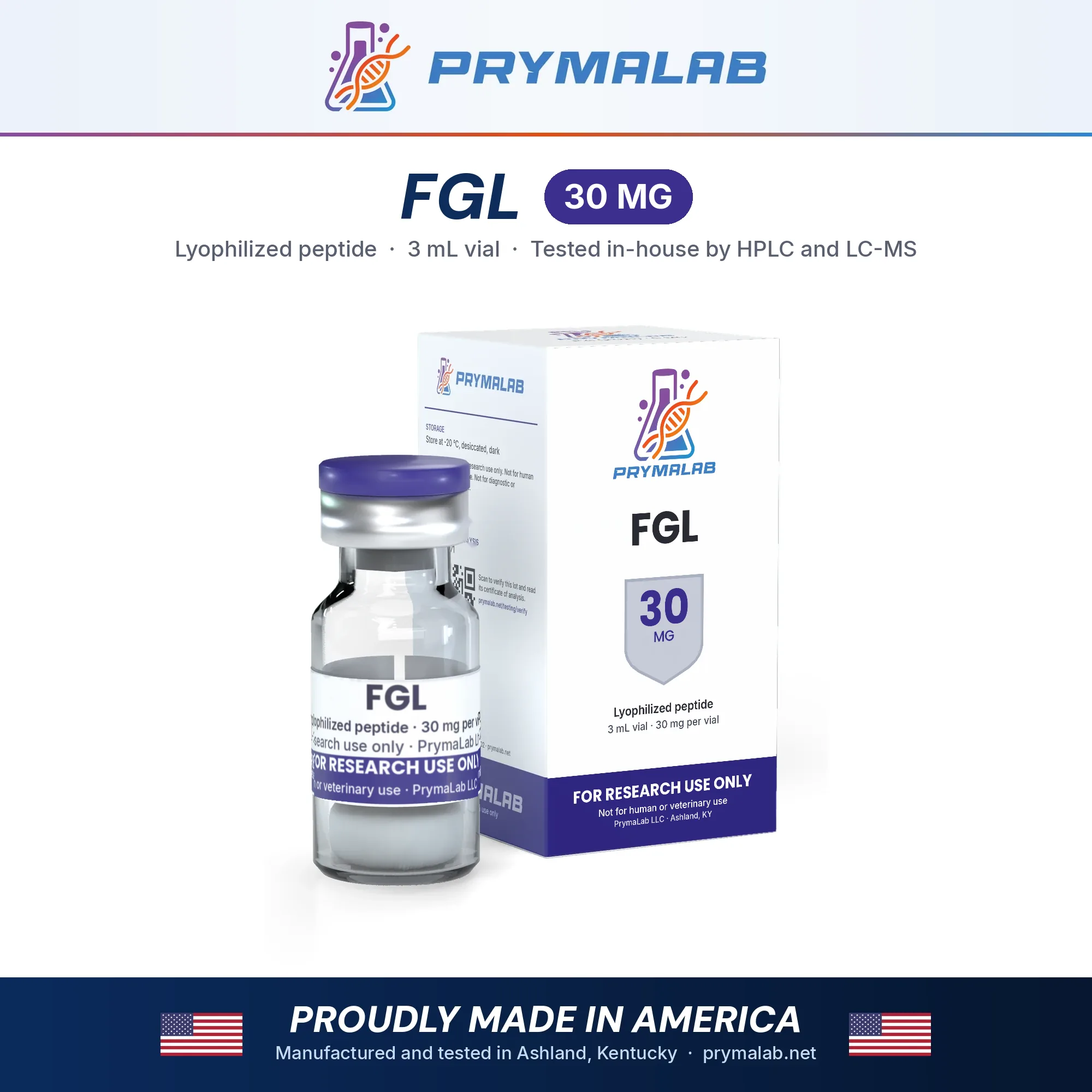
FGL Peptide 30mg
The NCAM FG-loop peptide EVYVVAENQQGKSKA, an FGFR1-binding mimetic, 30 mg freeze-dried
FGL stands for FG loop. This is the 30 mg vial of freeze-dried powder, a larger fill than the 10 mg main listing, made and tested as its own lot. The research summary, references and full FAQ are on the FGL Peptide 10mg page.
Specifications
| Property | Value |
|---|---|
| Compound | FGL (FGLoop) peptide, NCAM fibronectin type III module 2 FG-loop sequence, residues E681-A695 |
| CAS number | 499993-62-3 (PubChem-sourced) |
| Molecular formula | C71H116N20O25 |
| Theoretical mass | 1649.8 Da (monomer, free acid) |
| Sequence / structure | H-EVYVVAENQQGKSKA-OH; 15 residues, monomer, no disulfides. |
| Label claim | 30 mg per vial |
| Form | Lyophilized (freeze-dried) powder or cake in a sealed glass vial with a rubber stopper and aluminium crimp cap |
| Storage, sealed | −20 °C, desiccated, dark |
| Purity specification | 99.0% or higher by RP-HPLC |
| Lot certificate | Certificate for the first lot: in preparation. Published certificates appear on the results page and can be checked on the verify page. |
Other fills
This is the 30 mg fill. The FGL Peptide 10mg page is the main listing for this compound, with the full research summary and every fill side by side. Other fills: 10 mg.
What the structure is
Glu-Val-Tyr-Val-Val-Ala-Glu-Asn-Gln-Gln-Gly-Lys-Ser-Lys-Ala, linear, no cysteine, methionine or tryptophan. Formula C71H116N20O25, theoretical mass 1649.8 Da for the monomer as the free acid (PubChem CID 16200289, CAS 499993-62-3), which is exactly what the sequence gives with free termini. Asn8 and Gln9-Gln10 can deamidate in warm or alkaline solution, which is the main stability concern.
What the research covers
The literature on FGL is summarised, with references, on the FGL Peptide 10mg page: Origin: the NCAM-FGFR1 interaction; Neurite outgrowth and neuronal survival in culture; Memory and synaptic effects in rodents. The great majority of FGL work originates with, or involves, the Berezin and Bock laboratory in Copenhagen and its collaborators, so independence across the literature is limited even though several laboratories contributed behavioural, electrophysiological and pharmacokinetic data. None of the published work used PrymaLab material.
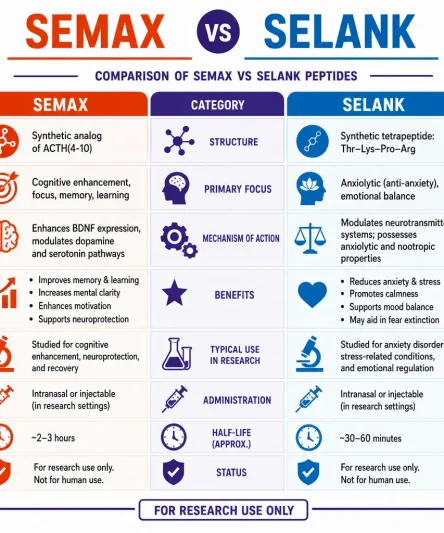
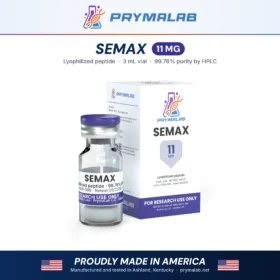
Related listings: Cerebrolysin 60mg, P21 (P021) 10mg, Semax 11mg, Selank 11mg. The cognitive, sleep and mood peptides category lists the rest of the range.
How each lot is tested
Every lot is tested in PrymaLab’s own laboratory in Ashland, Kentucky before release: RP-HPLC for purity, LC-MS for identity, Karl Fischer titration for water, LAL for endotoxin and USP <71> for sterility. Published certificates are listed on the results page and can be checked by number and key on the verify page. These are in-house results from PrymaLab Analytical, not an independent test, and the lab is not accredited to ISO 17025. The third-party testing guarantee on this page still applies: if any independent laboratory finds the wrong compound, or less than the stated purity or amount, the order is refunded and the cost of the test is reimbursed.
Frequently asked questions
Is the 30 mg vial the same compound as the 10 mg?
Yes. Both hold FGL, 1649.8 Da (monomer, free acid). Only the amount differs; each fill is made and tested as its own lot with its own certificate.
How should the vial be stored?
Sealed at −20 °C, desiccated and protected from light. Let it reach room temperature before opening, and keep any reconstituted solution at 2 to 8 °C, away from light.
Research use only
For laboratory research use only. FGL Peptide 30mg is not a drug, food, cosmetic or dietary supplement, is not approved by the FDA or any comparable authority for human or veterinary use, and must not be given to people or animals. It is sold to qualified researchers and institutions, and the buyer is responsible for lawful handling and disposal.








Reviews
There are no reviews yet.