Description
PrymaLab · Research use only
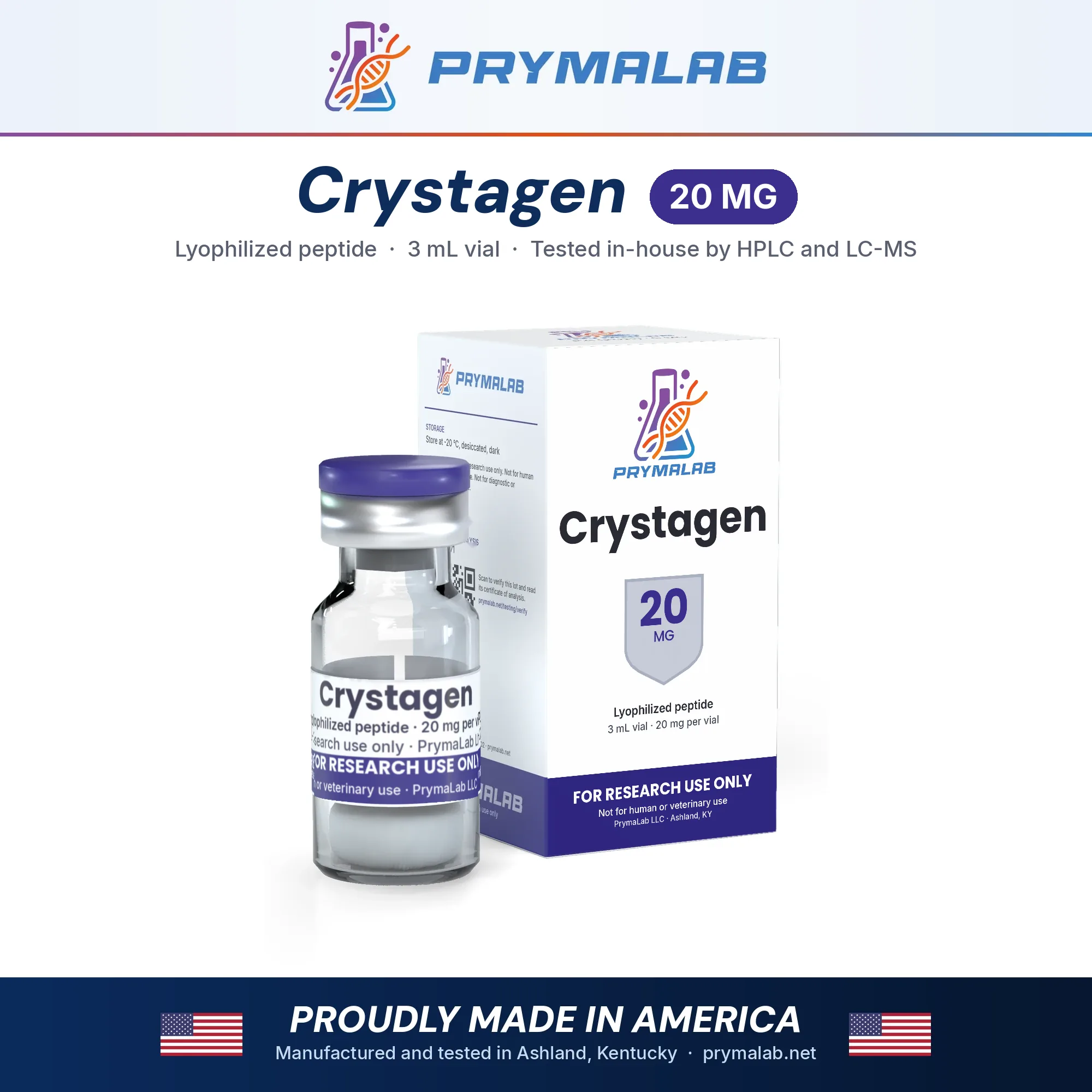
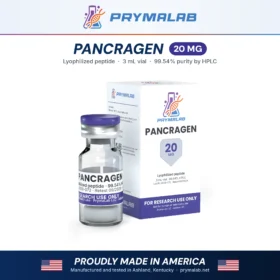
Crystagen Peptide 20mg
Glu-Asp-Pro (EDP), the Khavinson immune tripeptide, 20 mg freeze-dried
Crystagen is the tripeptide Glu-Asp-Pro, one of the short synthetic peptides from Vladimir Khavinson’s St Petersburg Institute of Bioregulation and Gerontology. Its developers class it as the immune-system member of that family and report that the same tripeptide is detectable in the thymus extract Thymalin. This listing is the 20 mg vial of freeze-dried powder, the main fill; a 5 mg and a 10 mg vial are also sold. The spelling Cristagen on some price lists is the same product.
Specifications
| Property | Value |
|---|---|
| Compound | Crystagen (Cristagen), L-glutamyl-L-aspartyl-L-proline (EDP); Khavinson synthetic bioregulator tripeptide |
| CAS number | Not assigned to the all-L record; identity by mass (359.3 Da) on the lot certificate |
| Molecular formula | C14H21N3O8 |
| Theoretical mass | 359.3 Da |
| Sequence / structure | H-Glu-Asp-Pro-OH (EDP); tripeptide, all L, free termini. |
| Label claim | 20 mg per vial |
| Form | Lyophilized (freeze-dried) powder or cake in a sealed glass vial with a rubber stopper and aluminium crimp cap |
| Storage, sealed | −20 °C, desiccated, dark |
| Purity specification | 99.0% or higher by RP-HPLC |
| Lot certificate | Certificate for the first lot: in preparation. Published certificates appear on the results page and can be checked on the verify page. |
Fills in this range
Crystagen is sold in 3 fills. The compound and the testing are the same in every fill; only the amount in the vial changes.
| Fill | Listing |
|---|---|
| 5 mg | Crystagen Peptide 5mg |
| 10 mg | Crystagen Peptide 10mg |
| 20 mg | Crystagen Peptide 20mg (this page) |
What the structure is
H-Glu-Asp-Pro-OH: three L-amino acids, free amino terminus, free C-terminal carboxyl, no modifications. Formula C14H21N3O8, theoretical mass 359.3 Da (all-L PubChem CID 23624313). Three carboxyl groups make it strongly acidic and very soluble in water. No CAS number is attached to the all-L record, so none is printed here; PubChem’s second EDP record (CID 145455337) encodes D-proline and is not this compound.
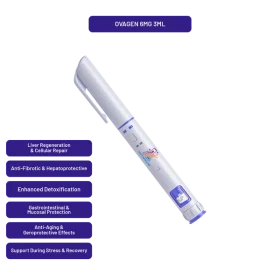
Several St Petersburg papers refer to the peptide only by its laboratory code T-36. It differs by one residue from Cortagen (Ala-Glu-Asp-Pro), Pinealon (Glu-Asp-Arg), Chonluten (Glu-Asp-Gly) and Ovagen (Glu-Asp-Leu), so the mass on the certificate (about 359 Da) is what separates it from its neighbours.
What the research covers
Lymphoid and stem cells in vitro (T-36)
Khavinson et al. tested tripeptides T-36 (Glu-Asp-Pro) and T-38 (Lys-Glu-Asp) at 0.1, 1 and 10 ng/ml on several cell types2. T-36 at 0.1 ng/ml increased the spontaneous proliferation of normal human lymphocytes, and the tripeptides inhibited proliferation of primary rat embryonic mesenchymal stem cells and transplantable KF-1 fibroblasts, which the authors interpret as possible antitumour activity2. The peptides did not change lymphocyte survival, adhesion, cytotoxic or induced proliferative activity, nor granulocyte phagocytosis or bactericidal activity2. The abstract is internally inconsistent about K-562 erythroleukaemia cells (first grouped with the inhibited lines, then stated to be unaffected by T-36), so that endpoint should not be quoted2.
Rat skin organotypic culture
In organotypic cultures of skin explants from young and old rats, Voicekhovskaya et al. compared five Glu/Asp-containing tripeptides including T-36 (Glu-Asp-Pro)1. In explants from young rats all peptides except Glu-Asp-Gly, T-36 among them, increased cell proliferation (explant growth zone); in old-rat explants only T-38 (Lys-Glu-Asp) produced a marked stimulatory effect1. Immunocytochemistry for p53 suggested the increased proliferation was accompanied by less apoptosis1. This is a tissue-culture screen, and Crystagen was not the most active peptide in it1.
Thymus and immune findings reported by the developers
The St Petersburg group’s 2021 review summarises unpublished or patent-based work on EDP: in gamma-irradiated rats (an accelerated-ageing model) Crystagen-treated animals retained the thymic cortex-medulla boundary and showed more macrophages, mast cells and PCNA-positive proliferating thymocytes; EDP increased IL-1, IL-6 and TNF-alpha secretion by peritoneal macrophages from young and old mice and stimulated proliferation of VTEC2.H/S human thymic epithelial cells4. The same review reports an oral Crystagen study in elderly people with secondary immunodeficiency in which 82% of treated versus 56% of control patients had a normalised immunogram, with larger effects on CD3+/CD4+ T cells than on B cells4. The underlying patent claims stimulation of lymphocyte proliferation and differentiation as the basis of the ‘immunogeroprotective’ effect7. These reports come from the compound’s developers, mostly without accessible primary data, and should be presented as such4,7.
Computational studies (DNA binding and transporter docking)
Molecular docking by the developers placed EDP among 19 short peptides modelled as binding double-stranded DNA; EDP and the dipeptide KE were assigned the same ‘agat’ binding sequence, offered as a possible explanation for gene-expression effects3. Later docking work modelled 26 of the group’s ultrashort peptides, EDP included, against the amino-acid transporters LAT1 and LAT2 and the peptide transporter PEPT1, and reported binding scores comparable to or better than known substrates, proposing these carriers as a route into cells6; a companion review tabulates Crystagen (EDP) as an ‘immunoprotector’ in this framework5. These are in silico results with no experimental confirmation for EDP specifically3,5,6.
What is not established
All peer-reviewed data on Glu-Asp-Pro come from the developing institute and its collaborators; there is no independent replication, no pharmacokinetic study and no blinded, registered clinical trial1,2,4,6. The thymus, macrophage and elderly-patient results are available only through the patent and a developer-authored review, not as primary papers with methods4,7. The DNA-binding and transporter mechanisms are docking predictions3,6. In the cell-culture screens that are published, Crystagen was often less active than the sister peptide Lys-Glu-Asp1,2. The ophthalmic use suggested in the brief has no support in the sources opened. None of the published work used this supplier’s material.
Clinical and regulatory status
No drug approval found in any jurisdiction. Crystagen is covered by Russian patent RU 2301074 and international application WO 2007/139435 (EP 2032595) by Khavinson and colleagues7; the developers’ own 2022 catalogue of their peptides lists Crystagen (EDP) only as an ‘immunoprotector’, with no marketing-authorisation number5, and the developer review describes an oral study in elderly patients without naming a registered product4. Russian-market sales as a non-drug peptide complex are commonly asserted by vendors but were not verified from a primary source. This listing is a research-grade material.
Related listings: Thymalin 10mg, Thymogen Peptide 20mg, Vilon Peptide 20mg, Cortagen Peptide 20mg, Pinealon 10mg. The peptide bioregulators category lists the rest of the range.
How each lot is tested
Every lot is tested in PrymaLab’s own laboratory in Ashland, Kentucky before release: RP-HPLC for purity, LC-MS for identity, Karl Fischer titration for water, LAL for endotoxin and USP <71> for sterility. Published certificates are listed on the results page and can be checked by number and key on the verify page. These are in-house results from PrymaLab Analytical, not an independent test, and the lab is not accredited to ISO 17025. The third-party testing guarantee on this page still applies: if any independent laboratory finds the wrong compound, or less than the stated purity or amount, the order is refunded and the cost of the test is reimbursed.
Frequently asked questions
What is Crystagen chemically?
The tripeptide L-glutamyl-L-aspartyl-L-proline, H-Glu-Asp-Pro-OH (EDP), C14H21N3O8, 359.33 Da, all-L PubChem CID 23624313. It is one of the Khavinson short peptides and is described by its developers as the immune-system member of that family.
Is ‘Cristagen’ the same product?
Yes. Cristagen and Kristagen are transliteration variants of the Russian Кристаген; all refer to Glu-Asp-Pro. Check the certificate of analysis for a mass of about 359 Da to confirm identity.
How does Crystagen differ from Thymalin, Thymogen and Vilon?
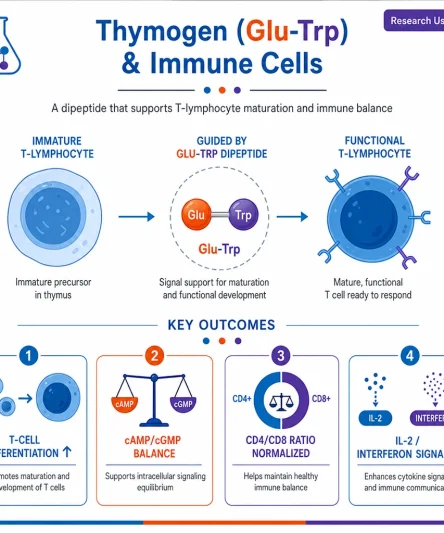
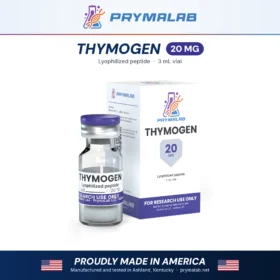
Thymalin is a bovine thymus extract; Thymogen (Glu-Trp) and Vilon (Lys-Glu) are dipeptides. The developers report that EDP, KE and EW are all detectable in Thymalin and present Crystagen as the synthetic tripeptide component. The published experimental literature on EDP itself is much thinner than for KE or EW.
Is Crystagen an eye peptide?
Not according to the literature opened. Its patent and the developers’ reviews describe only immune (‘immunogeroprotective’) activity. Khavinson’s ophthalmic products are separate peptides.
What has actually been measured in experiments with Glu-Asp-Pro?
Proliferation of normal human lymphocytes, rat embryonic mesenchymal stem cells and KF-1 fibroblasts in vitro; proliferation and p53 staining in rat skin explant cultures; and, in developer-reported work, thymus histology in irradiated rats, macrophage cytokine release and thymic epithelial cell proliferation. Docking studies model DNA and transporter binding.
How should Crystagen be stored and dissolved?
Lyophilized: −20 °C, sealed, desiccated and dark. It is very water-soluble because of its three carboxyl groups; dissolve in water or neutral buffer, keep solutions at 2 to 8 °C and use within days, or aliquot and freeze. No Met, Cys or Trp, so oxidation is not a major concern; the Asp-Pro bond is the most acid-labile peptide bond, so avoid acidic solutions and heat. Supplier-standard guidance.
References
- Voicekhovskaya MA, Chalisova NI, Kontsevaya EA, Ryzhak GA Effect of bioregulatory tripeptides on the culture of skin cells from young and old rats. Bulletin of Experimental Biology and Medicine. 2012;152(3):357-359. DOI · PubMed
- Khavinson VKh, Nikolsky IS, Nikolskaya VV, Zubov DA, Galickaya SN, Taranuha LI, Semenova YM, Lisica NA, Linkova NS, Butenko GM Effect of tripeptides on lymphoid and stem cells. Bulletin of Experimental Biology and Medicine. 2011;151(6):722-725. DOI · PubMed
- Khavinson VKh, Lin’kova NS, Tarnovskaya SI Short Peptides Regulate Gene Expression. Bulletin of Experimental Biology and Medicine. 2016;162(2):288-292. DOI · PubMed
- Khavinson VKh, Linkova NS, Chalisova NI, Ivko OM The Use of Thymalin for Immunocorrection and Molecular Aspects of Biological Activity. Biology Bulletin Reviews. 2021;11(4):377-382. DOI
- Khavinson V, Linkova N, Kozhevnikova E, Dyatlova A, Petukhov M Transport of Biologically Active Ultrashort Peptides Using POT and LAT Carriers. International Journal of Molecular Sciences. 2022;23(14):7733. DOI · PubMed
- Khavinson VK, Linkova NS, Rudskoy AI, Petukhov MG Feasibility of Transport of 26 Biologically Active Ultrashort Peptides via LAT and PEPT Family Transporters. Biomolecules. 2023;13(3):552. DOI · PubMed
- Khavinson VKh, Grigoriev EI, Malinin VV, Ryzhak GA Peptide substance revealing an immunogeroprotective effect, pharmaceutical composition on its base and the method of its application (patent WO 2007/139435; Russian patent RU 2301074; EP 2032595). Patent (WIPO / Rospatent / EPO). 2007;WO2007139435.
Research use only
For laboratory research use only. Crystagen Peptide 20mg is not a drug, food, cosmetic or dietary supplement, is not approved by the FDA or any comparable authority for human or veterinary use, and must not be given to people or animals. It is sold to qualified researchers and institutions, and the buyer is responsible for lawful handling and disposal.







Reviews
There are no reviews yet.