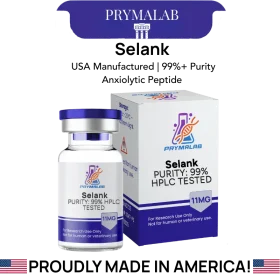
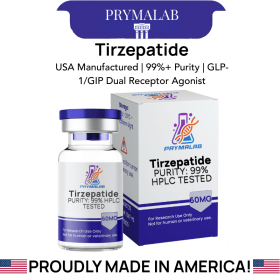
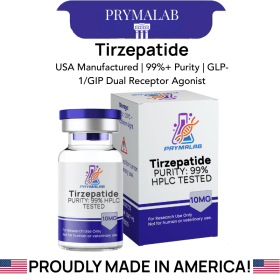
Welcome to the PrymaLab Peptide Calculator — a free peptide reconstitution calculator and peptide dosage calculator that delivers accurate results for any research application. As a trusted supplier of high-purity research peptides, we built this peptide calculator to help researchers determine precise reconstitution and dosing measurements with confidence.
The tool works with any research compound. Whether you’re reconstituting ipamorelin, BPC-157, semax, or selank — or a GLP-1 peptide such as tirzepatide, retatrutide, or semaglutide — it simplifies how to mix peptides so you get consistent, reproducible results from every vial. For compound-specific work, built-in features like our ipamorelin dosage calculator and HCG reconstitution calculator tailor the numbers to your protocol.
What Is Peptide Reconstitution?
Peptide reconstitution is the process of dissolving a lyophilized (freeze-dried) peptide powder into a liquid solution, typically using bacteriostatic water or sterile water. Peptides ship as a freeze-dried powder to protect their stability during transit and storage, so reconstitution is the essential first step before any research can begin. Knowing how to reconstitute peptides correctly is what keeps your dosing accurate and repeatable.
A peptide reconstitution calculator removes the guesswork by telling you exactly how much diluent to add to reach a target concentration. That precision matters for:
- Maintaining peptide dosage accuracy
- Keeping experimental conditions consistent
- Avoiding peptide degradation
- Achieving reproducible research outcomes
Why Use A Peptide Reconstitution Calculator?
A peptide reconstitution calculator eliminates the math errors that come with manual calculation. Think of it as a bac water calculator that also handles dosing. The advantages:
- Precision avoid mistakes that could compromise research integrity.
- Speed get syringe measurements instantly, with no hand calculation.
- Versatility works across peptide concentrations, vial sizes, and syringe sizes.
- Consistency standardize protocols across every experiment.
For compound-specific studies, our ipamorelin dosage calculator and HCG reconstitution calculator return measurements tuned to your parameters, and many researchers use the output to build a peptide reconstitution chart for quick lab reference.
Understanding Peptide Calculator Terms
Before you use the peptide calculator, it helps to understand each input and unit.
Syringe Capacity
This is the volume of your syringe, measured in milliliters (ml). Choosing the right syringe size keeps small doses accurate. Common syringe sizes:
- 3 ml (30 units) insulin syringe
- 5 ml (50 units) insulin syringe
- 0 ml (100 units) insulin syringe
Select the syringe size that matches your research protocol.
Vial Quantity
This is the peptide amount your vial contains, measured in milligrams (mg). Standard vial sizes:
- 5 mg (common for research peptides)
- 10 mg
- 15 mg
- Other — enter a custom peptide vial quantity
Your vial quantity sets the total peptide amount available after reconstitution.
Water Amount
Dose Per Injection
This is the desired dose you want to administer per application, measured in micrograms (mcg) or milligrams (mg). Standard research doses:
- 50 mcg — low-dose applications
- 100 mcg — standard research dose
- 250 mcg — moderate-dose applications
- 500 mcg — higher-dose applications
- Other — enter a custom desired dose
Step-by-Step Guide: How To Reconstitute Peptides
When you’re learning how to reconstitute peptides, following the right protocol protects both your research accuracy and the peptide’s stability. Here’s the full process.
Step 1: Prepare Your Workspace
Before you open the peptide reconstitution calculator, gather:
- A clean, contamination-free workspace
- Good lighting for reading syringe measurements
- The peptide vial with its listed quantity (5 mg, 10 mg, etc.)
- Bacteriostatic water at room temperature
- Your chosen syringe (0.3 ml, 0.5 ml, or 1.0 ml)
- Alcohol swabs for sterilization
Step 2: Calculate Your Protocol
Use the peptide calculator to determine:
- The exact water volume for your target concentration
- The syringe units that match your desired dose (where to draw the syringe to)
- How many doses each vial will yield
Step 3: Reconstitute The Peptide
- Remove the plastic cap from the peptide vial.
- Wipe the rubber stopper with an alcohol swab.
- Draw your calculated amount of bacteriostatic water into the syringe.
- Slowly inject the water down the inside wall of the vial.
- Gently swirl the vial — don’t shake — to dissolve the peptide.
- Let the solution dissolve fully before use.
-
Step 4: Verify Your Dose
Use the calculator’s output to confirm:
- The correct syringe units for your desired dose
- That you’re drawing the right draw volume of solution
- That the concentration matches your experimental requirements
Peptide Dosage Guidelines
Accurate peptide dosage is critical to research validity. The calculator handles the precision for you, but a few principles are worth understanding.
Dosage Calculations
The calculator computes the syringe units automatically from three inputs: vial size (mg), water volume added (ml), and desired dose (mcg or mg). For example, to reach 50 mcg from a 10 mg peptide reconstituted in 2 ml of bacteriostatic water, you’d draw to 10 units on a 50-unit (0.5 ml) syringe.
Common Peptide Research Protocols
Different peptides call for different optimal concentrations, and the tool adapts to each:
- Ipamorelin research use the ipamorelin dosage calculator for growth hormone secretagogue protocols.
- HCG studies the HCG reconstitution calculator provides exact measurements.
- BPC-157, semax, and selank the general peptide dosage calculator handles each compound.
- GLP-1 peptides use the peptide calculator for tirzepatide, retatrutide, and semaglutide research, entering your vial quantity and desired dose in mg or mcg.
Creating A Peptide Reconstitution Chart
Many researchers keep a peptide reconstitution chart on hand for quick reference during experiments. The calculator can generate a personalized chart for your protocols, including:
- Different concentration options for each peptide type
- Syringe measurements across your dose ranges
- Expected total doses per vial
- Storage recommendations for reconstituted peptide solutions
Specialized Calculator Features
Ipamorelin Dosage Calculator
For researchers studying growth hormone secretagogues, the ipamorelin dosage calculator provides optimized measurements for this popular research peptide. It reflects the typical research protocols used when studying HGH (human growth hormone) and related pathways, including:
- Growth hormone release
- Slow-wave sleep patterns
- Circadian rhythm regulation
- Delta-wave activity during rest
HCG Reconstitution Calculator
HCG research demands exact measurements. The HCG reconstitution calculator ensures accurate calculations for:
- Hormone research protocols
- Reproductive studies
- Endocrine function research
- Various dosing schedules
GLP-1 & Weight-Loss Peptide Calculator
The peptide calculator also works for GLP-1 research compounds. Use it as a peptide calculator for tirzepatide, retatrutide, or semaglutide by entering your vial quantity and desired dose — the tool returns the exact syringe units and concentration for each.
General Peptide Dosage Calculator
Understanding Peptide Concentrations
Your water amount sets your concentration. Here’s how the three ranges compare.
High Concentration (Less Water)
Using minimal water (1 ml) creates a high-concentration solution.
- Pros small injection volumes, easier storage.
- Cons requires more precise measurement.
- Best for experienced researchers and space-constrained protocols.
Moderate Concentration (2-3 ml)
This is the most common approach.
- Pros balanced concentration, easier measurement.
- Cons larger draw volumes.
- Best for general research applications.
Low Concentration (More Water)
Using more water (5 ml) creates a dilute solution.
- Pros maximum measurement-accuracy margin.
- Cons large volumes, may affect storage.
- Best for newer researchers and margin-heavy protocols.
Peptide Storage and Stability
After you reconstitute your peptides, proper storage keeps your peptide solutions stable.
Storage Guidelines
- Refrigerate at 2–8 °C (36–46 °F).
- Never freeze reconstituted peptides.
- Protect from light — store in dark containers or away from direct light.
- Always use sterile technique when handling.
Stability Considerations
- Short term reconstituted peptides typically stay stable for 2–4 weeks when stored properly.
- Long term use within recommended timeframes to preserve research validity.
- Single-use prefer single-use vials to reduce contamination risk.
Research Applications and Considerations
Peptide Functions in Research
Researchers study peptides for a range of biological functions, including:
- Tissue repair and regeneration mechanisms
- Hormone regulation and signaling pathways
- Circadian rhythm and sleep architecture
- Neurotransmitter function and slow-wave sleep
- Cellular repair and recovery processes
Potential Research Areas
- Safety-profile and side-effect studies
- Efficacy testing across applications
- Mechanism-of-action research
- Dose-response relationship studies
- Comparative effectiveness studies
Best Practices for Accurate Results
Using the Calculator Effectively
- Double-check every input value.
- Confirm your syringe type matches the calculator setting.
- Keep a record of your calculations for future reference.
- Build a peptide reconstitution chart for your common protocols.
Common Mistakes to Avoid
- Using the wrong syringe capacity setting
- Confusing mg and mcg measurements
- Overlooking the total peptide amount
- Miscalculating water volume
- Forgetting to verify concentration
Advanced Calculator Features
For experienced researchers, the peptide calculator doubles as a peptide blend calculator and dilution calculator, with:
- Multiple-peptide compatibility checking
- Concentration-optimization suggestions
- Protocol customization options
- Reference-chart generation
- Calculation-history tracking
Safety and Compliance
Important Research Guidelines
- All peptides are for in-vitro research only.
- Not for human or animal consumption.
- Use only in controlled laboratory environments.
- Follow all applicable regulations and guidelines.
- Document every experimental procedure.
Understanding Research Limitations
- Results may vary with experimental conditions.
- Monitor and record any side effects.
- Collect long-term stability data.
- Replicate studies to validate findings.
Troubleshooting Common Issues
Calculator Not Working
- Make sure all required fields are filled.
- Verify measurements are in the correct units.
- Clear your browser cache and reload.
- Try a different browser if the problem persists.
Unclear Results
- Contact our technical support team.
- Provide your specific calculation parameters.
- Include the peptide type and desired outcome.
- Reference your peptide reconstitution chart.
Why Choose PrymaLab?
At PrymaLab, we support the research community with:
- High-purity research peptides for reliable results
- Expert guidance on research protocols
- Accurate calculators and tools
- Comprehensive educational resources
- Responsive customer support for technical questions
Our peptide calculator reflects the same dedication to accuracy that goes into every peptide we produce.
Preparing to Reconstitute
Start by Preparing Your Environment
Before you begin, set up a clean, organized workspace. It makes the whole reconstitution process more accurate and easier to follow. Have these ready:
- The peptide vial with its listed quantity (5 mg, 10 mg, etc.)
- The bacteriostatic water you plan to add
- Your syringe of choice (0.3 ml, 0.5 ml, or 1.0 ml)
- A clean surface free of dust and contamination
- Good lighting to read the syringe measurements clearly
Peptide and Solvent Preparation
Gather your peptide vial and your bacteriostatic water. Check the vial’s listed milligrams and confirm the water volume so the calculator can return accurate measurements. Make sure both are at room temperature and ready to handle.
Adding the Solvent
Select how much bacteriostatic water you’re adding to the vial. The calculator instantly updates your dilution, showing the correct concentration and the exact syringe units for each dose. You can also enter a custom amount. This keeps your measurements accurate for the solvent volume you choose.
Storage of Peptide Solutions
Once reconstituted, refrigerate your peptide solutions at 2–8 °C and keep them out of direct light. Stored properly, most reconstituted peptides remain stable for 2–4 weeks — always confirm the specific timeframe for each compound before use.
Peptide Calculator FAQ
How do I use the peptide calculator?
Enter four values — syringe capacity, vial quantity (mg), water amount (ml), and your desired dose (mcg or mg). The calculator instantly returns the exact syringe units to draw to, your concentration, and the total doses per vial.
What is bacteriostatic water?
Bacteriostatic water is sterile water that contains 0.9% benzyl alcohol, an additive that inhibits bacterial growth. That makes it the preferred diluent for reconstituting peptides in multi-dose vials. Sterile water can be used as well, but it lacks the preservative.
How do I choose the right water amount?
Your water amount depends on the concentration you want: less water for a higher concentration, more water for a lower one. If you’re unsure, 2 ml is a solid starting point for a moderate concentration.
What if my dose isn’t listed in the dropdown?
Choose the “Other” option and enter your custom dose in mcg or mg. The calculator will compute the correct syringe measurement automatically.
Can I use this calculator for any peptide?
Yes. The general peptide dosage calculator works for all research peptides, including specialized versions like the ipamorelin dosage calculator and HCG reconstitution calculator, and GLP-1 compounds such as tirzepatide and retatrutide.
How accurate are the calculations?
The calculator provides precise mathematical accuracy for reliable research. As a best practice, verify each calculation manually before use.
What is the shelf life of reconstituted peptides?
Stored properly at 2–8 °C, reconstituted peptides typically stay stable for 2–4 weeks. Check each peptide’s documentation for its exact recommendation.
The PrymaLab Peptide Calculator is an essential tool for any researcher who needs precise peptide dosage and reliable reconstitution measurements. Whether you’re working with ipamorelin, BPC-157, semax, selank, or GLP-1 compounds like tirzepatide and retatrutide, it brings accuracy to every experiment — designed by researchers, for researchers. For questions or technical support, our team is ready to help.