

Tesamorelin Cost in 2026: Pricing, Dosage, and How to Access Safely

Tesamorelin cost ranges from $150 to $300 per month through compounding pharmacies, while the brand-name Egrifta SV can exceed $3,085 per month without insurance. As the only FDA-approved peptide specifically indicated for visceral fat reduction, tesamorelin occupies a unique position in the growth hormone secretagogue landscape — offering clinically validated results that research-grade alternatives cannot match in terms of regulatory backing.
Article Overview
- What tesamorelin is and how this GHRH analog targets visceral belly fat through the pituitary gland
- Exact tesamorelin cost breakdowns for brand-name Egrifta SV, compounded peptides, and research-grade options
- The correct tesamorelin dosage for adults, including considerations for men and women
- A head-to-head comparison of tesamorelin vs sermorelin vs ipamorelin across potency, cost, and side effects
- What clinical trial results reveal about fat loss, body composition, and expected timelines
- Where to buy tesamorelin safely and what to look for in a legitimate peptide source
Table of Contents
- What Is Tesamorelin and How Does It Work?
- How Much Does Tesamorelin Cost in 2026?
- What Is the Correct Tesamorelin Dosage?
- Tesamorelin vs Sermorelin vs Ipamorelin
- What Results Can You Expect from Tesamorelin?
- Where Can You Buy Tesamorelin Safely in 2026?
- Frequently Asked Questions
- Key Takeaways
- References
Tesamorelin cost ranges from $150 to $300 per month through compounding pharmacies, while the brand-name Egrifta SV costs $3,085 or more for a 30-day supply. The standard tesamorelin dosage is 1.4 mg injected subcutaneously once daily, and clinical trials show it reduces visceral abdominal fat by 12% to 20% within 26 weeks. This guide covers everything you need to know about tesamorelin pricing, dosage protocols, tesamorelin benefits, tesamorelin side effects, and how it compares to sermorelin and ipamorelin in 2026.
What tesamorelin is and how this GHRH analog targets visceral belly fat through the pituitary gland
Exact tesamorelin cost breakdowns for brand-name Egrifta SV, compounded peptides, and research-grade options
The correct tesamorelin dosage for adults, including considerations for men and women
A head-to-head comparison of tesamorelin vs sermorelin vs ipamorelin across potency, cost, and side effects
What clinical trial results reveal about fat loss, body composition, and expected timelines
Where to buy tesamorelin safely and what to look for in a legitimate peptide source
What Is Tesamorelin and How Does It Work?
Tesamorelin is a synthetic analog of growth hormone-releasing hormone (GHRH) composed of all 44 amino acids found in natural human GHRH, plus a trans-3-hexenoic acid group that makes it more potent and resistant to enzymatic breakdown than the body's own GHRH (Ferdinandi et al., 2007). Developed by Theratechnologies Inc. and sold under the brand name Egrifta SV, tesamorelin received FDA approval in November 2010 for reducing excess abdominal fat in adults with HIV-associated lipodystrophy. It remains the only FDA-approved medication specifically indicated for visceral fat reduction in this population.
The growing interest in tesamorelin among researchers and clinicians extends well beyond its original HIV indication, often leading to comparisons with other peptides like those requiring an aod 9604 peptide dosage. Peptide therapy clinics now prescribe compounded tesamorelin off-label for patients seeking targeted visceral fat loss, improved body composition, and potential metabolic benefits. Understanding how tesamorelin works, what it costs, and how it compares to alternatives like sermorelin, ipamorelin, and even aod-9604 vs tesamorelin, is essential for anyone considering this peptide in 2026.
What Is Tesamorelin's Mechanism of Action?
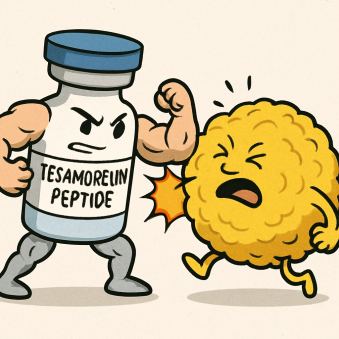
Tesamorelin works by binding to GHRH receptors on the anterior pituitary gland, triggering the natural synthesis and pulsatile release of endogenous natural growth hormone (GH) into the bloodstream (Dhillon, 2011). This distinguishes it from direct GH injections, which bypass the pituitary entirely and can suppress the body's own hormone production over time. By stimulating the pituitary rather than replacing its function, tesamorelin preserves the hypothalamic-pituitary axis and maintains the body's natural feedback mechanisms.
Once growth hormone levels rise, the liver responds by producing more insulin-like growth factor 1 (IGF-1), a key mediator of GH's anabolic and metabolic effects on proteins and lipids. The combination of elevated GH and IGF-1 drives two primary processes relevant to body composition. First, lipolysis increases — particularly in visceral adipose tissue, the metabolically active fat surrounding internal organs in the abdomen. Growth hormone has specific lipolytic properties that target visceral fat cells, promoting the breakdown of stored triglycerides (Benedini et al., 2008). Second, anabolic processes like protein synthesis accelerate, which may support lean muscle maintenance and growth.
Importantly, tesamorelin does not significantly affect subcutaneous fat — the body fat layer just beneath the skin, unlike some targeted belly fat injections. Its effects concentrate on the deeper visceral fat deposits associated with elevated cardiovascular risk, insulin resistance, and metabolic syndrome. This targeted mechanism is what makes tesamorelin particularly valuable for individuals carrying excess belly fat who have not responded adequately to diet and exercise alone.
Is Tesamorelin FDA Approved?
Yes. The U.S. Food and Drug Administration approved tesamorelin (brand name Egrifta) in November 2010 for the reduction of excess abdominal fat in HIV-infected adults with lipodystrophy (FDA, 2010). The approval was based on two large Phase 3 randomized controlled trials — LIPO-010 (N=412) and CTR-1011 (N=404) — which demonstrated statistically significant reductions in visceral adipose tissue compared to placebo at 26 weeks (Falutz et al., 2007; Falutz et al., 2010).
Egrifta SV, the current formulation requiring daily reconstitution, received approval in October 2019. A newer formulation called Egrifta WR, which requires only weekly reconstitution, has also been approved. These two formulations are not interchangeable because they differ in dosing, preparation, and storage requirements. It is important to note that tesamorelin is FDA-approved specifically for HIV-associated lipodystrophy and is not indicated for general weight loss management. Many patients explore tesamorelin for weight loss and body recomposition through off-label prescriptions from compounding pharmacies and telehealth clinics, which operate outside this specific FDA indication.
What Off-Label Benefits Are Being Explored?
While the FDA indication is limited to HIV lipodystrophy, researchers and clinicians have been investigating tesamorelin's potential benefits across several areas. A 2014 study published in JAMA found that tesamorelin reduced hepatic (liver) fat by a relative 40% compared to a 27% increase in the placebo group among HIV-positive adults with abdominal fat accumulation (Stanley et al., 2014). This finding has sparked interest in tesamorelin as a potential intervention for non-alcoholic fatty liver disease in broader populations, though this use remains investigational.
Additional research has explored tesamorelin's effects on body composition beyond visceral fat. A secondary analysis of the pivotal Phase 3 trials found that tesamorelin responders experienced significant increases in trunk skeletal muscle density and lean muscle area over 26 weeks, suggesting improvements in muscle quality alongside fat reduction (Adrian et al., 2019). Ongoing clinical trials are investigating tesamorelin's potential effects on cognition, liver inflammation, and diabetic retinopathy in people living with HIV, with results expected to further define the peptide's therapeutic potential.
Tesamorelin benefits that researchers and off-label users commonly report include reduced visceral belly fat, improved body composition, enhanced energy levels, better sleep quality, and potential improvements in skin elasticity. However, these off-label applications lack the robust Phase 3 evidence base that supports the HIV lipodystrophy indication, and individuals should work with qualified healthcare providers when considering peptide therapy.
How Much Does Tesamorelin Cost in 2026?
Tesamorelin cost varies dramatically depending on whether you are purchasing brand-name Egrifta SV, compounded tesamorelin through a telehealth clinic, or research-grade peptides. Understanding these pricing tiers helps you make an informed decision that balances quality, safety, and budget.
What Is the Average Tesamorelin Cost Per Month?
The average tesamorelin cost per month falls between $150 and $300 when obtained through a licensed compounding pharmacy, which represents the most common access pathway for off-label use in 2026. Brand-name Egrifta SV is significantly more expensive at approximately $3,085 per 30-day supply — translating to more than $37,000 annually — and is typically reserved for FDA-approved use in HIV-associated lipodystrophy with insurance coverage or manufacturer assistance programs.
Here is a breakdown of current tesamorelin price tiers across the three main access pathways:
| Access Tier | Monthly Cost | Annual Cost | Typical Use Case |
|---|---|---|---|
| Egrifta SV (Brand) | $3,085+ | $37,000+ | HIV lipodystrophy with insurance/copay assistance |
| Compounded Telehealth | $150–$300 | $1,800–$3,600 | Off-label fat loss with physician oversight |
| Research-Grade Peptides | $36–$79/vial | Varies by usage | Laboratory research only (not for human use) |
The Egrifta cost at retail pharmacy prices can be prohibitive without insurance. However, Theratechnologies offers the Thera Patient Support program (1-833-238-4372), which may reduce out-of-pocket costs to as little as $0 to $50 per month for commercially insured patients who qualify. Specialty pharmacies that distribute Egrifta can also help patients navigate prior authorization requirements.
What Factors Affect Tesamorelin Pricing?
Several variables influence the final tesamorelin price you will pay. The source of your prescription matters most: brand-name pharmaceutical products carry the highest cost due to research and development recoupment, regulatory compliance, and distribution through specialty pharmacy networks. Compounding pharmacies can produce tesamorelin at significantly lower cost because they prepare custom formulations based on individual prescriptions, avoiding the overhead associated with commercial drug manufacturing and marketing.
Dosage also affects cost directly. The FDA-approved Egrifta SV dose is 1.4 mg per day, but compounding pharmacies may prepare different concentrations based on a prescriber's protocol. Higher daily doses or longer treatment cycles naturally increase monthly expenses. Geographic location plays a role as well — telehealth peptide clinics based in different states may charge varying consultation fees, and compounding pharmacy prices differ by region.
Additionally, the cost of ancillary supplies should be factored into your total budget. Insulin syringes, bacteriostatic water for reconstitution (when using compounded products), alcohol swabs, and sharps disposal containers represent recurring expenses that typically add $15 to $30 per month to the overall cost of tesamorelin therapy.
Is Tesamorelin Covered by Insurance?
Insurance coverage for tesamorelin remains limited and situation-dependent. Most commercial insurance plans will consider coverage for brand-name Egrifta SV only when prescribed for its FDA-approved indication — HIV-associated lipodystrophy — and almost always require prior authorization. The prescribing physician typically must document the patient's HIV diagnosis, evidence of excess abdominal fat accumulation, and failure of other interventions before the insurer will approve coverage.
For off-label use in non-HIV patients seeking fat loss or body composition improvements, insurance coverage is exceptionally rare. These patients generally pay out of pocket through telehealth clinics and compounding pharmacies. Medicare and Medicaid coverage varies by state but follows similar patterns, primarily covering the FDA-approved indication with documentation requirements.
Patients prescribed Egrifta SV for its approved use should contact the Thera Patient Support program and their specialty pharmacy to explore copay assistance cards, manufacturer rebates, and patient assistance programs that can substantially reduce monthly costs. Some patients have successfully reduced their monthly out-of-pocket expense from thousands of dollars to under $50 through these programs.
What Is the Correct Tesamorelin Dosage?
The standard FDA-approved tesamorelin dosage is 1.4 mg injected subcutaneously once daily, based on the Phase 3 clinical trials that demonstrated significant visceral fat reduction at this dose level (Falutz et al., 2010). Understanding proper dosing, administration technique, and cycle considerations is critical for both safety and effectiveness.
What Is the Standard Tesamorelin Dosage for Adults?
For the brand-name Egrifta SV formulation, the prescribed dose is 1.4 mg (0.35 mL of the reconstituted solution) administered as a subcutaneous injection once daily. Each Egrifta SV vial contains 2 mg of lyophilized tesamorelin powder, which is reconstituted with 0.5 mL of Sterile Water for Injection to yield a concentration of 2 mg per 0.5 mL. Only 0.35 mL of this solution (delivering 1.4 mg) is drawn up and injected; the remainder is discarded (FDA Prescribing Information, 2025).
Compounded tesamorelin formulations commonly follow similar dosing protocols, with most prescribers recommending 1 to 2 mg per day administered subcutaneously. The specific tesamorelin peptide dosage may vary based on the patient's body weight, treatment goals, and the prescribing physician's clinical judgment. Some protocols start at a lower dose of 1 mg daily and titrate upward to 2 mg based on tolerance and response, though this approach lacks the controlled trial evidence that supports the 1.4 mg fixed dose.
The tesamorelin dosage chart below summarizes common protocols referenced in clinical literature and practice:
| Protocol | Daily Dose | Injection Frequency | Typical Duration |
|---|---|---|---|
| FDA-Approved (Egrifta SV) | 1.4 mg | Once daily | Ongoing with monitoring |
| Standard Compounded | 1–2 mg | Once daily | 8–12 weeks per cycle |
| Conservative Start | 1 mg | Once daily | 4 weeks, then reassess |
| Research Protocol | 2 mg | Once daily | 26 weeks (per clinical trials) |
Injection should be administered in the abdominal area below the navel. Rotate injection sites with each dose to minimize injection site reactions, and avoid injecting into scar tissue, bruises, or the belly button itself. The best time to take tesamorelin is in the evening or before bed, as this timing aligns with the body's natural nocturnal growth hormone pulse and may optimize the peptide's physiological effects.
Does Tesamorelin Dosage Differ for Women?
The FDA-approved tesamorelin dosage for women does not differ from the dosage for men — both receive 1.4 mg daily in the Egrifta SV formulation. The pivotal clinical trials included both male and female participants, though the study populations were predominantly male (approximately 87% in the pooled analysis) due to the demographics of HIV-associated lipodystrophy (Adrian et al., 2019).
For off-label use, some clinicians prescribe a slightly lower starting dose for women, particularly those with lower body weight, though this practice is based on clinical judgment rather than controlled trial evidence. Women considering tesamorelin should be aware that the peptide is classified as Pregnancy Category X — it is contraindicated in pregnancy due to potential harm to the fetus and its tendency to cause glucose intolerance (Patel et al., 2011). Women who are pregnant, planning to become pregnant, or breastfeeding should not use tesamorelin.
Tesamorelin benefits for women that have been reported in clinical and off-label contexts include targeted reduction of visceral belly fat, improved body composition metrics, and potential metabolic improvements. The peptide's specificity for visceral rather than subcutaneous fat may be particularly relevant for women experiencing age-related or hormonal changes in fat distribution, making it a strong contender for the best peptide for female fat loss, though rigorous clinical data specific to female off-label populations remains limited.
How Should Tesamorelin Be Reconstituted and Stored?
Proper tesamorelin reconstitution is essential for maintaining the peptide's potency and ensuring safe administration. For brand-name Egrifta SV, each vial is reconstituted with 0.5 mL of the Sterile Water for Injection provided in the kit. The water should be injected slowly along the inside wall of the vial, then swirled gently — never shaken — until the powder dissolves completely. The resulting solution should be clear and colorless with no visible particles. If the solution is cloudy, discolored, or contains particles, it should be discarded (MedlinePlus, 2025).
For compounded tesamorelin, reconstitution typically uses bacteriostatic water (BAC water) rather than sterile water, as the bacteriostatic agent (benzyl alcohol) allows the reconstituted solution to remain stable for longer periods. A common reconstitution ratio for a 10 mg vial is 2 to 5 mL of bacteriostatic water, depending on the desired concentration. Inject the water slowly along the vial wall and swirl gently until dissolved.
Does tesamorelin need to be refrigerated? Yes. Lyophilized (freeze-dried) tesamorelin powder should be stored in the refrigerator at 36°F to 46°F (2°C to 8°C) and should never be frozen. Once reconstituted, the solution should also be refrigerated and, for compounded formulations mixed with bacteriostatic water, used within 14 days. Egrifta SV reconstituted with sterile water should be used immediately after preparation. Keep all vials away from direct light and heat, and store supplies out of reach of children.
What About Tesamorelin Cycle Length?
The FDA-approved protocol for Egrifta SV does not specify a fixed tesamorelin cycle length — treatment is intended to be ongoing with periodic medical monitoring of IGF-1 levels, blood glucose, and clinical response. In the pivotal clinical trials, participants received tesamorelin for 26 weeks (approximately 6 months) during the primary efficacy phase, with some continuing into a 52-week safety extension (Falutz et al., 2008).
One important finding from the clinical trials is that the benefits of tesamorelin are not permanent. Upon discontinuation, visceral adipose tissue tends to reaccumulate, often returning to pre-treatment levels within months (Falutz et al., 2010). This means that sustained results require ongoing treatment or integration with lifestyle modifications such as regular exercise and dietary adjustments that independently reduce visceral fat.
In off-label practice, tesamorelin cycles commonly range from 8 to 12 weeks, followed by a break period of 4 to 8 weeks before resuming. This cycling approach aims to balance the benefits of treatment against theoretical concerns about prolonged growth hormone elevation and IGF-1 increases. However, it is important to note that this cycling strategy is based on clinical convention rather than controlled trial data. Patients should discuss cycle length and monitoring protocols with their prescribing physician.
Tesamorelin vs Sermorelin vs Ipamorelin: Which Peptide Is Right for You?
Choosing between tesamorelin, sermorelin, and ipamorelin — the three most popular growth hormone-stimulating peptides — requires understanding their distinct mechanisms, evidence bases, and practical considerations. Each peptide approaches GH stimulation differently, and the best choice depends on your specific goals, budget, and risk tolerance.
How Do These Three Peptides Compare?
The following comparison table provides a side-by-side overview of tesamorelin vs sermorelin vs ipamorelin across the factors that matter most:
| Feature | Tesamorelin | Sermorelin | Ipamorelin |
|---|---|---|---|
| Peptide Class | GHRH analog | GHRH analog | GH Secretagogue (ghrelin receptor agonist) |
| Amino Acids | 44 + hexenoic acid | 29 | 5 |
| Mechanism | Stimulates GHRH receptors on pituitary | Stimulates GHRH receptors on pituitary | Activates ghrelin (GHS) receptors |
| Half-Life | 26–38 minutes | 10–20 minutes | ~2 hours |
| FDA Status (2026) | Approved (Egrifta, 2010) | Discontinued (Geref, 2008) | Not approved |
| GH Release Pattern | Strong, sustained pulsatile | Moderate, natural pulsatile | Fast, selective burst |
| Primary Target | Visceral fat reduction | General GH boost / anti-aging | Muscle growth, fat loss, recovery |
| Clinical Evidence | Strong (Phase 3 RCTs, N=800+) | Moderate (earlier trials) | Limited (preclinical + small studies) |
| Side Effect Profile | Moderate (edema, joint pain, ISR) | Mild (headache, flushing, ISR) | Mild (nausea, headache, ISR) |
| Monthly Cost (Compounded) | $150–$300 | $100–$300 | $100–$250 |
| Best For | Stubborn visceral belly fat | Long-term anti-aging wellness | Body composition + performance |
How Do Potency and Targeted Effects Compare?
Tesamorelin is the most potent of the three peptides for visceral fat reduction, backed by the strongest clinical evidence base, and is often considered the best fat loss peptide for targeted results. Its modified 44-amino-acid structure makes it more resistant to enzymatic degradation than sermorelin's shorter 29-amino-acid chain, resulting in a longer tesamorelin half life (26–38 minutes vs 10–20 minutes) and stronger growth hormone release per dose (Ferdinandi et al., 2007). The Phase 3 clinical trials demonstrated a consistent 12% to 20% reduction in visceral adipose tissue at 26 weeks, a level of evidence that neither sermorelin nor ipamorelin can match.
Sermorelin, while operating through the same GHRH receptor pathway as tesamorelin, produces a more moderate and gradual growth hormone response. It was previously FDA-approved as Geref Diagnostic for evaluating pituitary function in children with growth hormone deficiency, but the manufacturer discontinued it in 2008 for commercial reasons — not safety concerns (Prakash & Goa, 1999). Sermorelin's gentler profile makes it popular for general anti-aging and wellness protocols where aggressive visceral fat targeting is not the primary goal.
Ipamorelin operates through an entirely different pathway by activating ghrelin receptors (GHS-R) rather than GHRH receptors. This results in a rapid, selective burst of growth hormone release without significantly affecting cortisol, prolactin, or other pituitary hormones (Raun et al., 1998). Ipamorelin vs tesamorelin comparisons show that ipamorelin's longer half-life of approximately two hours provides a more sustained GH elevation per dose, and it is particularly popular in bodybuilding and performance-oriented contexts for its potential effects on muscle growth, fat metabolism, and recovery.
Some practitioners prescribe a tesamorelin ipamorelin blend that combines both peptides to leverage tesamorelin's visceral fat-targeting through GHRH receptors with ipamorelin's complementary GH boost through ghrelin receptors. This combination approach targets two separate pathways simultaneously, potentially amplifying overall growth hormone release and broadening the range of body composition benefits. However, combination protocols lack dedicated Phase 3 trial data, and patients considering this approach should work with an experienced peptide therapy provider.
How Do Side Effect Profiles Compare?
All three peptides are generally well-tolerated when used under medical supervision, but their side effect profiles differ in important ways. Tesamorelin side effects are the most documented due to its extensive clinical trial program. The most common reactions include pain in the arms and legs, muscle pain (myalgia), joint pain (arthralgia), peripheral edema (swelling of the hands, feet, and ankles), and injection site reactions such as redness, itching, and bruising (FDA Prescribing Information, 2025). Serious but less common concerns include elevated IGF-1 levels requiring blood monitoring, fluid retention (or water retention) that can manifest as carpal tunnel syndrome, increased blood glucose levels, and a theoretical increased risk of cancer reactivation in HIV-positive patients.
Sermorelin's side effect profile is generally milder, with the most commonly reported reactions being injection site irritation, headaches, dizziness, flushing, and occasional changes in blood sugar. Allergic reactions are rare but possible.
Ipamorelin typically produces the mildest side effects of the three, which is consistent with its highly selective receptor binding that avoids stimulating cortisol or prolactin pathways. Reported side effects include mild nausea, transient headache, fatigue, and injection site discomfort. Its selectivity is a key advantage for individuals who are sensitive to the fluid retention and joint-related side effects more commonly associated with tesamorelin.
What Results Can You Expect from Tesamorelin?
Understanding realistic expectations for tesamorelin results requires examining the clinical evidence alongside practical timelines. The peptide's effects develop gradually, and the most robust data comes from controlled trials measuring changes over 26 weeks.
What Do Clinical Studies Show?
The strongest evidence for tesamorelin's efficacy comes from the pooled analysis of the two pivotal Phase 3 trials, which enrolled a combined 816 HIV-positive adults with excess abdominal fat (Falutz et al., JCEM 2010). Participants randomized to tesamorelin experienced a mean visceral adipose tissue reduction of approximately 15% compared to placebo at 26 weeks, with individual responders achieving reductions of 12% to 20% or more. Approximately 70% of tesamorelin-treated patients met the clinically meaningful threshold of at least 8% VAT reduction and were classified as "responders."
Beyond visceral fat, the clinical data reveals several additional body composition changes. A 2019 secondary analysis found that tesamorelin responders experienced statistically significant increases in trunk skeletal muscle density across all four major muscle groups, as well as increases in lean muscle mass (Adrian et al., 2019). These improvements in muscle quality occurred alongside the fat reduction, suggesting tesamorelin's effects on body composition are multifaceted rather than limited to tesamorelin fat loss alone.
The JAMA-published study by Stanley and colleagues (2014) demonstrated that tesamorelin reduced hepatic fat by a relative 40% in treated patients compared to a 27% increase in the placebo group — a finding that positions the peptide as a potential tool for addressing fatty liver conditions. Tesamorelin also improved triglyceride-to-HDL cholesterol ratios and other cardiovascular risk markers in several analyses, though these metabolic endpoints were secondary outcomes.
How Long Does Tesamorelin Take to Work?
Based on clinical trial protocols and reported patient experiences, the timeline for tesamorelin results follows a general pattern. During the first two to four weeks, most users do not notice visible changes in body composition, but some report improved sleep quality and increased energy levels. Growth hormone and IGF-1 levels begin rising during this initial period, setting the stage for downstream metabolic effects.
Between weeks four and eight, early changes in body composition may become noticeable — particularly a reduction in bloating and subtle tightening around the midsection. These early changes reflect the initial mobilization of visceral fat stores through increased lipolysis. By weeks eight through twelve, more apparent reductions in abdominal circumference and improvements in body composition become evident.
The most significant and measurable tesamorelin before and after results emerge between months three and six, corresponding to the 26-week primary endpoint used in Phase 3 trials. Peak visceral fat reduction typically occurs around this timeframe, and patients who continue beyond six months generally maintain their results as long as treatment continues. It is important to set realistic expectations: tesamorelin targets visceral fat specifically, not overall body weight, so the scale may not change dramatically even as waist circumference decreases and body composition improves measurably.
What Are the Known Tesamorelin Side Effects?
The tesamorelin side effects documented in clinical trials and post-marketing surveillance include both common and serious adverse reactions that users should understand before starting treatment.
The most frequently reported adverse effects from the Phase 3 trials include injection site reactions (redness, itching, pain, swelling, and bruising at the injection site), pain in the arms and legs, muscle pain, joint pain, and peripheral edema manifesting as swelling in the hands, feet, ankles, or lower legs. Tingling or numbness in the hands and wrists — potentially indicating fluid retention affecting the carpal tunnel — has also been reported. Gastrointestinal symptoms like nausea, vomiting, and heartburn occur in some patients, along with night sweats (FDA Prescribing Information, 2025; MedlinePlus, 2025).
Serious side effects that require medical attention include signs of severe allergic reaction (widespread rash, hives, facial or throat swelling, difficulty breathing, rapid heartbeat, or fainting), significant fluid retention, and persistent elevation in blood glucose levels. Because tesamorelin raises IGF-1 levels, regular blood monitoring is essential. Elevated IGF-1 is associated with theoretical concerns about cancer risk, and the prescribing information includes a warning about potential new cancer development or reactivation in HIV-positive patients. Patients with a history of cancer should discuss these risks thoroughly with their physician before initiating treatment.
The long-term cardiovascular safety of tesamorelin has not been fully established, which is noted in the FDA prescribing information. Growth hormone elevation in critically ill patients (those recovering from major surgery, serious trauma, or respiratory failure) has been associated with increased mortality, so tesamorelin should not be used in these acute situations.
Where Can You Buy Tesamorelin Safely in 2026?
Navigating the tesamorelin marketplace requires understanding the difference between legitimate medical channels and unregulated sources. Patient safety depends on obtaining pharmaceutical-quality peptides through proper medical oversight.
Do You Need a Prescription for Tesamorelin?
Yes. Tesamorelin prescription requirements apply in the United States. Brand-name Egrifta SV and Egrifta WR are distributed exclusively through specialty pharmacies and require a valid prescription from a licensed healthcare provider. For the FDA-approved indication of HIV-associated lipodystrophy, the prescribing physician must typically document the diagnosis and treatment rationale for insurance prior authorization.
For off-label use, compounded tesamorelin also requires a prescription. Telehealth peptide therapy clinics have made this process more accessible — many offer virtual consultations where a licensed physician evaluates the patient, reviews lab work, and writes a prescription that is filled by a partnered compounding pharmacy. These clinics typically charge consultation fees ranging from $50 to $200, with the compounded tesamorelin medication costing $150 to $300 per month on top of that.
Research-grade tesamorelin peptides sold by online vendors as "for research purposes only" do not require prescriptions. However, these products are explicitly not intended for human use, are not subject to pharmaceutical manufacturing standards, and carry significant risks related to purity, contamination, and accurate dosing. Purchasing tesamorelin for sale without a prescription for personal use may also carry legal risks depending on your jurisdiction.
How Do You Verify a Legitimate Peptide Provider?
Whether you are looking to buy tesamorelin through a telehealth clinic or evaluating a compounding pharmacy, several verification steps help ensure you are receiving a safe and legitimate product. First, confirm that the prescribing provider holds an active medical license in their state and has experience with peptide therapy protocols. You can verify physician licenses through your state's medical board website.
For compounding pharmacies, look for accreditation from the Pharmacy Compounding Accreditation Board (PCAB) or compliance with USP <797> and <800> standards for sterile compounding. These certifications indicate that the pharmacy follows rigorous quality control processes for sterile preparations. Ask whether the pharmacy provides Certificates of Analysis (COAs) for their peptide products — these documents report the results of third-party purity testing, typically via high-performance liquid chromatography (HPLC), and should show purity levels of 98% or higher.
Red flags that suggest an untrustworthy source include: no prescription requirement, prices dramatically below market norms (under $50/month for compounded tesamorelin), inability to provide COAs, no verifiable pharmacy license, claims that the product can be shipped internationally without customs restrictions, and marketing language that promises guaranteed or rapid results. Legitimate peptide providers will always require a prescription, provide transparent quality documentation, and set realistic expectations about treatment outcomes.
What Are the Risks of Buying Tesamorelin Without a Prescription?
Purchasing tesamorelin from unregulated online sources carries several serious risks. Without pharmaceutical-grade manufacturing controls, research peptides may contain impurities, degradation products, incorrect dosages, or even entirely different compounds than what is listed on the label. Studies analyzing peptides purchased from online research vendors have found significant variability in purity and potency, with some products containing less than half of the stated peptide content.
Beyond product quality concerns, using tesamorelin without medical supervision means foregoing the blood work and monitoring that physicians use to track IGF-1 levels, blood glucose, and other safety parameters. Elevated IGF-1 without monitoring can remain undetected, potentially increasing health risks over time. Additionally, without professional dosing guidance, users may administer incorrect amounts or follow inappropriate protocols that reduce effectiveness or increase side effect risk.
The financial savings from purchasing unregulated peptides — typically $36 to $79 per vial compared to $150 to $300 per month through legitimate channels — must be weighed against these quality, safety, and legal risks. For most individuals seeking where to buy tesamorelin safely, the additional cost of a proper prescription and pharmaceutical-grade compounded product represents a worthwhile investment in safety and efficacy.
Frequently Asked Questions
How much does tesamorelin cost per month?
Tesamorelin cost per month ranges from $150 to $300 through compounding pharmacies with a valid prescription, which is the most common access pathway for off-label use. Brand-name Egrifta SV costs approximately $3,085 per 30-day supply at retail, though copay assistance programs can reduce this to $0 to $50 for eligible patients with commercial insurance covering the HIV lipodystrophy indication.
What is the correct tesamorelin dosage for fat loss?
The clinically studied tesamorelin dosage for fat loss is 1.4 mg to 2 mg injected subcutaneously once daily. The FDA-approved Egrifta SV dose is 1.4 mg per day, while the original Phase 3 clinical trials used 2 mg per day and demonstrated 12% to 20% visceral fat reduction at 26 weeks. Compounding pharmacy protocols typically prescribe within this 1 to 2 mg daily range based on physician assessment.
How does tesamorelin compare to sermorelin?
Tesamorelin is more potent than sermorelin for visceral fat reduction due to its longer half-life (26–38 minutes vs 10–20 minutes) and greater resistance to enzymatic breakdown. Tesamorelin is FDA-approved and supported by large Phase 3 trials, while sermorelin was discontinued commercially in 2008. Both are GHRH analogs, but tesamorelin contains 44 amino acids versus sermorelin's 29, and monthly costs are comparable at $150 to $300 compounded.
What are the side effects of tesamorelin?
The most common tesamorelin side effects include injection site reactions (redness, itching, pain), pain in the arms and legs, muscle and joint pain, and peripheral edema (swelling in hands, feet, ankles). Serious but less common side effects include elevated IGF-1 levels requiring monitoring, increased blood glucose, fluid retention causing carpal tunnel symptoms, and allergic reactions. Long-term cardiovascular safety has not been fully established.
Is tesamorelin FDA approved?
Yes. Tesamorelin received FDA approval in November 2010 under the brand name Egrifta for reducing excess abdominal fat in HIV-infected adults with lipodystrophy. The current Egrifta SV formulation was approved in October 2019, and a newer Egrifta WR formulation requiring only weekly reconstitution is also available. The FDA approval is specifically for HIV-associated lipodystrophy, not general weight loss.
Where can you buy tesamorelin online?
Tesamorelin can be purchased online through licensed telehealth peptide therapy clinics that provide virtual physician consultations and partner with accredited compounding pharmacies. These clinics typically charge $50 to $200 for consultation plus $150 to $300 monthly for the compounded medication. Always verify the prescribing physician's license, the pharmacy's accreditation, and that Certificates of Analysis are available before purchasing.
How long does tesamorelin take to work?
Tesamorelin typically produces noticeable changes in body composition between weeks four and eight, with the most significant visceral fat reduction occurring between months three and six. The Phase 3 clinical trials measured primary outcomes at 26 weeks (approximately 6 months), at which point participants experienced 12% to 20% reductions in visceral adipose tissue. Some users report improved sleep and energy within the first two to four weeks.
Can you stack tesamorelin and ipamorelin?
Yes. A tesamorelin ipamorelin blend is a popular combination that targets two separate growth hormone pathways — tesamorelin activates GHRH receptors while ipamorelin stimulates ghrelin (GHS) receptors. This dual-pathway approach may amplify total growth hormone release and provide complementary benefits for visceral fat loss and muscle quality. However, combination protocols lack dedicated Phase 3 clinical trial data, so patients should work with an experienced provider.
Does tesamorelin need to be refrigerated?
Yes. Lyophilized tesamorelin powder must be stored in the refrigerator at 36°F to 46°F (2°C to 8°C) and should never be frozen. Once reconstituted with bacteriostatic water, the solution should also be refrigerated and used within 14 days. Brand-name Egrifta SV reconstituted with sterile water should be used immediately after preparation. Keep all vials protected from direct light and heat.
What is the tesamorelin half-life?
Tesamorelin has an elimination half-life of 26 to 38 minutes following subcutaneous injection, with a bioavailability of approximately 4% or less. Its relatively short half-life is why daily dosing is required to maintain consistent growth hormone stimulation. By comparison, sermorelin has a shorter half-life of 10 to 20 minutes, while ipamorelin's half-life is approximately 2 hours, allowing for more sustained growth hormone elevation per dose.
Key Takeaways
- Tesamorelin cost ranges from $150 to $300 per month through compounding pharmacies — significantly less than brand-name Egrifta SV at $3,085+/month
- The standard tesamorelin dosage is 1.4 to 2 mg injected subcutaneously once daily, with clinical trials demonstrating 12% to 20% visceral fat reduction at 26 weeks
- Tesamorelin is the only FDA-approved peptide for visceral fat reduction, backed by Phase 3 RCTs enrolling 800+ participants
- Compared to sermorelin and ipamorelin, tesamorelin offers the strongest clinical evidence for targeted belly fat loss but at a moderate side effect profile
- Results typically become noticeable between weeks 4 and 8, with peak visceral fat reduction at 3 to 6 months of consistent daily use
- Always obtain tesamorelin through a licensed provider and accredited compounding pharmacy — verify credentials, COAs, and avoid unregulated research-grade products
- Regular blood monitoring of IGF-1 and glucose levels is essential during treatment to ensure safety and optimize outcomes
- Ready to Learn More About Peptide Therapy?
- Explore our complete library of evidence-based peptide guides, dosage protocols, and research reviews.
Ready to Learn More About Peptide Therapy?
Explore our complete library of evidence-based peptide guides, dosage protocols, and research reviews.
Browse All ArticlesReferences
- Falutz J, Allas S, Blot K, et al. Metabolic effects of a growth hormone-releasing factor in patients with HIV. N Engl J Med. 2007;357:2359-2370. doi:10.1056/NEJMoa072375
- Falutz J, Allas S, Mamputu JC, et al. Long-term safety and effects of tesamorelin in HIV patients with abdominal fat accumulation. AIDS. 2008;22:1719-1728. doi:10.1097/QAD.0b013e32830a5058
- Falutz J, Potvin D, Mamputu JC, et al. Effects of tesamorelin in HIV-infected patients with abdominal fat accumulation: a randomized placebo-controlled trial. J Acquir Immune Defic Syndr. 2010;53:311-322. doi:10.1097/QAI.0b013e3181cbdaff
- Falutz J, Mamputu JC, Potvin D, et al. Effects of tesamorelin (TH9507): pooled analysis of two phase 3 trials. J Clin Endocrinol Metab. 2010;95:4291-4304. doi:10.1210/jc.2010-0490
- Stanley TL, Feldpausch MN, Oh J, et al. Effect of tesamorelin on visceral fat and liver fat in HIV-infected patients. JAMA. 2014;312:380-389. doi:10.1001/jama.2014.8334
- Adrian S, Scherzinger A, Sanyal A, et al. Tesamorelin decreases muscle fat and increases muscle area in adults with HIV. J Frailty Aging. 2019;8(3):154-159. doi:10.14283/jfa.2018.45
- Dhillon S. Tesamorelin: a review of its use in HIV-associated lipodystrophy. Drugs. 2011;71(8):1071-1091. doi:10.2165/11202240-000000000-00000
- Spooner LM, Olin JL. Tesamorelin: a GHRF analogue for HIV-associated lipodystrophy. Ann Pharmacother. 2012;46:240-247. doi:10.1345/aph.1Q629
- Ferdinandi ES, Brazeau P, High K, et al. Non-clinical pharmacology and safety evaluation of TH9507. Basic Clin Pharmacol Toxicol. 2007;100(1):49-58. doi:10.1111/j.1742-7843.2007.00008.x
- Benedini S, Terruzzi I, Lazzarin A, Luzi L. Recombinant human growth hormone: rationale for use in HIV-associated lipodystrophy. BioDrugs. 2008;22(2):101-112. doi:10.2165/00063030-200822020-00003
- Prakash A, Goa KL. Sermorelin: a review of its use in the diagnosis and treatment of children with idiopathic GH deficiency. BioDrugs. 1999;12(2):139-157. doi:10.2165/00063030-199912020-00007
- Raun K, Hansen BS, Johansen NL, et al. Ipamorelin, the first selective growth hormone secretagogue. Eur J Endocrinol. 1998;139:552-561. doi:10.1530/eje.0.1390552
- Sigalos JT, Pastuszak AW. The safety and efficacy of growth hormone secretagogues. Sex Med Rev. 2018;6(1):45-53. doi:10.1016/j.sxmr.2017.02.004
- Sinha DK, et al. Beyond the androgen receptor: GH secretagogues in body composition management. Transl Androl Urol. 2020;9(S2):S149-S159. doi:10.21037/tau.2019.11.30
- Patel A, Gandhi H, Upaganlawar A. Tesamorelin: a hope for ART-induced lipodystrophy. J Pharm Bioallied Sci. 2011;3(2):319-320. doi:10.4103/0975-7406.80763
- Egrifta SV Full Prescribing Information. U.S. Food and Drug Administration. Revised 2025. accessdata.fda.gov
- Tesamorelin Injection. MedlinePlus Drug Information. U.S. National Library of Medicine. Revised July 2025. medlineplus.gov
Medical Disclaimer
This article is provided for informational and educational purposes only and does not constitute medical advice. The information contained herein is not intended to diagnose, treat, cure, or prevent any disease or health condition. Tesamorelin and related compounds are prescription medications or research chemicals subject to applicable laws and regulations. Always consult a qualified healthcare professional before beginning any peptide therapy or making changes to your health regimen. Individual results may vary.